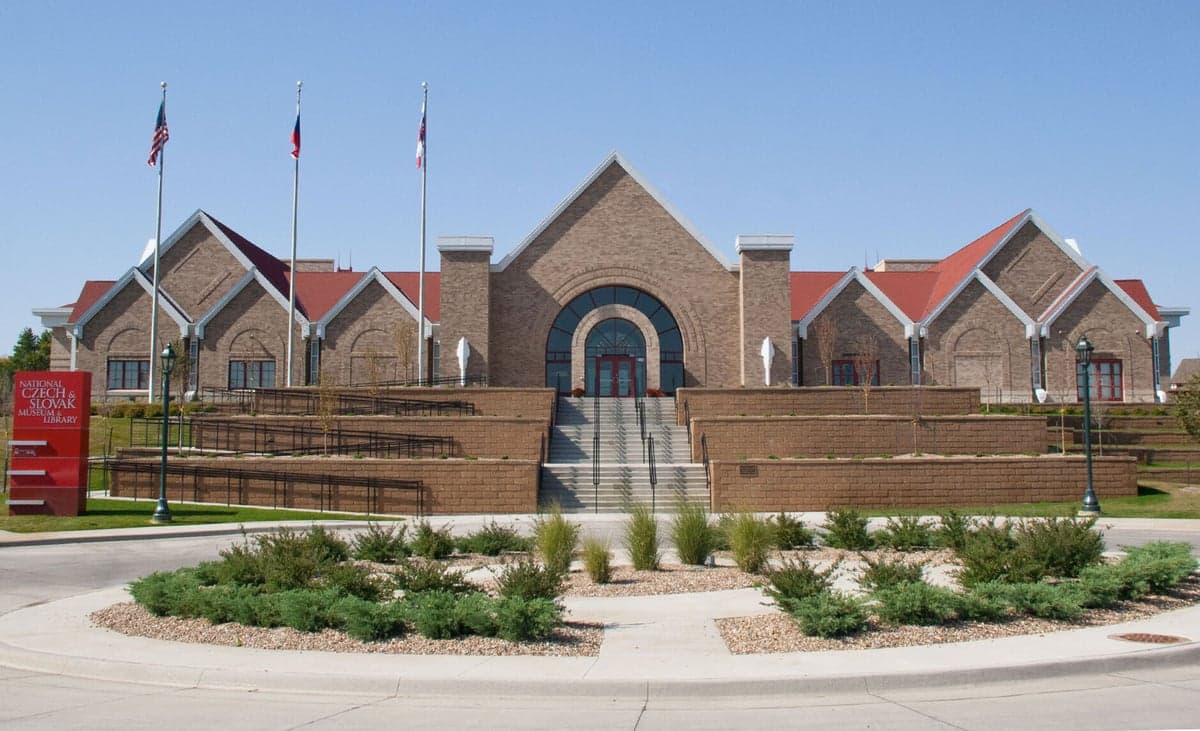
Photo: Wikipedia
Political ClimatePolitical Climate in Cedar Rapids, IA
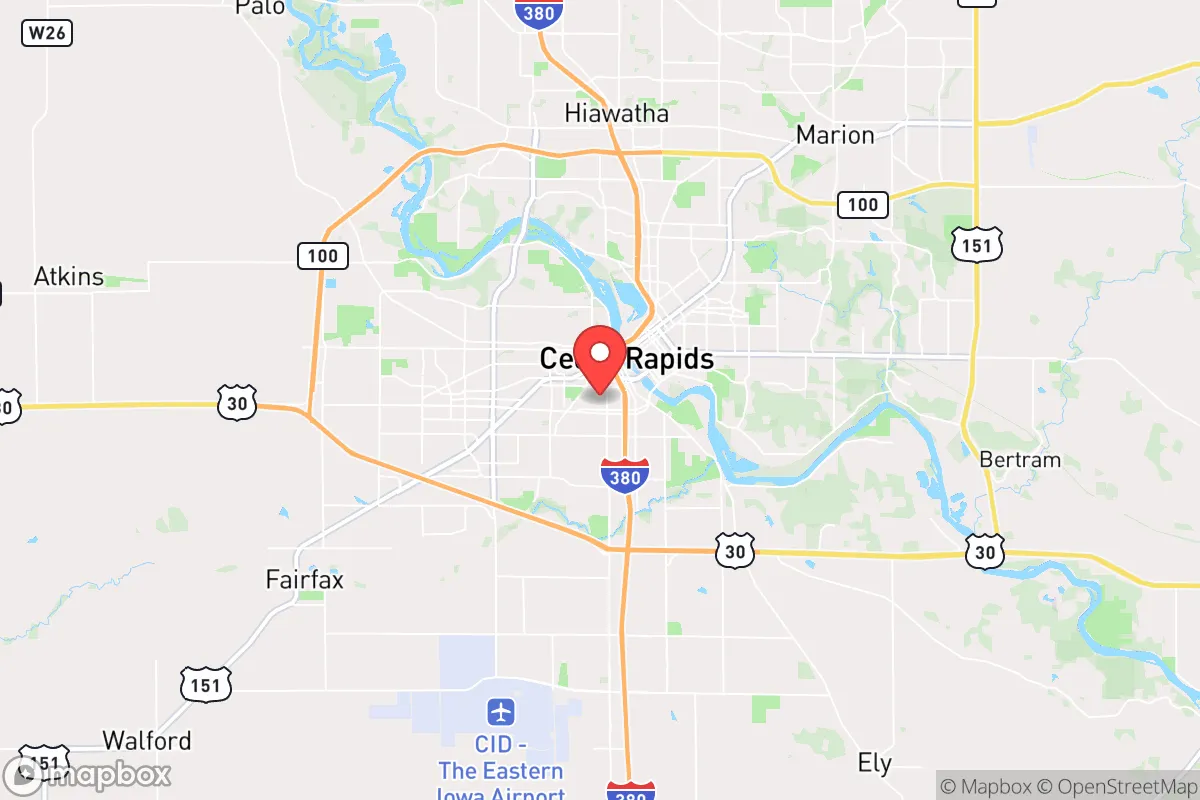
District shown is the primary district for this city’s centroid. Cities may span multiple districts.
Local Political AnalysisPolitical Analysis of Cedar Rapids, IA
Cedar Rapids has long been a bit of a political oddball in Iowa—historically a blue dot in a sea of red, but that's changing faster than a summer thunderstorm. The Cook PVI sits at R+4, which tells you the district leans Republican, but the city itself has been trending leftward in recent years, especially since the 2020 flood of progressive activism. If you’d asked me ten years ago, I’d have said Cedar Rapids was a solid, common-sense place where folks minded their own business and didn’t buy into the coastal craziness. Now? You’ve got city council meetings that sound like a Berkeley subcommittee, with talk of defunding police and equity audits that make you wonder if anyone remembers what made this town work in the first place.
How it compares
Drive twenty minutes west to Marion or Hiawatha, and you’ll feel the political temperature drop about ten degrees—those suburbs are still reliably conservative, with folks who wave the flag and don’t apologize for it. Head south to Iowa City, and you’re in a whole different universe: that’s the People’s Republic of Johnson County, where the city council once passed a resolution to ban plastic straws and the university crowd treats every election like it’s a moral crusade. Cedar Rapids sits right in the middle, but the pull from Iowa City is strong. The county itself, Linn County, voted for Biden in 2020, but the rural precincts around the city still lean red. What’s concerning is how the city’s core has shifted—younger transplants from Chicago and Minneapolis are moving in, bringing their big-government ideas with them. They don’t understand that Cedar Rapids was built by people who wanted less government, not more.
What this means for residents
For the average family here, the political drift means you’re paying more attention to local elections than ever before. The city council has been flirting with rent control proposals and mandatory paid leave policies that sound nice on paper but end up squeezing small businesses and landlords. Property taxes have crept up as the city expands its social programs, and there’s a growing sense that your voice matters less if you’re not part of the activist crowd. On the flip side, the state legislature in Des Moines has been pushing back hard—they’ve passed laws limiting local control on things like gun rights and school curriculum, which is a double-edged sword. It protects your freedoms from a progressive city council, but it also means state government is meddling in local affairs. The real worry is the long-term trend: if Cedar Rapids keeps electing progressive mayors and council members, you could see zoning changes that make it harder to own a home, or police policies that make the streets less safe. It’s not there yet, but the trajectory is clear.
Culturally, Cedar Rapids still has a lot of that old Iowa grit—the Czech Village and NewBo districts are full of family-owned shops and restaurants that don’t care about your politics. But the city’s embrace of sanctuary city rhetoric and DEI initiatives in the school district has created a quiet resentment among long-time residents. You’ll hear it at the coffee shop or the hardware store: people feel like the city is bending over backward for newcomers while ignoring the folks who paid taxes here for decades. The next few election cycles will tell the story—if the conservative suburbs can pull the city back to center, Cedar Rapids might stay a decent place to raise a family. If not, you’ll see more families heading to Palo or Fairfax, where the government still remembers its place.

State Political ClimatePolitical Climate in Iowa
State Political AnalysisPolitical Environment in the State
Iowa has been a reliably Republican state in presidential elections since 2016, but its political identity is more nuanced than a simple red-state label suggests. The state’s overall partisan lean is roughly R+6, driven by a coalition of rural conservatives, evangelical Christians, and a growing number of fiscally conservative suburbanites. Over the past 20 years, Iowa has shifted from a classic swing state—voting for Obama in 2008 and 2012—to a solidly GOP stronghold, a trajectory accelerated by the 2020 and 2024 cycles where Donald Trump won the state by 8 and 10 points respectively. However, the state’s politics are not monolithic; the urban centers of Des Moines, Iowa City, and Cedar Rapids remain Democratic strongholds, while the rest of the state has moved decisively rightward.
Urban vs. rural divide
The political map of Iowa is a textbook example of the urban-rural split. The Des Moines metro area, including Polk County and its suburbs like Ankeny and West Des Moines, is the state’s Democratic engine, with Polk County voting for Biden by 18 points in 2020. Iowa City, home to the University of Iowa, is even more liberal, with Johnson County delivering a 30-point margin for Democrats. In contrast, the vast rural expanse of northwest and north-central Iowa—counties like Sioux, Osceola, and Lyon—vote Republican by margins of 40 to 60 points. The real battlegrounds are the suburban counties surrounding Des Moines, such as Dallas County, which flipped from blue to red in 2016 and has stayed there, and Scott County (Quad Cities), which is now a toss-up. The 2024 election saw Dallas County vote for Trump by 4 points, a shift from its 2012 Obama support, signaling that even the state’s fastest-growing suburbs are trending conservative.
Policy environment
Iowa’s policy environment is aggressively conservative, especially under Governor Kim Reynolds, who has pushed through a slate of legislation that appeals to the state’s right-leaning base. The state’s flat income tax rate of 3.8%, set to drop to 3.5% by 2027, is among the lowest in the Midwest, and property taxes are capped at 2% annual growth. Education policy is a flashpoint: the state’s 2023 school choice law, which created Education Savings Accounts (ESAs) worth roughly $7,600 per student, has been a national model for parental rights, allowing families to use public funds for private or homeschool expenses. On healthcare, Iowa has not expanded Medicaid under the Affordable Care Act, and the state’s abortion law bans the procedure after six weeks of pregnancy, with no exceptions for rape or incest—a law that was briefly blocked by the courts but reinstated in 2024. Election laws have tightened significantly: Iowa now requires voter ID, limits early voting to 20 days, and bans ballot drop boxes, a package passed in 2021 that was praised by conservatives for election integrity but criticized by progressives as voter suppression. The state also has a constitutional carry law for firearms, meaning no permit is needed to carry a concealed weapon.
Trajectory & freedom
Iowa is moving decisively toward greater personal freedom in the conservative sense, particularly on gun rights, parental rights, and economic liberty. The 2021 permitless carry law (HF 756) eliminated the requirement for a permit to carry a concealed firearm, and the state has preempted local gun ordinances, meaning cities like Des Moines cannot enact their own restrictions. Parental rights were expanded with the 2023 “Students’ First” law, which bans instruction on sexual orientation and gender identity in K-6 classrooms and requires schools to notify parents of any changes to a student’s health or well-being. On the economic front, the state’s right-to-work law remains intact, and the 2017 elimination of collective bargaining for most public employees has weakened union influence. However, there are concerns about government overreach in other areas: the state’s 2024 law banning TikTok on government devices and its 2023 law requiring age verification for adult websites have raised eyebrows among privacy advocates. The biggest freedom concern is the state’s aggressive use of eminent domain for carbon capture pipelines, which has sparked bipartisan backlash from landowners in counties like Story and Hardin, who argue their property rights are being trampled for corporate gain.
Civil unrest & political movements
Iowa has seen relatively little civil unrest compared to coastal states, but there have been notable flashpoints. The 2020 Black Lives Matter protests in Des Moines and Iowa City were largely peaceful, though a few nights of vandalism in downtown Des Moines led to a heavy police presence. The state’s immigration politics are a hot-button issue: Iowa has no sanctuary cities, and a 2024 law makes it a state crime to be in the country illegally, allowing local law enforcement to arrest and detain undocumented immigrants. This has led to tensions in meatpacking towns like Storm Lake and Perry, where immigrant labor is essential to the economy. The election integrity movement is strong here; the 2021 voter ID law was driven by concerns about fraud, though no widespread fraud has been documented. The most visible political movement in recent years has been the fight against the carbon capture pipelines, which has united farmers, environmentalists, and libertarians in a rare coalition. In 2023, hundreds of landowners protested at the state capitol, and the issue has become a litmus test for local candidates. The state’s 2024 law banning foreign ownership of agricultural land (SF 2202) was a direct response to concerns about Chinese and Saudi purchases, reflecting a broader nationalist streak in Iowa politics.
Projection
Over the next 5-10 years, Iowa is likely to become even more conservative, driven by two key trends: the continued exodus of young, liberal-leaning residents from rural areas to out-of-state metros, and the in-migration of conservative retirees and remote workers from states like California and Illinois. The state’s population growth is concentrated in the Des Moines suburbs, which are trending red, while rural counties continue to lose population. This demographic shift will likely solidify the GOP’s grip on state government, with the possibility of a Republican supermajority in the legislature by 2030. The biggest wildcard is the carbon pipeline issue, which could fracture the GOP coalition if landowners’ rights continue to be ignored. On the cultural front, expect further restrictions on abortion and transgender rights, as well as continued expansion of school choice. By 2030, Iowa could have a flat income tax below 3%, no state estate tax, and even more permissive gun laws. The state’s political climate will remain stable and predictable for conservatives, but newcomers should be aware that the urban-rural divide will persist, with Des Moines and Iowa City becoming increasingly isolated blue islands in a deep red sea.
For a new resident, the bottom line is this: Iowa offers a high degree of personal freedom in the traditional sense—low taxes, strong gun rights, and a government that respects parental authority—but it is not a libertarian paradise. The state’s willingness to use eminent domain for corporate projects and its aggressive stance on immigration enforcement may give pause to those who prioritize property rights or open borders. If you’re a conservative looking for a stable, affordable, and culturally aligned place to raise a family, Iowa is a strong contender. Just be prepared for cold winters and a political landscape that, while red, is not without its internal battles.
* Values derived from national, state, county, city and local statistics and may differ in a specific area. Last updated: 2026-04-30T03:30:48.000Z
Narrative content on this page is AI-generated and may contain mistakes. Verify any details that matter before acting on them.
ReloMaps may earn a commission from affiliate links at no extra cost to you.

