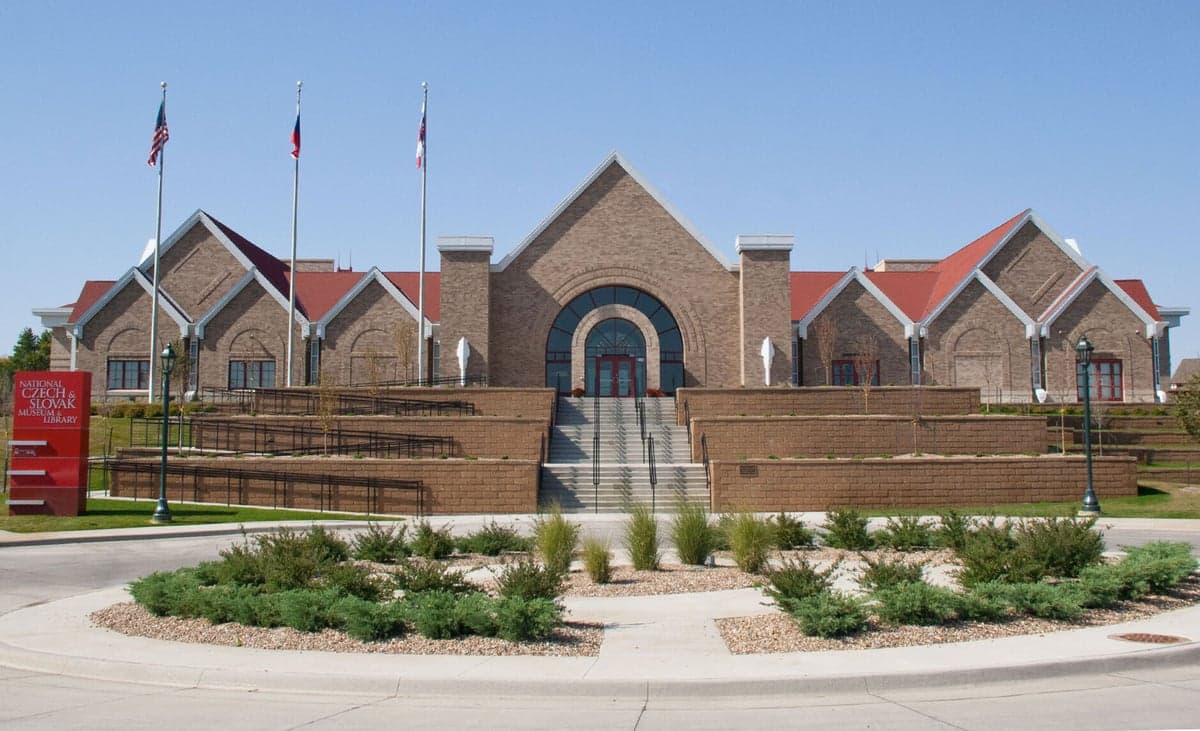
Photo: Wikipedia
Personal Sovereignty in Cedar Rapids, IA
Viable for self-reliance. Generally workable, though some barriers may limit total independence.
What does Personal Sovereignty tell us?
Personal Sovereignty measures your capacity for self-reliance and independence with minimal government friction. Higher scores mean fewer barriers between you and the way you want to live... but it assumes you have the space you need and good neighbors.
What does this tell us?
Personal Sovereignty measures your capacity for self-reliance and independence with minimal government friction. Higher scores mean fewer barriers between you and the way you want to live... but it assumes you have the space you need and good neighbors.
State Policy
Energy independence: Importer (50% of energy produced in-state)
Personal Liberty
Homesteading

Personal Liberty Analysis
Cedar Rapids offers a mixed but workable environment for personal sovereignty, where Iowa’s generally pro-liberty state framework meets the practical realities of a mid-sized Midwestern city. The state’s constitutional carry law, low property taxes relative to the national average, and right-to-work status create a baseline of autonomy that many conservative-leaning individuals and families find appealing. However, local zoning codes, a moderately progressive city council, and state-level preemption battles mean you cannot simply assume total freedom—you must navigate specific rules on everything from backyard chickens to home-based businesses. For a survivalist or prepper mindset, Cedar Rapids is a solid B-tier choice: better than coastal blue states, but not as unencumbered as rural counties further west.
Tax burden and regulatory posture: how much the state and city take
Iowa’s tax climate is improving but still carries a noticeable bite. The state’s flat income tax rate of 3.8% (as of 2025, with a scheduled phase-down to 3.5% by 2027) is moderate, but combined with local option sales taxes in Linn County—which push the total sales tax to 7%—your everyday purchases get taxed harder than in neighboring states like South Dakota. Property taxes in Cedar Rapids average around 1.5% of assessed value, which is slightly above the national median but manageable compared to Illinois or California. The regulatory posture at the city level is where you need to pay attention: Cedar Rapids enforces a relatively strict building code, requires permits for most structural changes, and has a zoning code that limits heavy industrial uses in residential areas. For a prepper looking to build a reinforced shed or install a backup generator, expect to file paperwork and possibly face delays. On the plus side, Iowa is a right-to-work state, meaning you cannot be forced to join a union as a condition of employment—a meaningful protection for individual economic freedom. The state also has a relatively low corporate income tax (currently 7.1%, dropping to 5.5% by 2027), which helps small businesses and self-employed individuals keep more of their earnings.
Self-defense and gun law specifics: what you can carry and where
Iowa is a constitutional carry state, meaning any law-abiding adult 21 or older can carry a concealed firearm without a permit. This is a major plus for personal sovereignty. Cedar Rapids itself does not impose additional local gun restrictions beyond state law, so you are not dealing with city-level magazine bans or waiting periods. The state does have a "stand your ground" law, codified in Iowa Code §704.1, which removes any duty to retreat before using deadly force if you are lawfully present and reasonably believe force is necessary to prevent death or great bodily harm. However, there are nuances: carrying in a vehicle does not require a permit, but if you are stopped by law enforcement, you must immediately inform the officer that you are armed. Also, Iowa prohibits carrying in courthouses, schools (with limited exceptions for permit holders), and certain government buildings. For a survivalist mindset, the ability to keep a firearm in your vehicle and on your person without bureaucratic hurdles is a significant advantage. Ammunition and firearms are widely available at local shops like Fin Feather Fur Outfitters and Scheels, and there are multiple shooting ranges within a 30-minute drive, including the Cedar Valley Shooting Range. One caution: the city of Cedar Rapids has a history of progressive city council members who have occasionally floated symbolic gun control resolutions, but state preemption laws (Iowa Code §724.28) prevent them from enacting any binding local ordinances that are stricter than state law. That preemption is your shield.
Self-reliance and homesteading viability: lot sizes, zoning, and off-grid feasibility
Within Cedar Rapids city limits, true homesteading is constrained by standard suburban zoning. Most residential lots are between 6,000 and 10,000 square feet, which allows for a substantial garden and a small chicken coop (up to six hens, no roosters, per city code), but not for larger livestock like goats or pigs. The city does allow beekeeping with a registration, and rain barrels are permitted without restriction. Off-grid living is effectively impossible inside city limits: Cedar Rapids requires connection to municipal water and sewer for all habitable structures, and solar panels must be grid-tied through Alliant Energy or Linn County Rural Electric Cooperative. If you want to drill a well or install a septic system, you need to look outside the city—places like rural Linn County or neighboring Benton County offer 1- to 5-acre parcels where you can legally go off-grid. The good news is that Iowa’s state-level building code does not prohibit alternative construction methods like earthbag or straw bale homes, but the local county health department will still require a septic permit and well water testing. For a prepper focused on food security, community gardens exist (e.g., the Cedar Rapids Garden Network), but the real opportunity is in the surrounding countryside, where land prices are reasonable—around $5,000 to $8,000 per acre for raw farmland as of 2026. That is a fraction of what you would pay in Colorado or the Pacific Northwest.
Personal liberties: parental rights, medical autonomy, speech, and property
Iowa has been a battleground for parental rights in education. In 2023, the state passed a law requiring schools to notify parents if a student requests a name or pronoun change, and it banned instruction on gender identity and sexual orientation through grade 6 (SF 496). For conservative parents, this is a meaningful protection against school-based ideological overreach. Medical autonomy is more complicated: Iowa has a broad religious exemption for vaccine mandates, but employers and private businesses can still require them. The state does not have a "right to try" law for experimental treatments beyond the federal standard, and telemedicine for out-of-state providers is restricted. On free speech, Iowa has no state-level equivalent of California’s AB 5 or New York’s social media laws that restrict online expression; your speech is protected under the First Amendment and the Iowa Constitution, which has its own free speech clause. Property rights are generally strong: Iowa is a "Dillon’s Rule" state, meaning local governments only have powers explicitly granted by the state, which limits city overreach. However, eminent domain is used for infrastructure projects—the city has used it for flood control and road expansions—so if you buy near a planned development, you could face pressure. One notable liberty: Iowa does not have a state-level red flag law, so your firearms cannot be seized without a criminal conviction or a mental health adjudication. That is a significant difference from states like Washington or California.
Overall, Cedar Rapids provides a workable level of personal sovereignty for a survivalist or prepper, but it is not a libertarian paradise. The state’s constitutional carry, parental rights protections, and right-to-work status are genuine assets. The city’s zoning and utility requirements, however, mean you will need to look to the surrounding rural counties for true off-grid independence. Compared to Des Moines, Cedar Rapids is slightly more conservative and less regulated; compared to rural Iowa, it is more restrictive but offers better infrastructure and job opportunities. If your priority is maximum autonomy with minimal government interference, you would be better off in a county like Buchanan or Delaware, 30-45 minutes away. But if you need a base with decent schools, a stable economy, and a legal framework that mostly respects your rights, Cedar Rapids is a solid choice—just keep your eyes open and your paperwork in order.

* Values derived from national, state, county, city and local statistics and may differ in a specific area. Last updated: 2026-04-30T03:30:48.000Z
Narrative content on this page is AI-generated and may contain mistakes. Verify any details that matter before acting on them.
ReloMaps may earn a commission from affiliate links at no extra cost to you.

