 Popular
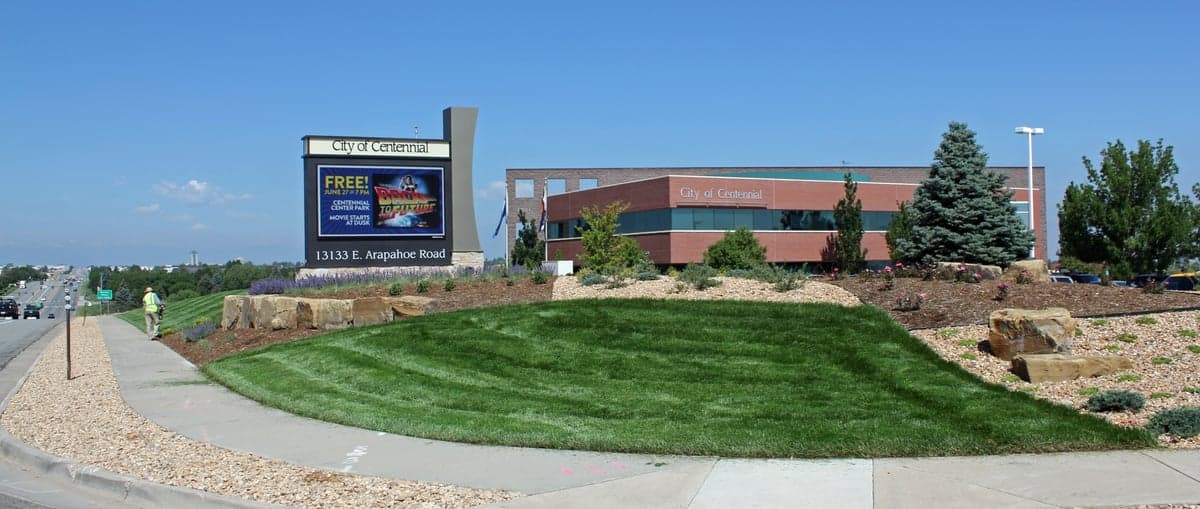
Photo: Wikipedia
Demographics of Centennial, CO
Affluence Level in Centennial, CO
An upper-middle-class area. Household wealth, education levels, and homeownership run ahead of national benchmarks.
People of Centennial, CO
Centennial, Colorado, is a predominantly white, highly educated, and politically moderate-leaning city of 107,386 residents, where 75.6% of the population identifies as white and 61.9% hold a college degree. The city’s character is defined by its planned suburban layout, low crime rates, and strong public schools, attracting families and professionals who prioritize stability and space. With a foreign-born population of just 3.6%, Centennial is less diverse than the Denver metro average, but its Asian (3.8%) and Indian (2.2%) communities are growing, particularly in newer housing developments. The city’s identity is rooted in its late-20th-century founding as a master-planned escape from urban density, and it remains a destination for those seeking a quiet, family-oriented lifestyle with easy access to Denver’s job market.
How the city was settled and grew
Centennial was officially incorporated in 2001, making it one of Colorado’s youngest cities. Its population history is not one of pioneer homesteads or mining camps, but of deliberate suburban expansion. The land was originally part of Arapahoe County’s agricultural plains, settled sparsely by white farmers and ranchers in the late 1800s. The first significant wave of residents arrived after World War II, when Denver’s population spilled southward along the I-25 corridor. These early suburbanites—overwhelmingly white, middle-class families—built homes in unincorporated areas that later became neighborhoods like Heritage Hills and Homestead in the Willows, which still feature large lots and mature trees. The area remained unincorporated until the late 1990s, when residents voted to form a city to control local zoning and avoid annexation by nearby Littleton and Aurora. The founding population was thus a coalition of homeowners who valued low taxes, minimal government, and neighborhood autonomy—a sentiment that still defines local politics.
Modern era (post-1965)
After the 1965 Immigration and Nationality Act, Centennial’s demographic change was slow compared to the rest of the Denver metro. The city’s housing stock—predominantly single-family homes on quarter-acre lots—was expensive, limiting in-migration to higher-income households. The white share remained above 85% through the 1990s. The most notable shift began in the 2000s, as tech and aerospace employers like United Launch Alliance and Sierra Space expanded in the nearby Denver Tech Center. This drew East/Southeast Asian professionals—engineers and managers—into neighborhoods like Willow Creek and Walnut Hills, where newer, larger homes were built. The Indian subcontinent population (2.2%) also grew, clustering in the same areas but maintaining distinct cultural institutions, such as the Hindu Temple of Colorado in nearby Littleton. The Hispanic population (10.0%) is largely concentrated in the city’s older, more affordable apartment complexes near the Arapahoe Road corridor, particularly around Southlands shopping district. The Black population (2.5%) remains small and dispersed, with no single neighborhood majority. Overall, Centennial’s modern growth has been driven by domestic migration from other states—especially California, Texas, and the Midwest—rather than international immigration.
The future
Centennial’s population is likely to continue its slow, steady growth, but the city is nearing build-out, with limited undeveloped land. The white share is projected to decline gradually as older residents age in place and younger, more diverse families move in. The East/Southeast Asian and Indian communities are expected to grow, particularly as high-skilled immigration to Colorado’s tech sector continues, but they will likely remain concentrated in specific subdivisions rather than spreading evenly. The Hispanic population is growing at a modest pace, driven by natural increase and some in-migration from other parts of Arapahoe County, but it is not expected to reach the levels seen in neighboring Aurora or Denver. The city is not tribalizing into distinct ethnic enclaves—neighborhoods remain largely integrated by income rather than ethnicity—but subtle clustering by origin is visible in newer developments. The foreign-born share (3.6%) is unlikely to rise dramatically, as Centennial’s housing costs and zoning laws favor higher-income buyers. The city will remain a predominantly white, upper-middle-class suburb, but with a slowly diversifying professional class.
For a conservative-leaning mover, Centennial offers a stable, low-crime environment with excellent schools and a population that values property rights and local control. The city is not becoming a multicultural melting pot, but it is gradually absorbing a small, educated immigrant population that integrates into existing neighborhoods rather than forming separate enclaves. The bottom line: Centennial is a place where demographic change is slow, orderly, and income-driven, making it a predictable choice for families who want suburban stability with access to Denver’s economy.

* Values derived from national, state, county, city and local statistics and may differ in a specific area. Last updated: 2026-04-23T02:48:29.000Z
Narrative content on this page is AI-generated and may contain mistakes. Verify any details that matter before acting on them.
ReloMaps may earn a commission from affiliate links at no extra cost to you.

