 Popular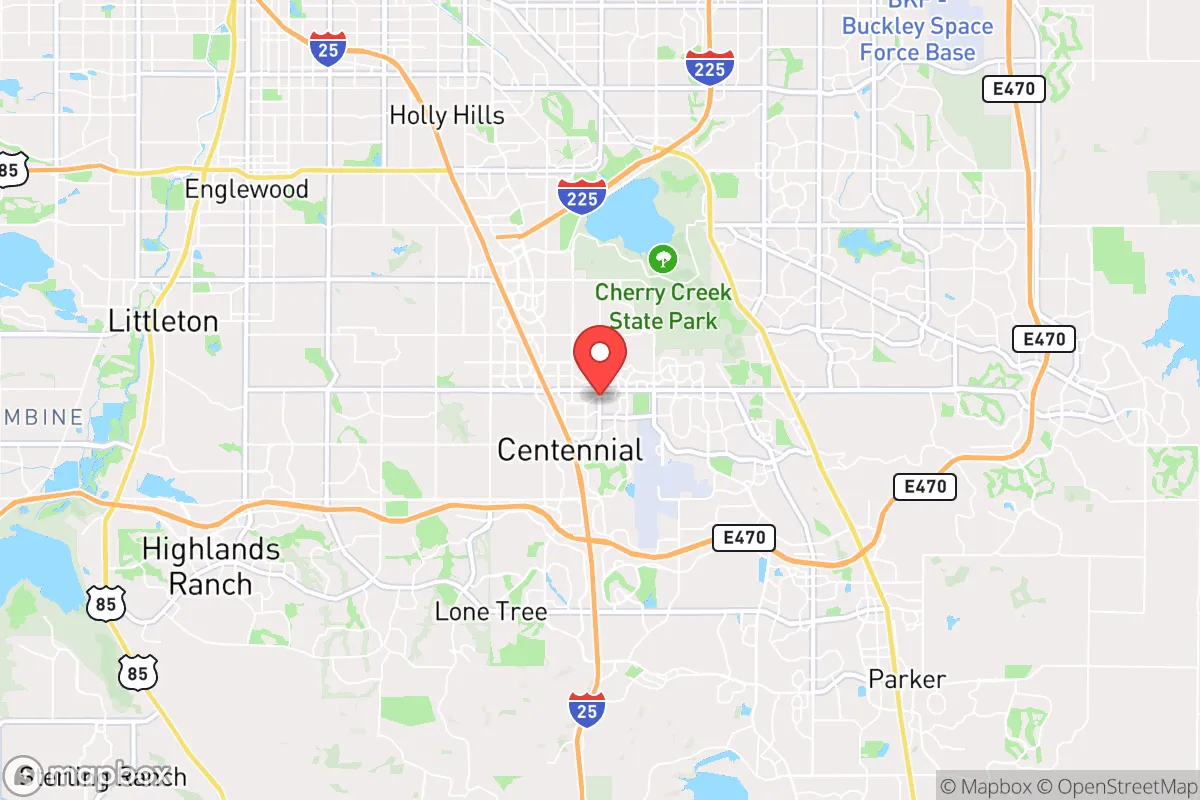
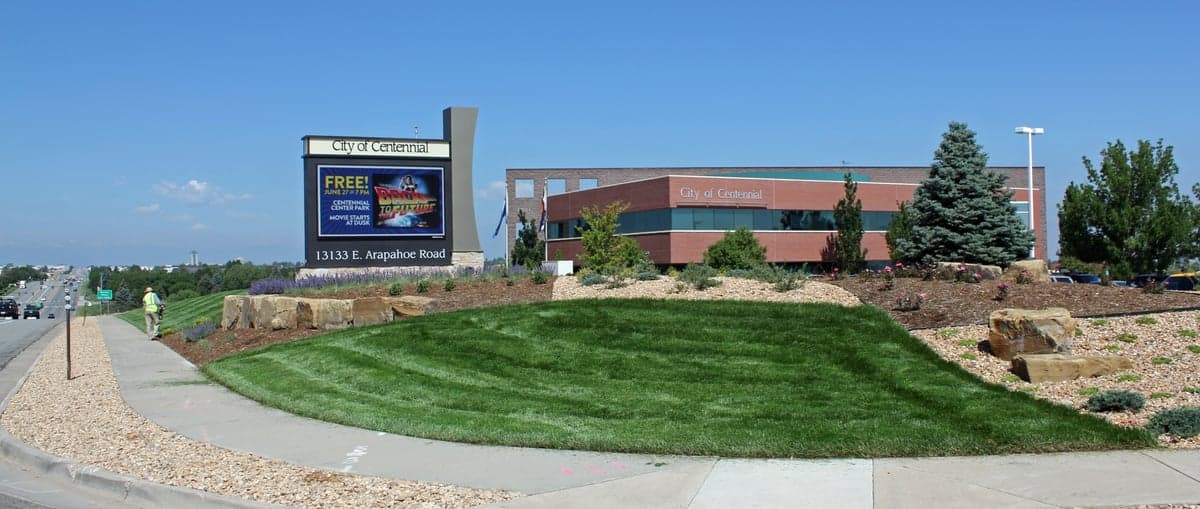
Photo: Wikipedia
Political ClimatePolitical Climate in Centennial, CO
District shown is the primary district for this city’s centroid. Cities may span multiple districts.
Local Political AnalysisPolitical Analysis of Centennial, CO
Look, I’ve been in Centennial since before it was even a city—back when it was just unincorporated Arapahoe County land. And I’ll tell you straight: this place used to be a rock-solid conservative stronghold, the kind where you knew your neighbors and they knew you, and government mostly stayed out of your business. But over the last decade, the political winds have shifted hard. The Cook PVI now sits at D+11, meaning Centennial votes about 11 points more Democratic than the nation as a whole. That’s a dramatic swing from where we were even 15 years ago, and it’s not slowing down. The 2024 presidential race here went for Harris by a comfortable margin, and local school board and city council races are increasingly dominated by progressive candidates. If you’re looking for a place where individual liberties and limited government are still the default, you need to know what you’re walking into.
How it compares
Drive 20 minutes south to Castle Rock or Parker, and you’ll feel like you crossed into a different country. Those towns are still reliably red—Douglas County voted +15 R in 2024—and you’ll hear a lot less talk about equity initiatives or climate mandates. Head north into Denver proper, and you get the full progressive playbook: rent control, sanctuary city policies, and a city council that’s openly hostile to Second Amendment rights. Centennial sits right in the middle, but it’s leaning harder toward the Denver side every election cycle. The surrounding unincorporated areas of Arapahoe County are a mixed bag, but the city itself has become a magnet for young professionals and out-of-state transplants who bring big-city voting habits with them. That’s the real story: the old-timers who kept things balanced are being outnumbered.
What this means for residents
Practically speaking, you’re going to see more government overreach at the local level. The city council has already passed a “social host” ordinance that holds homeowners liable for underage drinking on their property—even if you’re out of town. There’s been talk of mandatory composting and plastic bag bans, and the school district has pushed DEI training that goes way beyond what most parents are comfortable with. Property taxes are climbing to fund these new programs, and you’ll notice more regulations on everything from short-term rentals to home-based businesses. The police department is still professional and responsive, but the political pressure to “reform” it is constant. If you value being left alone to run your life without a bureaucrat’s permission, those days are numbered here.
One cultural distinction worth noting: Centennial still has a strong sense of community, especially in the older neighborhoods like Homestead Farm and Willow Creek. The Fourth of July parade is still a big deal, and the local VFW post is active. But the newer developments—the ones going up along E-470—are filled with people who moved here for the schools and the commute, not for any particular set of values. They vote like they’re still in California or Illinois. Long-term, I’d expect Centennial to keep trending blue, with more restrictions on personal freedom and higher taxes to match. If that bothers you, Castle Rock or even Elizabeth might be a better fit. But if you’re willing to fight for your rights at the ballot box and in city council meetings, you can still make a difference here—for now.

State Political ClimatePolitical Climate in Colorado
State Political AnalysisPolitical Environment in the State
Colorado has shifted from a classic purple swing state to a solidly blue-leaning state over the past two decades, with Democrats now controlling the governorship, both chambers of the legislature, and both U.S. Senate seats. The state voted for Hillary Clinton by 5 points in 2016, Joe Biden by 13 points in 2020, and Kamala Harris by roughly 11 points in 2024, reflecting a durable leftward tilt driven by explosive growth in the Denver-Boulder-Aurora metroplex and the I-25 Front Range corridor. For a conservative considering relocation, the state’s political trajectory is a cautionary tale of how rapid in-migration and demographic change can transform a once-balanced state into a one-party progressive stronghold.
Urban vs. rural divide
The political map of Colorado is a stark study in contrasts. The Denver metro area, including Denver, Boulder, Aurora, and Lakewood, accounts for roughly 60% of the state’s population and votes overwhelmingly Democratic — Boulder County gave Biden 80% in 2020. The I-25 corridor stretching from Fort Collins through Colorado Springs to Pueblo is a mixed bag: Fort Collins and Pueblo lean blue, while Colorado Springs remains a conservative stronghold, though even El Paso County has trended purple in recent cycles. Rural and mountain counties — places like Mesa County (Grand Junction), Weld County (Greeley), and Douglas County (south of Denver) — vote heavily Republican, but their populations are too small to offset the Front Range urban machine. The 2024 election saw Weld County vote +29 R and Mesa County +27 R, yet the state overall went blue. The divide isn’t just geographic; it’s cultural, with urban voters prioritizing climate policy and social issues while rural voters focus on agriculture, energy extraction, and property rights.
Policy environment
Colorado’s policy environment has become increasingly progressive under unified Democratic control. The state income tax rate was cut from 4.63% to 4.4% in 2020 via Proposition 116, but property taxes have risen sharply — residential property tax rates jumped 40% in 2023 due to a Gallagher Amendment repeal and soaring home values. The regulatory posture is hostile to traditional energy: Colorado’s 2019 SB 19-181 imposed strict methane rules and local control over oil and gas drilling, effectively banning new wells in many areas. On education, the state ranks 49th in per-pupil funding despite high property taxes, and school choice is under constant attack — the legislature passed a bill in 2023 limiting charter school growth. Healthcare is dominated by the state-run Connect for Health Colorado exchange, and a 2022 law capped insulin prices at $50 per month. Election laws have shifted left: Colorado was one of the first states to adopt universal mail-in voting (2013), and in 2021, the legislature passed SB 21-250, which expanded automatic voter registration and same-day registration. For conservatives, the most alarming trend is the erosion of local control — the state frequently preempts county and city decisions on land use, energy, and public health.
Trajectory & freedom
Colorado is becoming less free by any objective measure, especially for gun owners, parents, and taxpayers. The 2013 magazine capacity ban and universal background checks were just the start; in 2023, the legislature passed HB 23-1219, raising the purchase age for all firearms to 21, and HB 23-1220, imposing a three-day waiting period. A 2024 bill (SB 24-131) created a state-level “red flag” law with no due process protections, allowing courts to seize firearms based on anonymous tips. Parental rights took a hit in 2023 with HB 23-1108, which prohibited school boards from notifying parents about a student’s gender identity or sexual orientation without the student’s consent — effectively a forced secrecy policy. Medical freedom has been curtailed by a 2021 law requiring all schoolchildren to be vaccinated against COVID-19 (later struck down by a federal judge, but the precedent is concerning). Property rights are under siege from a 2023 “land use” bill (SB 23-213) that preempts local zoning to force higher-density housing near transit, overriding neighborhood input. On the positive side, Colorado has no state-level income tax on Social Security benefits and a flat income tax rate, but the overall trajectory is toward more government control, not less.
Civil unrest & political movements
Colorado has seen its share of political flashpoints. The 2020 George Floyd protests in Denver turned violent, with property damage estimated at $2 million and the city later paying $14 million in settlements to protesters injured by police. The state’s sanctuary policies — the 2013 “Trust Act” (SB 13-251) and 2019 “Limit Immigration Enforcement” law (HB 19-1124) — limit cooperation with federal immigration authorities, and Denver has been a “welcoming city” since 2017, drawing criticism from conservatives. On the right, the Colorado Springs area is a hub for conservative activism, including the Focus on the Family organization and the annual Western Conservative Summit. The 2020 election integrity debate was intense: Mesa County Clerk Tina Peters was indicted in 2022 for allegedly allowing unauthorized access to voting machines, a case that became a national rallying point for election skeptics. Secession movements have flared in rural counties — Weld County voted in 2013 to explore seceding to form the “State of North Colorado,” though it went nowhere. More recently, the 2023 “Parents’ Bill of Rights” debate drew thousands to the state capitol, with conservative parents clashing with progressive school boards over curriculum transparency and library books. A new resident would notice the political tension most acutely in school board meetings and county commission hearings, where the urban-rural cultural war plays out daily.
Projection
Over the next 5-10 years, Colorado will likely continue its leftward drift, driven by two unstoppable forces: in-migration from blue states (California, Illinois, New York) and generational replacement among younger voters. The Denver metro area is projected to add another 500,000 residents by 2035, almost all in Democratic-leaning suburbs like Broomfield and Lone Tree. The state’s Republican Party is fractured between moderates and Trump-aligned populists, making it unlikely to win statewide office soon. Expect more gun control (a proposed “assault weapons” ban is already being drafted for 2025), higher property taxes as the Gallagher Amendment remains dead, and further erosion of school choice. The one wild card is the state’s water crisis — the Colorado River compact renegotiation could force massive agricultural cutbacks in rural areas, potentially depopulating conservative counties and accelerating the urban-rural imbalance. For a conservative moving in now, the realistic expectation is that Colorado will become more like Oregon or Washington within a decade: a state where the rural minority is increasingly powerless against a progressive urban majority.
Bottom line for a new resident: If you’re a conservative considering Colorado, you’re moving into a state where your vote will likely be canceled out by the Front Range, where your gun rights are under constant legislative assault, and where your children’s education will be shaped by progressive school boards and a hostile state government. The trade-offs are real — stunning natural beauty, a strong economy, and a relatively low income tax — but the political climate is adversarial and likely to worsen. If you value personal liberty, parental rights, and limited government, you’ll need to be prepared for a long-term defensive fight, not a comfortable retirement. The best bets for conservatives are Douglas County (still reliably red, with strong schools and low crime) or Mesa County (more affordable, but isolated from job centers). Everywhere else, you’re swimming against a strong blue current.
* Values derived from national, state, county, city and local statistics and may differ in a specific area. Last updated: 2026-04-23T02:48:29.000Z
Narrative content on this page is AI-generated and may contain mistakes. Verify any details that matter before acting on them.
ReloMaps may earn a commission from affiliate links at no extra cost to you.

