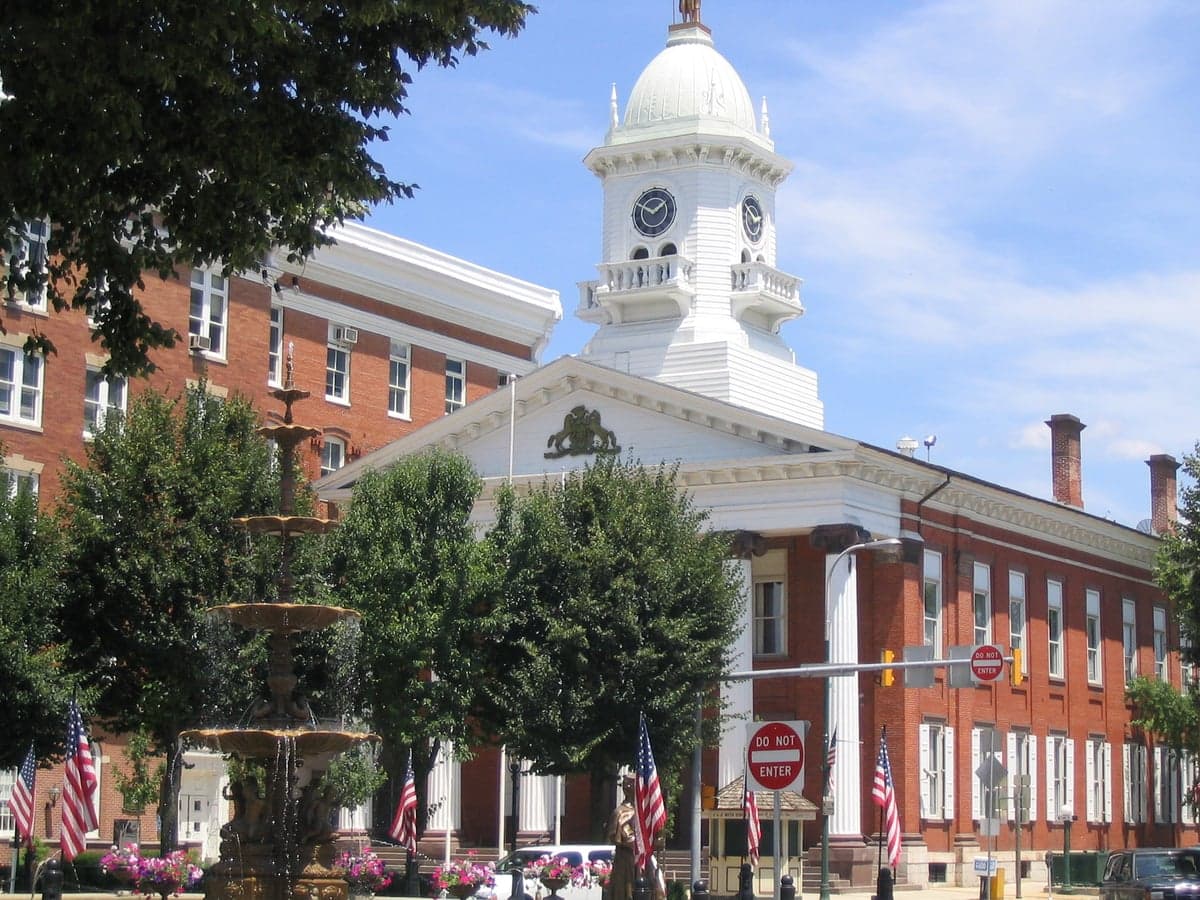
Photo: Wikipedia
Strategic Assessment of Chambersburg, PA
Meaningful friction. Expect exposure to either population pressure, blast zones, or natural disaster risk. Consider buying a retreat property.
What does the Strategic Assessment tell us?
Our Strategic Assessment grades tactical survivability of an area. Major population centers, military targets, fallout zones, natural disasters, and border exposure all drive risk — lower exposure means a more defensible position in a crisis.
This is heavily inspired by Joel Skousen's Strategic Relocation book. Highly recommended you checkout the book ($)What does this tell us?
Our Strategic Assessment grades tactical survivability of an area. Major population centers, military targets, fallout zones, natural disasters, and border exposure all drive risk — lower exposure means a more defensible position in a crisis.
This is heavily inspired by Joel Skousen's Strategic Relocation book. Highly recommended you checkout the book ($)Strategic Pillars

Key Distances
Regional Safe Places
Below is our recommended "safe zones" in Pennsylvania and the surrounding area based on our strategic heuristics. For most people, it's unrealistic to live in a “safe zone” full-time due to work, family or other personal reasons. They tend to be more rural. However, many of these areas are perfect for second homes and retreat properties that double as a vacation home or even a short-term rental.
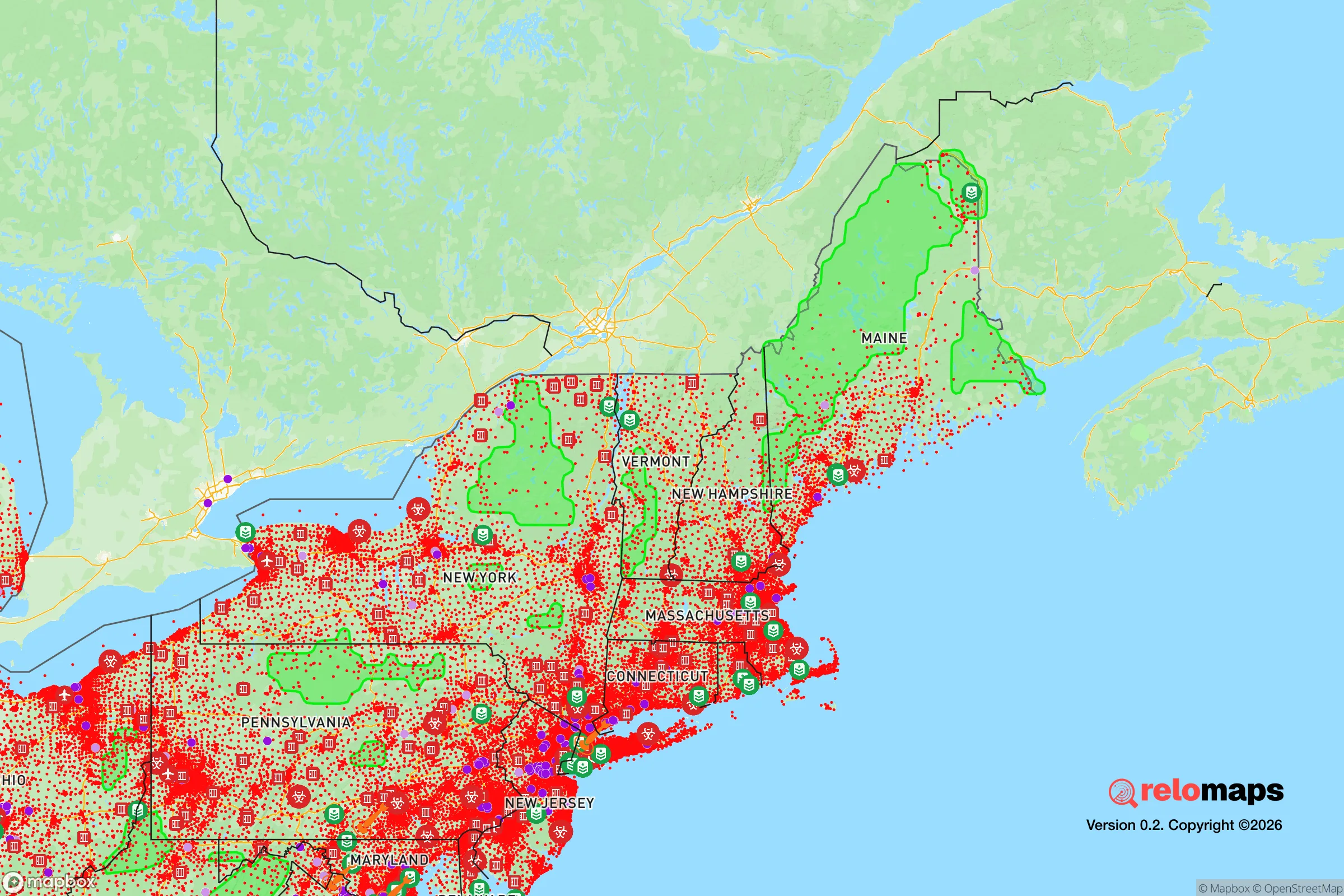
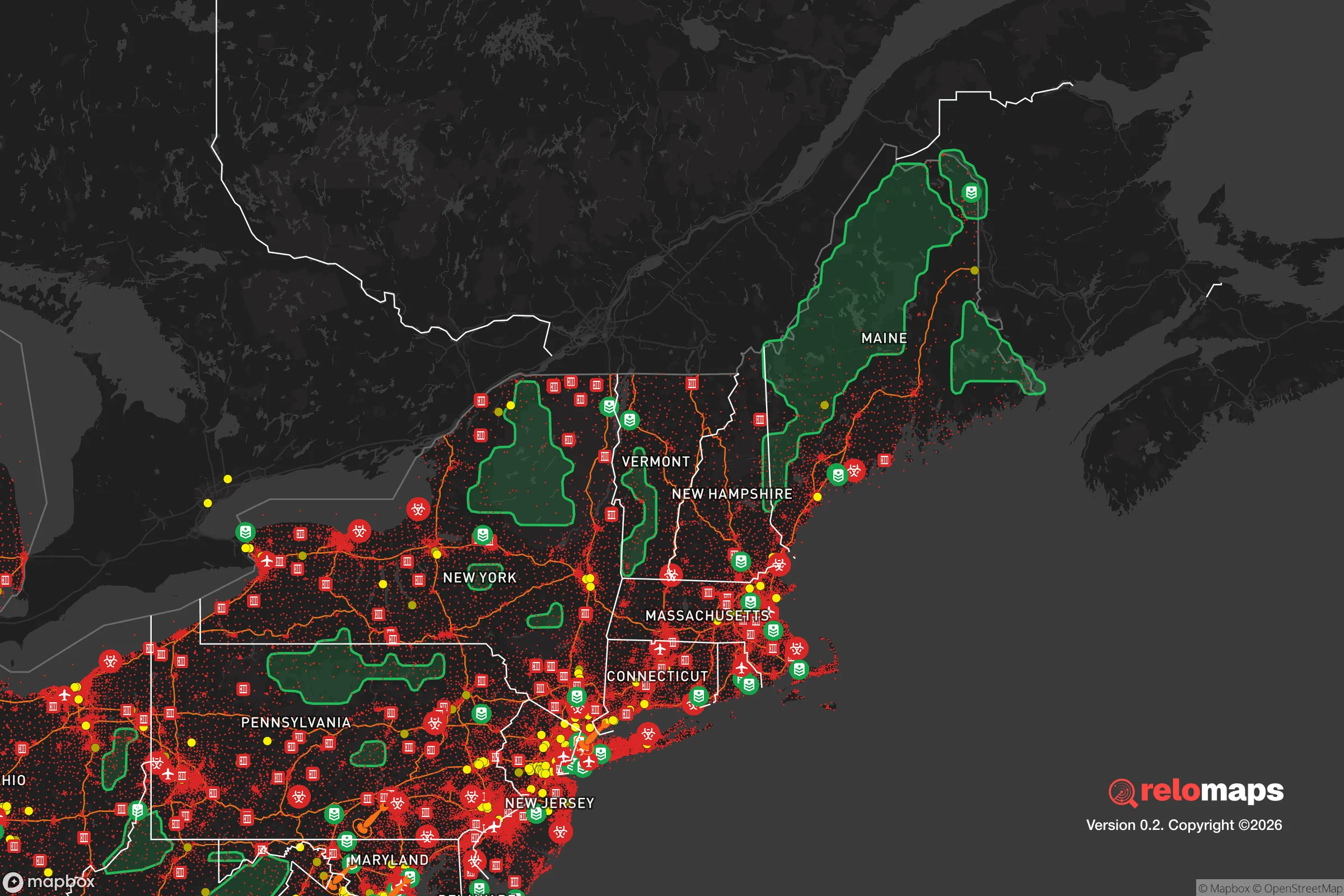


Important Note: For informational purposes only. This does not mean nothing bad ever happens in the green zones. Please use common sense. This is based on public data and modeled with AI. We tried to take a conservative approach but mistakes happen. We update this regularly as new information becomes available.
Solar Generator Recommendations
Backup power matters more here than in safer locations. We've picked three solar generators across budgets and capacity tiers — start with the budget unit if you only need a few essentials, or step up if you want to run a fridge and HVAC for days at a time.

Jackery Portable Power Station Explorer 300
Budget OptionPower on the Go: Weighing only 11 lbs, it's convenient to set up and store with book-sized foldable solar panels

BLUETTI Portable Power Station AC180
Designed for both indoor and outdoor scenarios, AC180 is highly capable as it has a robost capacity and continuous output power.

EF ECOFLOW DELTA Pro Ultra Power Station
Upgraded PickEcoFlow DELTA Pro Ultra is a whole-home energy system designed to grow with your family. Integrated with the Smart Home Panel 2, it scales to meet your evolving energy needs — keeping your home powered, intelligent, and secure through every stage of life.
We earn a commission, at no additional cost to you.
Strategic Assessment Analysis
Chambersburg, Pennsylvania, offers a compelling mix of geographic insulation and practical infrastructure that makes it a serious candidate for a strategic relocation, particularly for those prioritizing resilience over convenience. Situated in the Cumberland Valley, roughly 50 miles southwest of Harrisburg and 15 miles north of the Maryland line, it sits far enough from major metropolitan blast zones to avoid the worst of a collapse event, yet close enough to access critical supply routes if they remain functional. The area’s historical role as a crossroads during the Civil War—it was burned by Confederate forces in 1864—underscores a hard truth: this is a place that has been tested by fire and rebuilt, which speaks to a community that understands hardship and self-reliance. For a conservative-leaning individual or family looking to weather civic unrest, economic dislocation, or a major disaster, Chambersburg presents a balanced risk profile that rewards careful planning.
Geographic position and natural advantages for long-term survival
Chambersburg’s location is its primary strategic asset. It lies in the Great Appalachian Valley, a natural corridor that has historically funneled movement and trade, but the town itself is tucked into a bowl surrounded by low ridges and farmland. This topography provides a degree of natural defensibility: the surrounding hills offer observation points and chokepoints for anyone approaching from the east or west, while the valley floor is fertile and well-watered. The area sits atop the Conococheague Aquifer, a significant groundwater source that feeds local wells and springs, meaning water scarcity is less of a concern than in many other parts of the mid-Atlantic. The climate is temperate, with four distinct seasons, but it avoids the extreme winter conditions of northern Pennsylvania or the oppressive humidity of the coastal plain. Growing seasons are long enough for substantial gardening and small-scale agriculture, and the surrounding farmland—much of it still active—provides a buffer of open space that reduces the risk of being caught in a dense urban collapse. For a relocator, the key takeaway is that Chambersburg is not a fortress, but it is a place where the land itself gives you a head start on self-sufficiency.
Risks, exposures, and proximity to fallout-relevant landmarks
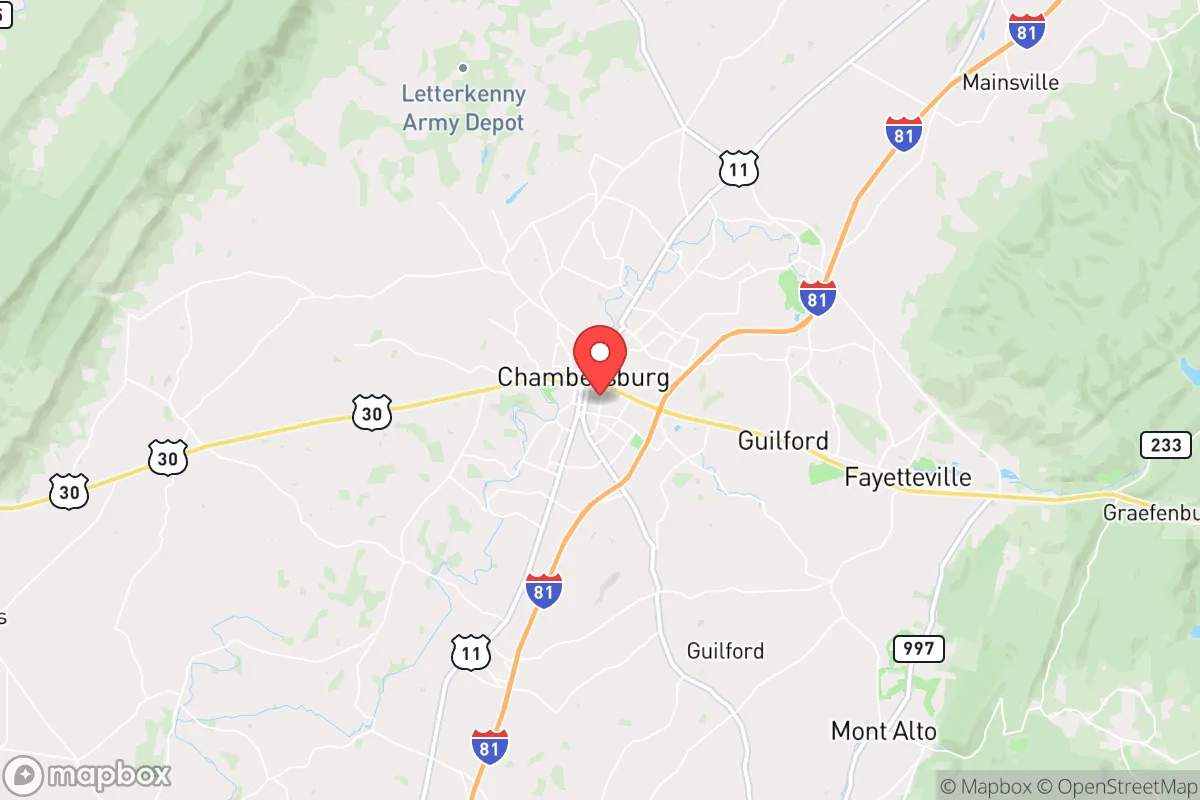
No location is without vulnerabilities, and Chambersburg has several that demand attention. The most immediate concern is its proximity to the Baltimore-Washington metropolitan area, roughly 90 miles to the southeast. In a major disaster—whether a nuclear event, a coordinated attack, or a complete breakdown of civil order—that corridor would become a funnel for refugees fleeing the cities. Interstate 81 runs directly through Chambersburg, and while it is a vital supply route, it is also a highway of vulnerability. A determined mob or a military checkpoint could turn that road into a death trap. Additionally, the area is within 100 miles of the Three Mile Island nuclear plant (now decommissioned but still storing spent fuel) and within 150 miles of the Peach Bottom and Susquehanna plants. A radiological release from any of these sites could contaminate the valley depending on wind patterns, though the prevailing westerlies offer some protection. There is also the matter of Letterkenny Army Depot, located just 15 miles northeast in Franklin County. This is a major ammunition and missile storage facility—a high-value target in any conflict. Its presence brings both a potential military response (which could be stabilizing) and a risk of being caught in a secondary attack or accident. For the prepper, these are not deal-breakers, but they are factors that demand a layered defense plan: secure your home, stock supplies, and have a bug-out route that avoids the main highways.
Practical resilience for a relocator: food, water, energy, and defensibility
Chambersburg’s practical resilience is where it shines for the serious prepper. The town itself has a population of about 21,000, with Franklin County totaling roughly 155,000—small enough that community ties matter, but large enough to have a functional hospital (WellSpan Chambersburg Hospital) and a regional airport. Water is the first pillar: the Conococheague Creek runs through town, and the aquifer is accessible via private wells in most rural and suburban parcels. For those buying land, a well-drilling permit is straightforward, and the water table is typically 50–100 feet deep, which is manageable with a hand pump or solar-powered system. Food resilience is strong: the county is one of Pennsylvania’s top agricultural producers, with dairy, poultry, and row crops dominating. Local farmers’ markets operate year-round, and the Mennonite and Amish communities in the surrounding areas are a significant asset—they are skilled in off-grid living, animal husbandry, and food preservation. Building relationships with these groups is a force multiplier for any relocator. Energy is more of a challenge. The grid is reliable in normal times, but rural outages from storms are common. Solar is viable, with average annual sunlight comparable to much of the mid-Atlantic, but battery storage is essential. Natural gas is available in town, but propane is the standard for rural heating. Defensibility is moderate: the town’s layout is a mix of historic grid streets and suburban sprawl, which makes it hard to secure a single perimeter. However, the surrounding farmsteads and hillside properties offer better options. A property with a long driveway, a creek, and a view of the approach road is ideal. The local gun culture is strong, with several gun shops and ranges, and Pennsylvania’s firearm laws are among the most favorable in the Northeast—no permit needed for open carry, and a license-to-carry is issued on a shall-issue basis. This is not a place where you will be disarmed by local ordinance.
The overall strategic picture for Chambersburg is one of cautious optimism for the prepared relocator. It is not a remote mountain redoubt, and it will not be immune to the ripple effects of a national crisis. But it offers a rare combination of natural resources, agricultural base, and community infrastructure that can sustain a family through a prolonged disruption. The key is to treat it as a base of operations, not a final fortress. Establish a network with local farmers and tradesmen, secure your water and energy independence, and maintain a low profile. The town’s history of burning and rebuilding is a reminder that resilience is not about avoiding trouble—it is about being ready to endure it and come out the other side. For those willing to put in the work, Chambersburg is a solid bet in an uncertain world.

* Values derived from national, state, county, city and local statistics and may differ in a specific area. Last updated: 2026-05-01T12:52:37.000Z
Narrative content on this page is AI-generated and may contain mistakes. Verify any details that matter before acting on them.
ReloMaps may earn a commission from affiliate links at no extra cost to you.

