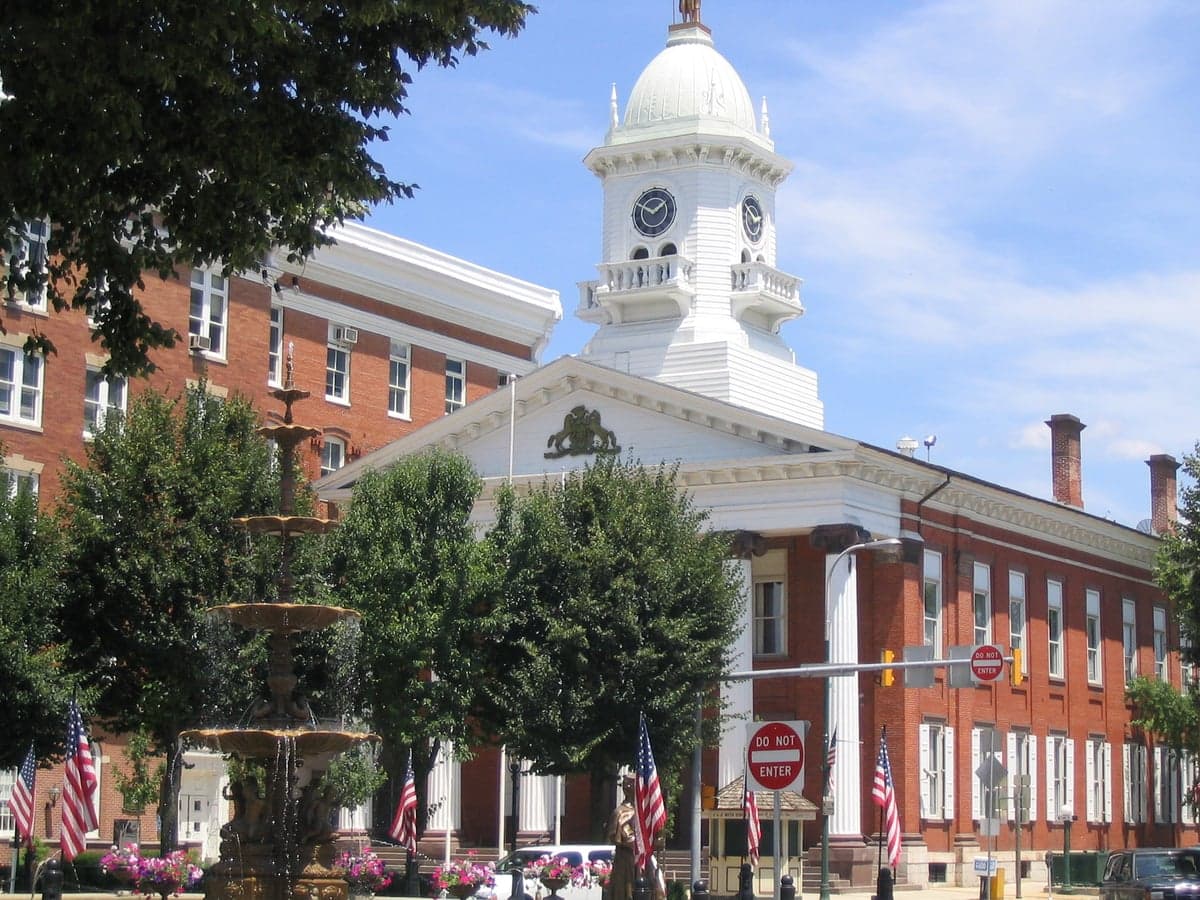
Photo: Wikipedia
Political ClimatePolitical Climate in Chambersburg, PA
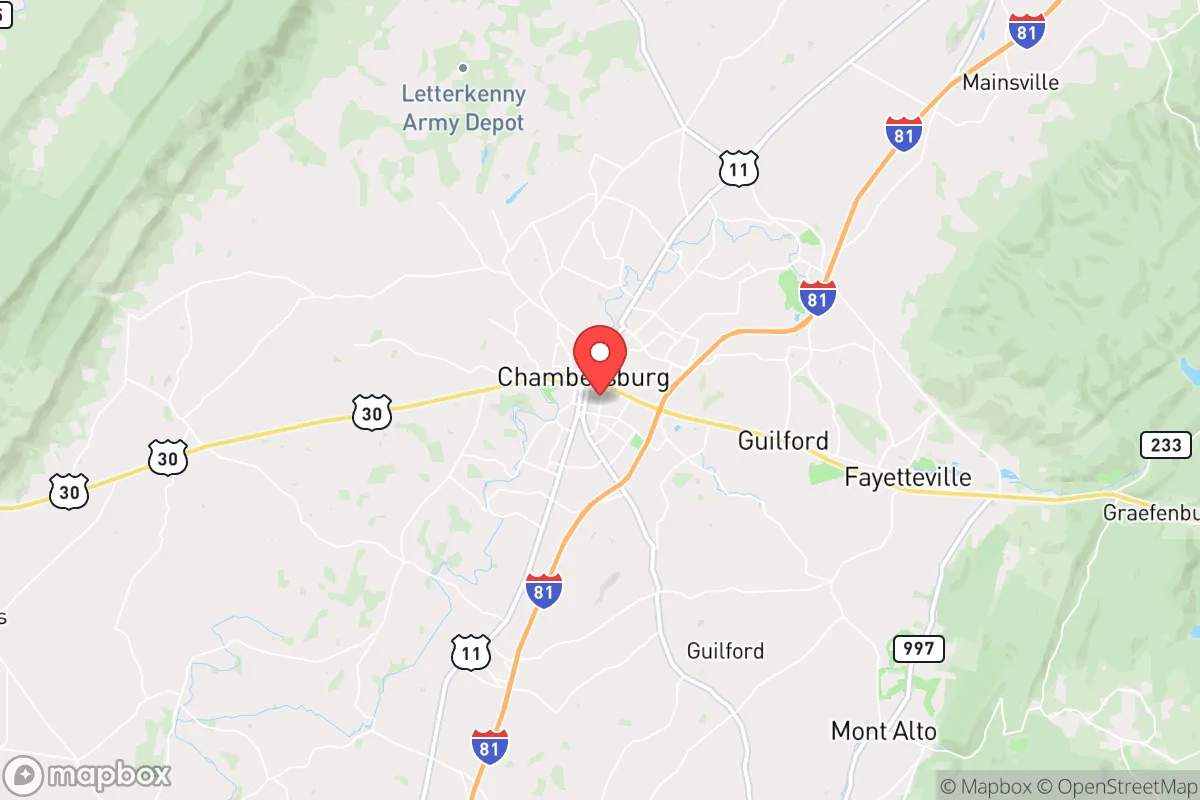
District shown is the primary district for this city’s centroid. Cities may span multiple districts.
Local Political AnalysisPolitical Analysis of Chambersburg, PA
Chambersburg leans heavily Republican, with a Cook PVI of R+23 that puts it among the most conservative small cities in Pennsylvania. That number isn't just a statistic—it reflects a community where traditional values and limited-government principles have been the norm for generations. The political trajectory here has been remarkably stable, though you can feel a subtle shift in the air as some newer residents and transplants from places like Washington County or even Frederick, Maryland, bring different ideas with them. For now, though, Chambersburg remains a place where the local GOP holds sway, and the broader Franklin County electorate consistently votes red by wide margins.
How it compares
Drive 20 minutes east to Gettysburg, and you'll find a town that's become noticeably more purple over the last decade, thanks to tourism and a growing college presence. Head south into Maryland, and Hagerstown feels like a different world entirely—more blue-collar Democratic roots, with a recent uptick in progressive activism that would raise eyebrows here. Chambersburg, by contrast, has held its ground. Surrounding towns like Shippensburg and Waynesboro lean conservative too, but none match the sheer consistency of Chambersburg's voting patterns. The R+23 rating isn't just a number; it means that in most races, Republican candidates can expect to win by double digits without breaking a sweat. That kind of political insulation is rare in Pennsylvania, a state that's otherwise a battleground.
What this means for residents
For folks who value personal freedoms and want government to stay out of their lives, Chambersburg offers a breath of fresh air. You won't see the kind of overreach you might in Philadelphia or Pittsburgh—no heavy-handed mandates, no local ordinances that tell you how to run your business or what you can do on your own property. The county commissioners and local school boards tend to lean conservative, which means less red tape and more common-sense governance. That said, there's a growing concern among long-time residents about outside influence creeping in. Some worry that as the area grows—new housing developments, more remote workers from D.C.—the political culture could start to shift. If that happens, the very freedoms that make Chambersburg attractive could come under pressure. For now, though, the community still values self-reliance and local control, and most folks here are keeping a close eye on any signs of progressive overreach.
Culturally, Chambersburg stands apart from much of the state. You won't find the same kind of urban-progressive energy that dominates Harrisburg or Lancaster. Instead, the town holds onto a quieter, more traditional way of life—church on Sunday, family dinners, and a general distrust of politicians who promise to fix everything from on high. The local policy landscape reflects that: zoning laws are minimal, taxes are kept low, and there's a strong emphasis on Second Amendment rights. If you're looking for a place where you can live your life without a bureaucrat looking over your shoulder, Chambersburg still delivers. But the warning signs are there. Pay attention to school board elections and county commissioner races—those are the battlegrounds where the future of this town's political character will be decided. For now, it's still a safe bet for anyone who values freedom over convenience.

State Political ClimatePolitical Climate in Pennsylvania
State Political AnalysisPolitical Environment in the State
Pennsylvania is a classic purple state that has been drifting leftward over the past two decades, though it still retains a strong conservative backbone in its rural and exurban regions. The state’s 19 electoral votes have gone Democratic in every presidential election since 2004 except for 2016, when Donald Trump narrowly flipped it, and 2020, when Joe Biden reclaimed it by about 80,000 votes. The shift is driven by the growing Democratic dominance in Philadelphia and its suburbs, combined with population losses in the more conservative western and central parts of the state. For a conservative considering relocation, the picture is mixed: you’ll find deep-red strongholds in places like Lancaster, York, and the northern tier, but the state-level political machinery is increasingly controlled by a progressive coalition centered in the southeast.
Urban vs. rural divide
The political map of Pennsylvania is a stark study in contrasts. Philadelphia and its collar counties—Bucks, Montgomery, Delaware, and Chester—have become a Democratic powerhouse, delivering margins of 60-70% in recent elections. Pittsburgh, the other major urban center, leans Democratic but is less reliably blue than Philly, with Allegheny County voting about 55-60% Democratic. The real action is in the so-called “T” of the state: the rural spine running from the northern tier down through central Pennsylvania and into the southwest. Counties like Tioga, Bradford, and Potter in the north routinely vote 70% Republican, while Lancaster and York in the southeast have become conservative anchors despite suburban growth. The 2020 election saw several counties flip back to Trump after voting for Obama in 2008 and 2012, including Erie and Northampton, but the overall trend is that the Philly suburbs are getting bluer while the rest of the state holds steady or reddens slightly. The key battleground is the “collar counties” around Philadelphia, where moderate suburbanites have been trending left on social issues even as they remain fiscally conservative.
Policy environment
Pennsylvania’s policy environment is a mixed bag for conservatives. The state has a flat income tax rate of 3.07%, which is relatively low and hasn’t changed in years, but property taxes are among the highest in the nation—averaging about 1.5% of home value, with some counties like Monroe and Pike exceeding 2%. There is no state sales tax on groceries or clothing, but the overall sales tax is 6% (8% in Philadelphia). The regulatory climate is moderate but trending worse: the state has a prevailing wage law that drives up construction costs, and the Department of Environmental Protection has become more aggressive under Governor Josh Shapiro, particularly on natural gas drilling. Education policy is a flashpoint: the state’s school funding system was ruled unconstitutional in 2023, and the legislature is now debating a massive increase in state funding for public schools, which will likely mean higher taxes. On election integrity, Pennsylvania has become a national concern for conservatives: no-excuse mail-in voting was expanded in 2019 under Act 77, and the 2020 election saw significant controversy over ballot drop boxes and signature verification. The state still requires voter ID for first-time voters but not for repeat voters, a gap that many conservatives want closed.
Trajectory & freedom
Pennsylvania is becoming less free by most conservative metrics. The biggest recent blow was the passage of Act 77 in 2019, which expanded mail-in voting without a voter ID requirement, a move that many conservatives view as an erosion of election security. On gun rights, the state is a mixed picture: it has preemption laws that prevent local municipalities from enacting their own gun control, but Philadelphia has repeatedly tried to circumvent this with “ghost gun” bans and safe storage ordinances. The state also has a universal background check law for handguns and a 48-hour waiting period, which are moderate restrictions. On parental rights, the state has seen a backlash against critical race theory and LGBTQ curriculum in schools, with several conservative school boards in places like Central Bucks and Pennridge passing parental notification policies. However, the Shapiro administration has been hostile to these efforts, issuing guidance that effectively bans discrimination based on sexual orientation and gender identity in schools. Medical freedom took a hit during COVID: Pennsylvania had one of the longest-lasting mask mandates in schools, and the state still has a vaccine mandate for healthcare workers. Property rights are generally strong, but the state’s growing use of eminent domain for “blight” redevelopment in cities like Philadelphia and Pittsburgh is concerning.
Civil unrest & political movements
Pennsylvania has seen its share of political flashpoints. The 2020 election aftermath was particularly intense, with the “Stop the Steal” movement holding large rallies in Harrisburg and Philadelphia. The state was ground zero for election integrity lawsuits, and the Pennsylvania Supreme Court’s decision to extend the ballot receipt deadline after Election Day was a major controversy. On the left, the Black Lives Matter protests in Philadelphia in 2020 were among the largest in the country, with significant property damage and looting in Center City. The city has also become a sanctuary city for illegal immigrants, with the Philadelphia Police Department prohibited from cooperating with ICE, a policy that has drawn criticism from conservatives. The state has a growing secessionist movement in the northern tier, with several counties passing resolutions declaring themselves “Second Amendment sanctuaries” and threatening to nullify state gun laws. The Pennsylvania Firearm Owners Association is one of the most active gun rights groups in the country, and they’ve successfully sued to block several Philadelphia gun ordinances. Immigration politics are less visible than in border states, but the influx of migrants to Philadelphia and Pittsburgh has strained social services and sparked local debates.
Projection
Over the next 5-10 years, Pennsylvania is likely to continue its slow leftward drift at the state level, driven by demographic changes in the southeast. The Philadelphia suburbs are growing and diversifying, while rural counties are losing population, which means the state legislature will eventually flip to Democratic control—possibly as early as 2026. The state Supreme Court is already 5-2 Democratic, and the governor’s mansion is solidly blue. This will likely lead to a state-level progressive agenda: higher taxes, expanded Medicaid, stricter environmental regulations on natural gas, and more gun control. However, the conservative strongholds in the “T” will remain deeply red, and the state’s strong tradition of local control means that many counties will continue to resist progressive policies. The wildcard is in-migration: Pennsylvania is seeing a net inflow of people from New York and New Jersey, many of whom are fleeing high taxes and crime but may bring their progressive voting habits with them. For a conservative moving in now, expect to live in a state where your vote for president and Senate will be competitive, but where state-level policy will increasingly reflect the priorities of Philadelphia and its suburbs.
For a new resident, the bottom line is that Pennsylvania offers a decent quality of life with relatively low income taxes and strong property rights, but you’ll need to pick your location carefully. If you move to Lancaster, York, or the northern tier, you’ll find a conservative community with good schools and affordable housing. If you move to the Philly suburbs, you’ll be in a blue area with high taxes and progressive school boards. The state as a whole is trending left, but the rural and exurban areas remain strongholds of freedom and traditional values. Just be prepared for a constant political fight at the state level, and make sure your vote counts in local elections, where the real battles are being fought.
* Values derived from national, state, county, city and local statistics and may differ in a specific area. Last updated: 2026-05-01T12:52:37.000Z
Narrative content on this page is AI-generated and may contain mistakes. Verify any details that matter before acting on them.
ReloMaps may earn a commission from affiliate links at no extra cost to you.

