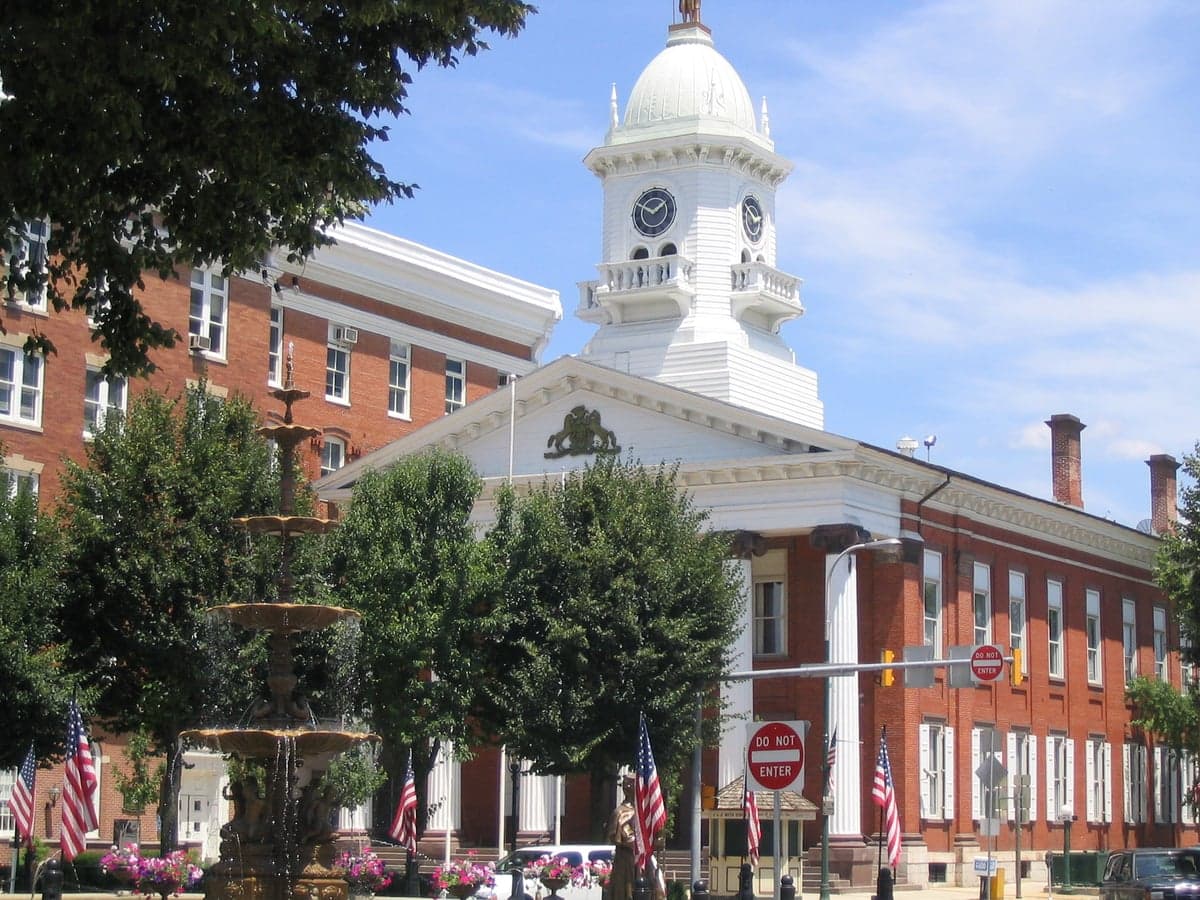
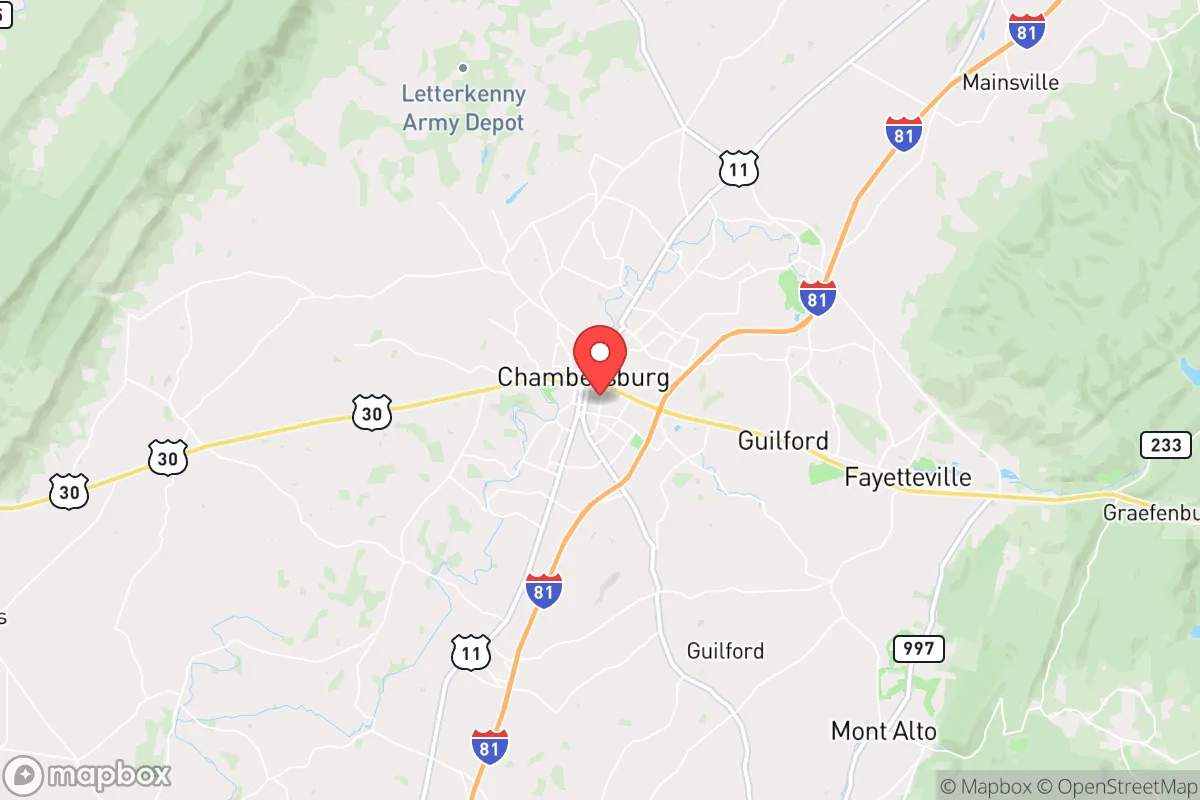
Photo: Wikipedia
Quality of Life in Chambersburg, PA
Above-average quality of iife. The area offers a reasonable cost of living, decent mobility, and a mix of neighborhood amenities.
What does Quality of Life tell us?
Quality of Life blends cost of living, nearby amenities, socioeconomic signals, and neighborhood character. City-level scores represent the whole municipality; individual neighborhoods can differ.
What does this tell us?
Quality of Life blends cost of living, nearby amenities, socioeconomic signals, and neighborhood character. City-level scores represent the whole municipality; individual neighborhoods can differ.
Cost of Living
16% below national average
The Real Cost of Living in Chambersburg, PA for 2026
| Tier | Individual | Family (4) |
|---|---|---|
| Survival | $17k | $33k |
| Comfortable | $38k | $56k |
| Luxury | $99k+ | $153k+ |
| Elite (Top 5%) | $116k+ | $180k+ |
100%
The Area Signal
A metric tracking the socioeconomic signals of the area.
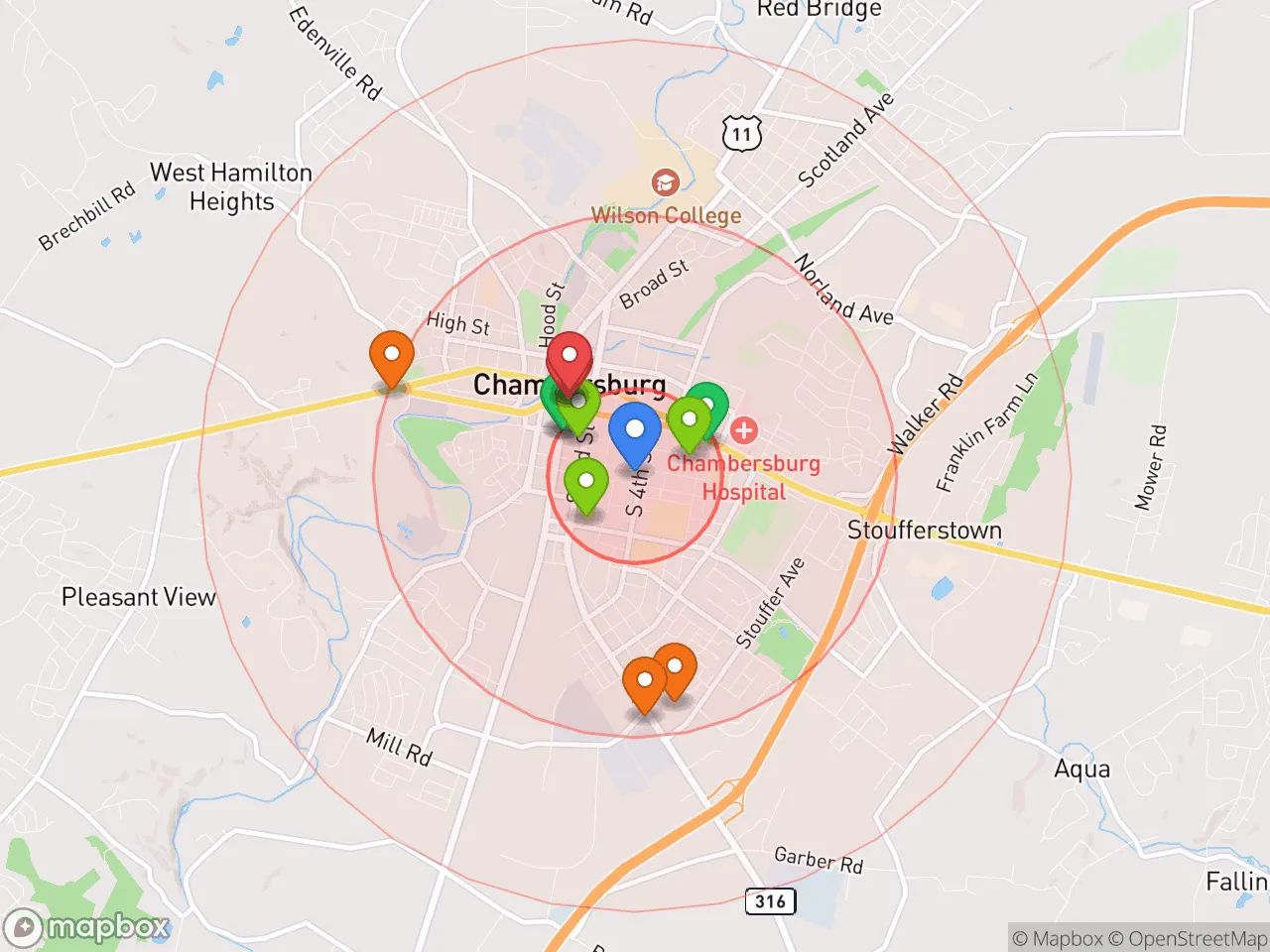
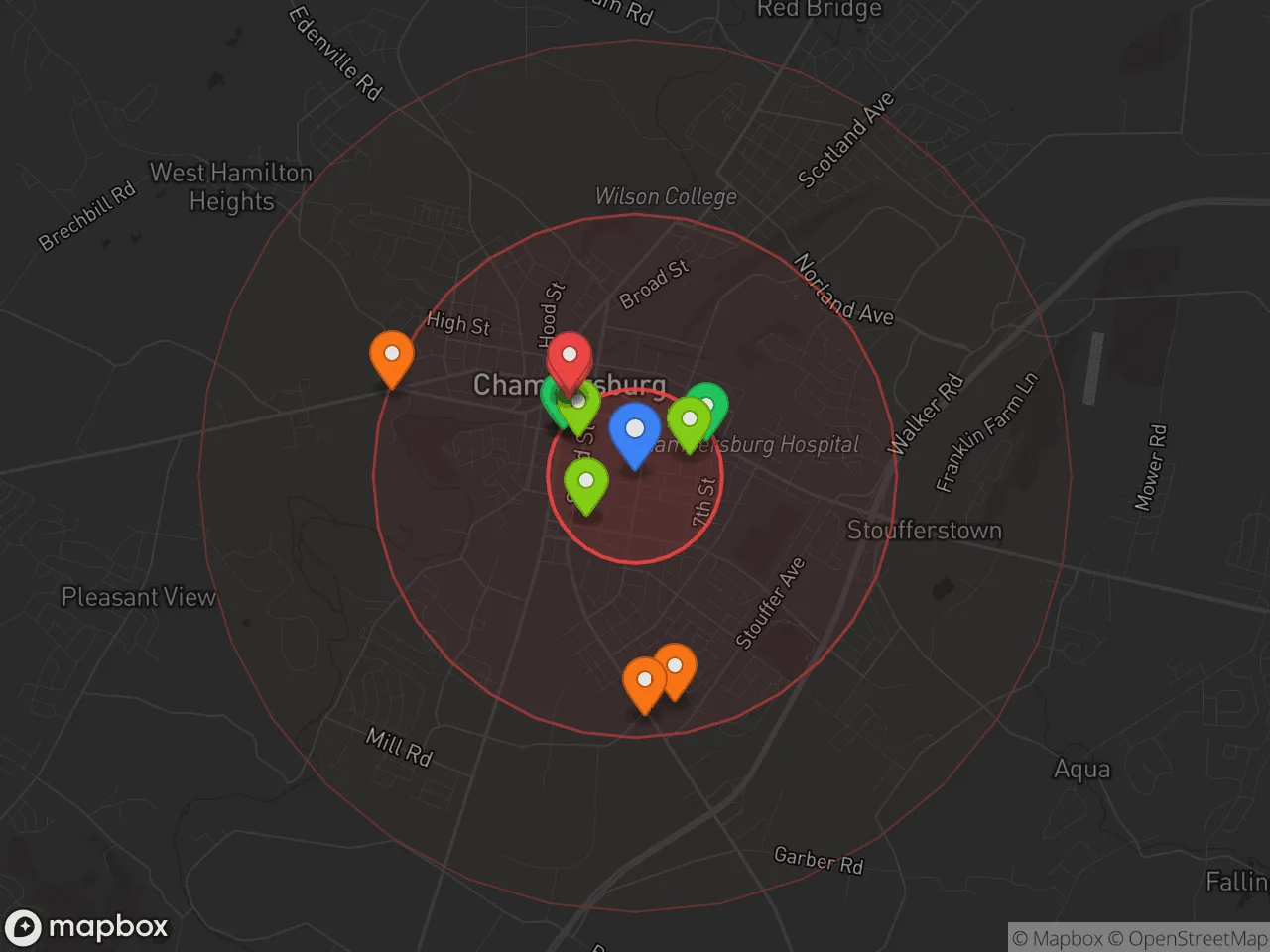
Hobbies
Explore the areaGroceries
5 within 10 miles
Gas
20 within 10 miles
Hospital
7 within 20 miles
Airport
IAD — Washington Dulles International
Post Office
USPS — Chambersburg, PA
Critical Amenities
Quality-of-Life Analysis
Chambersburg, Pennsylvania, offers a quality of life defined by its notably low cost of living and a demographic mix of long-standing families, commuters to larger job centers, and newcomers drawn by affordable housing. With a cost-of-living index of 84 (well below the U.S. average of 100), the borough provides a middle-class lifestyle that is increasingly rare in the Northeast, attracting both young professionals and retirees seeking financial breathing room. The area’s character is rooted in its historic downtown and agricultural surroundings, yet it maintains a practical, no-frills atmosphere that prioritizes value over prestige.
How affordable is Chambersburg compared to nearby cities like Hagerstown or Harrisburg?
Chambersburg’s affordability is its strongest draw, with a median home value of $196,200 and a median rent of $1,088 — both significantly below national benchmarks. For context, the median home value in nearby Hagerstown, Maryland (roughly 20 miles south) hovers around $260,000, while Harrisburg, Pennsylvania’s capital (about 50 miles east), sits near $210,000. This means a buyer in Chambersburg can often secure a three-bedroom single-family home for what a two-bedroom townhouse would cost in those cities. Renters also benefit: the typical $1,088 monthly rent is roughly 15-20% lower than in Hagerstown and on par with more rural Franklin County towns. The average commute of 18.9 minutes is notably short, reflecting the borough’s compact layout and the fact that many residents work locally in healthcare, retail, or manufacturing rather than enduring long drives to Harrisburg or Washington, D.C. Property taxes in Franklin County are moderate, with a millage rate around 20-22 mills, keeping total monthly housing costs manageable for most income brackets.
What daily life is like for families and professionals in Chambersburg
Daily life in Chambersburg centers on a walkable historic downtown with independent shops, restaurants, and seasonal events like the ChambersFest street fair. The Chambersburg Area School District serves roughly 8,500 students across a mix of older neighborhood schools and newer facilities, with a graduation rate near 87% — slightly above the state average. For recreation, residents have access to the 200-acre Chambersburg Memorial Park, the Caledonia State Park (a 15-minute drive for hiking and trout fishing), and the nearby Michaux State Forest. Healthcare is anchored by WellSpan Chambersburg Hospital, a 232-bed facility that is the largest employer in the county. The area lacks major cultural venues like a performing arts center or a large concert hall, but residents often drive 45 minutes to Harrisburg or 90 minutes to Baltimore for such amenities. The rhythm of life is slower than in suburban Philadelphia or D.C., with a strong emphasis on local sports leagues, church communities, and volunteer fire company events.
Chambersburg is best suited for budget-conscious families, remote workers, and retirees who prioritize low housing costs and a short commute over urban nightlife or high-end shopping. The borough’s affordability allows a single-income household to own a home comfortably, while its proximity to I-81 and I-76 (the Pennsylvania Turnpike) provides access to larger job markets without requiring a daily long drive. Those seeking a vibrant arts scene, top-tier public schools, or a rapidly growing economy may find Chambersburg too static, but for anyone wanting a stable, affordable base in south-central Pennsylvania, it delivers a solid return on investment.

Crime in Chambersburg, PA
Crime rates similar to the national median for U.S. locations.
Violent CrimeViolent Crime Analysis
Property CrimeProperty Crime Analysis
Crime Analysis
Chambersburg, Pennsylvania, presents a mixed safety profile for potential residents. The borough's violent crime rate of 347 incidents per 100,000 residents is slightly above the national average, while its property crime rate of 1,452.3 per 100,000 is notably higher, indicating property-related offenses are a more pressing concern. As a small city near the larger Harrisburg and Hagerstown metro areas, Chambersburg faces crime pressures that are often amplified by the progressive judicial policies common in such regions, which can result in more offenders cycling back onto the streets rather than facing meaningful accountability.
Crime in context
Chambersburg's violent crime rate of 347 per 100,000 is roughly 10% higher than the national average of about 315 per 100,000, but significantly lower than Pennsylvania's large cities like Philadelphia (over 1,000 per 100,000). Property crime, however, is a standout concern: at 1,452.3 per 100,000, it exceeds both the national average (approximately 1,100 per 100,000) and the Pennsylvania state average (around 1,200 per 100,000). This disparity suggests that while violent confrontations are less common than in major urban centers, theft, burglary, and vehicle break-ins are persistent problems. The borough's location along the I-81 corridor, a known trafficking route, contributes to these property crime numbers, as transient offenders often target vehicles and unsecured homes.
What residents experience
Daily life in Chambersburg involves a heightened awareness of property security. Residents commonly report vehicle break-ins and package thefts as the most frequent nuisances, particularly in neighborhoods near the downtown core and shopping plazas. Violent crime, while less common, is not absent—assaults and robberies occur, often concentrated in specific areas like the Franklin County Housing Authority complexes and parts of the Lincoln Way corridor. The local police department has responded with targeted patrols and community watch programs, but the effectiveness is undermined by a broader judicial environment in Franklin County that leans toward rehabilitation over incarceration. Progressive district attorneys and judges in the region often prioritize diversion programs and reduced sentences, which, while well-intentioned, can result in repeat property offenders being released quickly, frustrating residents who see little consequence for theft.
Neighborhood-level variation
Safety in Chambersburg varies significantly by neighborhood. The borough's northern and western residential areas, such as the neighborhoods around Norland Avenue and the Scotland Road corridor, generally experience lower crime rates, with many blocks seeing few incidents annually. In contrast, the central downtown area and the southern end near the borough line with Guilford Township report higher concentrations of both property and violent crime. The Chambersburg Housing Authority properties, particularly on McKinley Street and West Washington Street, are known hotspots for drug-related activity and assaults. For those considering relocation, choosing a home in the northern or western sections, or in the adjacent but separate Guilford Township (which has its own police force and lower crime rates), can significantly reduce exposure to the borough's crime challenges.
* Values derived from national, state, county, city and local statistics and may differ in a specific area. Last updated: 2026-05-01T12:52:37.000Z
Narrative content on this page is AI-generated and may contain mistakes. Verify any details that matter before acting on them.
ReloMaps may earn a commission from affiliate links at no extra cost to you.

