Photo: Wikipedia
Demographics of Champaign, IL
Affluence Level in Champaign, IL
A below-average socioeconomic profile. Incomes, home values, and educational attainment trail the U.S., with higher poverty and unemployment.
People of Champaign, IL
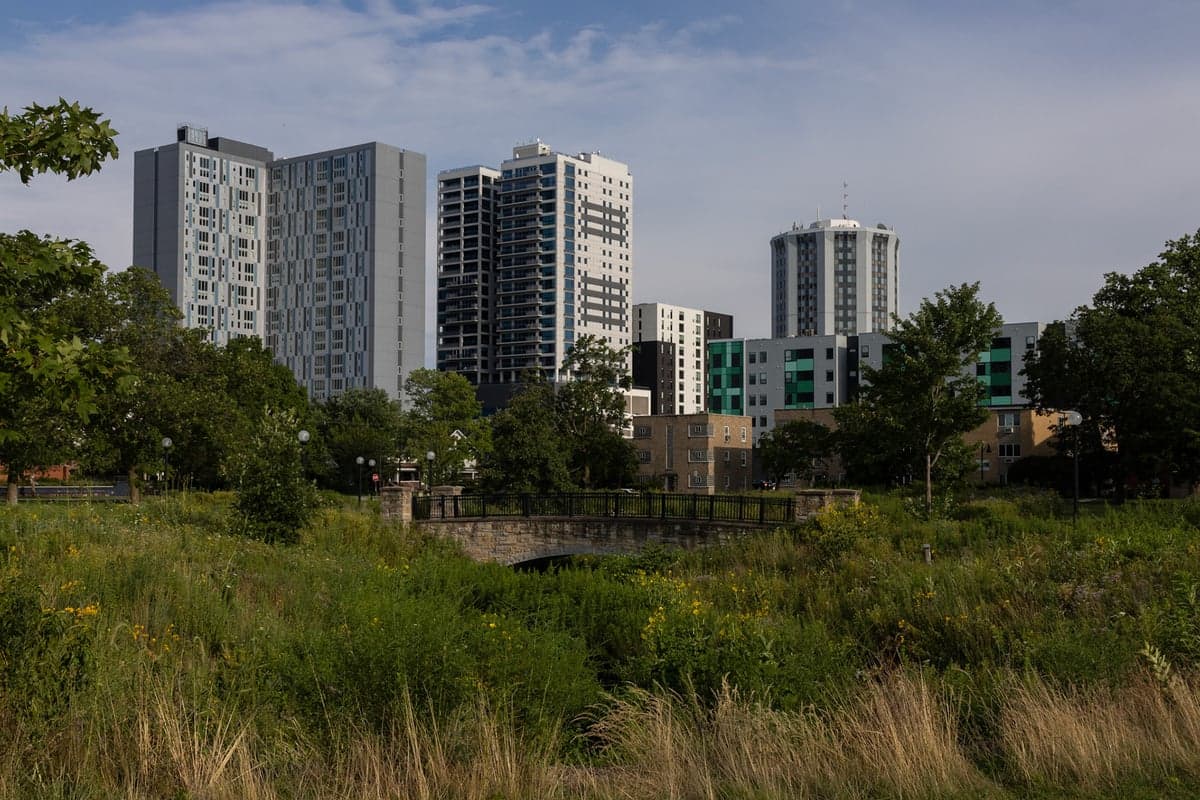
Champaign, Illinois, is a city of 88,822 residents shaped by the University of Illinois at Urbana-Champaign, with a population that is 56.0% white, 17.1% Black, 11.1% East/Southeast Asian, 7.5% Hispanic, and 3.6% Indian (subcontinent). Over 53.6% of adults hold a college degree, and 11.5% of residents are foreign-born, creating a distinctly educated, diverse, and transient population. The city’s character is a blend of a stable Midwestern core, a large university-driven international community, and historically rooted Black and working-class neighborhoods, making it more cosmopolitan than its downstate location suggests.
How the city was settled and grew
Champaign was founded in 1855 as “West Urbana” when the Illinois Central Railroad bypassed the original county seat of Urbana, drawing land speculators and merchants. The city’s early population was overwhelmingly native-born white Americans from the Ohio River Valley and New England, who built the downtown core around the rail depot. By the 1860s, Irish and German immigrants arrived to work on the railroad and in local brickyards, settling in the Midtown and North First Street corridor, areas that remain working-class today. The establishment of the University of Illinois in 1867 (in adjacent Urbana) brought a steady stream of faculty and students, but Champaign itself remained a small railroad and agricultural service town through the early 1900s. The Great Migration (1910–1970) brought a significant wave of Black families from the Deep South, who settled in the Garden Hills and Douglas Park neighborhoods, building a tight-knit community around churches, small businesses, and the historic Bethel AME Church. By 1950, Champaign’s population had reached 39,563, with a Black share of roughly 8%, concentrated in these segregated enclaves.
Modern era (post-1965)
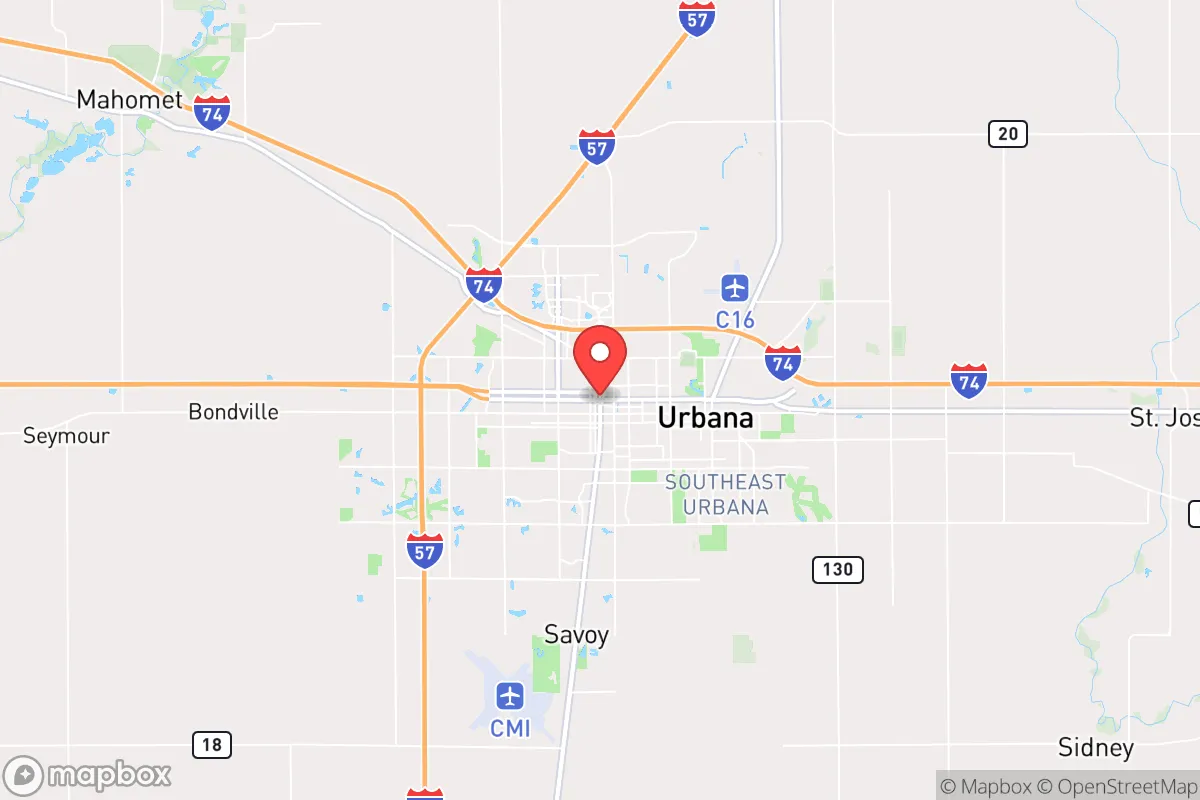
The 1965 Hart-Cellar Act and the expansion of the University of Illinois’s graduate programs transformed Champaign’s demographics. The first wave of East/Southeast Asian immigrants—primarily Chinese, Korean, and Vietnamese—arrived in the 1970s and 1980s, drawn by engineering and science PhD programs. They settled near campus in the Campustown district and the South Side neighborhoods around Florida Avenue, where Asian grocery stores and restaurants now cluster. A second, larger wave of Indian (subcontinent) immigrants began in the 1990s, fueled by the tech boom and the university’s computer science and engineering departments. Today, Indian residents make up 3.6% of the population, with many living in the Southwest Champaign subdivisions near the Research Park and the I-57 corridor. Hispanic growth accelerated after 2000, driven by Mexican and Central American immigrants working in construction, landscaping, and food service; they are concentrated in the North End and Garden Hills, where the Hispanic share now exceeds 15% in some census tracts. The Black population peaked at roughly 20% in the 1990s but has declined to 17.1% as middle-class Black families moved to suburban areas like Savoy and Mahomet, while the white share fell from 75% in 1980 to 56.0% today, reflecting both out-migration and the influx of international students and faculty.
The future
Champaign’s population is projected to grow slowly, reaching roughly 95,000 by 2040, driven almost entirely by international migration and university enrollment. The East/Southeast Asian and Indian communities are the fastest-growing segments, with the Asian share likely to surpass 15% within a decade as the university continues to recruit globally. The Hispanic population is also expanding steadily, though at a slower pace, and is expected to reach 10–12% by 2035. The white population is aging and declining in absolute numbers, while the Black population is stabilizing after decades of suburban flight. The city is not homogenizing; instead, it is tribalizing into distinct enclaves: Campustown and Southwest Champaign are becoming increasingly Asian and Indian, Garden Hills remains predominantly Black and Hispanic, and the West Side (west of Neil Street) is overwhelmingly white and affluent. The foreign-born share (11.5%) is likely to rise to 15–18% as second-generation immigrants stay for the tech and research economy. For a newcomer, this means Champaign offers genuine diversity, but also clear neighborhood sorting by ethnicity and income—a pattern that is likely to intensify.
Champaign is becoming a smaller, more international version of a classic college town: highly educated, ethnically segmented, and economically stratified between the university orbit and the native-born working class. For a conservative-leaning mover, the city offers a stable, low-crime core in white-majority neighborhoods like the West Side or Southwest Champaign, but the broader population is increasingly transient, secular, and left-leaning due to the university’s influence. The bottom line: Champaign is not a culturally conservative enclave, but it is a safe, affordable, and demographically dynamic place where neighborhood choice determines your daily experience.

* Values derived from national, state, county, city and local statistics and may differ in a specific area. Last updated: 2026-05-03T20:24:07.000Z
Narrative content on this page is AI-generated and may contain mistakes. Verify any details that matter before acting on them.
ReloMaps may earn a commission from affiliate links at no extra cost to you.

