
Photo: Wikipedia
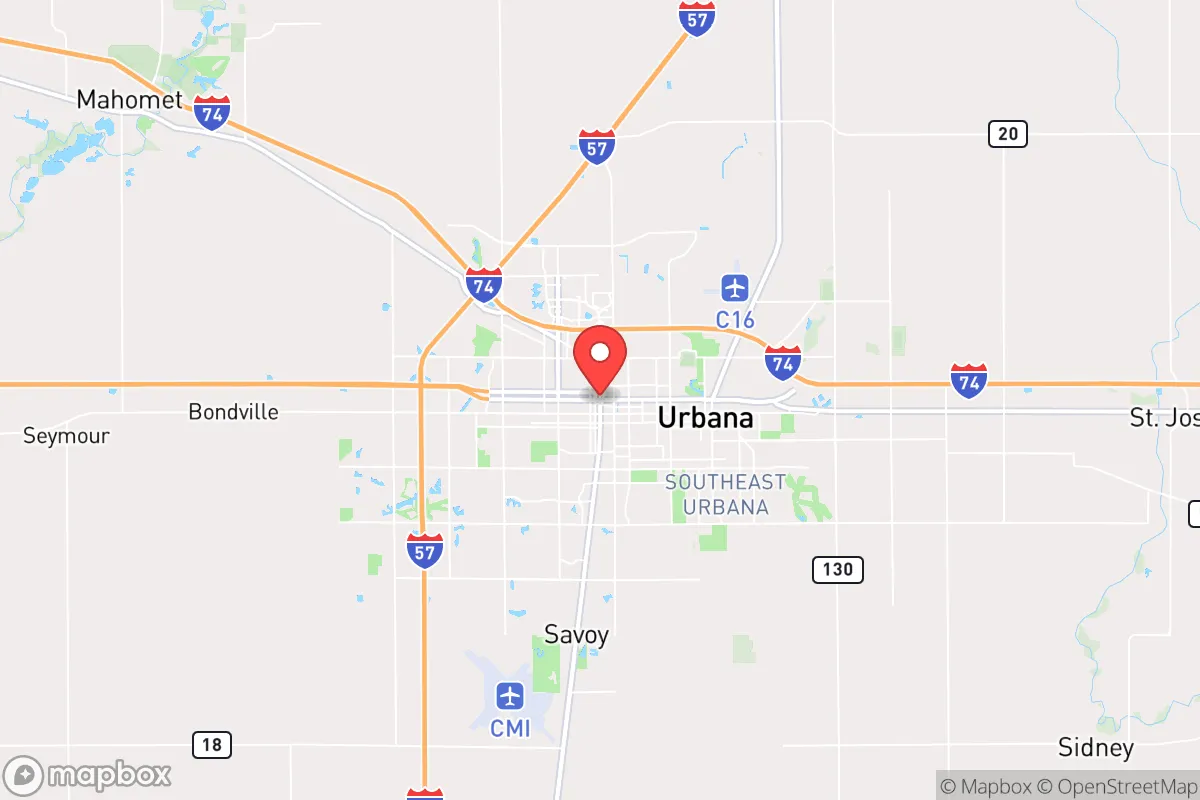
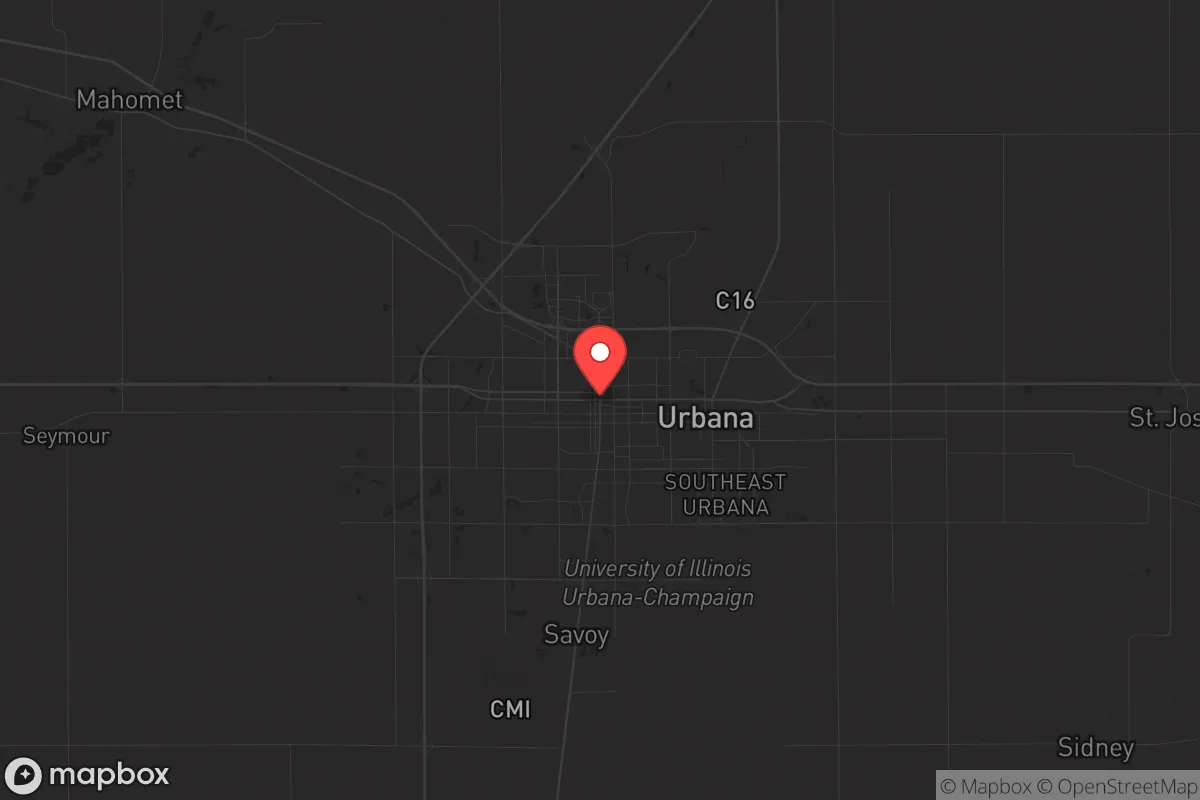
Strategic Assessment of Champaign, IL
Meaningful friction. Expect exposure to either population pressure, blast zones, or natural disaster risk. Consider buying a retreat property.
What does the Strategic Assessment tell us?
Our Strategic Assessment grades tactical survivability of an area. Major population centers, military targets, fallout zones, natural disasters, and border exposure all drive risk — lower exposure means a more defensible position in a crisis.
This is heavily inspired by Joel Skousen's Strategic Relocation book. Highly recommended you checkout the book ($)What does this tell us?
Our Strategic Assessment grades tactical survivability of an area. Major population centers, military targets, fallout zones, natural disasters, and border exposure all drive risk — lower exposure means a more defensible position in a crisis.
This is heavily inspired by Joel Skousen's Strategic Relocation book. Highly recommended you checkout the book ($)Strategic Pillars

Key Distances
Regional Safe Places
Below is our recommended "safe zones" in Illinois and the surrounding area based on our strategic heuristics. For most people, it's unrealistic to live in a “safe zone” full-time due to work, family or other personal reasons. They tend to be more rural. However, many of these areas are perfect for second homes and retreat properties that double as a vacation home or even a short-term rental.
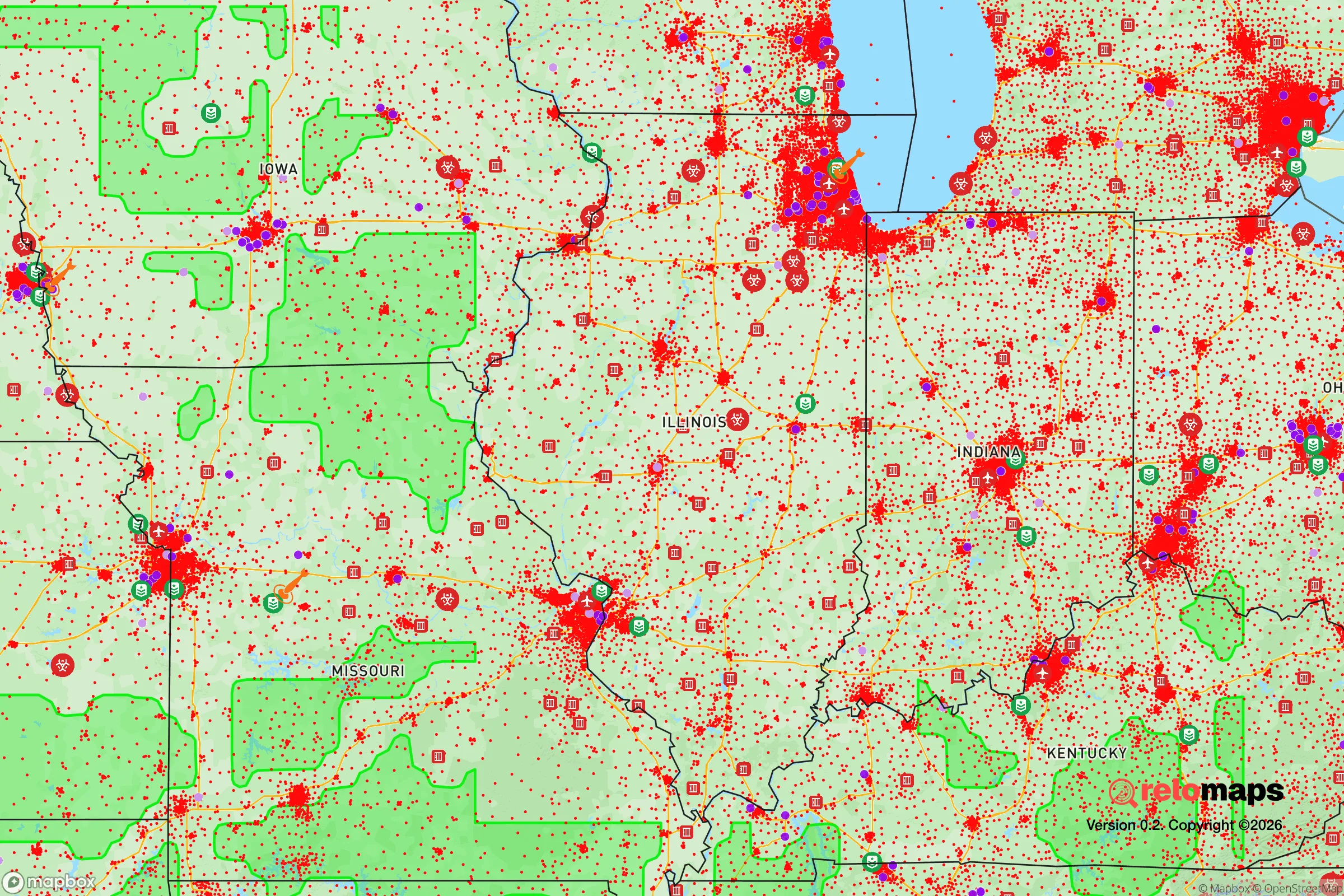
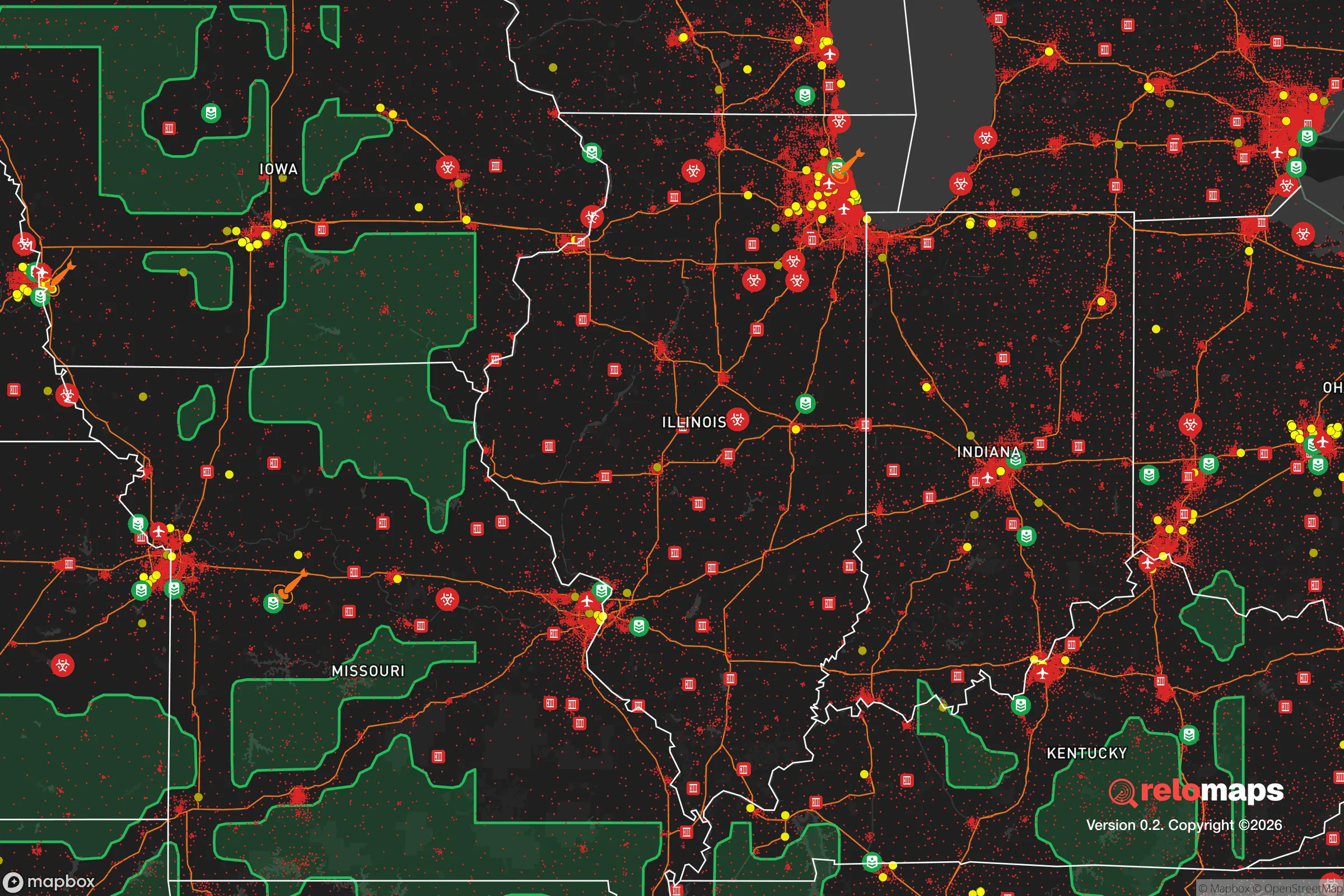


Important Note: For informational purposes only. This does not mean nothing bad ever happens in the green zones. Please use common sense. This is based on public data and modeled with AI. We tried to take a conservative approach but mistakes happen. We update this regularly as new information becomes available.
Solar Generator Recommendations
Backup power matters more here than in safer locations. We've picked three solar generators across budgets and capacity tiers — start with the budget unit if you only need a few essentials, or step up if you want to run a fridge and HVAC for days at a time.

Jackery Portable Power Station Explorer 300
Budget OptionPower on the Go: Weighing only 11 lbs, it's convenient to set up and store with book-sized foldable solar panels

BLUETTI Portable Power Station AC180
Designed for both indoor and outdoor scenarios, AC180 is highly capable as it has a robost capacity and continuous output power.

EF ECOFLOW DELTA Pro Ultra Power Station
Upgraded PickEcoFlow DELTA Pro Ultra is a whole-home energy system designed to grow with your family. Integrated with the Smart Home Panel 2, it scales to meet your evolving energy needs — keeping your home powered, intelligent, and secure through every stage of life.
We earn a commission, at no additional cost to you.
Strategic Assessment Analysis
Champaign, Illinois, sits at a strategic crossroads that offers a mixed bag for the survival-minded relocator. Its position in east-central Illinois, roughly 140 miles south of Chicago and 120 miles west of Indianapolis, places it within a day’s drive of major population centers—a double-edged sword. On one hand, this proximity provides access to supply chains and medical infrastructure; on the other, it puts you within the blast radius of potential civil unrest or mass casualty events that could ripple outward from those cities. The area’s flat, fertile landscape is a classic breadbasket, but its lack of natural barriers and its reliance on a single major interstate (I-57) for north-south travel create distinct vulnerabilities. For a conservative-leaning individual or family weighing long-term preparedness, Champaign offers some genuine resilience advantages—chiefly its agricultural abundance and a relatively stable local economy—but demands careful consideration of its exposure to fallout from larger, more volatile regions.
Geographic position and natural advantages for long-term survival
Champaign’s geographic reality is defined by the flat, open expanse of the Central Illinois prairie. This is not a defensible terrain—there are no hills, forests, or natural chokepoints to slow an advancing threat. However, the same flatness that makes it vulnerable also makes it a logistical hub. The area is crisscrossed by rail lines (Union Pacific, Norfolk Southern, and CSX) and major highways, including I-57, I-74, and U.S. 150, which could be critical for moving supplies or evacuating if needed. The region’s natural advantage is its soil: the deep, black loam of the Grand Prairie is among the most productive agricultural land in the world. Champaign County alone produces over 50 million bushels of corn and 15 million bushels of soybeans annually, meaning local food production is not a theoretical backup but a daily reality. For a prepper, this translates to a robust local food system that could sustain a population even if supply chains falter. The area also sits atop the Mahomet Aquifer, a massive underground water source that supplies nearly all of east-central Illinois—a critical asset in a grid-down scenario. The downside is that the aquifer is shallow and vulnerable to contamination from surface spills or agricultural runoff, so well water testing and filtration should be non-negotiable for any relocator.
Risks, exposures, and proximity to fallout-relevant landmarks
The most significant risk for Champaign is its proximity to Chicago and the broader I-57 corridor. In a scenario of civil unrest, mass casualty events, or a major disaster, Chicago’s population of 2.7 million could become a source of refugee flow southward along I-57, which passes directly through Champaign. The city is also within 50 miles of the University of Illinois Urbana-Champaign campus, a major research institution that, while economically stabilizing, could become a target for civil disruption or a focal point for political unrest. The presence of the university’s nuclear research reactor (the Advanced Teaching and Research Reactor, or ATRR) is a low-level concern—it’s a small, licensed facility, but any nuclear incident, even a minor one, would draw federal attention and potentially trigger evacuation orders. Additionally, Champaign is within 200 miles of the Clinton Power Station (a nuclear plant in Clinton, IL) and the Dresden Generating Station (near Morris, IL), both of which are aging facilities. A major event at either could create a fallout plume that would affect Champaign depending on wind direction. The area’s flat terrain also makes it prone to tornadoes—the 2021 derecho that swept through the region caused widespread power outages and property damage. For a relocator, the lack of natural cover means that a hardened safe room or basement is not optional; it’s a necessity.
Practical resilience for a relocator: food, water, energy, and defensibility
For a family or individual looking to establish a resilient homestead, Champaign offers a few concrete advantages. Food security is the strongest draw: the local farmers’ markets (Urbana’s Market at the Square, Champaign’s Lincoln Square Farmers Market) operate from May through October, and the surrounding county has dozens of u-pick farms and community-supported agriculture (CSA) programs. The University of Illinois Extension also runs workshops on home food preservation, canning, and gardening—practical skills that align with a prepper mindset. Water is less of a concern than in many parts of the country, thanks to the Mahomet Aquifer, but the municipal water supply in Champaign is treated with chlorine and fluoride, which some conservative-leaning relocators may want to filter or bypass entirely. A private well is feasible in rural parts of the county, but drilling costs run $5,000–$10,000, and you’ll need a backup pump for grid-down scenarios. Energy resilience is middling: the local grid is served by Ameren Illinois, which has a mixed reliability record during storms. Solar is viable (the area averages 200 sunny days per year), but the flat landscape means no shading from trees, so panels are exposed to hail and wind damage. A backup generator running on propane or natural gas is a wise investment. Defensibility is the weakest link. The open prairie offers no natural cover, and the city’s layout—sprawling subdivisions with cul-de-sacs—makes it hard to secure a perimeter. A rural property with a long driveway and a clear line of sight to the road is preferable, but even then, you’re relying on distance and visibility rather than terrain. The local law enforcement presence is adequate (Champaign Police Department and the Champaign County Sheriff’s Office), but in a widespread collapse scenario, response times would stretch thin.
The overall strategic picture for Champaign is one of calculated trade-offs. It is not a fortress, nor is it a remote bunker. It is a working agricultural hub with a stable, university-anchored economy that would likely hold together longer than many other mid-sized cities in a crisis. The food and water resources are genuine assets, and the proximity to major highways could be leveraged for supply runs or evacuation if you plan ahead. But the risks are real: the flat terrain, the proximity to Chicago’s potential chaos, and the presence of nuclear facilities within a few hours’ drive mean that a relocator must be proactive, not reactive. For a conservative-leaning individual or family who values self-reliance and community stability, Champaign is a viable option—provided you invest in a hardened home, a reliable water filtration system, and a solid plan for monitoring and responding to threats from the north. It’s not a bug-out location; it’s a live-in location that demands constant awareness. If you’re willing to trade dramatic natural defenses for agricultural abundance and a relatively low-crime baseline, Champaign can work. But don’t mistake its flat, quiet surface for safety. The real test will come when the sirens sound from Chicago or the reactor alarms go off downstate—and you’ll need to know which way the wind is blowing.

* Values derived from national, state, county, city and local statistics and may differ in a specific area. Last updated: 2026-05-03T20:24:07.000Z
Narrative content on this page is AI-generated and may contain mistakes. Verify any details that matter before acting on them.
ReloMaps may earn a commission from affiliate links at no extra cost to you.

