
Photo: Wikipedia
Political ClimatePolitical Climate in Champaign, IL
District shown is the primary district for this city’s centroid. Cities may span multiple districts.
Local Political AnalysisPolitical Analysis of Champaign, IL
Champaign, Illinois, has a political climate that leans solidly left, with a Cook PVI of D+5, but that number doesn’t tell the whole story of how things have shifted over the years. I’ve lived here long enough to remember when this town was more of a purple patch—where you could have a reasonable conversation with your neighbor about taxes or local ordinances without it turning into a shouting match. Now, the progressive tilt is unmistakable, especially in city council decisions and school board policies, and it’s driven more by the university crowd and transplants than by long-time locals. If you’re looking for a place where individual liberties and fiscal restraint still carry weight, you’ll want to pay close attention to how Champaign’s politics have changed and where they’re headed.
How it compares
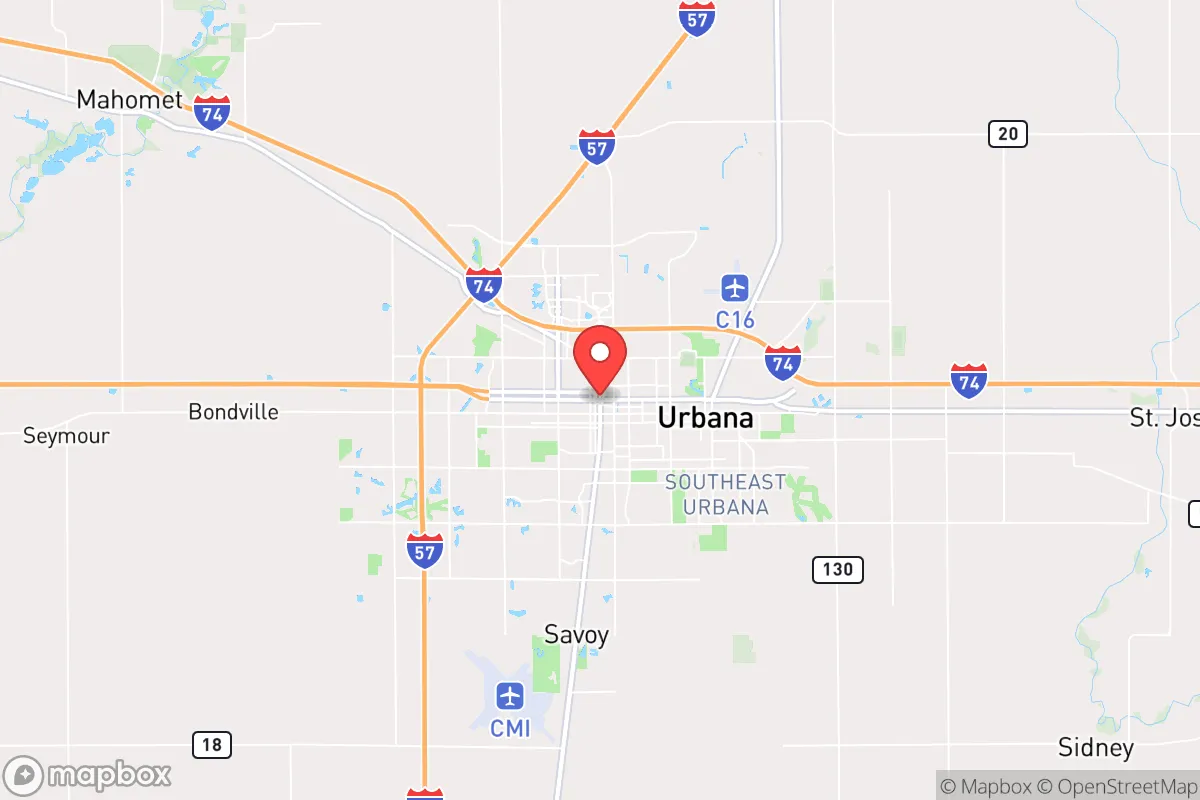
Drive just 10 miles west to Urbana, and you’ll find an even more progressive vibe—think bike lanes everywhere, stricter environmental ordinances, and a city council that’s openly pushing for rent control and sanctuary city status. Head south to Savoy or east to St. Joseph, and the political landscape flips dramatically: those towns lean conservative, with lower property tax rates, fewer zoning restrictions, and a general hands-off approach to business and personal choices. Even within Champaign County, the contrast is stark—rural towns like Mahomet and Tolono vote reliably red, while Champaign itself has become a bubble of progressive policy. The university is the engine of that shift, bringing in a transient population that votes for things like higher minimum wages and expanded social programs, often without having to live with the long-term tax consequences.
What this means for residents
For folks who value personal freedom and limited government, Champaign’s current trajectory is a growing concern. The city council has passed ordinances that restrict short-term rentals like Airbnb, imposed stricter noise and nuisance laws that can feel like overreach, and debated measures that would limit how landlords manage their own properties. Property taxes here are already among the highest in the state, and with each new social program or green initiative, the burden on homeowners and small business owners creeps higher. If you’re a gun owner, you’ll find Champaign’s local ordinances more restrictive than surrounding towns—things like firearm discharge bans and storage requirements that go beyond state law. The school district has also embraced progressive curriculum changes that some parents feel prioritize ideology over academics, which is a big reason why enrollment in private and homeschool options has ticked up in recent years.
What daily life is like for families
On the ground, the political climate affects everyday choices. You might think twice before putting up a political sign in your yard if it’s not a blue one, because social pressure from progressive neighbors can be real. Local businesses that lean conservative often keep their heads down, avoiding public stances to dodge boycotts or bad reviews. The city’s push for “equity” initiatives has led to reallocating funds from things like road maintenance to social programs, which means potholes and infrastructure issues don’t get fixed as fast as they used to. That said, Champaign still has a strong sense of community among like-minded folks—there are active conservative groups, church networks, and civic clubs where you can find your people. The key is knowing where to look and being prepared for the fact that the political pendulum here isn’t swinging back anytime soon, especially with the university’s influence only growing.

State Political ClimatePolitical Climate in Illinois
State Political AnalysisPolitical Environment in the State
Illinois has been a reliably blue state in presidential elections for decades, but its political landscape is far more fractured than the statewide vote totals suggest. The Democratic stronghold of Cook County and the Chicago metro area consistently delivers 60%+ margins, while the rest of the state—particularly downstate and the collar counties—has shifted sharply rightward over the past 20 years. The result is a state governed by a progressive supermajority in Springfield that often feels disconnected from the values of its rural and suburban residents, especially on taxes, gun rights, and parental authority.
Urban vs. rural divide
The political map of Illinois is essentially a battle between Chicago and everywhere else. Cook County alone accounts for roughly 40% of the state’s population, and its Democratic machine—anchored by the city of Chicago and inner-ring suburbs like Evanston and Oak Park—drives statewide elections. The collar counties (DuPage, Lake, Kane, Will, McHenry) were once reliably Republican but have trended purple or blue in recent cycles, particularly in areas like Naperville and Schaumburg that have seen an influx of younger, more progressive voters. Meanwhile, downstate Illinois—places like Effingham, Quincy, and Marion—votes overwhelmingly Republican, often by 70% or more. The divide is stark: drive 90 minutes southwest of Chicago and you’ll find counties like Christian and Montgomery that voted +40 for Trump in 2024, while the city itself went +50 for Biden. This urban-rural chasm means that state policy is effectively set by Chicago and its suburbs, with downstate residents feeling increasingly voiceless.
Policy environment
Illinois’s policy environment is a case study in progressive governance with real consequences for personal freedom. The state has the second-highest property tax burden in the nation, with effective rates averaging over 2% of home value—a crushing weight for families in places like Lake Forest or Springfield. The state income tax is a flat 4.95%, but there’s a permanent push for a progressive income tax that voters rejected in 2020 (the "Fair Tax" amendment). On education, Illinois mandates a comprehensive sex education curriculum that includes LGBTQ+ topics from kindergarten, and the state has eliminated parental notification requirements for abortion. Gun rights have been severely curtailed: in 2023, Governor JB Pritzker signed a ban on assault weapons and high-capacity magazines, and the state requires a Firearm Owner’s Identification (FOID) card and a 72-hour waiting period for all purchases. Election laws are among the most liberal in the country, with automatic voter registration, no-excuse mail-in voting, and same-day registration. For a conservative-leaning family, the policy environment feels like a slow but steady erosion of local control and individual liberty.
Trajectory & freedom
Illinois is becoming less free by nearly any measure, and the trend has accelerated since 2019. The assault weapons ban (HB 5471) was a major flashpoint, with over 100 counties passing resolutions of non-compliance or declaring themselves "sanctuary counties" for the Second Amendment. The state also eliminated cash bail in 2023 through the SAFE-T Act, a move that critics argue has reduced public safety and increased pretrial crime. On parental rights, Illinois passed a law in 2024 that prohibits schools from notifying parents if a child changes their gender identity or pronouns—a direct blow to family autonomy. Medical freedom took a hit with the state’s strict COVID-19 mandates, which included some of the longest-lasting school mask requirements in the Midwest. Property rights are under pressure from a growing push for rent control and tenant protections in Chicago, which could spread statewide. The only bright spot for conservatives is that the state’s fiscal crisis—a $140 billion unfunded pension liability—has so far prevented even more aggressive tax hikes, but that dam is likely to break within the decade.
Civil unrest & political movements
Illinois has seen significant civil unrest and political activism in recent years, much of it centered on the Chicago metro area. The 2020 George Floyd protests in Chicago turned violent, with looting and property damage that led to a $45 million settlement for businesses. On the right, the "We the People" movement has organized large rallies in Springfield against the assault weapons ban and the SAFE-T Act, drawing thousands of gun owners from downstate counties like Macoupin and Madison. Immigration politics are a hot-button issue: Chicago is a sanctuary city, and the state has poured millions into legal defense for undocumented immigrants, while downstate communities like Murphysboro have passed resolutions opposing sanctuary policies. Election integrity remains a concern for many conservatives, especially after the 2020 election saw widespread use of mail-in ballots and ballot drop boxes in Cook County, though no major fraud was proven. The most visible flashpoint for a new resident would likely be the constant tension between Chicago’s progressive agenda and the rest of the state’s resistance—a dynamic that plays out in everything from license plate readers to school board meetings.
Projection
Over the next 5-10 years, Illinois is likely to continue its leftward drift, driven by demographic trends in the Chicago metro area and the inability of downstate Republicans to gain a foothold in statewide races. The state’s population has been shrinking for a decade—losing over 250,000 residents since 2020—with most of the out-migration going to Indiana, Texas, and Florida. Those leaving tend to be younger families and retirees from the collar counties and downstate, which further concentrates progressive power in Cook County. The pension crisis will eventually force either a massive tax increase or a restructuring that could trigger a constitutional crisis. On the cultural front, expect more battles over parental rights, school curriculum, and gun control, with the state legislature likely to pass additional restrictions on firearms and expand transgender protections. For a conservative moving in now, the realistic expectation is that Illinois will become a more expensive, less free state over the next decade, with the political center of gravity firmly in Chicago.
For a new resident, the bottom line is this: Illinois offers world-class amenities in Chicago and its suburbs—top-tier museums, restaurants, and job opportunities—but the trade-off is a state government that is actively hostile to conservative values on taxes, guns, education, and family autonomy. If you’re moving here, you’ll want to pick your county carefully: places like Kendall County or McHenry County still offer a more conservative environment, but you’ll be fighting an uphill battle against Springfield’s progressive supermajority. The state is not unlivable for conservatives, but it requires constant vigilance and a willingness to engage in local politics to protect your freedoms. If that sounds exhausting, you might be better off looking at Indiana or Missouri. If you’re willing to fight, Illinois has plenty of like-minded neighbors—you just won’t find them in the governor’s mansion.
* Values derived from national, state, county, city and local statistics and may differ in a specific area. Last updated: 2026-05-03T20:24:07.000Z
Narrative content on this page is AI-generated and may contain mistakes. Verify any details that matter before acting on them.
ReloMaps may earn a commission from affiliate links at no extra cost to you.

