Photo: Wikipedia
Demographics of Chandler, AZ
Affluence Level in Chandler, AZ
An upper-middle-class area. Household wealth, education levels, and homeownership run ahead of national benchmarks.
People of Chandler, AZ
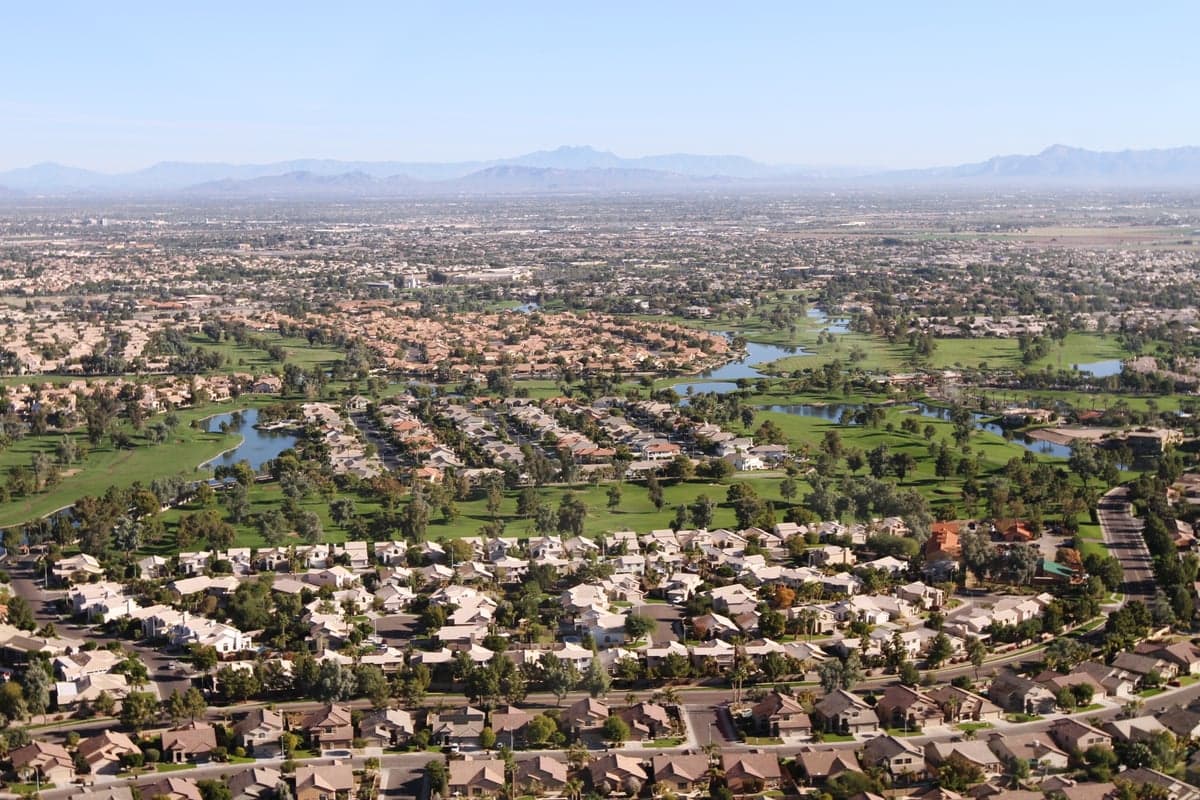
The people of Chandler, Arizona today number 278,123, forming a predominantly white-collar, family-oriented suburb with a distinctly Western character. The city is majority white (55.3%) with a substantial Hispanic minority (21.4%) and growing East/Southeast Asian (6.3%) and Indian-subcontinent (5.0%) populations, reflecting its evolution from an agricultural town to a tech and business hub. Chandler’s population is notably well-educated, with 46.8% holding a college degree, and the city maintains a reputation for safe neighborhoods, strong schools, and a relatively conservative political leaning. The city’s identity is shaped by its rapid, planned growth as a Sun Belt suburb, where newcomers are drawn by employment at major employers like Intel and the broader Phoenix metro’s lower cost of living.
How the city was settled and grew
Chandler was founded in 1912 by Dr. Alexander John Chandler, a veterinarian and land speculator who purchased 18,000 acres of former ranchland and built an irrigation system to attract farmers. The original population was overwhelmingly white and Anglo-American, drawn from the Midwest and Great Plains by the promise of irrigated agriculture—primarily cotton, alfalfa, and citrus. The historic Downtown Chandler area, centered around Arizona Avenue and Chandler Boulevard, was the original settlement, with modest homes and commercial buildings built by these early farmers and their families. A small Mexican-American community also formed early on, working as farm laborers and settling in the San Marcos area near the original San Marcos Hotel, though they were largely segregated from the white population. Through the mid-20th century, Chandler remained a small agricultural town, with the population hovering around 3,000 until the 1950s, when the post-war boom and the expansion of Phoenix began to push suburban development southward.
Modern era (post-1965)
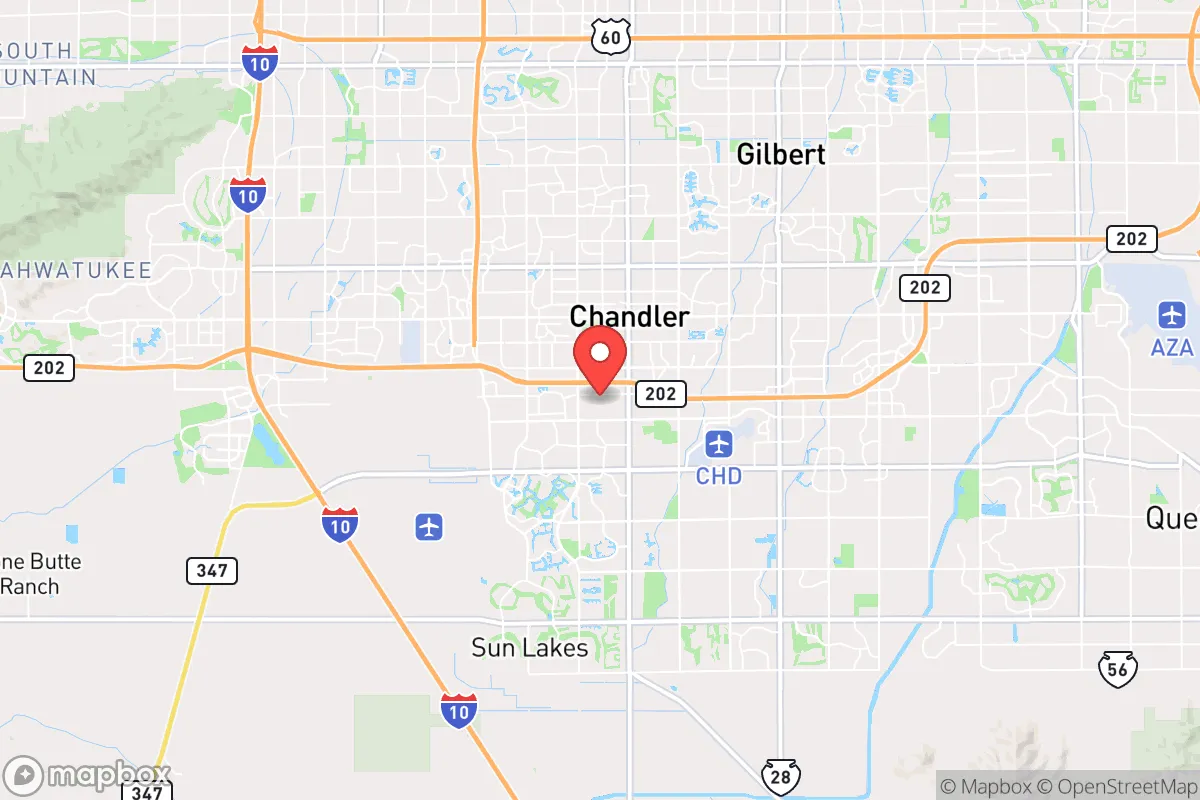
The modern transformation of Chandler began in earnest after the 1965 Immigration and Nationality Act, but the city’s explosive growth truly took off in the 1980s and 1990s with the arrival of high-tech manufacturing. Intel opened its first Chandler campus in 1980, and the subsequent wave of domestic in-migration—primarily from California, the Midwest, and the Northeast—reshaped the city’s demographics. The Ocotillo master-planned community, developed in the 1990s, became a magnet for white and Asian professionals working at Intel and other tech firms, featuring large homes, golf courses, and highly rated schools. The Sun Lakes retirement community, also developed in the 1980s, attracted a predominantly white, older population from colder states. Meanwhile, the Hispanic population grew steadily, concentrated in older neighborhoods like Chandler Heights and parts of South Chandler, where many families had roots in the agricultural era. The Asian and Indian-subcontinent populations began rising sharply after 2000, drawn by tech jobs and settling in newer subdivisions in Fulton Ranch and the Price Corridor near the Loop 101 freeway. Today, Chandler’s foreign-born population stands at 7.0%, a moderate share for a Sun Belt suburb, with the largest immigrant groups coming from Mexico, India, and East/Southeast Asia.
The future
Chandler’s population is likely to continue growing, though at a slower pace than the 1990s and 2000s, as available land for new subdivisions diminishes. The city is not homogenizing into a single cultural bloc; rather, it is developing distinct enclaves. The Ocotillo and Fulton Ranch areas will remain predominantly white and Asian, while South Chandler and older neighborhoods near downtown will retain a strong Hispanic character. The Indian-subcontinent community, concentrated near the Price Corridor, is growing rapidly and shows signs of strong professional assimilation, with high rates of homeownership and college education. The East/Southeast Asian population is also expanding, particularly among Vietnamese and Filipino families, and is likely to become more visible in Chandler’s civic and business life. The white population share is slowly declining as other groups grow, but Chandler is not experiencing the rapid racial turnover seen in some older suburbs—its diversity is being added through new construction and in-migration, not displacement. The city’s political character, broadly center-right, is likely to persist, though the growing Asian and Indian communities may introduce more moderate or libertarian-leaning voters.
For someone moving to Chandler now, the city offers a stable, family-oriented environment with strong schools and a diversified economy. The population is becoming more diverse but remains largely middle-class and professional, with clear neighborhood distinctions that allow newcomers to choose a community that matches their cultural and lifestyle preferences. Chandler is not a melting pot in the traditional sense, but a collection of well-defined, prosperous enclaves that together form a cohesive, low-crime suburb.

* Values derived from national, state, county, city and local statistics and may differ in a specific area. Last updated: 2026-04-24T23:56:10.000Z
Narrative content on this page is AI-generated and may contain mistakes. Verify any details that matter before acting on them.
ReloMaps may earn a commission from affiliate links at no extra cost to you.

