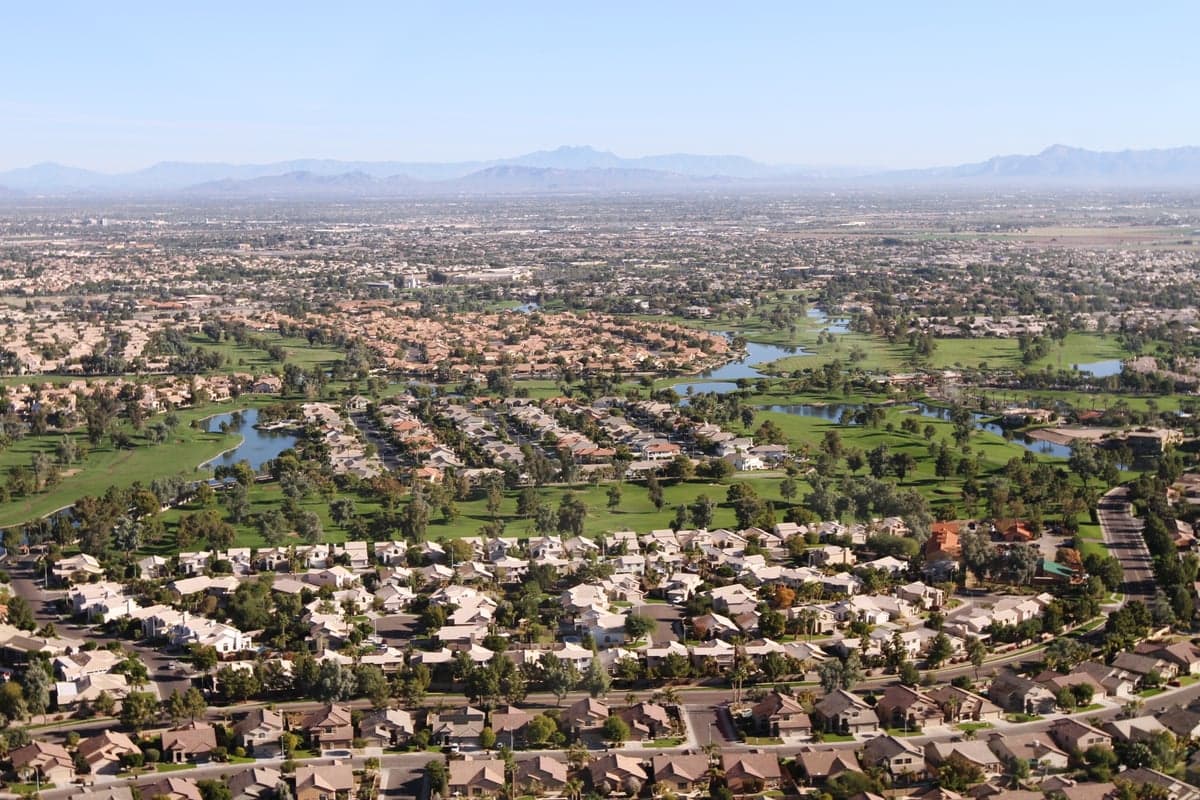
Photo: Wikipedia
Political ClimatePolitical Climate in Chandler, AZ
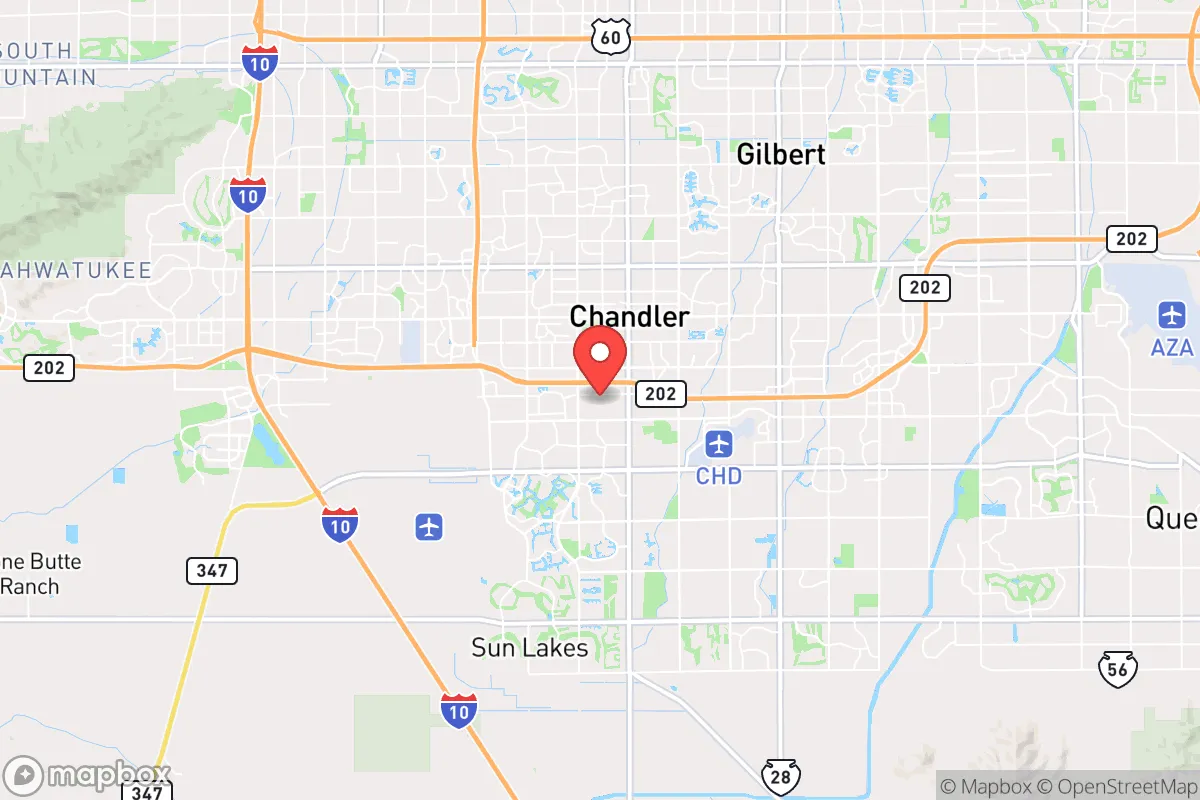
District shown is the primary district for this city’s centroid. Cities may span multiple districts.
Local Political AnalysisPolitical Analysis of Chandler, AZ
Chandler, Arizona, has long been a solidly conservative community, and its Cook Partisan Voting Index of R+10 reflects that deep-rooted lean. For decades, this was a place where folks trusted local leadership to keep government small, taxes low, and personal freedoms front and center. But if you’ve lived here as long as I have, you’ve seen the winds start to shift—especially in the last five to eight years. The influx of new residents from blue states has brought a noticeable undercurrent of progressive ideology, and while the city council still leans right, the cultural and policy battles are getting louder. It’s not the Chandler I grew up in, and that’s something worth paying attention to.
How it compares
Drive ten minutes north to Tempe or Mesa, and you’ll feel the difference fast. Tempe has embraced a much more progressive agenda, with higher taxes and a city council that’s openly pushing green-energy mandates and social-justice initiatives. Mesa, while still conservative in parts, has seen its own wave of left-leaning activism, especially around the downtown area. Chandler, by contrast, has held the line better—our property taxes are lower, and zoning laws haven’t been rewritten to favor dense, government-subsidized housing projects. But compare us to Gilbert or Queen Creek to the southeast, and you’ll see Chandler is actually the more moderate of the bunch. Gilbert’s R+12 PVI and its aggressive push to keep school boards conservative show a community that’s fighting harder to preserve traditional values. Chandler’s leadership, meanwhile, has been more willing to compromise—sometimes too willing, in my book. The surrounding towns like Sun Lakes and Ahwatukee (technically Phoenix but a world apart) lean older and more reliably Republican, but they’re not immune to the same demographic pressures.
What this means for residents
For the average Chandlerite, the political climate translates directly into daily life. You’ll notice it in the school board meetings, where debates over curriculum and parental rights have gotten heated. The city’s police department remains well-funded and respected, but there’s been quiet pressure from activist groups to “reform” things that don’t need fixing. On the plus side, Chandler still has a strong business-friendly environment—Intel and other major employers keep the tax base healthy, and there’s no city income tax. But the creeping expansion of HOA regulations and local ordinances on everything from short-term rentals to water usage feels like a slow erosion of personal choice. If you value the freedom to run your household without a bureaucrat’s permission, you’ll want to keep a close eye on who’s running for city council. The next few election cycles could determine whether Chandler stays a place where conservative principles hold or slides into the kind of overreach we’re seeing in Phoenix proper.
One of the biggest cultural distinctions here is the balance between growth and preservation. Chandler has exploded in population—over 280,000 people now—and with that comes pressure to adopt the kind of progressive policies that dominate larger cities. The city’s decision to expand light rail connections to Phoenix and Tempe is a sore spot for many long-time residents, who see it as a Trojan horse for higher-density development and the social problems that follow. On the other hand, Chandler still has a strong sense of community, with events like the Ostrich Festival and a downtown that hasn’t been overrun by chain stores. The real test will be whether the next generation of leaders respects the individual liberties that made this area great, or if they fall in line with the national trend toward government control. For now, Chandler is a battleground—and if you’re a conservative who values freedom, you’ll want to stay engaged.

State Political ClimatePolitical Climate in Arizona
State Political AnalysisPolitical Environment in the State
Arizona has transformed from a reliably Republican stronghold into a true battleground state over the past two decades, currently leaning slightly Republican but with a razor-thin margin that flips with each election cycle. The state’s political coalition is a volatile mix of long-time conservative retirees, a growing Latino population, moderate suburbanites in Maricopa County, and a surge of left-leaning transplants from California and the Midwest. Over the last 10-20 years, the trajectory has been a steady leftward drift from solid red to purple, with Democrats winning the presidential vote in 2020 for the first time since 1996 and flipping both U.S. Senate seats by 2022, though Republicans still hold the governorship and a narrow legislative majority as of 2026.
Urban vs. rural divide
The political map of Arizona is a classic tale of two landscapes. The Phoenix metro area, anchored by Phoenix, Mesa, and Chandler, is the epicenter of the state’s swing dynamics. Maricopa County alone holds over 60% of the state’s population, and its suburban voters—especially in Chandler and Gilbert—have shifted leftward in recent cycles, driven by college-educated professionals and tech workers. Meanwhile, Tucson in Pima County is a Democratic stronghold, reliably blue but not growing as fast as the Phoenix suburbs. The rural vastness tells a different story: counties like Mohave (Kingman, Lake Havasu City), Yavapai (Prescott, Sedona’s outskirts), and Pinal (Casa Grande) are deeply red, often voting 65-75% Republican. The Flagstaff area in Coconino County is a blue island in the north, driven by Northern Arizona University and a strong environmentalist presence. The divide isn’t just urban vs. rural—it’s also suburban vs. exurban, with places like Queen Creek and Maricopa (the city) leaning conservative but showing signs of purple creep as new housing developments bring in diverse newcomers.
Policy environment
Arizona’s policy environment is a mixed bag that still leans conservative on many fronts but has seen notable progressive inroads. The state has a flat income tax rate of 2.5% as of 2023, down from 4.5% in 2020, thanks to Republican-led tax cuts—a clear win for fiscal conservatives. Property taxes are relatively low, averaging about 0.62% of home value, and there’s no estate tax. However, the sales tax is moderately high at 5.6% state rate, with local add-ons pushing it to 8-10% in some cities. On education, Arizona was a pioneer in school choice with the Empowerment Scholarship Account program, expanded in 2022 to cover all students—a massive win for parental rights. But the state also passed a universal school voucher expansion that some conservatives worry could lead to future regulation. Healthcare is a sore spot: the state expanded Medicaid under the Affordable Care Act in 2013, and efforts to repeal it have failed. Election laws have been a flashpoint—the 2020 election audit in Maricopa County fueled national controversy, and subsequent laws like SB 1260 (2022) tightened voter ID requirements and restricted ballot drop boxes, though a 2024 law expanded early voting access again. Overall, Arizona is freer than California or New York but less free than Texas or Florida on key metrics like gun laws and regulatory burden.
Trajectory & freedom
On the freedom front, Arizona is a state in flux, with recent legislation both expanding and contracting personal liberty. The good news: in 2021, the state passed a constitutional carry law (HB 2560), allowing law-abiding adults to carry a concealed firearm without a permit—a strong affirmation of Second Amendment rights. In 2022, the legislature passed a Parents’ Bill of Rights (SB 1456), requiring schools to notify parents about curriculum changes and medical services, a direct response to COVID-era overreach. Property rights got a boost with the 2022 repeal of the state’s “dark store” tax loophole for big-box retailers, but the bigger story is the 2023 law limiting municipal zoning authority to ban short-term rentals like Airbnb—a win for property owners. On the concerning side, the state’s 2024 expansion of early voting and mail-in ballot access (HB 2786) has conservatives worried about election integrity, despite the 2020 audit’s inconclusive findings. Medical autonomy took a hit with the 2024 passage of a ballot measure enshrining abortion access up to fetal viability in the state constitution, overriding a 2022 law that had banned most abortions after 15 weeks. This was a clear loss for pro-life advocates. The trajectory is mixed: gun rights and school choice are solid, but the abortion measure and election law changes signal a slow leftward creep that could accelerate if in-migration patterns continue.
Civil unrest & political movements
Arizona has been a hotbed of political activism and occasional unrest, particularly around immigration and election integrity. The state’s border with Mexico—especially near Nogales and Yuma—has been a flashpoint for decades. In 2024, the state legislature passed the controversial SB 1160, which requires local law enforcement to cooperate with federal immigration authorities, a response to the Biden administration’s border policies. This has sparked protests from immigrant rights groups in Tucson and Phoenix, but also strong support from rural conservatives. The 2020 election audit in Maricopa County drew national attention, with dueling protests from “Stop the Steal” activists and anti-Trump groups outside the state capitol in Phoenix. More recently, in 2025, a series of school board meetings in Gilbert and Chandler erupted over critical race theory and LGBTQ curriculum, with parents on both sides clashing—a sign that the culture war is alive and well in the suburbs. The “sanctuary city” debate is ongoing: Phoenix and Tucson have resisted full cooperation with ICE, while the state legislature has passed preemption laws to force compliance. A new resident would notice the heavy presence of political signage, especially in rural areas, and the frequency of ballot measure campaigns—Arizona is one of the most initiative-happy states in the country.
Projection
Looking ahead 5-10 years, Arizona is likely to continue its slow drift toward purple, with a real chance of becoming a blue-leaning state by 2032 if current demographic trends hold. The key driver is in-migration: roughly 100,000 new residents arrive each year, many from California and other blue states, and they tend to bring their voting habits with them. The Phoenix suburbs—especially Chandler, Gilbert, and Mesa—are becoming denser and more diverse, with younger families and tech workers who lean moderate to liberal on social issues. Rural counties like Mohave and Yavapai will remain deeply red, but their population growth is slower. The Latino vote, which made up about 25% of the electorate in 2024, is not monolithic—many are conservative on social issues—but younger Latino voters trend Democratic. If the state’s abortion rights measure and expanded voting access stick, they could lock in a leftward tilt. However, the Republican legislature’s ability to pass tax cuts and school choice expansions could keep the state competitive for conservatives. For someone moving in now, expect a state that will be politically contested every cycle, with no guaranteed outcome—a far cry from the solid red Arizona of the 1990s.
For a new resident, the bottom line is this: Arizona offers a relatively low-tax, gun-friendly, school-choice-rich environment that still feels more free than most coastal states, but you’ll be living in a political battleground where every election matters and the culture war is fought in your local school board and city council. If you’re a conservative, you’ll find strong allies in rural areas and exurbs like Queen Creek or Prescott, but you’ll need to stay engaged to prevent the leftward drift from accelerating. If you value personal freedom and limited government, Arizona is still a good bet—just don’t expect it to stay that way without effort.
* Values derived from national, state, county, city and local statistics and may differ in a specific area. Last updated: 2026-04-24T23:56:10.000Z
Narrative content on this page is AI-generated and may contain mistakes. Verify any details that matter before acting on them.
ReloMaps may earn a commission from affiliate links at no extra cost to you.

