Photo: Wikipedia
Personal Sovereignty in Chandler, AZ
Viable for self-reliance. Generally workable, though some barriers may limit total independence.
What does Personal Sovereignty tell us?
Personal Sovereignty measures your capacity for self-reliance and independence with minimal government friction. Higher scores mean fewer barriers between you and the way you want to live... but it assumes you have the space you need and good neighbors.
What does this tell us?
Personal Sovereignty measures your capacity for self-reliance and independence with minimal government friction. Higher scores mean fewer barriers between you and the way you want to live... but it assumes you have the space you need and good neighbors.
State Policy
Energy independence: Importer (20% of energy produced in-state)
Personal Liberty
Homesteading

Personal Liberty Analysis
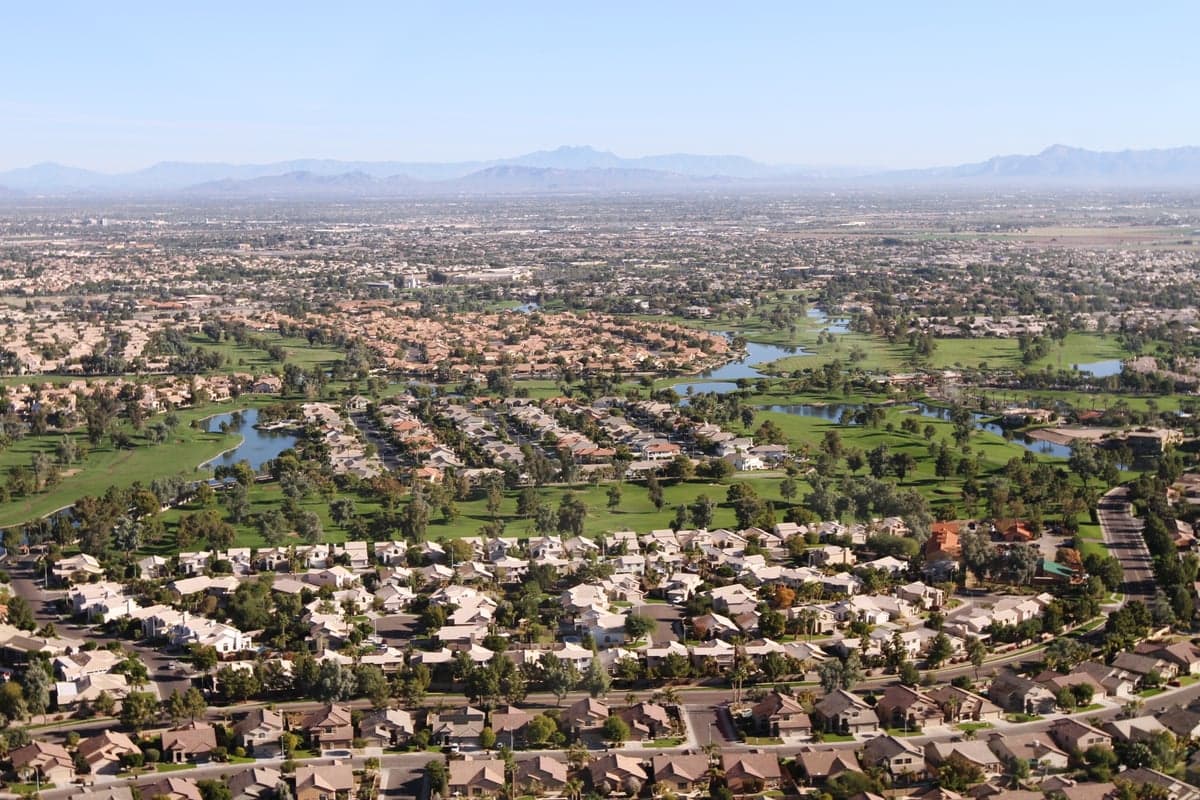
Chandler, Arizona, offers a notably high degree of personal sovereignty compared to many urban centers in the United States, particularly for those who prioritize minimal government interference in daily life. As a city within Maricopa County, it operates under Arizona’s strong preemption laws, which generally prevent local ordinances from infringing on state-guaranteed rights related to firearms, property use, and parental authority. For the survivalist or prepper, Chandler presents a strategic balance: it is a modern, economically robust city of over 280,000 residents, yet it sits within a state that consistently ranks among the most liberty-friendly in the nation. The key question for those considering relocation is whether the suburban infrastructure and HOA-heavy neighborhoods of Chandler can accommodate a self-reliant lifestyle, or if the city’s growth has eroded the autonomy that makes Arizona attractive.
Tax burden and regulatory posture: How Arizona’s policies protect your wallet and choices
Arizona’s state-level tax structure is a significant draw for those seeking to keep more of their earnings and reduce government dependency. The state has a flat income tax rate of 2.5% as of 2023, one of the lowest in the country, and there is no state-level tax on Social Security benefits. For a single individual or family in Chandler, this means a lower overall tax burden compared to states like California or Illinois, where progressive rates and high property taxes can consume a large portion of income. Property taxes in Chandler are also relatively modest, with an effective rate around 0.62% of assessed home value, well below the national average. This regulatory posture extends to business and occupational licensing; Arizona is a right-to-work state with minimal red tape for starting a small business or operating a home-based enterprise. For the prepper, this translates to fewer bureaucratic hurdles when trying to establish a side hustle, a repair shop, or a small-scale food production operation on your property. However, it is critical to note that Chandler is a planned suburban city with active homeowners’ associations (HOAs) governing many neighborhoods. These HOAs can impose strict rules on parking, landscaping, and exterior modifications, which may conflict with a desire for absolute property autonomy. The city itself, however, generally defers to state law on regulatory matters, meaning your primary friction point will likely be your HOA, not the municipal government.
Self-defense and gun law specifics: What Chandler allows for armed preparedness
Arizona is a constitutional carry state, meaning that as of 2010, any adult legally allowed to possess a firearm can carry it openly or concealed without a permit. Chandler fully respects this state preemption, and local law enforcement does not enforce any additional restrictions beyond state law. For the survivalist, this is a foundational liberty: you can carry a sidearm for personal protection without government permission, and you can keep a rifle or shotgun in your vehicle or home without registration. There is no state-level magazine capacity limit, no assault weapon ban, and no waiting period for firearm purchases. Private sales between individuals are also legal without a background check, though federal law applies to licensed dealers. The Castle Doctrine is strong in Arizona, with no duty to retreat in any place where you are lawfully present, and the use of deadly force is presumed justified if an intruder has unlawfully entered your home or occupied vehicle. For parents, this means you can legally train your children in firearm safety and marksmanship on your own property, subject to local noise ordinances. The only notable restriction is that carrying a firearm into a posted federal building, a K-12 school (without a valid permit), or a secure area of an airport remains illegal. Overall, Chandler provides a permissive environment for armed self-defense, consistent with the state’s libertarian-leaning culture.
Self-reliance and homesteading viability: Lot sizes, zoning, and off-grid feasibility
This is where Chandler presents the most significant trade-off for the serious prepper. The city is largely built out with suburban subdivisions on standard lots of 6,000 to 10,000 square feet (roughly 0.14 to 0.23 acres). This is not rural homesteading territory. Zoning regulations in Chandler are typical of a modern suburb: keeping livestock such as chickens is generally allowed on single-family lots, but roosters are prohibited, and larger animals like goats or pigs require a special use permit or are outright banned in most residential zones. Growing a substantial vegetable garden is feasible in a backyard, but water rights and usage are tightly controlled by the city and the Central Arizona Project. Off-grid living—meaning no connection to municipal water, sewer, or electricity—is effectively impossible within Chandler city limits. The city requires all new construction to connect to public utilities, and existing homes cannot legally disconnect. For those seeking true self-reliance, Chandler is best viewed as a base of operations: a place to earn income, store supplies, and maintain a low profile, while a secondary rural property in places like Pinal County (e.g., Casa Grande or Eloy) serves as the retreat location. The city’s climate—over 100°F for four months of the year—also makes passive solar or off-grid water collection challenging without significant investment. If your priority is a fully sovereign homestead, Chandler is not the answer; if you want a comfortable suburban home with strong legal protections and proximity to infrastructure, it works well.
Personal liberties: Parental rights, medical autonomy, speech, and property
Arizona has been a battleground for parental rights, and the state legislature has passed several laws reinforcing a parent’s authority over their children’s education and medical decisions. In Chandler, this means parents can opt their children out of any curriculum or activity they find objectionable, including sex education or certain health screenings, without penalty. The state also has a robust school choice program, including Empowerment Scholarship Accounts (ESAs), which allow parents to use public education funds for private school, homeschooling, or microschooling. For the conservative parent, this is a powerful tool to insulate your children from government overreach in education. Medical autonomy is more nuanced: Arizona does not have a state-level vaccine mandate for adults, and there is no forced medical treatment law for competent adults, but the state did have a controversial ban on mask mandates in schools during the pandemic, which was later struck down by a court. The general trend is toward individual choice, but local school boards in Chandler have occasionally pushed back. Free speech is strongly protected under the Arizona Constitution, and Chandler has not enacted any local ordinances that restrict political speech, protest, or assembly beyond standard time-place-manner regulations. Property rights are robust, with strong eminent domain protections and no statewide rent control. However, as noted, HOAs can impose significant restrictions on property use, so buyers should carefully review CC&Rs before purchasing. Overall, Chandler offers a high degree of personal liberty in the areas that matter most to a conservative or libertarian-leaning individual, with the primary caveat being the suburban HOA environment.
In the broader context of American cities, Chandler ranks as a strong but not extreme choice for personal sovereignty. It is far more liberty-friendly than any major city in California, New York, or Illinois, where taxes are higher, gun rights are restricted, and parental authority is often subordinated to state mandates. Compared to rural Arizona towns like Snowflake or Show Low, Chandler offers less physical autonomy but far more economic opportunity and access to resources. For the survivalist or prepper who values a low-tax, high-freedom environment but needs a job in tech, aerospace, or healthcare, Chandler is arguably one of the best suburban options in the Southwest. The key is to enter with eyes open: buy a home with a weak HOA or none at all, budget for the water costs of a desert climate, and accept that true off-grid independence will require a second property. If you can navigate those constraints, Chandler provides a legal and cultural framework that respects your right to live as you see fit, without the government breathing down your neck.

* Values derived from national, state, county, city and local statistics and may differ in a specific area. Last updated: 2026-04-24T23:56:10.000Z
Narrative content on this page is AI-generated and may contain mistakes. Verify any details that matter before acting on them.
ReloMaps may earn a commission from affiliate links at no extra cost to you.

