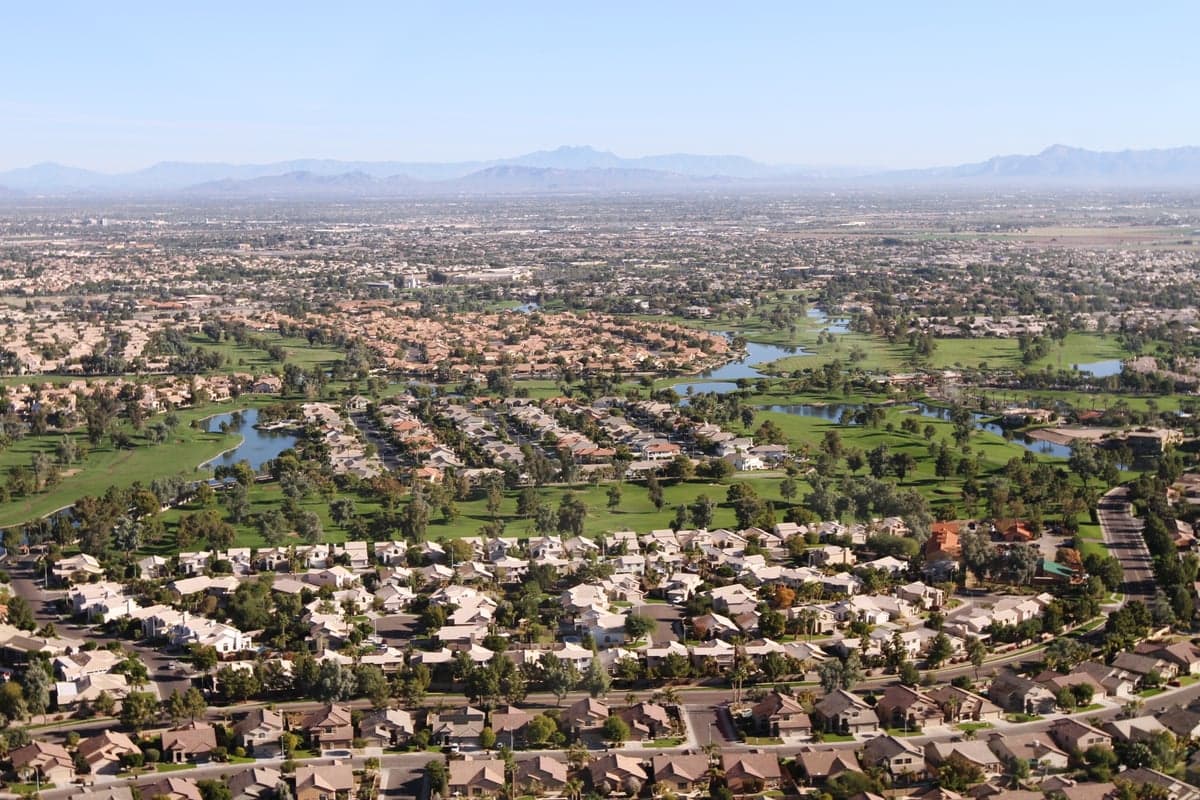
Photo: Wikipedia
Strategic Assessment of Chandler, AZ
Multiple tactical vulnerabilities. Population density, target proximity, or disaster risk are likely compounding. A retreat property and exit planning is required.
What does the Strategic Assessment tell us?
Our Strategic Assessment grades tactical survivability of an area. Major population centers, military targets, fallout zones, natural disasters, and border exposure all drive risk — lower exposure means a more defensible position in a crisis.
This is heavily inspired by Joel Skousen's Strategic Relocation book. Highly recommended you checkout the book ($)What does this tell us?
Our Strategic Assessment grades tactical survivability of an area. Major population centers, military targets, fallout zones, natural disasters, and border exposure all drive risk — lower exposure means a more defensible position in a crisis.
This is heavily inspired by Joel Skousen's Strategic Relocation book. Highly recommended you checkout the book ($)Strategic Pillars

Key Distances
Regional Safe Places
Below is our recommended "safe zones" in Arizona and the surrounding area based on our strategic heuristics. For most people, it's unrealistic to live in a “safe zone” full-time due to work, family or other personal reasons. They tend to be more rural. However, many of these areas are perfect for second homes and retreat properties that double as a vacation home or even a short-term rental.
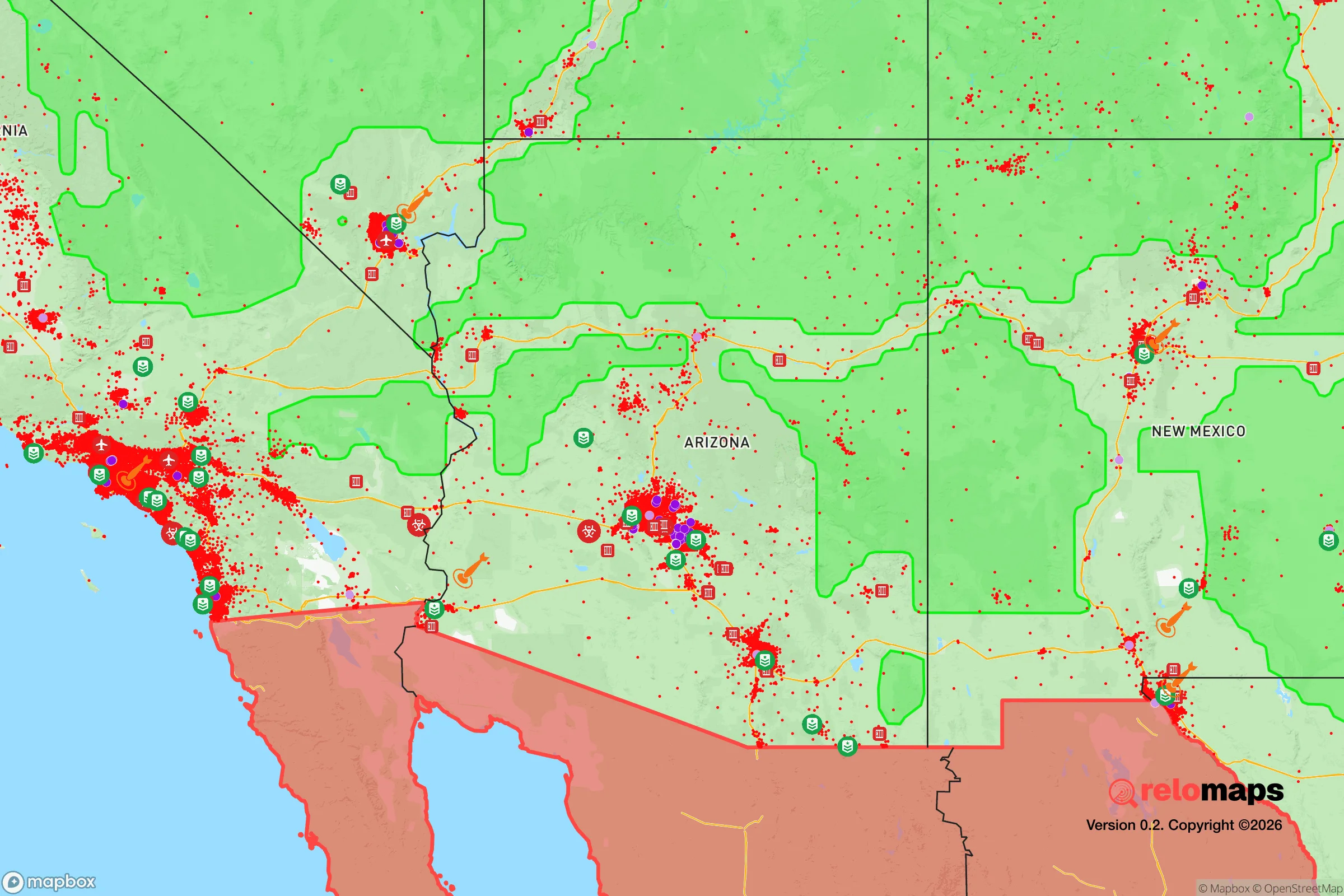
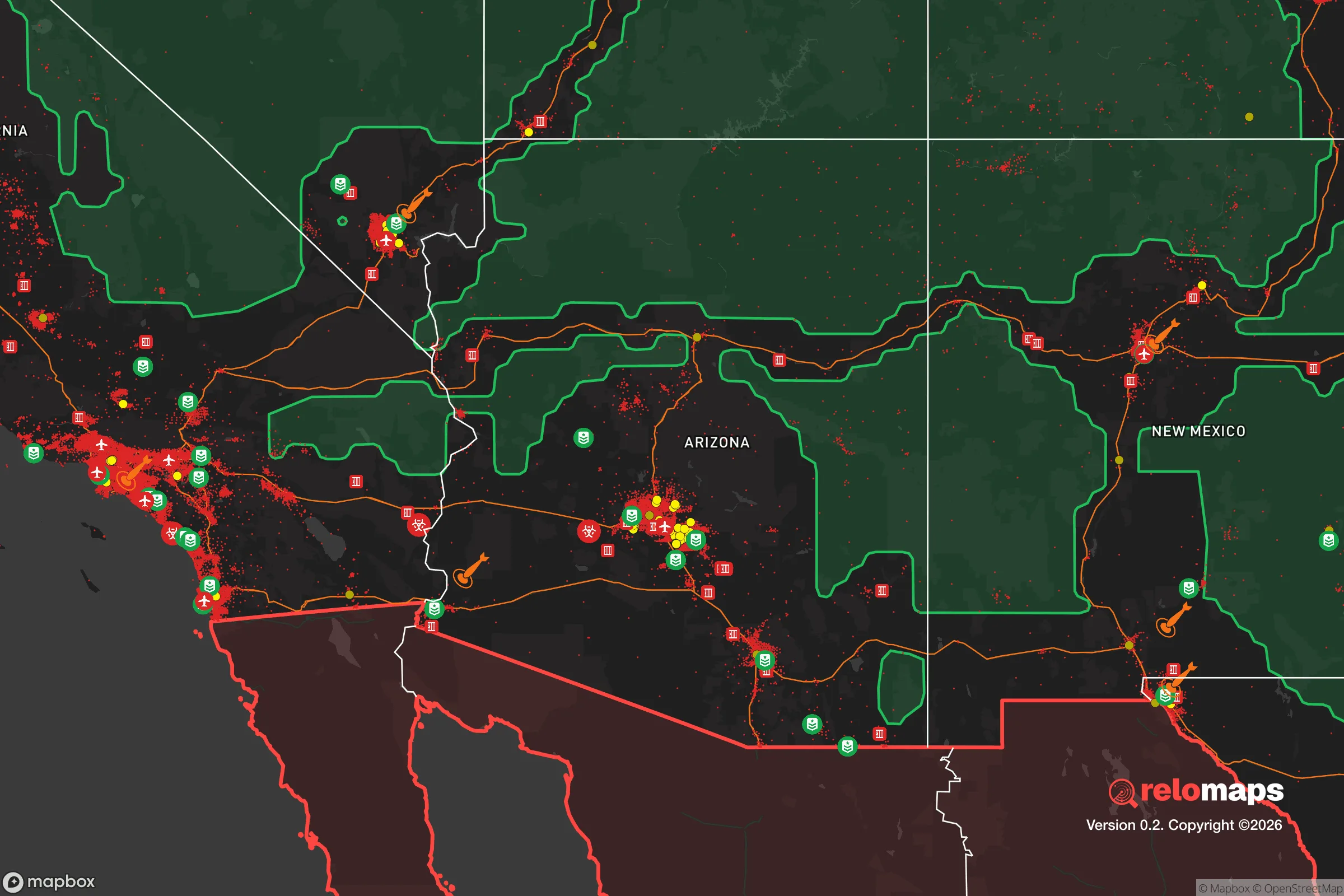


Important Note: For informational purposes only. This does not mean nothing bad ever happens in the green zones. Please use common sense. This is based on public data and modeled with AI. We tried to take a conservative approach but mistakes happen. We update this regularly as new information becomes available.
Solar Generator Recommendations
Backup power matters more here than in safer locations. We've picked three solar generators across budgets and capacity tiers — start with the budget unit if you only need a few essentials, or step up if you want to run a fridge and HVAC for days at a time.

Jackery Portable Power Station Explorer 300
Budget OptionPower on the Go: Weighing only 11 lbs, it's convenient to set up and store with book-sized foldable solar panels

BLUETTI Portable Power Station AC180
Designed for both indoor and outdoor scenarios, AC180 is highly capable as it has a robost capacity and continuous output power.

EF ECOFLOW DELTA Pro Ultra Power Station
Upgraded PickEcoFlow DELTA Pro Ultra is a whole-home energy system designed to grow with your family. Integrated with the Smart Home Panel 2, it scales to meet your evolving energy needs — keeping your home powered, intelligent, and secure through every stage of life.
We earn a commission, at no additional cost to you.
Strategic Assessment Analysis
Chandler, Arizona, presents a complex strategic picture for the conservative prepper or survivalist. On one hand, its explosive growth and deep integration into the Phoenix metroplex create significant vulnerabilities in a crisis. On the other, its position in the Sonoran Desert, away from the immediate blast zones of major military or nuclear targets, offers a unique set of trade-offs that demand careful, sober assessment. For the single individual or family prioritizing long-term resilience, Chandler is not a bug-out location but a potential "gray man" staging ground—provided you understand its specific risks and assets.
Geographic position and natural advantages for long-term survival
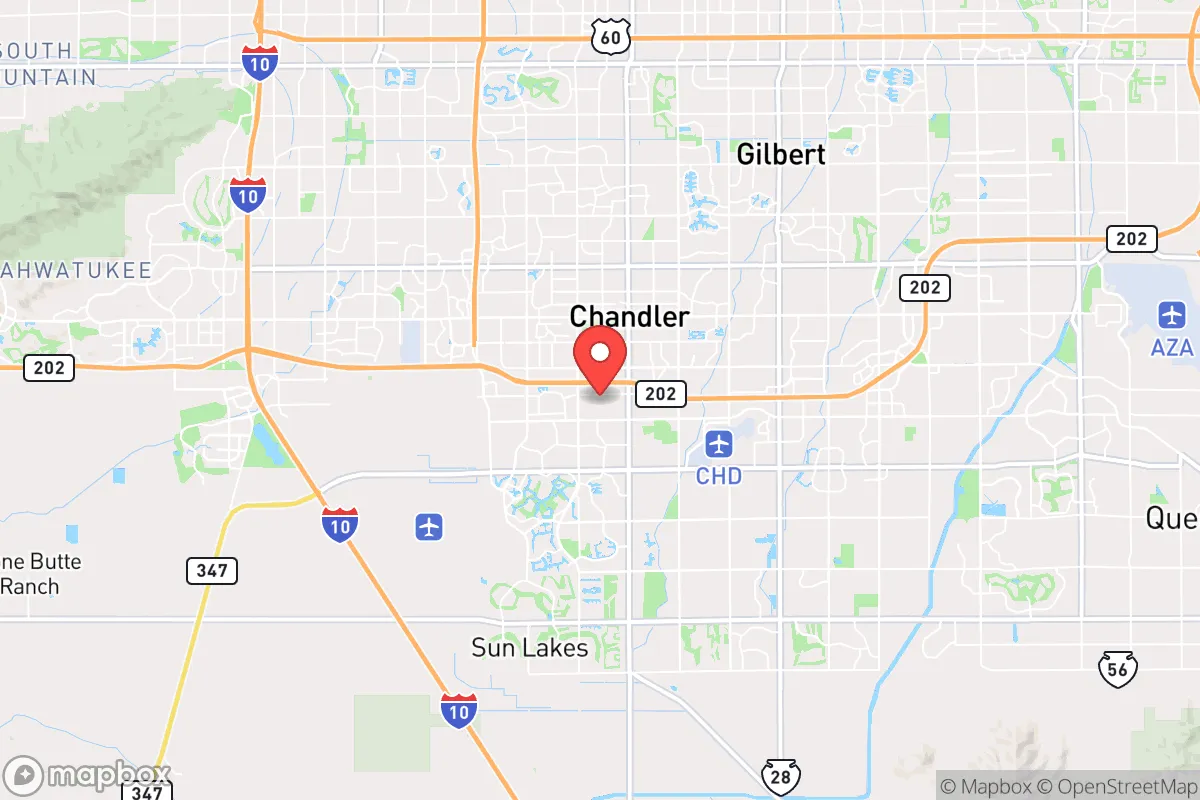
Chandler sits at roughly 1,200 feet elevation on the southern edge of the Phoenix metropolitan area, a location that offers a few genuine natural advantages. The most significant is its distance from the primary nuclear and military targets that would be prioritized in a major conflict. Unlike Tucson (home to Davis-Monthan Air Force Base) or the area around Luke Air Force Base west of Phoenix, Chandler is not in the immediate shadow of a high-value strategic asset. The nearest major military installation is the Gila Bend Air Force Auxiliary Field, roughly 60 miles southwest—a secondary target at best. The Salt River Project's Roosevelt Dam and the Palo Verde Nuclear Generating Station (the largest nuclear plant in the nation by output) are both within 50 miles, but neither sits directly in Chandler's backyard. This geographic buffer means a first-strike scenario would likely leave Chandler physically intact, though the electromagnetic pulse (EMP) effects from a high-altitude detonation could still cripple electronics across the entire region.
The desert environment itself is a double-edged sword. The arid climate means no hurricanes, minimal flooding (outside of monsoon washes), and very low risk of earthquakes or wildfires compared to California or the Pacific Northwest. The lack of dense tree cover also limits the spread of fire and provides clear sightlines for security. However, the same aridity makes water the single most critical vulnerability. The region's water supply depends entirely on the Colorado River (via the Central Arizona Project) and the Salt-Verde river system. In a prolonged grid-down scenario, municipal water delivery would fail within days. The natural advantage here is that Chandler's flat, open terrain and low humidity make it feasible to store water long-term without mold or rapid degradation—a practical consideration for any prepper.
Risks, exposures, and proximity to fallout-relevant landmarks
The most pressing risk for Chandler is its location within the Phoenix metroplex, home to over 4.8 million people. In a mass casualty event—whether from a pandemic, economic collapse, or civil unrest—the population density of the East Valley becomes a liability. Chandler itself has over 280,000 residents, and the surrounding cities of Mesa, Gilbert, and Tempe add another 1.2 million within a 15-mile radius. The primary evacuation routes (I-10, US 60, and Loop 202) are notorious for gridlock even on a normal weekday. In a crisis, these roads would become impassable within hours. The Sky Harbor International Airport, just 20 miles northwest, is a potential target for terrorism or secondary effects from a broader conflict, though it is not a primary nuclear target.
Fallout exposure is a nuanced concern. The prevailing winds in central Arizona generally blow from west to east, meaning fallout from a strike on Palo Verde (west of Phoenix) or Luke Air Force Base (northwest) could drift toward Chandler depending on the season and weather patterns. The Gila River Indian Community and the extensive agricultural land south of Chandler provide some buffer, but the risk is real. More immediate is the proximity to the Intel Corporation's Ocotillo campus, a massive semiconductor fabrication facility. While not a military target, such a facility could be a secondary target in a cyber or kinetic attack aimed at crippling US tech infrastructure. The resulting chemical release or fire could create a localized hazard zone. For the survivalist, the takeaway is clear: Chandler is not a safe zone in a major conflict, but it is far safer than living within five miles of a military base or major port.
Practical resilience for a relocator: food, water, energy, and defensibility
For the individual or family looking to establish a resilient household, Chandler offers a mixed bag. Water is the non-negotiable bottleneck. The city's municipal water comes from a blend of surface water (Salt and Verde rivers) and groundwater. In a long-term grid-down scenario, the electric pumps that move this water would fail. A prepper here must have a minimum of two weeks of stored water per person—ideally 30 days—and a plan for rainwater catchment or a deep well. The good news is that the water table in the Chandler area is relatively high (around 200-300 feet), and many older homes have private wells. Newer subdivisions, however, are entirely dependent on municipal supply. If you're buying, prioritize a property with an existing well or the space to drill one.
Food security is more achievable. The agricultural land south of Chandler, particularly around the Gila River Valley, produces cotton, alfalfa, and some vegetables. The local farmers' markets and the presence of the Arizona State University Polytechnic campus in nearby Mesa mean there is a growing network of small-scale growers. For the serious prepper, establishing a relationship with a local farmer or joining a community-supported agriculture (CSA) program before a crisis is a smart move. Energy resilience is straightforward: Chandler averages 300+ days of sunshine per year. A solar panel array with battery storage (like Tesla Powerwall or a DIY lithium setup) can keep a home running indefinitely, provided you have the means to secure it from looters. The city's building codes are generally permissive for rooftop solar, and net metering is available through Salt River Project or Arizona Public Service.
Defensibility is the weak point. Chandler is a sprawling suburban grid with few natural chokepoints. The flat terrain and wide streets make it easy for vehicles to move, but also easy for hostile groups to approach. A single-family home in a typical subdivision offers limited tactical advantage. The better option is a property on the southern or eastern fringe, near the agricultural buffer zones, where you have more space and fewer neighbors. The presence of the Gila River Indian Community to the south provides a de facto barrier—it is sovereign land with its own law enforcement, and in a crisis, it would likely be sealed off. That boundary could serve as a natural defensive line for those living just north of it.
The overall strategic picture for Chandler is one of calculated risk. It is not a remote retreat, nor is it a hardened bunker location. What it offers is a relatively low-profile environment with good solar potential, a manageable water situation if you plan ahead, and a position that is unlikely to be a primary target in a major conflict. The biggest threats are population density and the fragility of the regional supply chain. For the conservative prepper who wants to maintain a normal suburban life while building serious resilience, Chandler is viable—but only if you treat it as a base of operations, not a final redoubt. You need a secondary bug-out location farther into the desert or mountains (e.g., the Tonto National Forest or the area around Superior) for a true SHTF scenario. Chandler works as a place to live, work, and prepare, but the moment the grid goes down and the city becomes a pressure cooker, you need to be ready to move. Plan accordingly.

* Values derived from national, state, county, city and local statistics and may differ in a specific area. Last updated: 2026-04-24T23:56:10.000Z
Narrative content on this page is AI-generated and may contain mistakes. Verify any details that matter before acting on them.
ReloMaps may earn a commission from affiliate links at no extra cost to you.

