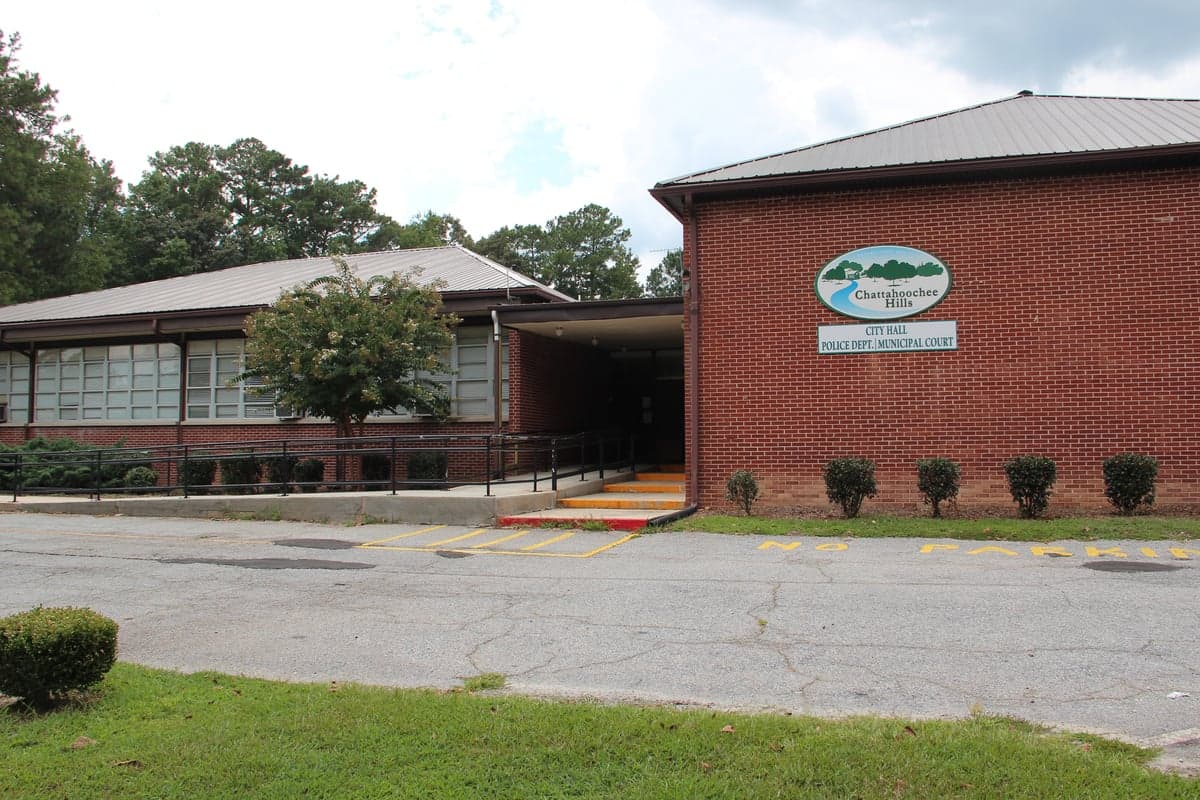
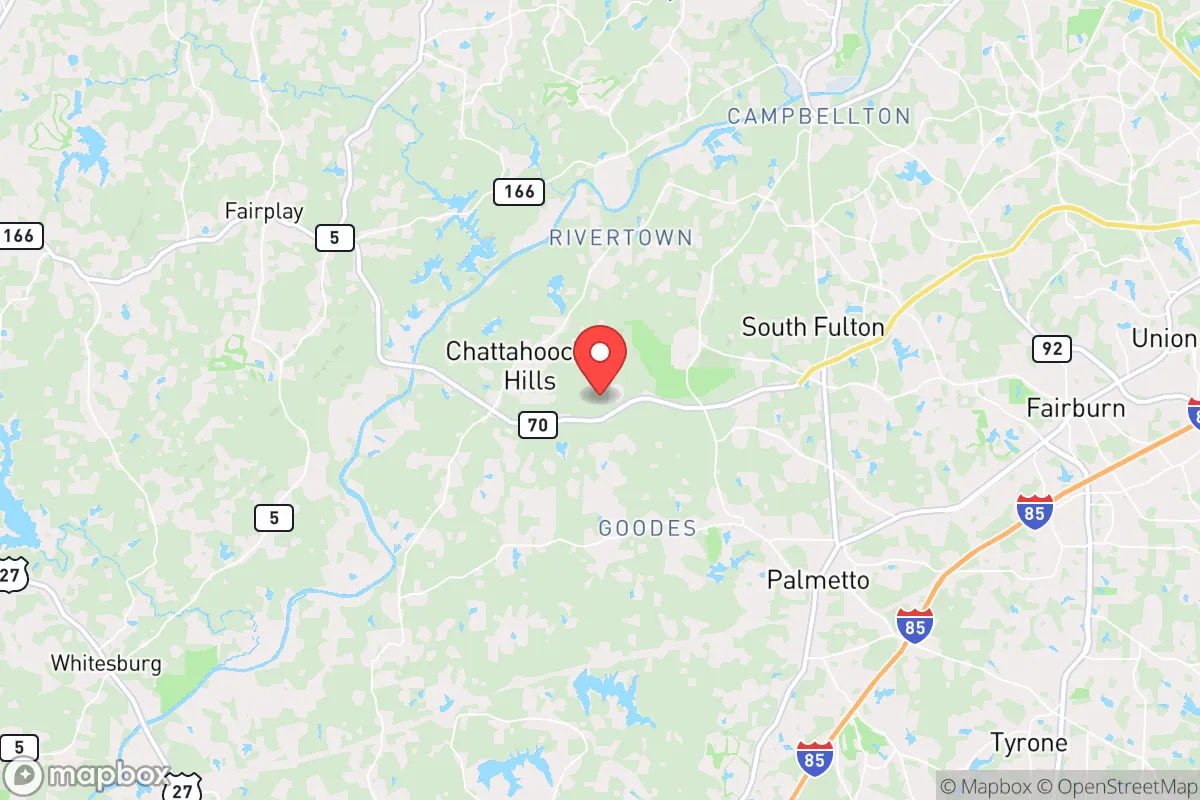
Photo: Wikipedia
Demographics of Chattahoochee Hills, GA
Affluence Level in Chattahoochee Hills, GA
An upper-middle-class area. Household wealth, education levels, and homeownership run ahead of national benchmarks.
People of Chattahoochee Hills, GA
The people of Chattahoochee Hills, Georgia, today form a small, predominantly native-born population of 3,537 that is notably more racially diverse than many of its rural Fulton County neighbors, with a 55.7% white, 28.7% Black, and 11.8% Hispanic composition. The city’s character is defined by its low density—roughly 50 people per square mile across 51 square miles—and a strong identity rooted in equestrian estates, conservation-minded development, and a deliberate resistance to suburban sprawl. Nearly half of residents (49.3%) hold a college degree, a figure that reflects the area’s draw for professionals seeking a rural lifestyle within commuting distance of Atlanta. The foreign-born share is minimal at 2.0%, and there are no recorded East/Southeast Asian or Indian-subcontinent populations, making the city’s demographic story almost entirely one of domestic migration and internal racial shifts.
How the city was settled and grew
Chattahoochee Hills was not a historic settlement but was incorporated as a city only in 2007, created by the merger of several unincorporated communities along the Chattahoochee River to preserve their rural character against Atlanta’s southward expansion. The area’s original population was drawn by agriculture and the river’s mills in the 19th century, with small farming hamlets like Rico and Riverton emerging as centers for cotton and timber. The construction of the Atlanta & West Point Railroad in the 1850s brought a modest wave of white yeoman farmers and a significant number of enslaved Black laborers who worked the plantations along the river bottomlands. After the Civil War, freedmen established their own communities, most notably Campbellton, a historic crossroads that became a hub for Black landowners and sharecroppers. By the early 20th century, the area’s population had stabilized as a mix of white farm families and Black rural communities, with little in-migration from outside the region. The mid-20th century saw a slow decline as mechanized agriculture reduced the need for farm labor, and younger generations moved to Atlanta for industrial jobs.
Modern era (post-1965)
The modern demographic story of Chattahoochee Hills begins in the 1990s and accelerates after 2000, driven by two parallel trends: the preservationist movement and the expansion of Atlanta’s exurban housing market. The 1965 Hart-Cellar Act had negligible impact here—the foreign-born share remains below 2%—so the city’s racial and economic shifts are entirely domestic. The first major wave of new residents were affluent white professionals from Atlanta’s northern suburbs, drawn by large-lot zoning and the Chattahoochee Hill Country Conservancy’s promise of rural preservation. They concentrated in the Serenbe development, a planned community founded in 2004 that now anchors the city’s identity with its farm-to-table ethos, arts programming, and high-end homes. Simultaneously, Black families who had lived in the area for generations began to see their share of the population decline as property values rose: the Black share fell from an estimated 40% in 2000 to 28.7% today, while the white share rose from roughly 50% to 55.7%. Hispanic residents, mostly working in landscaping and construction on the large estates, grew to 11.8% and are concentrated in the older, less expensive neighborhoods around Rico and along Cochran Road. The Riverton area, once a majority-Black community, has seen significant white in-migration as new custom homes replace aging farmhouses.
The future
The population of Chattahoochee Hills is likely to continue its slow, selective growth, with the city’s master plan capping density at roughly 4,500 residents to preserve its rural character. The white share is expected to stabilize or increase slightly as Serenbe and similar developments fill out, while the Black share may continue a gradual decline as generational landowners sell to developers. The Hispanic population, currently 11.8%, is the most likely to grow, driven by demand for service labor in the equestrian and hospitality sectors, but it will remain concentrated in older rental housing rather than the new estate neighborhoods. The city shows no signs of tribalizing into distinct enclaves—Serenbe is overwhelmingly white, Rico is mixed Hispanic and white, and the remaining Black population is scattered across the older crossroads—but the economic divide between the Serenbe residents and the rest of the city is widening. The foreign-born share will likely remain below 5%, as the city’s high land costs and lack of rental housing deter immigrant settlement.
For someone moving in now, Chattahoochee Hills is becoming a bifurcated place: a wealthy, white, conservation-minded enclave centered on Serenbe, alongside a shrinking population of long-time Black and Hispanic residents in the older hamlets. The city’s future is one of managed growth and demographic stability, not rapid change, making it a predictable choice for those who value rural space and are willing to pay for it.

* Values derived from national, state, county, city and local statistics and may differ in a specific area. Last updated: 2026-04-23T05:19:03.000Z
Narrative content on this page is AI-generated and may contain mistakes. Verify any details that matter before acting on them.
ReloMaps may earn a commission from affiliate links at no extra cost to you.

