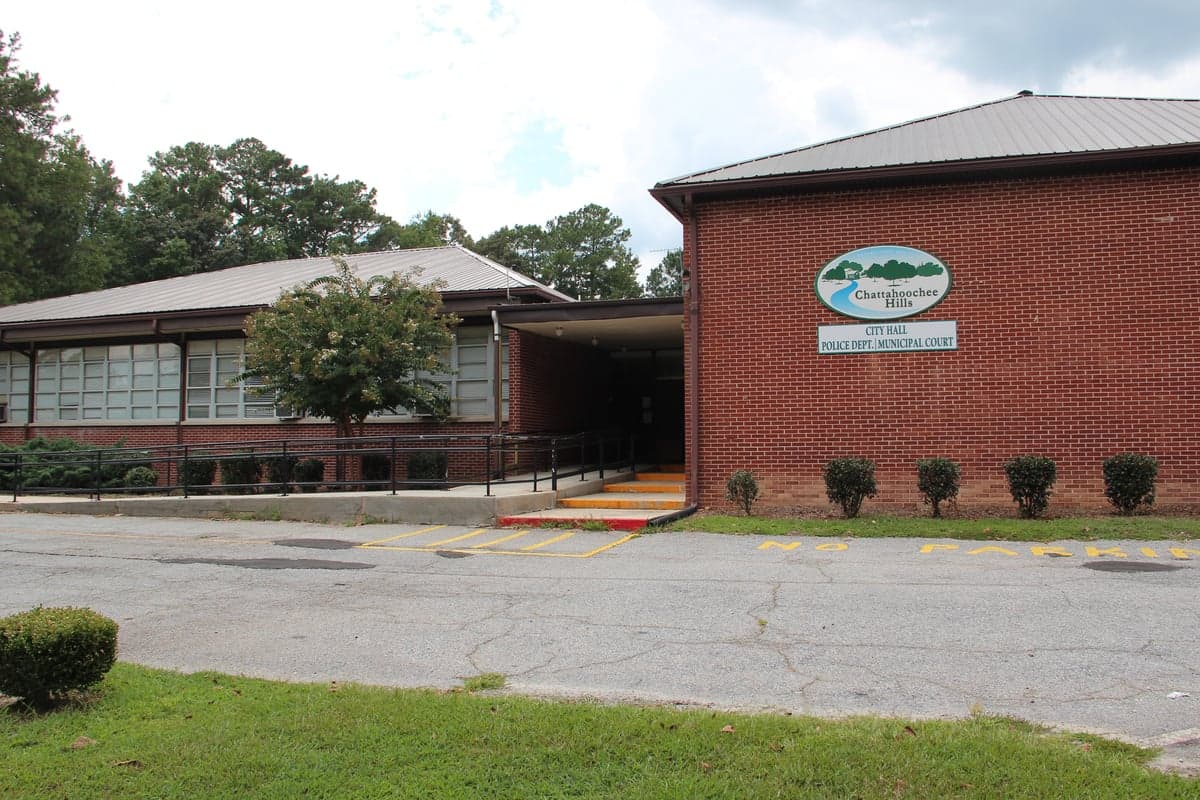
Photo: Wikipedia
Strategic Assessment of Chattahoochee Hills, GA
Meaningful friction. Expect exposure to either population pressure, blast zones, or natural disaster risk. Consider buying a retreat property.
What does the Strategic Assessment tell us?
Our Strategic Assessment grades tactical survivability of an area. Major population centers, military targets, fallout zones, natural disasters, and border exposure all drive risk — lower exposure means a more defensible position in a crisis.
This is heavily inspired by Joel Skousen's Strategic Relocation book. Highly recommended you checkout the book ($)What does this tell us?
Our Strategic Assessment grades tactical survivability of an area. Major population centers, military targets, fallout zones, natural disasters, and border exposure all drive risk — lower exposure means a more defensible position in a crisis.
This is heavily inspired by Joel Skousen's Strategic Relocation book. Highly recommended you checkout the book ($)Strategic Pillars

Key Distances
Regional Safe Places
Below is our recommended "safe zones" in Georgia and the surrounding area based on our strategic heuristics. For most people, it's unrealistic to live in a “safe zone” full-time due to work, family or other personal reasons. They tend to be more rural. However, many of these areas are perfect for second homes and retreat properties that double as a vacation home or even a short-term rental.
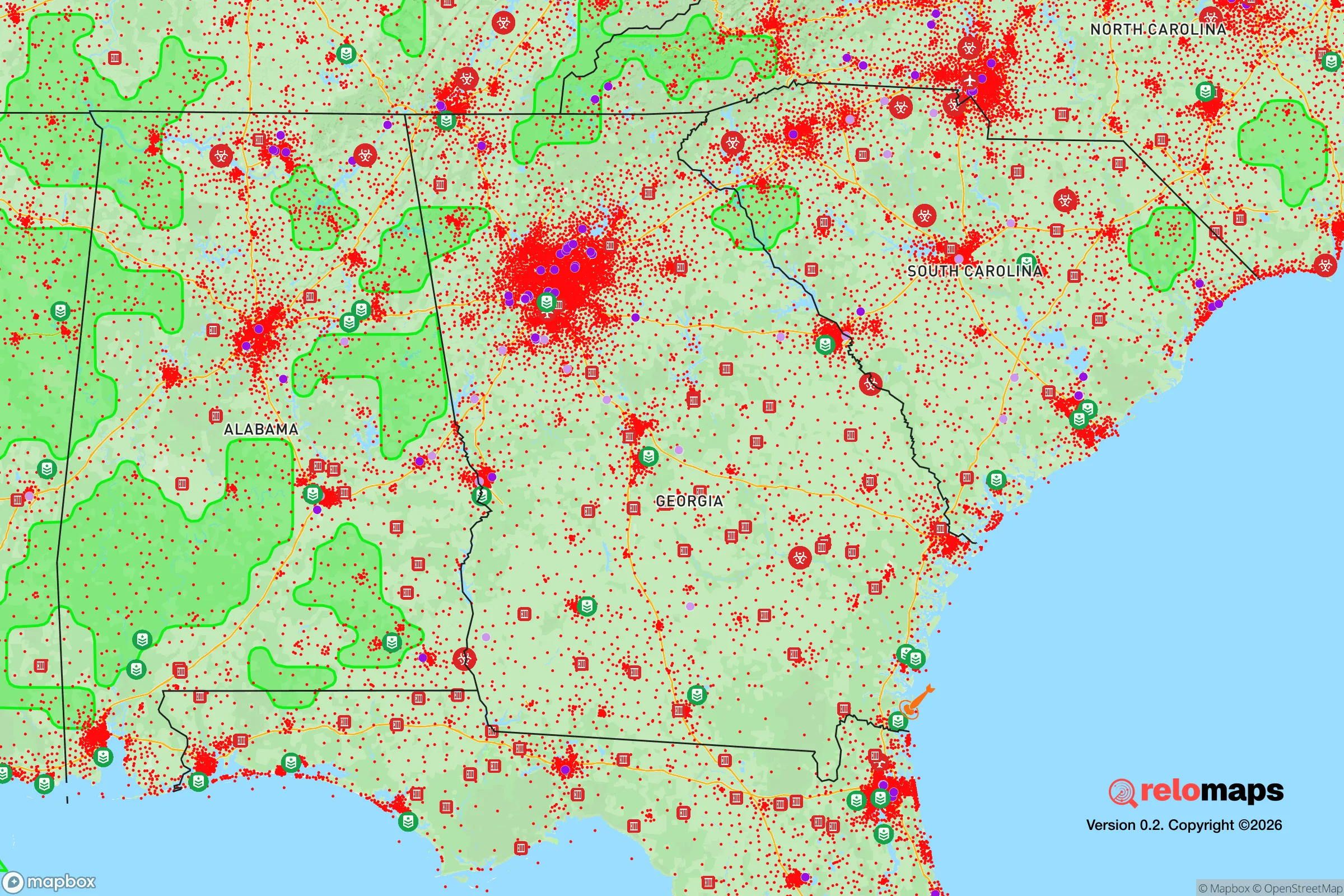
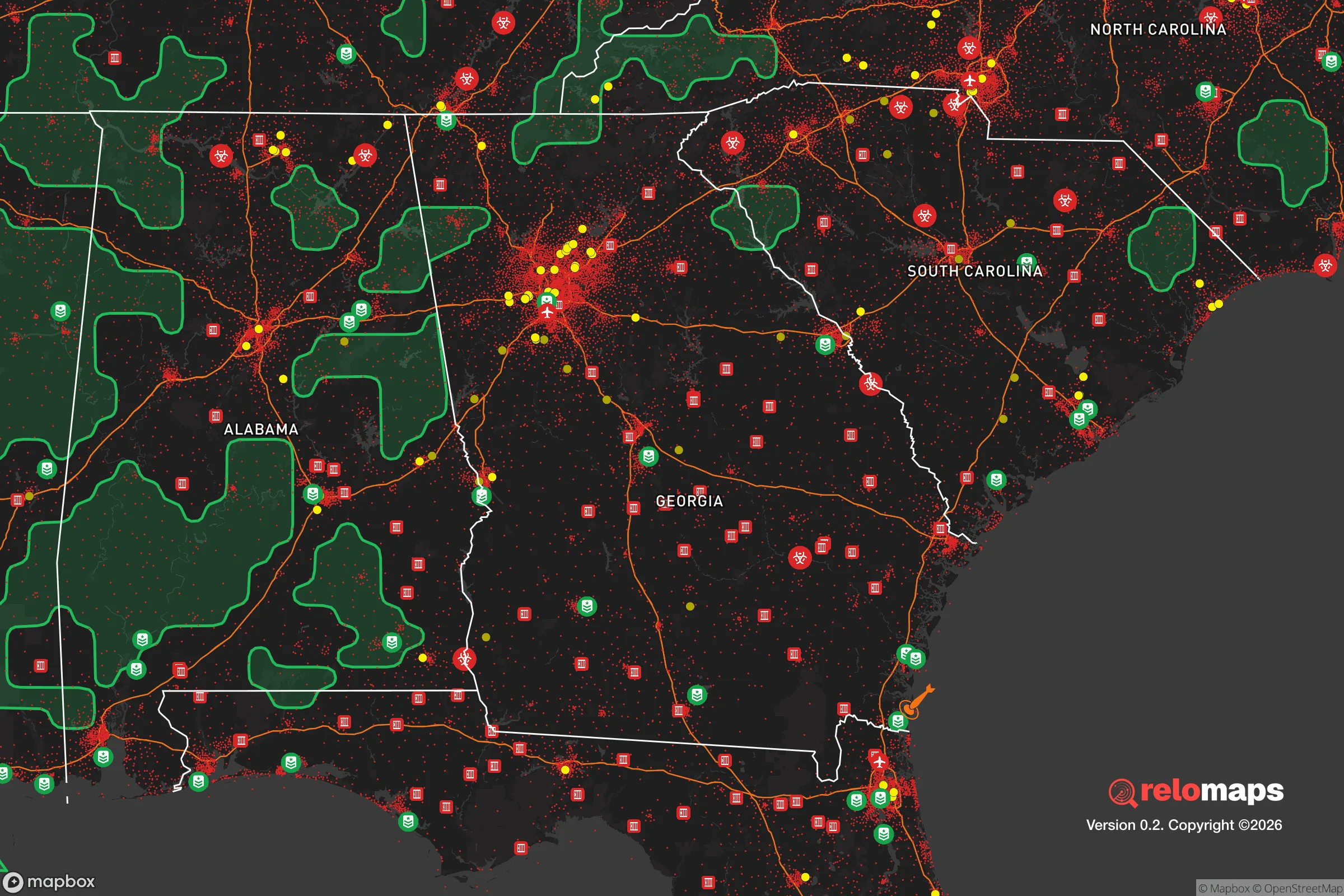


Important Note: For informational purposes only. This does not mean nothing bad ever happens in the green zones. Please use common sense. This is based on public data and modeled with AI. We tried to take a conservative approach but mistakes happen. We update this regularly as new information becomes available.
Solar Generator Recommendations
Backup power matters more here than in safer locations. We've picked three solar generators across budgets and capacity tiers — start with the budget unit if you only need a few essentials, or step up if you want to run a fridge and HVAC for days at a time.

Jackery Portable Power Station Explorer 300
Budget OptionPower on the Go: Weighing only 11 lbs, it's convenient to set up and store with book-sized foldable solar panels

BLUETTI Portable Power Station AC180
Designed for both indoor and outdoor scenarios, AC180 is highly capable as it has a robost capacity and continuous output power.

EF ECOFLOW DELTA Pro Ultra Power Station
Upgraded PickEcoFlow DELTA Pro Ultra is a whole-home energy system designed to grow with your family. Integrated with the Smart Home Panel 2, it scales to meet your evolving energy needs — keeping your home powered, intelligent, and secure through every stage of life.
We earn a commission, at no additional cost to you.
Strategic Assessment Analysis
Chattahoochee Hills, Georgia, offers a compelling strategic position for those prioritizing resilience and self-sufficiency, sitting roughly 30 miles southwest of Atlanta’s urban core yet maintaining a distinctly rural, low-density character. Its location within Fulton County—the same jurisdiction as Atlanta—creates a paradox: you benefit from the county’s resources while being far enough from the city’s likely unrest zones, major infrastructure targets, and population-density risks. The area’s 2020 census population of just over 3,000 people, spread across 50 square miles, means you’re not dealing with suburban sprawl or the kind of dense neighborhoods that become chokepoints during evacuations or civil disruptions. For a conservative-leaning relocator thinking about long-term preparedness, this is a rare pocket where proximity to economic hubs doesn’t automatically mean exposure to urban vulnerabilities.
Geographic position and natural advantages for long-term security
Chattahoochee Hills sits within the Piedmont region, characterized by rolling hills, mixed hardwood forests, and the Chattahoochee River forming its western boundary. This river is a double-edged asset: it provides a natural defensive barrier to the west and a reliable water source, but also means floodplain considerations in low-lying areas. The terrain offers numerous ridgelines and valleys that can provide visual and physical separation from main thoroughfares—useful for maintaining a low profile or establishing a defensible property. The area is part of the larger Chattahoochee Hill Country, a 40,000-acre conservation corridor that limits dense development and preserves wildlife corridors. For a prepper mindset, this means fewer neighbors, less light pollution, and natural buffers against the kind of suburban creep that erodes privacy and self-reliance. The region’s clay-based soils are workable for gardening after amendment, and the long growing season (roughly 220 frost-free days) supports year-round food production. The elevation averages around 900 feet, which reduces flood risk compared to river-bottom properties and provides decent vantage points for observation.
Risks, exposures, and proximity to fallout-relevant landmarks
The most significant strategic liability is Chattahoochee Hills’ position within the Atlanta metropolitan area’s outer ring. While the town itself is rural, it lies within 35 miles of Hartsfield-Jackson Atlanta International Airport—one of the busiest airports globally and a likely target for any large-scale disruption, whether from terrorism, EMP attack, or civil unrest. The airport’s proximity means that any event causing mass evacuation or supply chain collapse in Atlanta will send waves of people outward along major corridors like I-85, I-20, and I-285. Chattahoochee Hills is accessible via GA-92 and GA-166, both two-lane roads that can become clogged quickly. The area is also within 20 miles of the South River and the Chattahoochee River’s major water treatment facilities, which could be contamination targets. On the positive side, there are no nuclear power plants within 50 miles (the closest is Plant Vogtle, over 150 miles away), and no major military bases or chemical plants in immediate proximity. The primary fallout risk comes from potential attacks on Atlanta’s infrastructure—power grids, fuel depots, and transportation hubs—rather than direct blast zones. The area’s low population density means that if you’re prepared to shelter in place, you’re less likely to face the kind of resource competition that plagues suburban neighborhoods during crises.
Practical resilience for a relocator: food, water, energy, and defensibility
Water access is the strongest natural advantage here. The Chattahoochee River provides a surface water source, but more importantly, the region sits atop the Piedmont aquifer system. Wells in the area typically produce 10-30 gallons per minute at depths of 200-400 feet, which is sufficient for household use and small-scale irrigation. For those without well access, rainwater collection is viable given the region’s 50 inches of annual rainfall, though you’ll need to account for seasonal dry spells in late summer. Food resilience is moderate: the growing season supports vegetables, fruits, and small livestock, but the clay soils require amendment with compost or raised beds. Local agriculture is limited—there are a few farms and the Serenbe community’s organic operations, but you can’t rely on local food production for a full diet without significant personal investment. Energy considerations are mixed: Georgia Power’s grid is reasonably stable, but the area is susceptible to ice storms and thunderstorms that cause outages. Solar potential is decent, with about 4.5 peak sun hours per day, but tree cover on many properties reduces panel efficiency. Defensibility is good for a rural area—the winding roads, forested lots, and limited access points make it hard for large groups to approach unseen. However, the lack of natural chokepoints like mountains or rivers (other than the western boundary) means you’ll need to rely on property-level security measures rather than terrain. The nearest hospital is Piedmont Newnan, about 15 miles away, which is a Level III trauma center—adequate for routine emergencies but not for mass casualty events. Law enforcement presence is minimal; the Fulton County Sheriff’s Office covers the area, but response times can exceed 20 minutes in remote parts.
The overall strategic picture for Chattahoochee Hills is one of calculated trade-offs. It offers genuine advantages for a relocator seeking a rural buffer within driving distance of Atlanta’s economic opportunities—good water, low density, defensible terrain, and a long growing season. But the proximity to a major urban center and its associated vulnerabilities—airport, infrastructure targets, evacuation corridors—means you’re not truly remote. For a conservative prepper mindset, this location works best as a “bug-in” property where you’ve invested in on-site water, food storage, and renewable energy, rather than a retreat you’d flee to after a crisis. The area’s zoning and conservation easements limit development, which preserves the rural character but also means you’ll have fewer neighbors to rely on for mutual aid. If your primary concern is avoiding the fallout from urban collapse while maintaining access to city resources, Chattahoochee Hills is a strong candidate—but only if you’re willing to put in the work to make your property self-sufficient before the crisis hits.

* Values derived from national, state, county, city and local statistics and may differ in a specific area. Last updated: 2026-04-23T05:19:03.000Z
Narrative content on this page is AI-generated and may contain mistakes. Verify any details that matter before acting on them.
ReloMaps may earn a commission from affiliate links at no extra cost to you.

