Photo: Wikipedia
Political ClimatePolitical Climate in Chattahoochee Hills, GA
District shown is the primary district for this city’s centroid. Cities may span multiple districts.
Local Political AnalysisPolitical Analysis of Chattahoochee Hills, GA
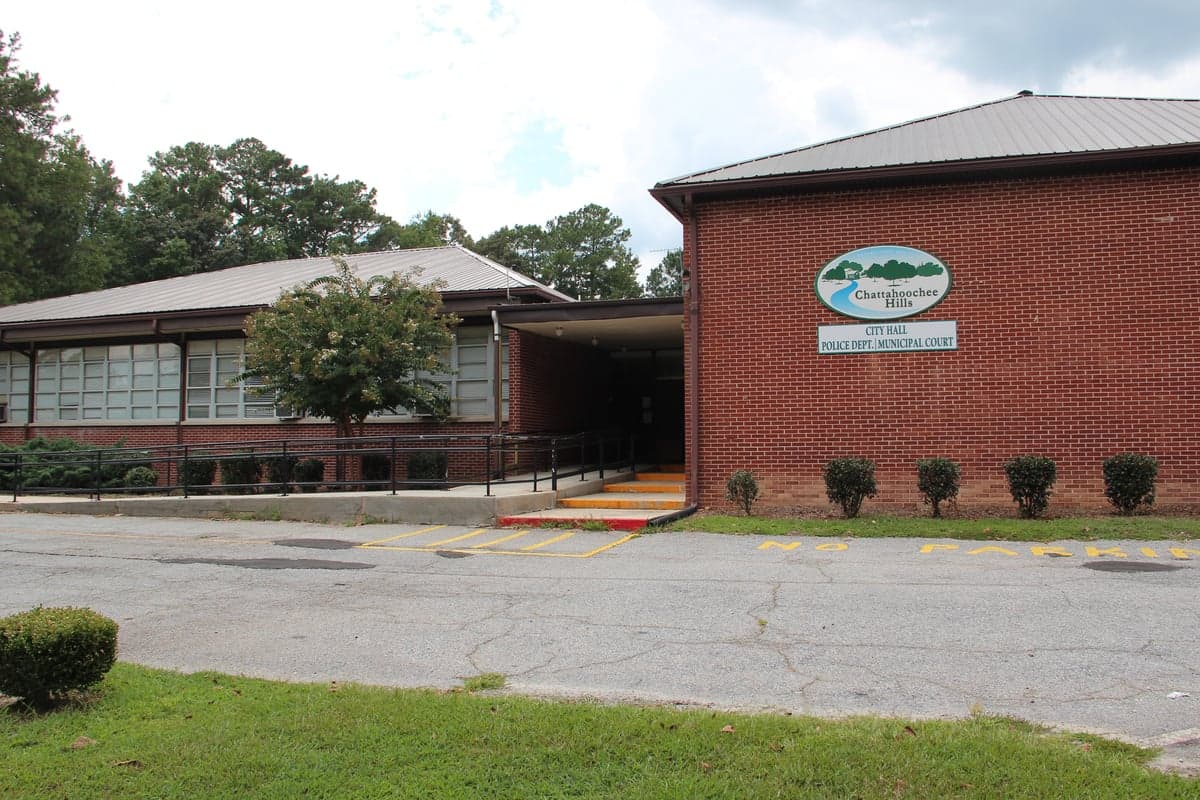
Chattahoochee Hills, Georgia, is a place where the political landscape has shifted dramatically, and not for the better if you value traditional freedoms. With a Cook PVI of D+25, this once-rural enclave now leans heavily Democratic, a stark contrast to the conservative values that defined the area just a generation ago. The trajectory is concerning, as progressive policies on land use, taxation, and personal liberties are becoming the norm, driven by an influx of newcomers from Atlanta who bring a very different worldview.
How it compares
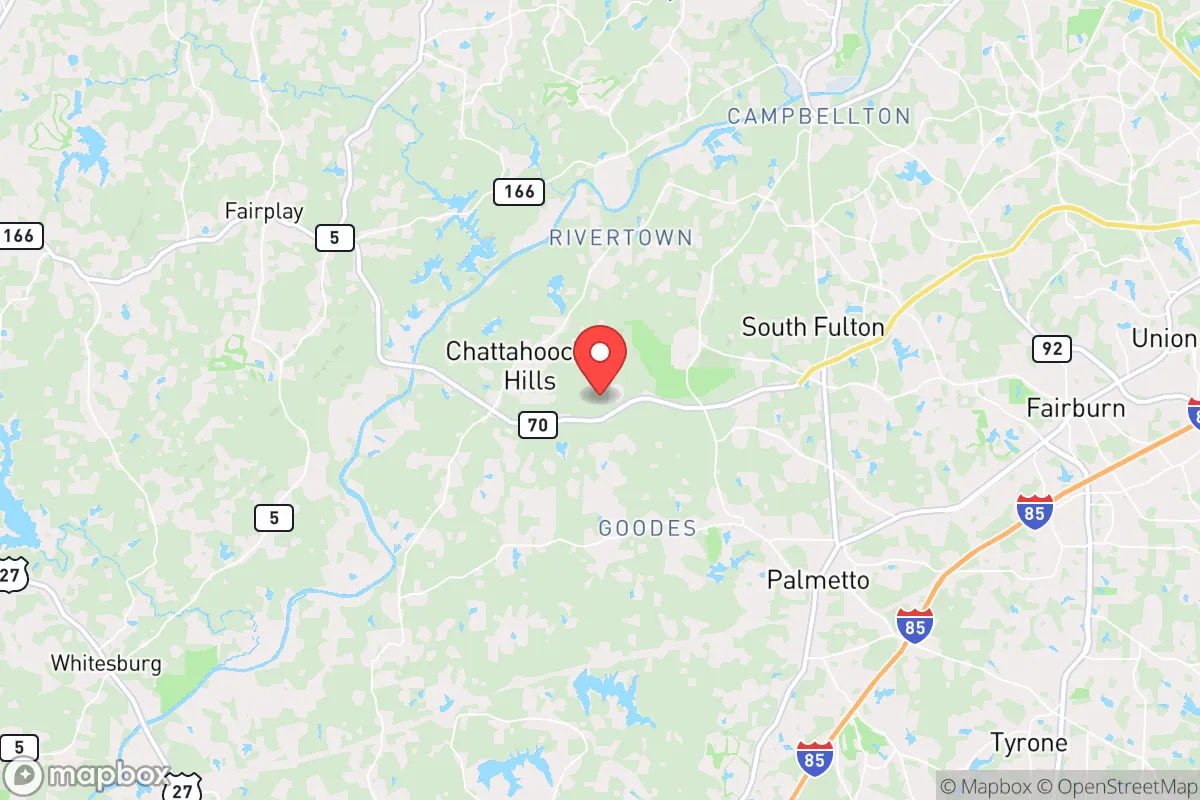
To understand Chattahoochee Hills today, you have to look at the surrounding areas. Head south or west into Coweta County, and you’ll find communities like Newnan and Senoia that still hold a solid Republican majority—places where the Second Amendment is respected and property rights aren’t constantly under threat. Even nearby Palmetto, just a few miles north, has a more balanced political mix. But Chattahoochee Hills? It’s become an outlier, a progressive island in a sea of conservative Georgia. The contrast is jarring: while neighbors fight to keep taxes low and government small, this city has embraced higher spending and stricter regulations, often under the guise of “sustainability” or “equity.” It feels like the local government is more interested in following trends from Portland or Seattle than listening to the folks who’ve been here for decades.
What this means for residents
For those of us who live here, the shift isn’t just about who wins elections—it’s about daily life. Property taxes have crept up as the city funds new programs and initiatives that many residents never asked for. There’s a growing sense that personal freedoms—like how you use your land, what you build on it, or even how you run your small business—are being squeezed by zoning overlays and bureaucratic red tape. The school board and local council meetings have become battlegrounds, with debates over curriculum, library books, and public health mandates that would have been unthinkable 20 years ago. If you value the right to make your own choices without government interference, you’re starting to feel like an outsider in your own hometown. The long-term outlook is grim: unless there’s a realignment, expect more of the same—higher costs, less autonomy, and a culture that increasingly prioritizes collective goals over individual rights.
Culturally, Chattahoochee Hills has always prided itself on its rural character and tight-knit community, but that’s fading. The push for “smart growth” and “inclusive zoning” is really about centralizing control, not preserving what made this place special. You see it in the way local leaders talk about “affordable housing” mandates that actually drive up costs, or in the quiet removal of public input from major decisions. It’s a slow erosion of the very freedoms that drew people here in the first place. If you’re considering a move, keep your eyes open: the politics here aren’t just liberal—they’re increasingly intrusive. And that’s a red flag you can’t ignore.

State Political ClimatePolitical Climate in Georgia
State Political AnalysisPolitical Environment in the State
Georgia has shifted from a reliably conservative stronghold to a genuine battleground state over the past two decades, with its partisan lean now hovering around a coin-flip in presidential elections. The state’s 2020 and 2024 results—where Donald Trump narrowly lost in 2020 and then narrowly won in 2024—reflect a deeply divided electorate, driven by explosive growth in the Atlanta metro area and a resilient conservative base in the rest of the state. For a conservative considering relocation, the key takeaway is that Georgia’s political future is being contested block by block, with the Atlanta suburbs acting as the primary battleground.
Urban vs. rural divide
The political map of Georgia is a study in stark contrasts. The Atlanta metro area, encompassing Fulton, DeKalb, Cobb, and Gwinnett counties, has become a Democratic stronghold, powered by a coalition of white liberals, Black voters, and a growing Hispanic and Asian population. In 2024, Fulton County delivered over 73% of its vote to Kamala Harris, while DeKalb hit 84%. Meanwhile, rural and exurban counties like Murray, Gilmer, and Pickens in the north Georgia mountains routinely vote 75-80% Republican. The real story is the suburbs: Cobb County, once a GOP bastion, flipped to Biden in 2020 and stayed blue in 2024, while Forsyth County north of Atlanta remains deeply red but is seeing Democratic inroads. Outside the Atlanta orbit, cities like Augusta and Savannah lean Democratic but are surrounded by conservative rural areas, while Columbus and Macon are more evenly split. The Albany area in southwest Georgia is heavily Democratic due to its large Black population, but the surrounding counties are rock-ribbed Republican.
Policy environment
Georgia’s state-level policy environment is broadly conservative, but with notable exceptions that concern many on the right. The state has a flat income tax rate of 5.49%, which is set to drop to 4.99% by 2029 under legislation passed in 2022. Property taxes are relatively low, with a median effective rate of 0.87% of home value. The regulatory climate is business-friendly, with Georgia ranking in the top 10 for ease of doing business. On education, the state has a robust school choice program, including the Georgia Promise Scholarship Act (2024), which provides $6,500 per student for private school or homeschooling expenses. However, the state’s healthcare policy is a mixed bag: Georgia did not expand Medicaid under the Affordable Care Act, but the state’s “Pathways to Coverage” program (2023) imposes work requirements that many conservatives support but that have been criticized as bureaucratic. Election integrity is a major concern: the 2021 Election Integrity Act (SB 202) tightened voter ID requirements, limited drop boxes, and banned mobile voting centers—moves that conservatives applaud but that progressives decry as suppression. The law withstood legal challenges, but the fight is ongoing.
Trajectory & freedom
Georgia’s trajectory on personal freedom is a mixed bag that should give conservatives pause. On the positive side, the state has expanded gun rights significantly: in 2022, Georgia became a constitutional carry state (HB 218), allowing permitless carry of firearms for anyone 21 or older. Parental rights were strengthened with the 2022 “Parents’ Bill of Rights” (HB 1178), which requires schools to notify parents of any changes to a student’s mental, emotional, or physical health—a direct response to transgender policies in schools. On the negative side, the state’s medical freedom took a hit during COVID-19, with Governor Brian Kemp issuing a state of emergency that allowed for business closures and mask mandates, though he later banned vaccine mandates for state employees. Property rights are generally strong, with no statewide rent control and relatively lax zoning in most areas, though Atlanta’s city council has flirted with rent stabilization. The biggest red flag for conservatives is the Atlanta city government’s progressive agenda, which includes sanctuary city policies (though state law bans them) and a push for “defund the police” rhetoric, though actual defunding hasn’t occurred. The state’s preemption laws generally prevent local governments from enacting stricter gun laws, but Atlanta has tried to circumvent them with ordinances on gun storage.
Civil unrest & political movements
Georgia has been a flashpoint for political activism on both sides. The 2020 election aftermath saw massive protests in Atlanta, including the “Stop the Steal” rally at the state capitol and counter-protests by groups like Black Lives Matter. The 2021 election law (SB 202) sparked boycotts from Major League Baseball, which moved the 2021 All-Star Game from Atlanta to Denver—a move that galvanized conservative voters. Immigration politics are heated: the 2011 HB 87 law, which cracked down on illegal immigration, remains on the books, but Atlanta and Clarkston (a suburb known as the “Ellis Island of the South”) have large refugee and immigrant populations that create cultural tensions. The “Stop Cop City” movement—a years-long campaign against the Atlanta Public Safety Training Center—has involved violent protests, arson, and a state law (SB 44) that expanded penalties for domestic terrorism. Election integrity remains a live issue: the 2024 election saw record turnout, but ongoing lawsuits over absentee ballot rules and the State Election Board’s new powers (granted in 2023) keep the issue front and center. A new resident in Marietta or Kennesaw will see yard signs for both parties, while in Rome or Dalton, the political landscape is uniformly red.
Projection
Over the next 5-10 years, Georgia is likely to become more competitive, not less. The Atlanta metro area is growing by roughly 100,000 people per year, with many newcomers from blue states like California and New York. This in-migration is slowly shifting the suburbs leftward: Gwinnett County, which voted for Trump in 2016, went for Biden by 18 points in 2020 and by 15 in 2024. Meanwhile, the rural population is stagnant or declining, meaning the GOP’s base is shrinking as a percentage of the electorate. However, the state’s conservative legislature has been aggressive in passing laws to shore up election integrity and preempt local progressive policies, which may slow the leftward drift. The wild card is the 2026 gubernatorial race: if a moderate Republican like Brian Kemp is replaced by a more Trump-aligned candidate, the party could lose suburban moderates. For a conservative moving in now, expect to see a state that remains Republican-controlled at the state level for the next decade, but where presidential elections will be toss-ups and local control in the Atlanta suburbs will increasingly be in Democratic hands.
For a conservative relocating to Georgia, the bottom line is that you’re moving to a state with a strong conservative foundation—low taxes, gun rights, school choice—but one that is under demographic siege. If you settle in Woodstock, Buford, or Peachtree City, you’ll find a conservative community with good schools and a high quality of life. If you move inside the Perimeter (I-285), you’ll be in a blue enclave with rising crime and progressive governance. The smart play is to choose your county carefully, get involved in local politics, and brace for a state that will be a political battleground for the foreseeable future.
* Values derived from national, state, county, city and local statistics and may differ in a specific area. Last updated: 2026-04-23T05:19:03.000Z
Narrative content on this page is AI-generated and may contain mistakes. Verify any details that matter before acting on them.
ReloMaps may earn a commission from affiliate links at no extra cost to you.

