Photo: Wikipedia
Quality of Life in Chester, PA
Above-average quality of iife. The area offers a reasonable cost of living, decent mobility, and a mix of neighborhood amenities.
What does Quality of Life tell us?
Quality of Life blends cost of living, nearby amenities, socioeconomic signals, and neighborhood character. City-level scores represent the whole municipality; individual neighborhoods can differ.
What does this tell us?
Quality of Life blends cost of living, nearby amenities, socioeconomic signals, and neighborhood character. City-level scores represent the whole municipality; individual neighborhoods can differ.
Cost of Living
32% below national average
The Real Cost of Living in Chester, PA for 2026
| Tier | Individual | Family (4) |
|---|---|---|
| Survival | $17k | $32k |
| Comfortable | $27k | $40k |
| Luxury | $72k+ | $111k+ |
| Elite (Top 5%) | $94k+ | $146k+ |
100%
The Area Signal
A metric tracking the socioeconomic signals of the area.
Hobbies
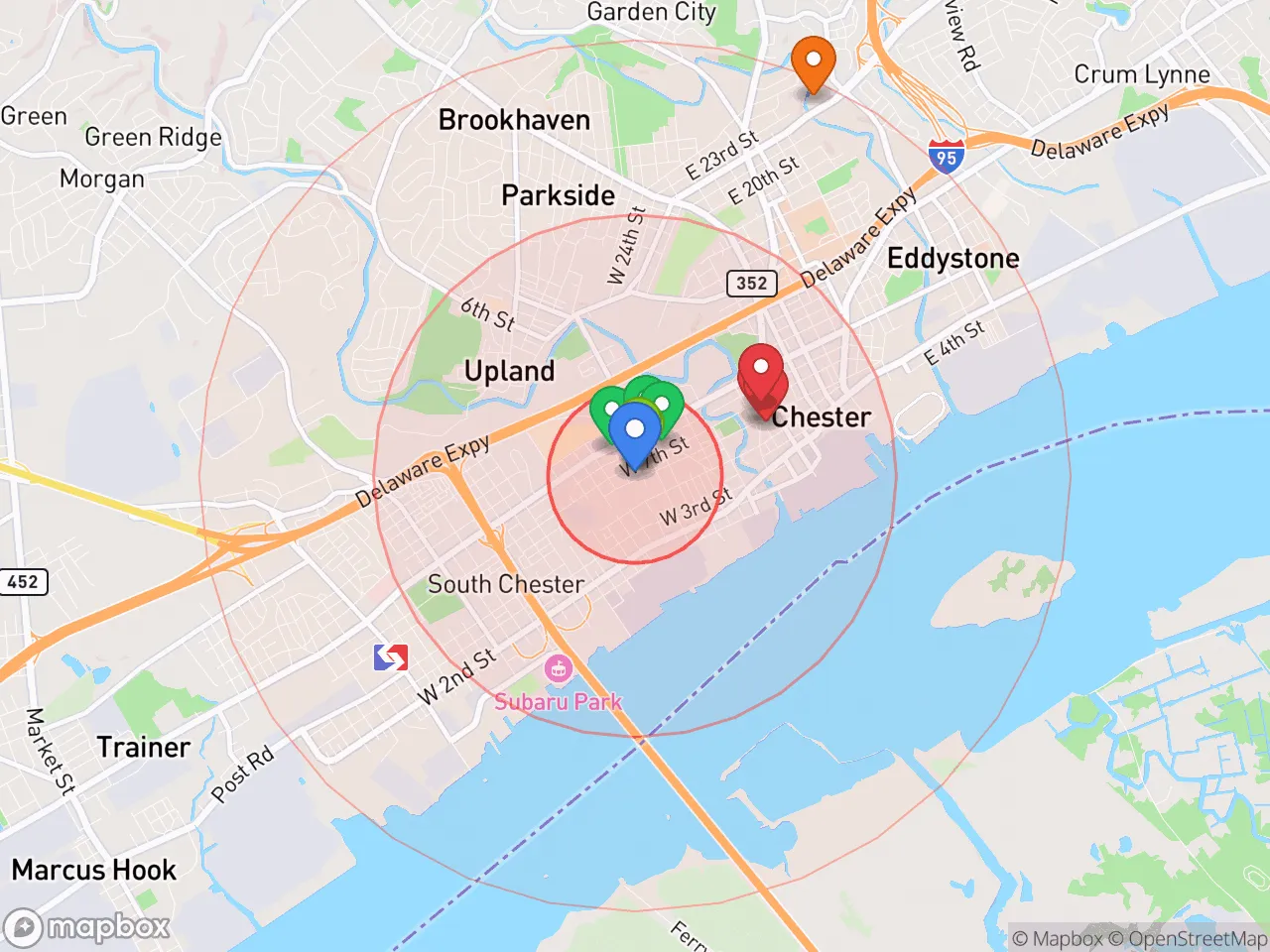
Explore the areaGroceries
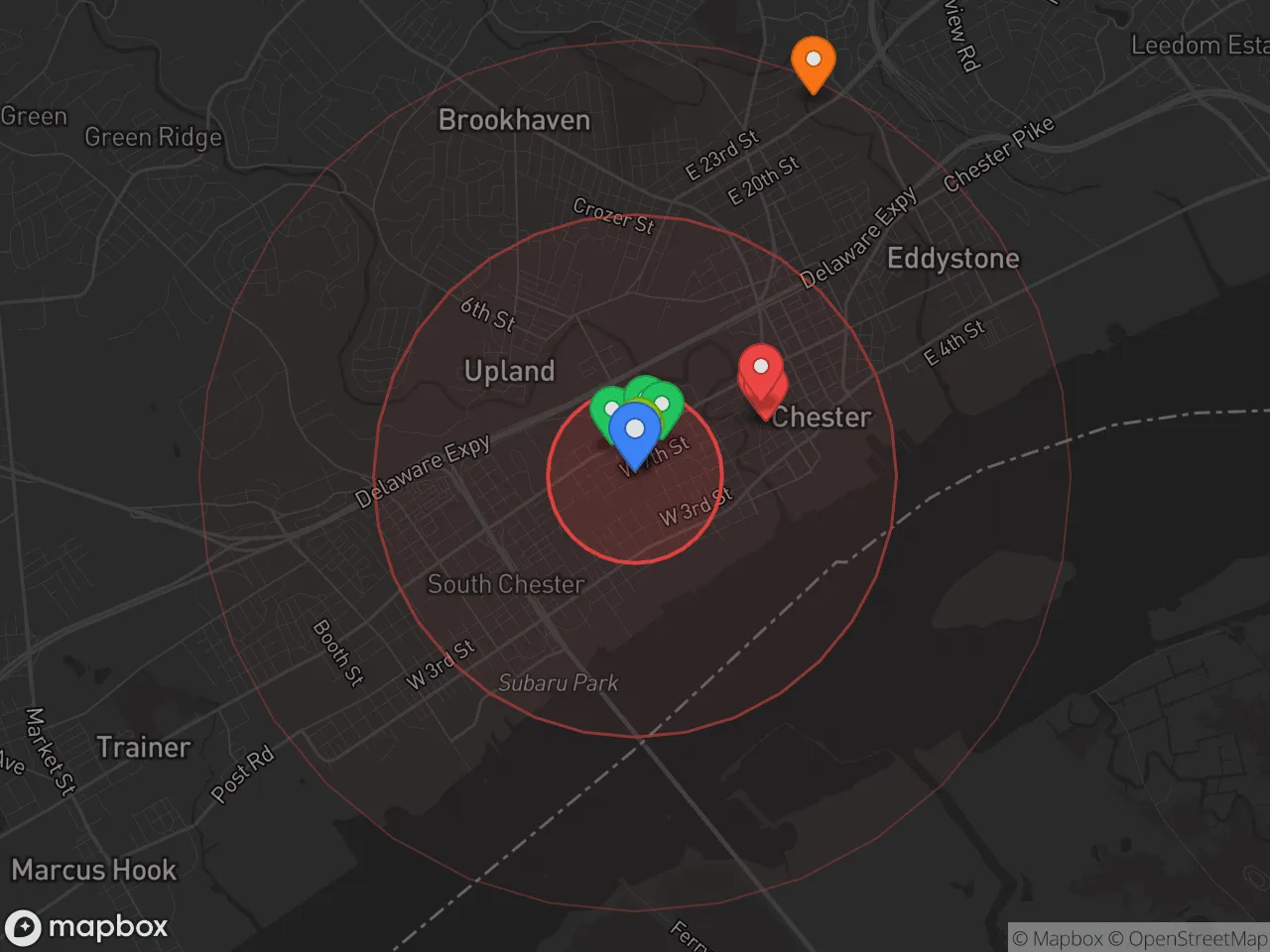
5 within 10 miles
Gas
20 within 10 miles
Hospital
20 within 20 miles
Airport
PHL — Philadelphia International
Post Office
USPS — Brookhaven, PA
Critical Amenities
Quality-of-Life Analysis
Chester, Pennsylvania, presents a quality-of-life profile that is markedly more affordable than its Delaware County neighbors, with a cost of living index of 68—32% below the national average—and a median home value of just $85,400. The city’s population is predominantly working-class and diverse, with a significant share of residents employed in healthcare, logistics, and manufacturing sectors. While Chester faces economic challenges, its low housing costs and proximity to Philadelphia (roughly 15 miles north) attract those seeking an urban-adjacent lifestyle without the premium price tag of the Main Line or Center City.
Cost of living, housing affordability, and how Chester compares to nearby areas
Chester’s housing market is among the most accessible in the Philadelphia metropolitan area. The median home value of $85,400 is roughly one-tenth the median in nearby Swarthmore or Media, and the median rent of $1,080 is about 40% lower than the regional average. This affordability is driven by an older housing stock—much of it pre-1950 row homes and twins—and a local economy that has not fully recovered from post-industrial decline. For comparison, a renter in Chester pays roughly $600 less per month than a renter in neighboring Ridley Township. The average commute time of 21.8 minutes is shorter than the national average (26 minutes), largely because many residents work within Delaware County or at the nearby Philadelphia International Airport and the sprawling industrial parks along I-95. However, property taxes in Chester (around 1.8% of assessed value) are higher than in some surrounding townships, partly offsetting the low purchase price.
Amenities, schools, and what daily life is like for families
Daily life in Chester is shaped by a mix of urban convenience and limited retail options. The city has a walkable core along Avenue of the States, with small groceries, dollar stores, and fast-food outlets, but lacks a full-service supermarket—a common complaint among residents. The Chester-Upland School District serves most families, though it has faced chronic underfunding and state oversight; graduation rates hover around 70%, well below the state average. For recreation, residents use the 77-acre Chester Park (with sports fields and a community pool) and the nearby Ridley Creek State Park for hiking. Cultural amenities are sparse, but the city is a 20-minute SEPTA Regional Rail ride from Center City Philadelphia, giving residents access to museums, theaters, and professional sports. Healthcare is anchored by the Crozer-Chester Medical Center, a major trauma center and employer. The daily rhythm is quieter than in Philadelphia proper, with a strong sense of neighborhood identity in areas like Sun Village and the West End.
Chester is best suited for budget-conscious buyers and renters who prioritize low housing costs and a short commute to industrial or healthcare jobs in Delaware County. It is less ideal for families seeking top-tier public schools or for those who rely on walkable amenities like grocery stores and sit-down restaurants. The city’s ongoing revitalization efforts—including the redevelopment of the waterfront and the expansion of the Widener University campus—suggest gradual improvement, but the current quality of life remains defined by trade-offs: extreme affordability in exchange for limited services and higher crime rates than the county average. For the right resident—one who values proximity to Philadelphia and a low cost of entry—Chester offers a viable, if gritty, urban option.

Crime in Chester, PA
Higher crime rates than 69% of comparable U.S. locations.
Violent CrimeViolent Crime Analysis
Property CrimeProperty Crime Analysis
Crime Analysis
Chester, Pennsylvania, presents a challenging safety landscape, with violent and property crime rates that significantly exceed both state and national averages. The city's violent crime rate of 468 incidents per 100,000 residents is more than double the national average, while its property crime rate of 1,808 per 100,000 also sits well above typical benchmarks. These figures reflect a community grappling with systemic issues, including the impact of progressive criminal justice policies in the surrounding Delaware County and broader Philadelphia metro area, which critics argue prioritize offender rehabilitation over public safety and victim justice.
Crime in context
Chester's crime statistics place it among the more dangerous small cities in the Philadelphia metropolitan region. The violent crime rate of 468 per 100,000 is roughly 2.5 times the national average of about 180 per 100,000, and significantly higher than the Pennsylvania state average of approximately 300 per 100,000. Property crime, at 1,808 per 100,000, also exceeds the national average of roughly 1,600 per 100,000. These numbers are not outliers but persistent trends, driven in part by the city's proximity to Philadelphia and the broader regional approach to criminal justice. The presence of liberal-leaning district attorneys and judges in the metro area has been linked to lower incarceration rates and more lenient sentencing, which can result in repeat offenders cycling back onto Chester's streets more quickly, undermining deterrence and victim confidence.
What residents experience
For those living in Chester, the high crime rates translate into tangible daily concerns. Violent offenses—including aggravated assault, robbery, and homicide—are concentrated in specific areas, making certain blocks and neighborhoods feel unsafe, especially after dark. Property crimes like burglary, theft, and motor vehicle theft are common, with residents often reporting break-ins or stolen vehicles. The city's economic struggles, including a poverty rate above 30%, compound these issues, as limited opportunities and under-resourced policing create an environment where crime can persist. Residents frequently express frustration with a justice system they perceive as soft on offenders, noting that progressive policies aimed at reducing mass incarceration can leave victims feeling unheard and neighborhoods vulnerable to repeat criminal activity.
Neighborhood-level variation is significant in Chester. Areas closer to the waterfront and the city's industrial core, such as the West End and parts of the South Side, tend to see higher concentrations of violent crime. In contrast, pockets near Widener University and some residential streets in the North End experience lower rates, benefiting from community watch programs and university security presence. However, even these relatively safer areas are not immune to the spillover effects of the city's broader crime challenges. Prospective residents should research specific blocks and consult local crime maps, as the difference between a high-risk and a moderate-risk street can be stark. Overall, Chester demands a high degree of situational awareness and a clear understanding of the local criminal justice climate before choosing to relocate there.
* Values derived from national, state, county, city and local statistics and may differ in a specific area. Last updated: 2026-05-01T12:32:20.000Z
Narrative content on this page is AI-generated and may contain mistakes. Verify any details that matter before acting on them.
ReloMaps may earn a commission from affiliate links at no extra cost to you.

