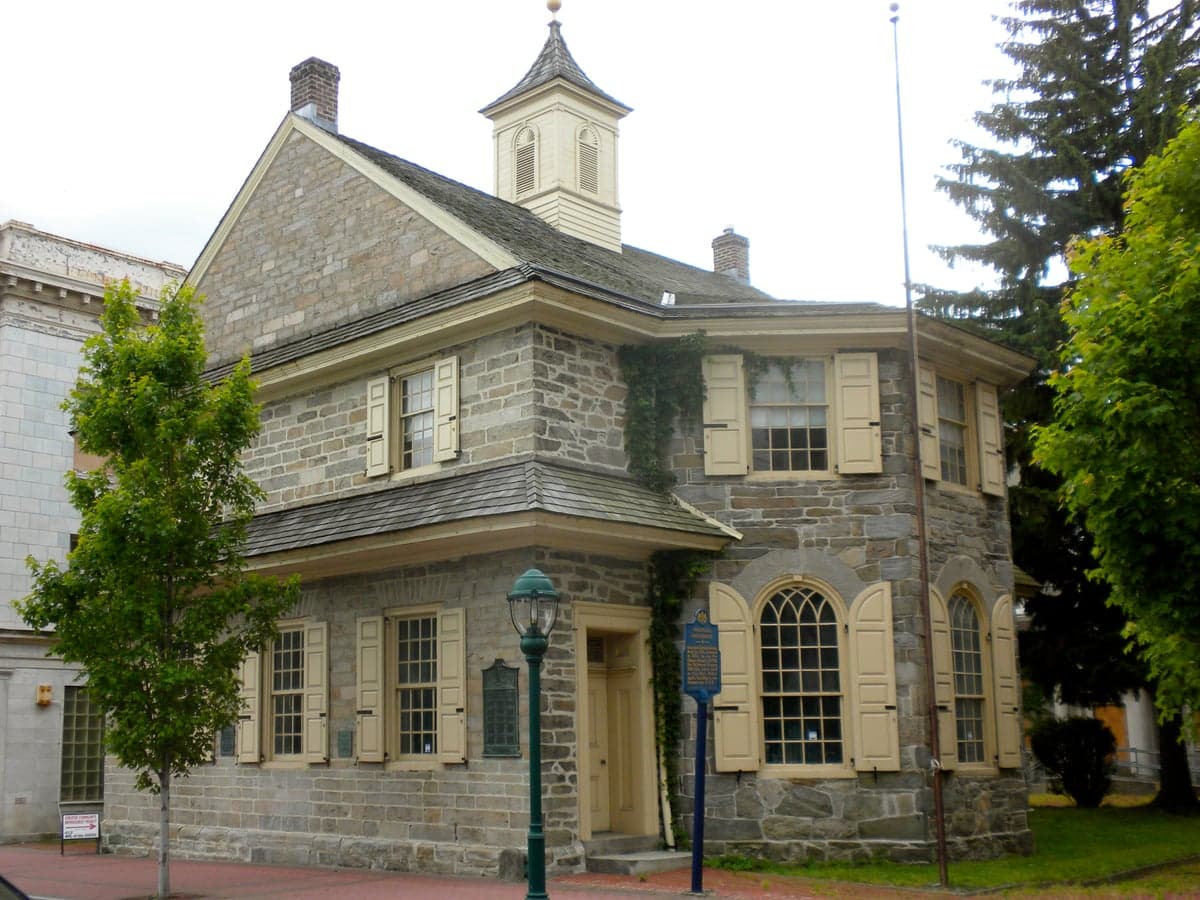
Photo: Wikipedia
Political ClimatePolitical Climate in Chester, PA
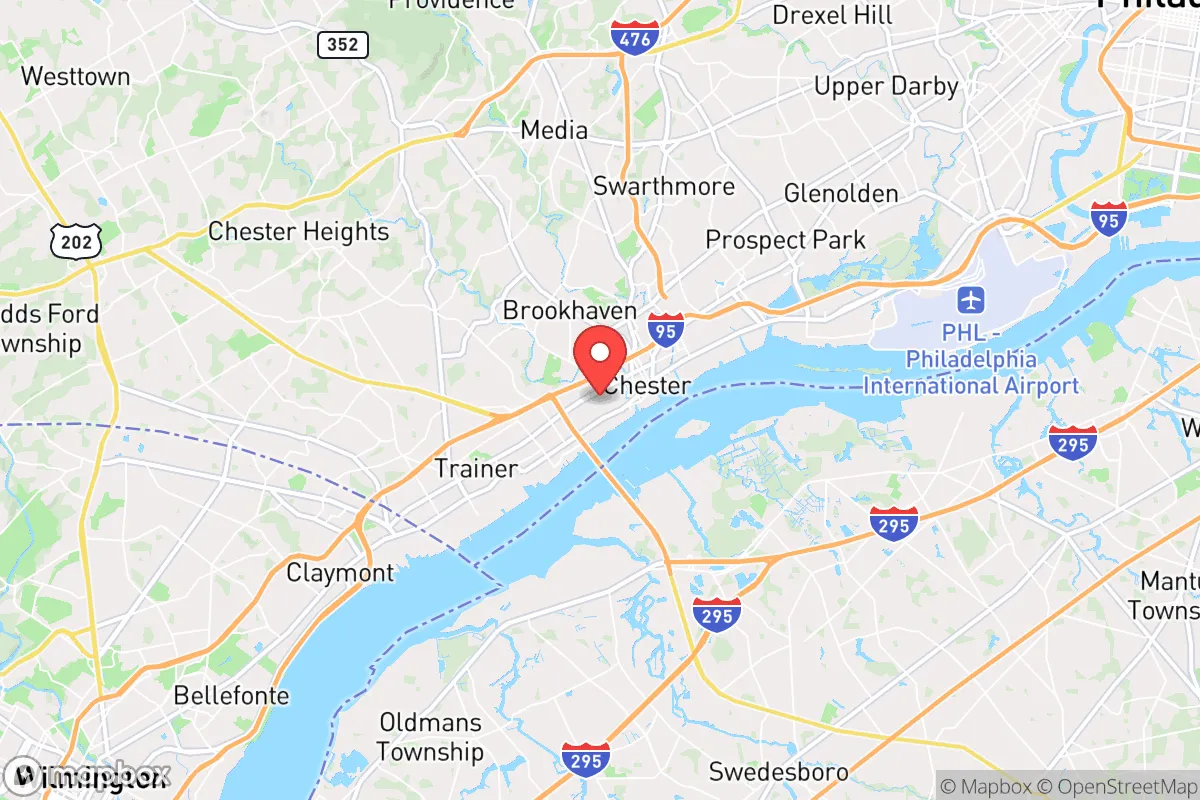
District shown is the primary district for this city’s centroid. Cities may span multiple districts.
Local Political AnalysisPolitical Analysis of Chester, PA
Chester, Pennsylvania, is about as deep blue as it gets in the Keystone State, with a Cook PVI of D+15 that tells you everything you need to know about the local voting patterns. I’ve lived in this area long enough to remember when the city had a different kind of energy, but over the last couple of decades, the political machine here has become a one-party show. The Democratic stronghold is so entrenched that Republicans rarely even field candidates for local offices, and the city council votes are often decided in the primary. The trajectory has been a steady march leftward, with progressive policies taking hold on everything from policing to development, and it’s left a lot of us longtime residents feeling like our voices don’t carry much weight anymore.
How it compares
Drive 15 minutes west to Media, and you’ll find a more balanced political scene—still blue-leaning, but with a healthy Republican minority that keeps things honest. Head north to Swarthmore or Rose Valley, and you’re in affluent liberal territory, but the difference is those towns have the tax base to absorb the costs of progressive experiments. Chester doesn’t. The contrast with nearby Ridley Park or Brookhaven is stark; those communities have a mix of working-class Democrats and Republicans who actually talk to each other. In Chester, the political monoculture means there’s no real opposition to question spending or push back on policies that feel like government overreach. When the county government in Media pushes a new tax or regulation, Chester’s delegation usually just goes along with it, while towns like Aston or Edgmont will fight it tooth and nail.
What this means for residents
For the average person living here, the one-party rule translates into a feeling that your personal freedoms are secondary to the government’s agenda. I’ve seen it with the way the city handled the pandemic—mandates that went beyond what the state required, with little pushback from council. Property taxes have crept up year after year, and there’s a sense that the city spends money on feel-good programs rather than fixing the potholes or keeping the streets safe. The school board has shifted hard left, with curriculum changes that prioritize social justice over reading and math, and parents who speak up at meetings are often dismissed. It’s concerning because when there’s no political competition, there’s no accountability. You can’t just vote the bums out when every candidate sounds the same.
Looking ahead, I don’t see this changing anytime soon. The demographics are shifting, with younger, more progressive transplants moving in from Philadelphia, and the old-timers who remember a more moderate Chester are fading out. The city’s reliance on state and federal grants means it’s tied to the whims of Harrisburg and Washington, and as long as the money flows, the machine keeps running. For anyone considering a move here, I’d say be prepared for a place where your vote for a conservative or even a moderate candidate is essentially a protest vote. The culture is one of top-down decision-making, and if you value local control and individual liberty, you might find yourself frustrated more often than not. It’s a shame, because the bones of this city are good—the riverfront, the history, the people—but the politics have made it a tough place to call home if you don’t toe the party line.

State Political ClimatePolitical Climate in Pennsylvania
State Political AnalysisPolitical Environment in the State
Pennsylvania has long been the quintessential swing state, but over the past decade, its political center of gravity has shifted in ways that should give anyone valuing personal freedom and limited government pause. The state’s 19 electoral votes have flipped from Obama (2012) to Trump (2016) to Biden (2020) by razor-thin margins, but the underlying trends are clear: the Philadelphia and Pittsburgh metros are growing bluer and more populous, while the vast rural and exurban “T” stretching from Erie to the Maryland line remains reliably red but is losing population. The result is a state that feels increasingly split between two Americas, with state-level policy tilting leftward even as many counties vote conservative.
Urban vs. rural divide
The political map of Pennsylvania is a tale of two landscapes. The southeastern corner, anchored by Philadelphia and its collar counties like Montgomery, Delaware, and Chester, delivers massive Democratic margins — in 2020, Philadelphia County alone gave Biden a 460,000-vote cushion. Pittsburgh and its immediate suburbs in Allegheny County add another 200,000-vote Democratic edge. Meanwhile, the vast rural center and north — places like Tioga County, Bradford County, and Franklin County — vote 70-30 Republican. The real battlegrounds have been the “collar counties” around Philadelphia: Bucks County and Lancaster County. Bucks, once a bellwether, has trended left as wealthy professionals from Philly move in. Lancaster, long a conservative stronghold, is seeing its rural character eroded by development from the northeast corridor, making it a true toss-up. The 2022 Senate race saw John Fetterman win by 5 points statewide, but he lost all but a handful of counties — a stark illustration of the urban-rural chasm.
Policy environment
Pennsylvania’s state-level policy is a mixed bag that leans increasingly progressive. The state has a flat income tax of 3.07%, which is relatively low, but property taxes are among the highest in the nation — averaging over $4,000 annually — and there is no statewide cap on how much they can rise. The sales tax is 6%, but it exempts food and clothing, which helps low-income families. On regulation, Pennsylvania has a notoriously complex permitting system for businesses, especially in energy and manufacturing. The state’s education system is heavily centralized, with the Department of Education in Harrisburg dictating curriculum standards and testing. School choice is limited: there are charter schools, but they face constant legal challenges from teachers’ unions. The state has no voucher program and only a small tax-credit scholarship program for low-income students. On healthcare, Pennsylvania expanded Medicaid under Obamacare in 2015, and the state runs its own exchange. Election laws have been a flashpoint: Act 77 of 2019 expanded mail-in voting without a photo ID requirement, and the 2020 election saw widespread use of drop boxes and ballot curing, which many conservatives view as eroding election integrity. The state’s voter ID law is weak — you only need to show ID the first time you vote at a new polling place.
Trajectory & freedom
On the freedom front, Pennsylvania is moving in the wrong direction. The most concerning trend is the erosion of Second Amendment rights. In 2018, the state passed Act 79, which created a “red flag” law allowing courts to temporarily confiscate firearms from individuals deemed a threat — a law that critics argue lacks due process. In 2022, Governor Josh Shapiro signed a 10-day waiting period for long gun purchases, despite the fact that Pennsylvania already had a 48-hour handgun waiting period. The state also has universal background checks for handguns but not long guns. On parental rights, the picture is mixed: Pennsylvania has no statewide law requiring schools to notify parents of a child’s gender identity changes, and several school districts, including Central Bucks School District, have been battlegrounds over library books and curriculum transparency. The state’s medical autonomy was dealt a blow in 2022 when the legislature passed a near-total abortion ban (HB 1500), but Governor Shapiro vetoed it. However, the state still has a 24-hour waiting period and a parental consent requirement for minors. On property rights, Pennsylvania has no statewide zoning reform, meaning local municipalities can block development, which drives up housing costs. The state’s tax burden is high: the combined state and local tax burden is 10.4% of income, ranking 15th highest nationally.
Civil unrest & political movements
Pennsylvania has seen its share of political flashpoints. The 2020 election aftermath was particularly intense: the “Stop the Steal” movement held large rallies in Harrisburg and Philadelphia, and the state became a national focus for election integrity debates. In 2021, the Lancaster County commissioners passed a resolution calling for a forensic audit of the 2020 election, echoing Arizona’s efforts. On the left, the Philadelphia area has seen repeated protests over police brutality, including the 2020 George Floyd protests that turned violent in Center City. Immigration politics are less visible than in border states, but Philadelphia is a sanctuary city, meaning local police do not cooperate with ICE detainers. This has led to tensions with the state legislature, which has passed bills to withhold state funding from sanctuary cities, though these have been vetoed by the governor. The state’s rural areas have seen a rise in “Second Amendment sanctuary” resolutions — over 30 counties have declared themselves sanctuaries, refusing to enforce future gun control laws. The most visible movement right now is the parental rights movement, which has organized school board takeovers in Bucks County and York County over critical race theory and gender ideology in schools.
Projection
Looking ahead 5-10 years, the trajectory is concerning for conservatives. The state’s population is aging and shrinking in rural areas while growing in the Philadelphia and Pittsburgh suburbs, which are trending left. The 2020 Census cost Pennsylvania a congressional seat, and the next reapportionment is likely to cost another. The state’s Democratic governor, Josh Shapiro, is popular and likely to win re-election in 2026, which means continued vetoes of conservative legislation. The state Supreme Court has a 5-2 Democratic majority, and it has already struck down voter ID laws and upheld mail-in voting. The biggest wild card is the energy transition: Pennsylvania is the second-largest natural gas producer in the country, and the Biden administration’s policies are hurting the industry. If the state’s energy sector declines, it will accelerate rural depopulation and further concentrate power in the cities. The best-case scenario for conservatives is that the state’s high cost of living and regulatory burden drive out more people, leading to a political realignment — but that’s a slow process. For now, expect continued gridlock in Harrisburg, with the governor vetoing any conservative bills that reach his desk.
For a new resident, the bottom line is this: Pennsylvania offers a mix of low income taxes and high property taxes, a strong energy sector in the west, and a growing tech and healthcare sector in the east. But the political climate is increasingly hostile to traditional values. If you’re moving here, choose your county carefully — Franklin County or Butler County will feel like a different country from Montgomery County or Philadelphia. The state’s trajectory is toward more government control, higher taxes, and less personal freedom, but there are still pockets where conservative values thrive. Just know that the state-level winds are blowing against you, and it will take a concerted effort to push back.
* Values derived from national, state, county, city and local statistics and may differ in a specific area. Last updated: 2026-05-01T12:32:20.000Z
Narrative content on this page is AI-generated and may contain mistakes. Verify any details that matter before acting on them.
ReloMaps may earn a commission from affiliate links at no extra cost to you.

