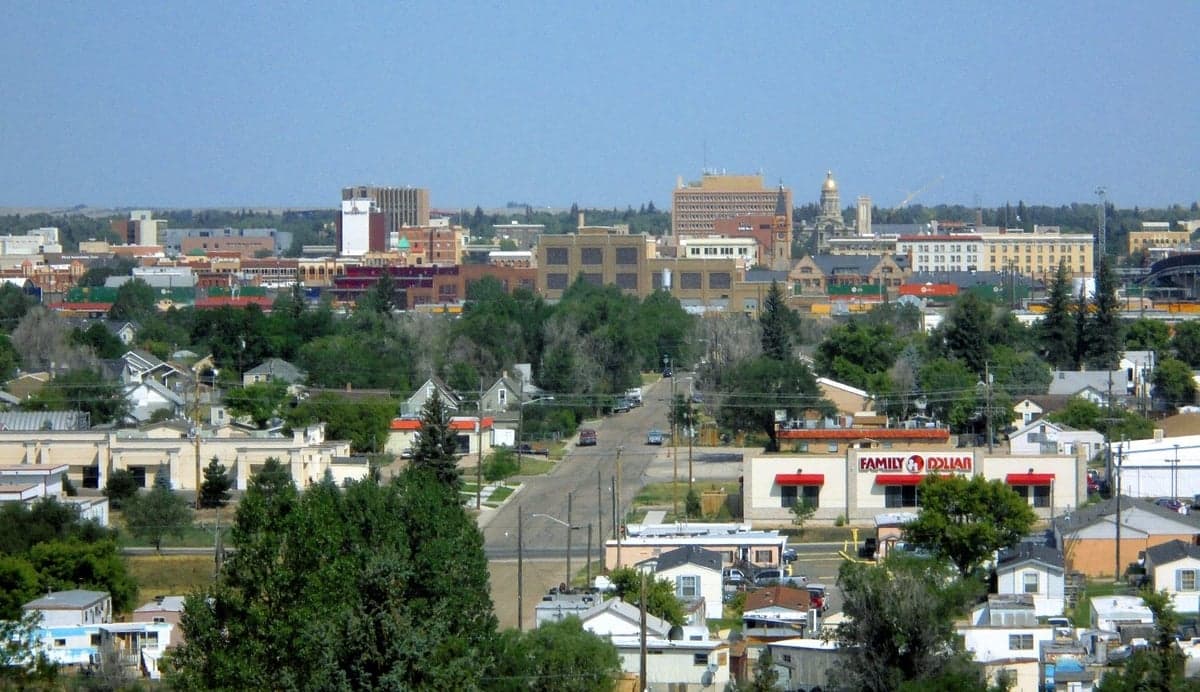
Photo: Wikipedia
Strategic Assessment of Cheyenne, WY
Workable tactical position. Some exposure to population density or targets, but generally defensible in a crisis.
What does the Strategic Assessment tell us?
Our Strategic Assessment grades tactical survivability of an area. Major population centers, military targets, fallout zones, natural disasters, and border exposure all drive risk — lower exposure means a more defensible position in a crisis.
This is heavily inspired by Joel Skousen's Strategic Relocation book. Highly recommended you checkout the book ($)What does this tell us?
Our Strategic Assessment grades tactical survivability of an area. Major population centers, military targets, fallout zones, natural disasters, and border exposure all drive risk — lower exposure means a more defensible position in a crisis.
This is heavily inspired by Joel Skousen's Strategic Relocation book. Highly recommended you checkout the book ($)Strategic Pillars

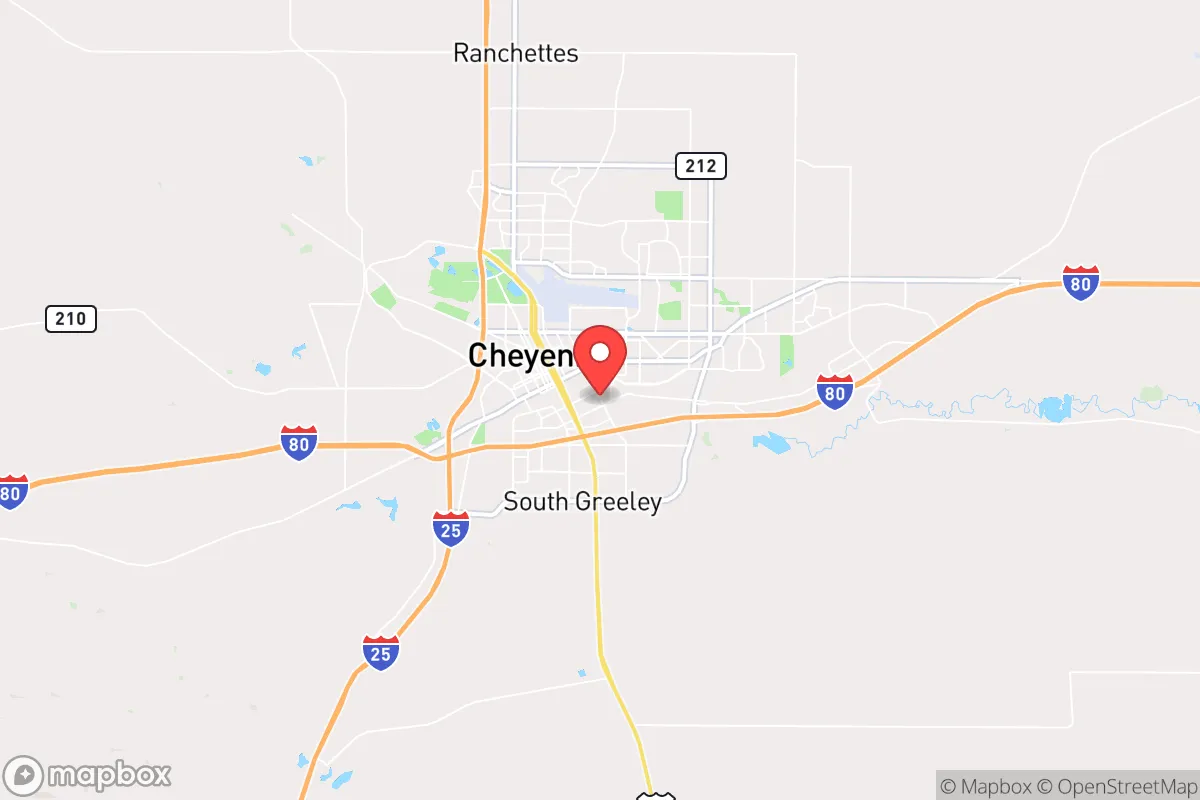
Key Distances
Regional Safe Places
Below is our recommended "safe zones" in Wyoming and the surrounding area based on our strategic heuristics. For most people, it's unrealistic to live in a “safe zone” full-time due to work, family or other personal reasons. They tend to be more rural. However, many of these areas are perfect for second homes and retreat properties that double as a vacation home or even a short-term rental.
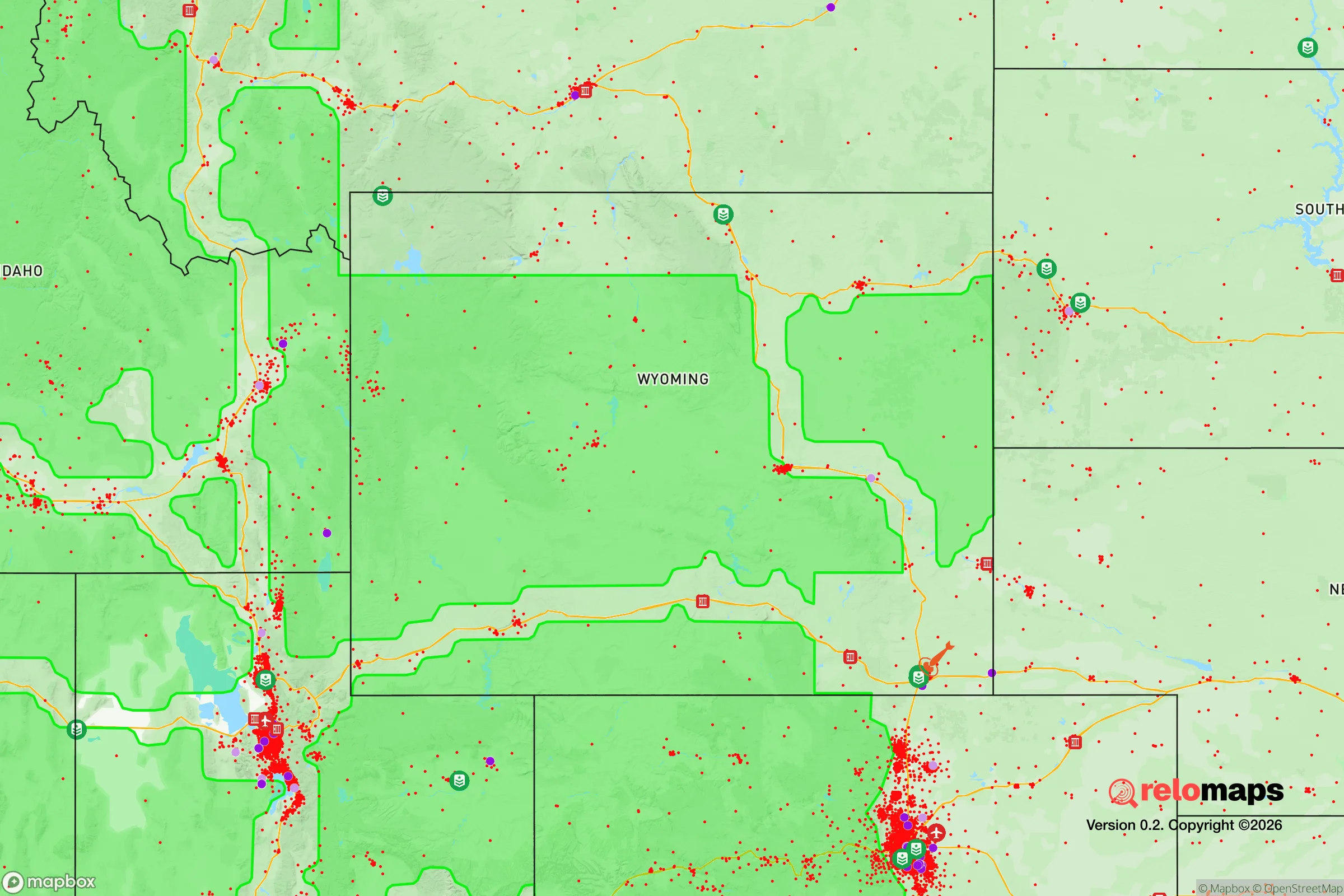
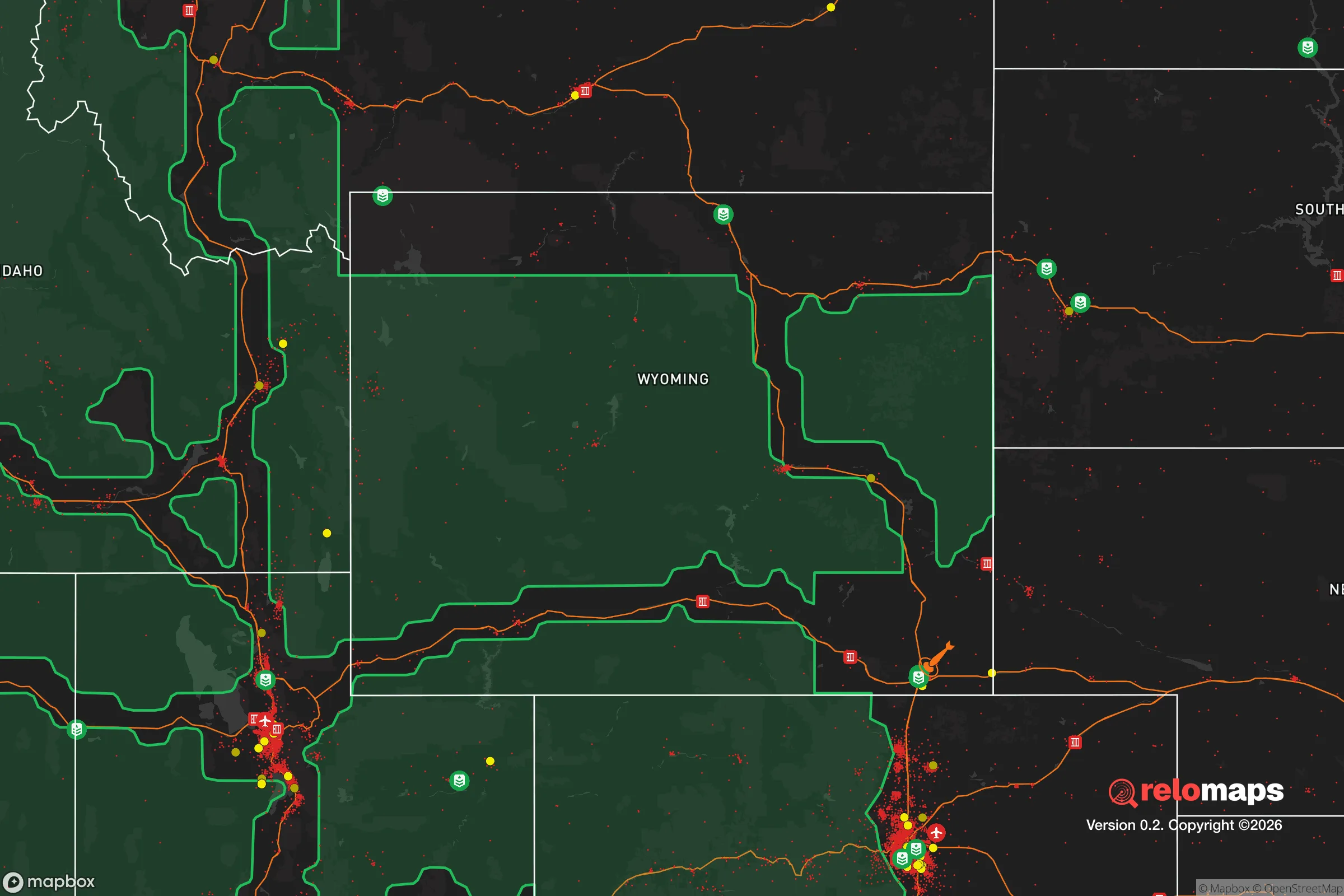


Important Note: For informational purposes only. This does not mean nothing bad ever happens in the green zones. Please use common sense. This is based on public data and modeled with AI. We tried to take a conservative approach but mistakes happen. We update this regularly as new information becomes available.
Solar Generator Recommendations
Backup power matters more here than in safer locations. We've picked three solar generators across budgets and capacity tiers — start with the budget unit if you only need a few essentials, or step up if you want to run a fridge and HVAC for days at a time.

Jackery Portable Power Station Explorer 300
Budget OptionPower on the Go: Weighing only 11 lbs, it's convenient to set up and store with book-sized foldable solar panels

BLUETTI Portable Power Station AC180
Designed for both indoor and outdoor scenarios, AC180 is highly capable as it has a robost capacity and continuous output power.

EF ECOFLOW DELTA Pro Ultra Power Station
Upgraded PickEcoFlow DELTA Pro Ultra is a whole-home energy system designed to grow with your family. Integrated with the Smart Home Panel 2, it scales to meet your evolving energy needs — keeping your home powered, intelligent, and secure through every stage of life.
We earn a commission, at no additional cost to you.
Strategic Assessment Analysis
Cheyenne, Wyoming, presents a compelling strategic option for those prioritizing long-term resilience and geographic insulation from the major fault lines of American instability. Its position as the state capital and a transportation hub offers a veneer of connectivity, but the reality is a low-density, high-plains environment that naturally buffers against the cascading failures of coastal megacities. For the prepper or survivalist, Cheyenne’s primary advantage is its location: far enough from the chaos of Denver (roughly 100 miles south) to avoid immediate spillover, yet close enough to access critical supplies and medical infrastructure if the grid holds. The city’s population of roughly 65,000 sits in a county of under 100,000, meaning you’re not dealing with the anonymity or resource strain of a major metro, but you’re also not isolated to the point of self-sufficiency failure. This is a place where a prepared individual or family can realistically establish a foothold without being overwhelmed by the sheer scale of a crisis.
Geographic position and natural advantages for long-term security
Cheyenne sits at the intersection of Interstates 25 and 80, which is a double-edged sword. On one hand, it’s a chokepoint for east-west and north-south movement, meaning any large-scale evacuation or military logistics will flow through here. On the other hand, that same infrastructure makes Cheyenne a natural resupply node if you can secure your own transport. The city’s elevation—over 6,000 feet—provides a natural defensive advantage: cold winters and thin air discourage the unprepared from lingering. The surrounding Laramie County is open, high-plains grassland with limited tree cover, which means visibility is excellent for anyone watching their perimeter. Water is a legitimate concern here—the region averages only 14–16 inches of precipitation annually—but the city draws from the North Platte River via the Cheyenne Stage II water project, a pipeline that provides a relatively secure municipal supply. For a relocator, the key is that Cheyenne is not dependent on a single, fragile aquifer like many Plains towns. The wind is constant, which is a nuisance but also a renewable energy asset; small-scale wind turbines are a realistic addition to a solar setup here, given the average wind speed of 12–13 mph. The natural geography offers no major floodplains, no earthquake zones, and no hurricane paths—just cold, dry, and open.
Risks, exposures, and proximity to fallout-relevant landmarks
No strategic assessment is honest without addressing the downsides. Cheyenne’s most significant exposure is its proximity to F. E. Warren Air Force Base, which hosts a wing of Minuteman III intercontinental ballistic missiles. This is a double-edged reality: the base provides economic stability and a strong military presence, but it also makes Cheyenne a potential target in any major conflict involving nuclear powers. The missile silos are scattered across southeastern Wyoming and western Nebraska, meaning the entire region is a valid target set. For the survivalist, this is the single biggest reason to reconsider—or to dig deep. If you’re concerned about fallout, you need to know that prevailing winds blow west to east, so a strike on the base or silos would likely push contamination toward Nebraska, not into the city itself. But that’s cold comfort. Beyond nuclear risk, Cheyenne faces the same threats as any small city: a single major employer (the state government, the base, and the Union Pacific railyard) means economic shocks hit hard. The city’s location on the High Plains also means blizzards can shut down everything for days, and the lack of dense tree cover means no natural windbreaks. For the prepper, the real risk isn’t a single event—it’s the slow grind of supply chain disruption. Cheyenne is a long way from major ports and manufacturing hubs, so any national-level disruption will hit here later but last longer.
Practical resilience for a relocator: food, water, energy, and defensibility
For a family or individual looking to establish a resilient household, Cheyenne offers a mixed but workable picture. Water is the first bottleneck: municipal supply is reliable for now, but a long-term grid-down scenario means you need a well or a rainwater catchment system. The city’s building codes allow for private wells on larger lots outside city limits, and the water table in Laramie County is generally accessible at 100–300 feet. Food production is limited by the short growing season (roughly 120 frost-free days) and alkaline soil, but cold-hardy crops like potatoes, carrots, and kale do well. Local farmers’ markets and the Cheyenne Farmers Market provide seasonal options, but year-round self-sufficiency requires greenhouse investment. Energy is a bright spot: Wyoming is a net energy exporter, and Cheyenne sits near the Black Hills Corporation service area, which has a relatively stable grid. Solar is viable despite the cold, and the constant wind makes small-scale turbines a realistic supplement. Defensibility is situational: the open terrain means you can see threats coming from miles away, but it also means you have limited cover. A rural property with a good line of sight and a reinforced structure is ideal. The city itself is not defensible in a collapse scenario—too many roads, too much open space—but a prepared household on the outskirts can hold its own. Community is the wildcard: Cheyenne has a strong ranching and military culture, which means a high proportion of gun owners and a general self-reliance ethic. That’s a double-edged sword—good for mutual aid, bad if you’re seen as an outsider. Building relationships before a crisis is non-negotiable here.
The overall strategic picture for Cheyenne is one of calculated trade-offs. It is not a bug-out location for the lone wolf—it is a base of operations for someone who wants to be near enough to infrastructure to survive a slow decline, but far enough from the chaos to avoid the initial shock. The nuclear risk from F. E. Warren is real and cannot be dismissed, but for those who accept that calculus, the city offers a stable, low-crime environment with a conservative, self-reliant population. The winters are harsh, the growing season is short, and the wind never stops—but those same factors filter out the unprepared. If your goal is to ride out a period of national instability without being in a refugee corridor or a contested urban zone, Cheyenne deserves a serious look. Just bring a good coat, a deep well, and a realistic understanding of what you’re signing up for.

* Values derived from national, state, county, city and local statistics and may differ in a specific area. Last updated: 2026-04-21T11:37:47.000Z
Narrative content on this page is AI-generated and may contain mistakes. Verify any details that matter before acting on them.
ReloMaps may earn a commission from affiliate links at no extra cost to you.

