Photo: Wikipedia
Demographics of Chico, TX
Affluence Level in Chico, TX
A below-average socioeconomic profile. Incomes, home values, and educational attainment trail the U.S., with higher poverty and unemployment.
People of Chico, TX
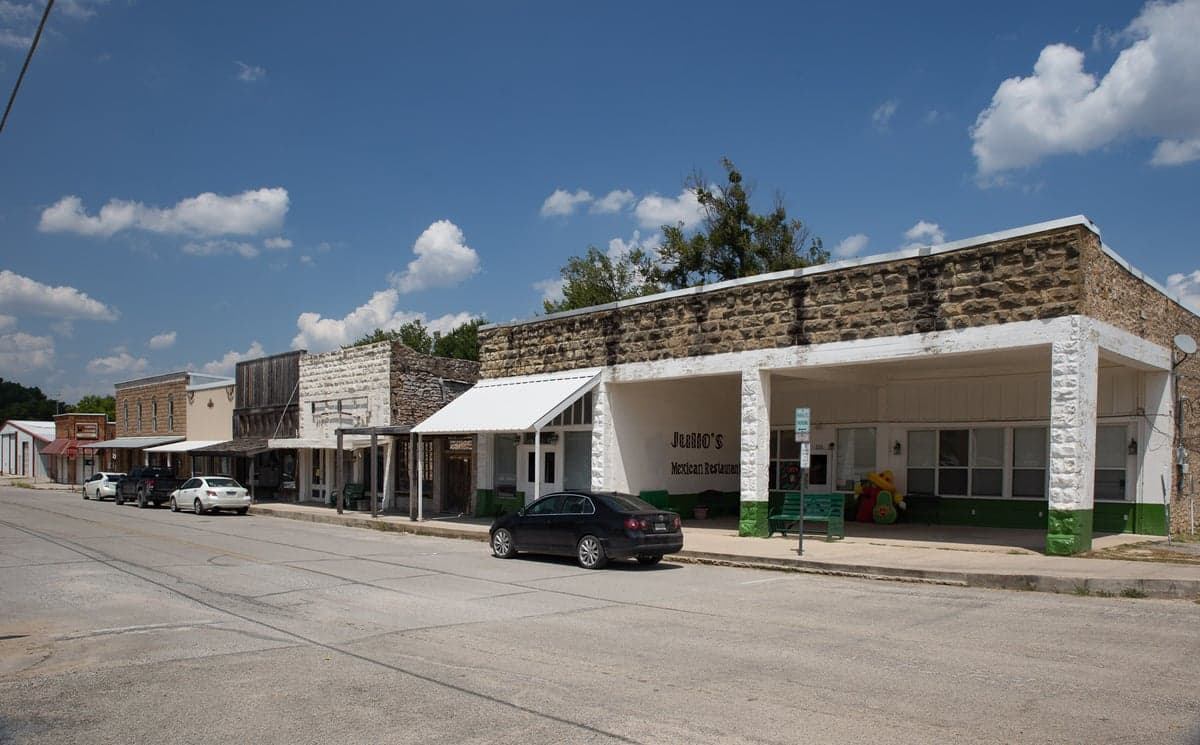
The people of Chico, Texas, today form a small, tightly-knit community of 1,174 residents, characterized by its overwhelming White majority (84.2%) and a significant Hispanic minority (12.9%). With a foreign-born population of just 1.1% and a college attainment rate of only 10.3%, Chico is a working-class, predominantly native-born town where family ties and local roots run deep. Its identity is that of a quiet, rural North Texas hub, distinct from the fast-growing suburbs of nearby Fort Worth, offering a slower pace and a strong sense of local heritage.
How the city was settled and grew
Chico’s human history begins in the late 19th century, founded in 1875 as a stop along the Texas and Pacific Railway. The original population was drawn by the promise of fertile farmland and the railroad’s economic lifeline. Early settlers were primarily Anglo-American farmers and ranchers from the Upland South, particularly Tennessee and Kentucky, who established homesteads along the rail corridor. The historic Downtown Chico district, centered around the railroad depot, became the commercial and social heart for these founding families. A second wave arrived in the early 1900s, composed of German and Czech immigrants seeking agricultural opportunities; they settled in the Northside neighborhood, where many of their descendants still live in century-old farmhouses. By 1930, the population had stabilized around 800, with the local economy anchored by cotton ginning, livestock, and a small but vital grain elevator.
Modern era (post-1965)
The post-1965 era brought modest but notable demographic shifts. The Immigration and Nationality Act of 1965 had little direct effect on Chico, as the town remained overwhelmingly native-born. Instead, the major change was domestic: the gradual suburbanization of the Dallas-Fort Worth metroplex began to reach Wise County. From the 1980s onward, a small but steady influx of White families from the Dallas area moved to Chico seeking cheaper land and a rural lifestyle. These newcomers largely settled in the Oak Ridge Estates subdivision, a planned development of single-family homes on larger lots built in the 1990s. Meanwhile, the Hispanic population grew from near-zero in 1970 to 12.9% by 2020, driven primarily by Mexican-American families moving from nearby Decatur and Fort Worth for affordable housing and agricultural work. This community concentrated in the Southside area, along Farm-to-Market Road 1810, where several Hispanic-owned businesses and a small Catholic mission church now serve as cultural anchors. The Black population remains negligible at 0.3%, and there are no recorded East/Southeast Asian or Indian subcontinent residents, reflecting Chico’s limited economic pull for immigrant communities.
The future
Chico’s population trajectory points toward slow, steady growth with increasing homogenization. The town’s population has grown by roughly 15% since 2000, but this is almost entirely driven by White domestic in-migration from the DFW metroplex. The Hispanic share is likely to plateau or grow only modestly, as the agricultural jobs that drew earlier waves are declining and younger Hispanic residents often move to larger cities for better opportunities. The Chico Heights neighborhood, a newer development of mid-priced homes built since 2015, is attracting young White families priced out of Fort Worth suburbs, reinforcing the town’s Anglo character. No significant immigrant communities are forming, and the foreign-born share remains below the national rural average. Over the next 10–20 years, Chico will likely become slightly larger but demographically more uniform, with a rising share of commuters working in Denton or Fort Worth and a shrinking agricultural base.
For someone moving in now, Chico is becoming a bedroom community for the DFW metroplex rather than an independent farming town. Its population is stable, predominantly White, and increasingly composed of families who value low housing costs and small-town schools over urban amenities. The lack of ethnic diversity and low college attainment rate suggest limited economic mobility for newcomers, but the community’s cohesion and low crime rates appeal to those seeking a predictable, family-oriented environment.

* Values derived from national, state, county, city and local statistics and may differ in a specific area. Last updated: 2026-05-11T00:47:47.000Z
Narrative content on this page is AI-generated and may contain mistakes. Verify any details that matter before acting on them.
ReloMaps may earn a commission from affiliate links at no extra cost to you.

