Photo: Wikipedia
Strategic Assessment of Chico, TX
Meaningful friction. Expect exposure to either population pressure, blast zones, or natural disaster risk. Consider buying a retreat property.
What does the Strategic Assessment tell us?
Our Strategic Assessment grades tactical survivability of an area. Major population centers, military targets, fallout zones, natural disasters, and border exposure all drive risk — lower exposure means a more defensible position in a crisis.
This is heavily inspired by Joel Skousen's Strategic Relocation book. Highly recommended you checkout the book ($)What does this tell us?
Our Strategic Assessment grades tactical survivability of an area. Major population centers, military targets, fallout zones, natural disasters, and border exposure all drive risk — lower exposure means a more defensible position in a crisis.
This is heavily inspired by Joel Skousen's Strategic Relocation book. Highly recommended you checkout the book ($)Strategic Pillars

Key Distances
Regional Safe Places
Below is our recommended "safe zones" in Texas and the surrounding area based on our strategic heuristics. For most people, it's unrealistic to live in a “safe zone” full-time due to work, family or other personal reasons. They tend to be more rural. However, many of these areas are perfect for second homes and retreat properties that double as a vacation home or even a short-term rental.

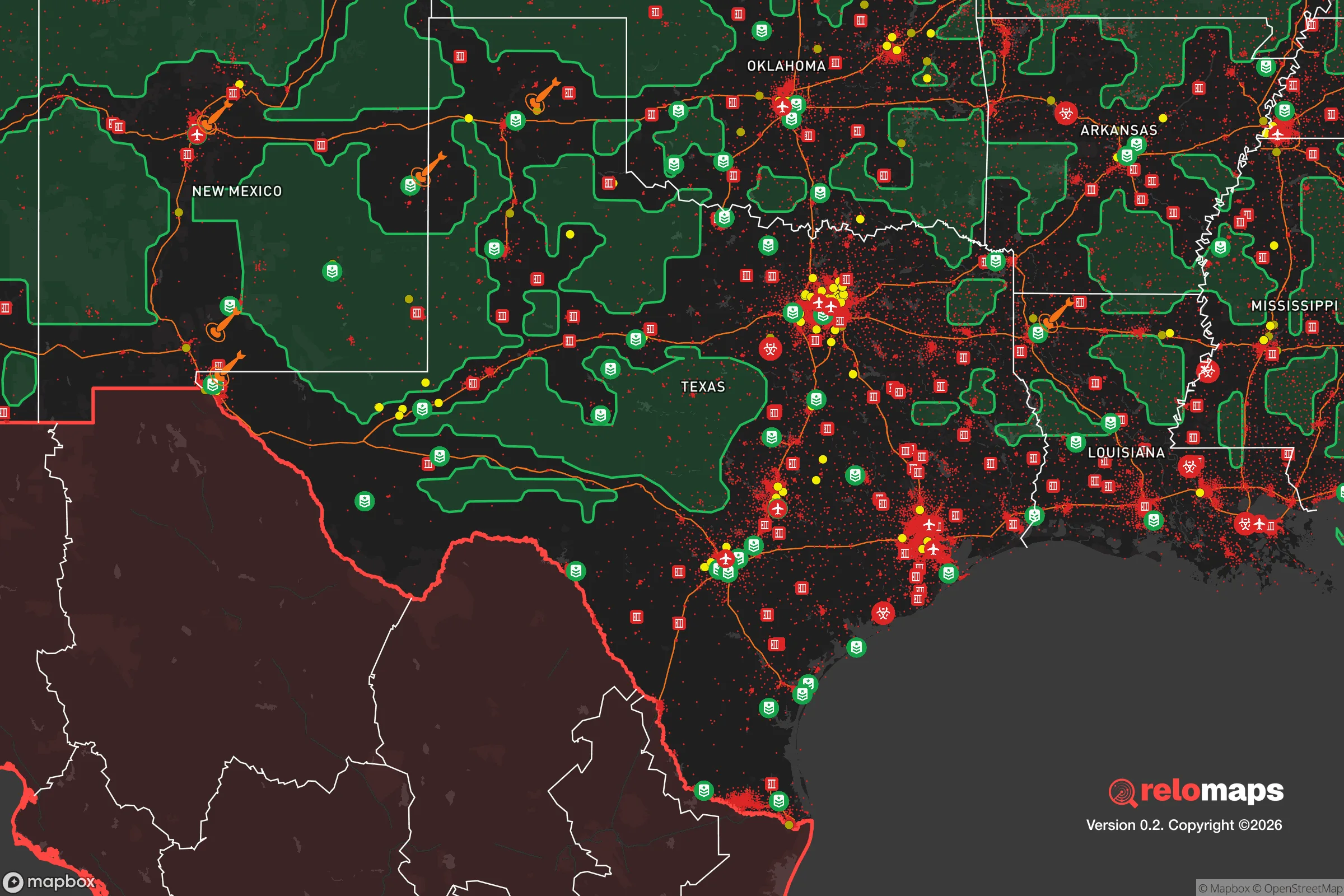


Important Note: For informational purposes only. This does not mean nothing bad ever happens in the green zones. Please use common sense. This is based on public data and modeled with AI. We tried to take a conservative approach but mistakes happen. We update this regularly as new information becomes available.
Solar Generator Recommendations
Backup power matters more here than in safer locations. We've picked three solar generators across budgets and capacity tiers — start with the budget unit if you only need a few essentials, or step up if you want to run a fridge and HVAC for days at a time.

Jackery Portable Power Station Explorer 300
Budget OptionPower on the Go: Weighing only 11 lbs, it's convenient to set up and store with book-sized foldable solar panels

BLUETTI Portable Power Station AC180
Designed for both indoor and outdoor scenarios, AC180 is highly capable as it has a robost capacity and continuous output power.

EF ECOFLOW DELTA Pro Ultra Power Station
Upgraded PickEcoFlow DELTA Pro Ultra is a whole-home energy system designed to grow with your family. Integrated with the Smart Home Panel 2, it scales to meet your evolving energy needs — keeping your home powered, intelligent, and secure through every stage of life.
We earn a commission, at no additional cost to you.
Strategic Assessment Analysis
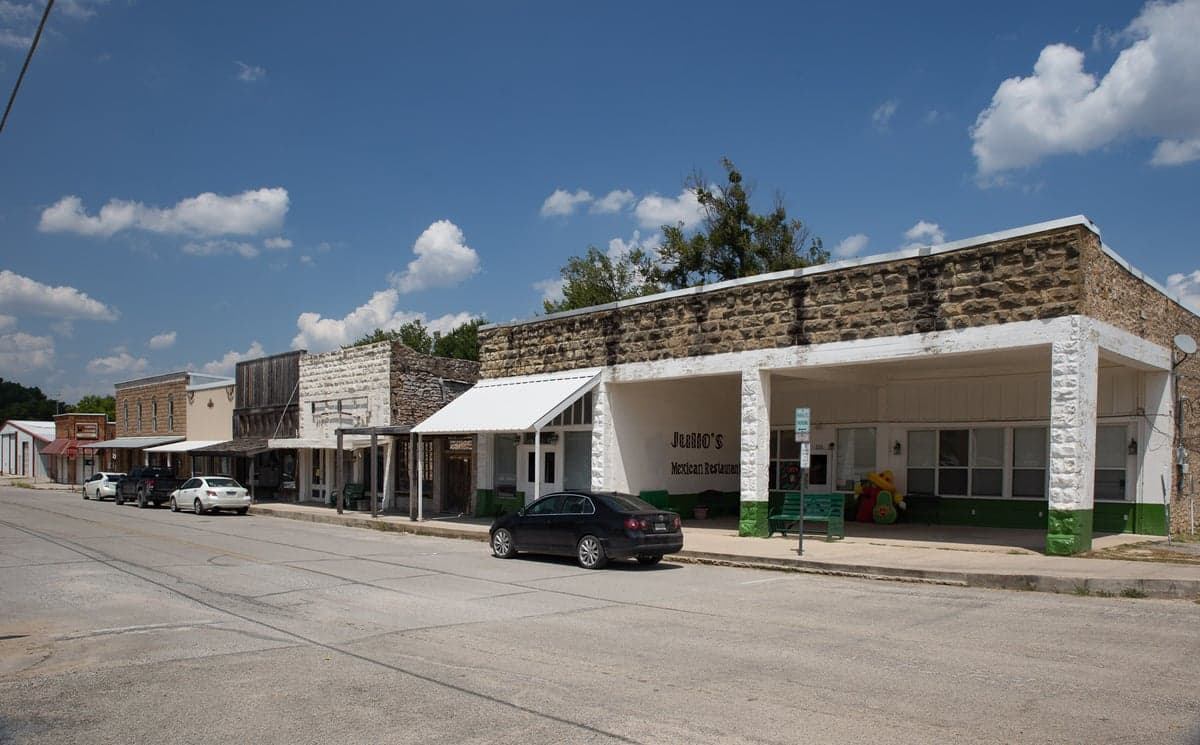
Chico, Texas, sits in a sweet spot that few relocators from either coast fully appreciate: close enough to the Metroplex to access its resources, yet far enough to avoid the blast radius of its inevitable collapse. This Wise County town of roughly 5,000 people offers a strategic buffer that makes it a serious contender for anyone thinking in terms of decades, not just next year. Its position along U.S. 380 and proximity to the Red River give it a logistical edge that matters when supply chains snap and urban centers become liabilities.
Geographic position and natural advantages for long-term security
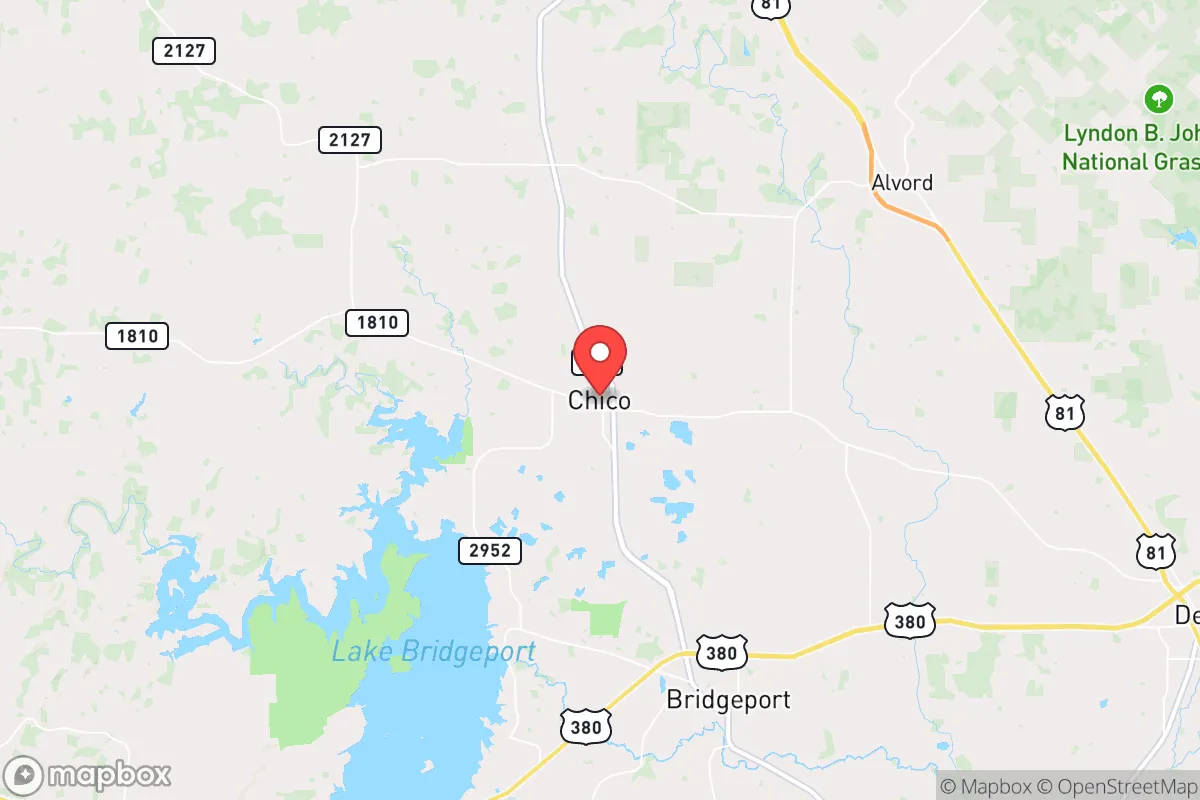
Chico’s location is its primary asset. It sits roughly 50 miles northwest of Fort Worth, placing it outside the immediate fallout zone of a major metropolitan disaster—whether that’s a grid-down event, civil unrest, or a coordinated attack on critical infrastructure. The town is nestled in the rolling hills of the Cross Timbers region, which provides natural cover and defensible terrain compared to the flat, exposed expanses of the High Plains. The area receives about 35 inches of rainfall annually, enough to support rain catchment and small-scale agriculture without the drought risk that plagues West Texas. The Trinity Aquifer runs beneath Wise County, offering a groundwater source that isn’t as heavily tapped as the Ogallala further west. For a relocator thinking about water independence, that’s a concrete advantage—many rural Texas counties are already fighting over diminishing surface water rights, but Chico sits on a recharge zone that gives it a longer timeline before scarcity becomes acute.
Risks, exposures, and proximity to fallout-relevant landmarks
No location is a fortress, and Chico has its exposures. The most obvious is its proximity to the Dallas-Fort Worth metroplex, a population center of over 7 million that would become a humanitarian catastrophe in any serious national crisis. If a major event triggers a mass exodus, U.S. 380 and I-35W would become chokepoints—and Chico lies directly in the path of anyone fleeing north or west. That means the town could face a wave of refugees, not an invasion, but a wave that would strain local resources within days. The Wise County landfill and the nearby Bridgeport coal plant are also worth noting: the plant is a potential target for sabotage or a secondary hazard if grid failure leads to uncontrolled shutdowns. On the plus side, Chico is far from the nuclear reactors at Comanche Peak (Glen Rose) and the Pantex plant near Amarillo, which are higher-profile targets. There are no major military installations or chemical storage facilities within a 30-mile radius, which reduces the risk of a targeted strike or industrial accident. The biggest practical risk for a relocator is the lack of redundancy in local infrastructure—Chico’s water system relies on a single treatment plant, and the power grid is the same ERCOT system that failed in 2021. A prepper moving here needs to assume that both will fail simultaneously in a crisis, and plan accordingly.
Practical resilience for a relocator: food, water, energy, and defensibility
For someone serious about self-sufficiency, Chico offers a workable baseline. The surrounding Wise County farmland is productive—hay, cattle, and some row crops—and the local soil is suitable for gardening with amendments. The growing season runs about 230 days, long enough for two crop cycles of staples like corn, beans, and squash. Water is the critical variable: the Trinity Aquifer is accessible via private wells at depths of 200-400 feet, and the cost to drill is reasonable compared to the Hill Country. Rainwater catchment is viable, with average annual rainfall supporting a 1,000-gallon tank system for a small household. Energy-wise, the area gets 220+ sunny days per year, making solar a solid play, but the frequent spring storms and occasional ice events mean battery backup is non-negotiable. Wood is abundant in the Cross Timbers—post oak and juniper—so a wood stove or outdoor boiler is a practical hedge against grid failure. Defensibility is mixed: Chico itself is a small, spread-out town with multiple entry points, but the surrounding rural properties offer better options. A 10-20 acre parcel with a creek frontage and a single gravel road approach gives a relocator the ability to control access without looking like a compound. The local sheriff’s office is understaffed (about 30 deputies for the entire county), so in a prolonged crisis, law enforcement response will be measured in hours, not minutes. That means a relocator needs to be prepared to handle security personally, but it also means the area is less likely to see the kind of heavy-handed lockdowns or confiscation orders that plague more populated counties.
The overall strategic picture for Chico is one of calculated trade-offs. It’s not a remote bunker in the mountains—it’s a working-class Texas town with a functional economy, decent schools, and a population that still remembers how to fix things themselves. The biggest threat is the metroplex to the southeast, but that same proximity gives you access to medical care, hardware stores, and a labor market that can sustain a remote career or a local trade. For a conservative relocator who wants to be prepared without going full hermit, Chico offers a realistic middle path: low enough population density to avoid the worst of urban collapse, high enough resource availability to make self-sufficiency achievable, and a community that won’t look at you sideways for owning a generator and a root cellar. The key is to arrive before the next crisis, not after. If you wait until the news confirms what you already suspect, the window will have closed.

* Values derived from national, state, county, city and local statistics and may differ in a specific area. Last updated: 2026-05-11T00:47:47.000Z
Narrative content on this page is AI-generated and may contain mistakes. Verify any details that matter before acting on them.
ReloMaps may earn a commission from affiliate links at no extra cost to you.

