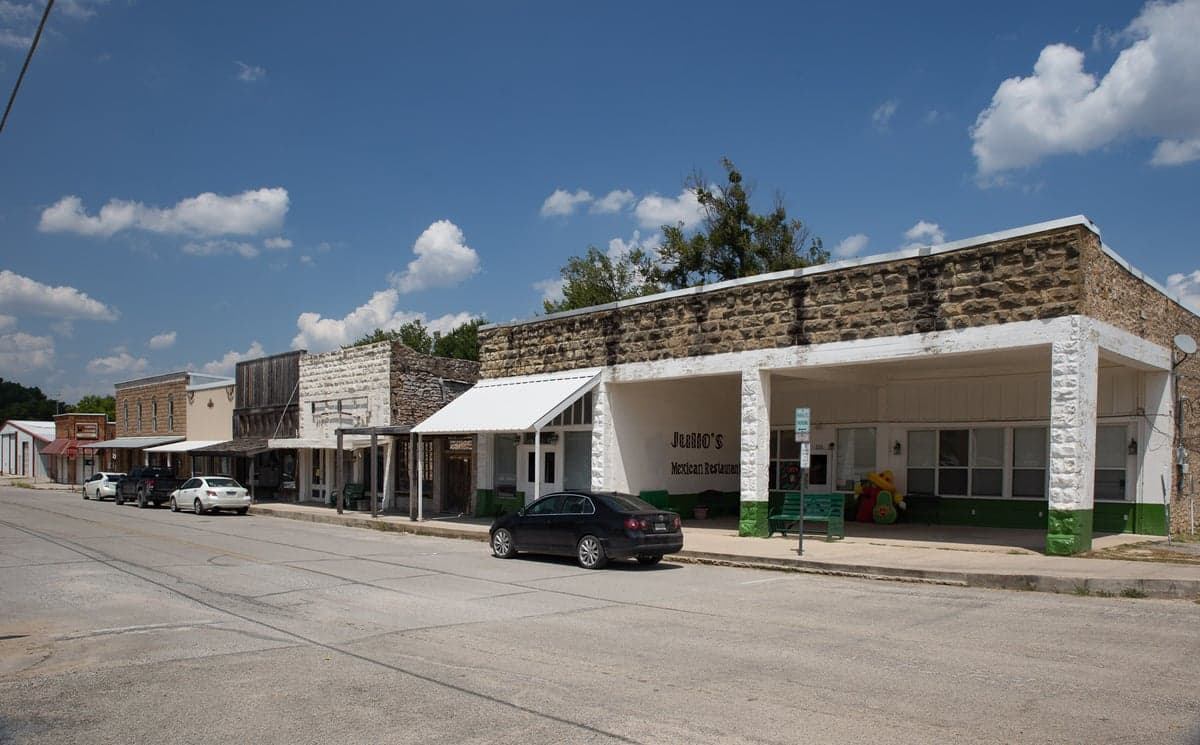

Photo: Wikipedia
Political ClimatePolitical Climate in Chico, TX
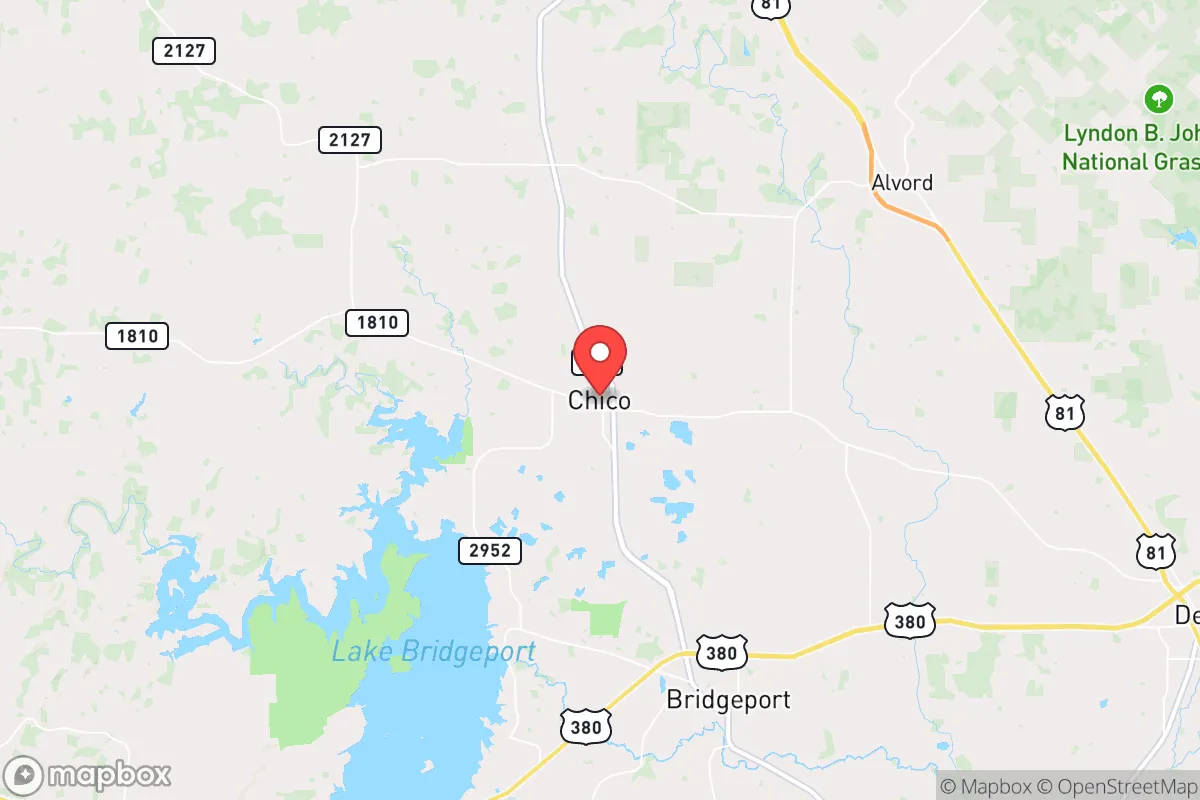
District shown is the primary district for this city’s centroid. Cities may span multiple districts.
Local Political AnalysisPolitical Analysis of Chico, TX
Chico, Texas, is a small, tight-knit community that has long leaned solidly conservative, and that hasn’t changed much even as the rest of the state has seen some shifts. You’ve got to remember, this is Wise County, and folks around here take their personal freedoms and Second Amendment rights seriously. The surrounding state of Texas, TX, carries a Cook PVI of R+4, which tells you the state overall is still red, but Chico feels a whole lot redder than that number suggests. We’re talking about a place where the local elections are decided by who’s more committed to limited government, not by which party can promise the most handouts. The trajectory here is steady—if anything, the recent influx of folks from places like Dallas and Fort Worth has actually reinforced the conservative backbone, because a lot of those people moved here specifically to escape the overreach they saw in the big cities.
How it compares
When you stack Chico up against the broader Texas, TX, landscape, the difference is night and day. The state’s R+4 rating means it’s still reliably Republican, but you’ve got pockets like Austin and Houston that are pushing progressive policies on everything from property taxes to school curriculum. Chico, on the other hand, is a world apart. Compare it to nearby Decatur or even Bridgeport—those towns have a similar vibe, but Chico is even more insulated from the coastal influence. The contrast is sharpest when you look at places like Denton, just a half-hour east, where the university crowd has started to tilt things left. In Chico, you won’t find that kind of drift. The local government here is still focused on keeping taxes low and staying out of your business, which is exactly how it should be. The state might be flirting with some big-government ideas on infrastructure and energy, but Chico’s leadership isn’t buying in.
What this means for residents
For the folks living here, this political climate means you can still live your life without a bunch of bureaucrats telling you how to run your household or your small business. The school board isn’t pushing critical theory, and the county sheriff isn’t going to enforce any federal overreach on gun rights. That’s a big deal when you see what’s happening in other parts of Texas, where property taxes are skyrocketing and local ordinances are getting more intrusive. In Chico, the biggest political fights are about keeping the rural character intact—things like zoning for farmland versus new subdivisions. It’s a welcome change from the nonsense you hear on the news. The downside? If you’re hoping for a lot of government services, you won’t find them here, but most residents see that as a feature, not a bug. You’re free to handle your own problems without the state sticking its nose in.
One thing that really sets Chico apart is the cultural resistance to any progressive drift. You won’t see a pride flag flying over city hall, and the local churches are still the center of community life. The policy distinctions are subtle but real—like how the town handles water rights and land use, always with a preference for private property over public mandates. Looking ahead, the concern is that as the Metroplex expands, more folks from blue areas might try to bring their politics with them. But so far, the old-timers and the newcomers who get it have held the line. If you value your personal freedoms and want to live somewhere that hasn’t sold out to the progressive agenda, Chico is a solid bet. Just don’t expect it to change anytime soon—and that’s exactly the point.

State Political ClimatePolitical Climate in Texas
State Political AnalysisPolitical Environment in the State
Texas remains a solidly Republican state at the statewide level, with a Cook Partisan Voting Index of R+4, but that headline number masks a dramatic and ongoing realignment. Over the past 10-20 years, the dominant coalition has shifted from a traditional, rural-and-suburban conservative base to a more complex mix: booming, diverse suburbs are trending left, while deep-red rural and exurban areas have become even more Republican. The result is a state that is still reliably red for now, but where the margins are tightening faster than almost anywhere else in the country, driven by massive in-migration from blue states and explosive growth in the urban core.
Urban vs. rural divide
The political map of Texas is a study in contrasts. The major metros—Houston, Dallas-Fort Worth, San Antonio, and Austin—are the engines of Democratic growth. Harris County (Houston) and Dallas County have become reliably blue, while Travis County (Austin) is one of the most liberal counties in the South. The real story, though, is the suburbs: places like Collin County (north of Dallas) and Williamson County (north of Austin) were once GOP strongholds but have shifted noticeably leftward in recent cycles, with Collin County voting for Biden in 2020 by a slim margin after going for Trump by 12 points in 2016. Meanwhile, the rural and exurban areas—think the Panhandle around Lubbock and Amarillo, East Texas, and the Rio Grande Valley—have become even more Republican. The Valley, once a Democratic stronghold, flipped hard toward Trump in 2020 and 2024, driven by conservative cultural values and economic concerns. The divide isn't just geographic; it's cultural and demographic, with younger, more diverse suburbanites pulling one way and older, whiter rural voters pulling the other.
Policy environment
Texas's policy environment is defined by a low-tax, low-regulation posture that has been a magnet for businesses and families. There is no state income tax, and property taxes are high but capped by law (the 2019 reform capped annual appraisal increases at 10% for homesteads). The regulatory climate is business-friendly, with minimal red tape on everything from oil and gas to tech startups. On education, the state has leaned into school choice, with the 2023 passage of a universal Education Savings Account (ESA) program that gives parents direct funding for private or homeschool options—a major win for parental rights. Healthcare policy is more mixed: Texas did not expand Medicaid under the ACA, and the state has some of the strictest abortion laws in the nation (a near-total ban after a heartbeat is detected, with no exceptions for rape or incest). Election laws have tightened significantly, with the 2021 SB 1 imposing stricter voter ID requirements, limiting drive-through and 24-hour voting, and enhancing poll watcher access. For a conservative-leaning resident, the policy environment is broadly favorable, though the property tax burden and lack of Medicaid expansion are ongoing pain points.
Trajectory & freedom
On the freedom front, Texas has moved in two directions simultaneously. On personal liberty, the state has expanded rights significantly: the 2021 permitless carry law (HB 1927) allows most adults to carry a handgun without a license, and the 2023 parental rights bill (HB 900) requires public school libraries to remove books deemed "sexually explicit" and gives parents more control over curriculum. The 2023 ESA program is another clear expansion of educational freedom. However, on medical freedom, the state has been restrictive: the 2021 ban on vaccine mandates for private employers (SB 968) was a win for bodily autonomy, but the state also banned gender-affirming care for minors in 2023 (SB 14), which some see as protecting children and others as government overreach. Property rights remain strong, with no statewide rent control and minimal zoning in most areas, though some cities like Austin have experimented with land-use restrictions. The overall trajectory is toward more freedom on guns, education, and parental rights, but with a growing tension between state-level conservative policy and the cultural drift of its largest cities.
Civil unrest & political movements
Texas has seen its share of political flashpoints. The 2020 protests in Austin and Dallas over police brutality were large and occasionally violent, leading to a state-level crackdown on "defund the police" movements (the 2021 law HB 1900 penalizes cities that cut police budgets). Immigration politics are a constant source of tension: the state has bused thousands of migrants to sanctuary cities like New York and Chicago, and Governor Abbott's Operation Lone Star has deployed state troopers and National Guard to the border, leading to legal battles with the Biden administration. The "secession" rhetoric, while mostly performative, has a real following—the Texas Nationalist Movement has pushed for a 2024 referendum on independence, though it has no legal path. Election integrity remains a hot-button issue: the 2020 and 2022 cycles saw widespread claims of fraud (largely unsubstantiated), leading to the aforementioned SB 1. A new resident would notice the heavy presence of law enforcement at the border, the omnipresent political signage in rural areas, and the occasional protest in liberal enclaves like Austin or El Paso.
Projection
Over the next 5-10 years, Texas is likely to become more competitive at the statewide level but remain Republican-leaning, thanks to continued in-migration from conservative-leaning areas of California and the Northeast. The suburbs will continue to shift left, but the rural and exurban areas will become even more red, and the Hispanic vote—especially in the Rio Grande Valley—is trending Republican. The key battlegrounds will be the fast-growing exurbs like Comal County (north of San Antonio) and Montgomery County (north of Houston), which are currently deep red but could become competitive as they diversify. The biggest wildcard is the urban core: if Austin and Dallas continue to attract young, progressive transplants, the state could flip blue within a decade. For now, the most likely scenario is a slow, grinding shift toward purple, with the state remaining red but with narrower margins. A new resident moving in now should expect a state that is still conservative on most issues but where the culture wars are intensifying, especially around education, immigration, and local control.
For a conservative-leaning individual or family, Texas offers a strong alignment on taxes, gun rights, parental control in education, and a business-friendly environment. The trade-offs are real: property taxes are high, the summer heat is brutal, and the political landscape is increasingly polarized between the big cities and the rest of the state. If you value low regulation, personal liberty on firearms and schooling, and a state that pushes back against federal overreach, Texas is a solid bet. Just be prepared for the culture war to be a constant background noise, and know that the state's political future is anything but settled.
* Values derived from national, state, county, city and local statistics and may differ in a specific area. Last updated: 2026-05-11T00:47:47.000Z
Narrative content on this page is AI-generated and may contain mistakes. Verify any details that matter before acting on them.
ReloMaps may earn a commission from affiliate links at no extra cost to you.

