
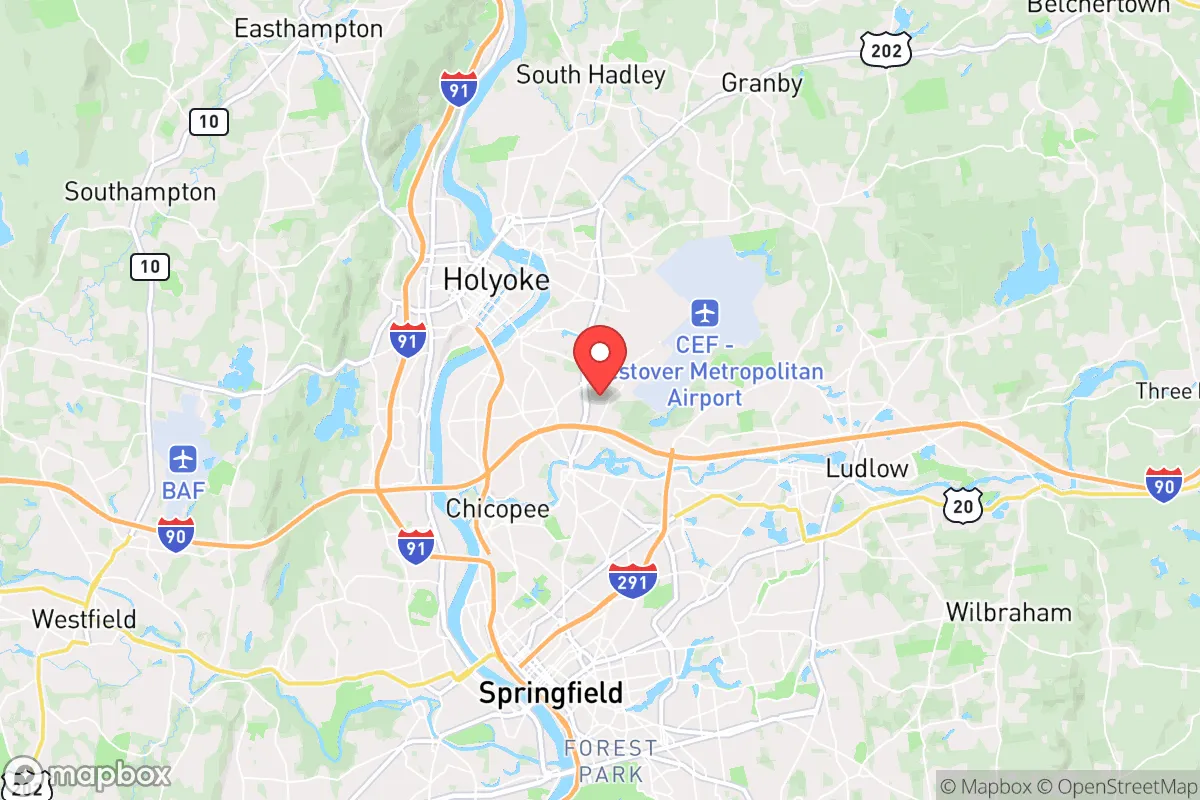
Photo: Wikipedia
Personal Sovereignty in Chicopee, MA
Viable for self-reliance. Generally workable, though some barriers may limit total independence.
What does Personal Sovereignty tell us?
Personal Sovereignty measures your capacity for self-reliance and independence with minimal government friction. Higher scores mean fewer barriers between you and the way you want to live... but it assumes you have the space you need and good neighbors.
What does this tell us?
Personal Sovereignty measures your capacity for self-reliance and independence with minimal government friction. Higher scores mean fewer barriers between you and the way you want to live... but it assumes you have the space you need and good neighbors.
State Policy
Energy independence: Importer (5% of energy produced in-state)
Personal Liberty
Homesteading

Personal Liberty Analysis
Chicopee, Massachusetts, presents a challenging environment for those prioritizing personal sovereignty, as the Commonwealth's dense regulatory framework and progressive governance significantly constrain individual autonomy. While the city itself offers some practical advantages for self-reliance, such as relatively affordable land compared to eastern Massachusetts, residents must navigate a state-level political climate that actively limits gun rights, parental control in education, and the ability to live off-grid. For a survivalist or prepper evaluating Chicopee, the core tension is between the city's workable blue-collar infrastructure and a state government that views personal preparedness and non-conformity with deep suspicion. The bottom line: you gain some practical space, but you surrender substantial legal and cultural freedom.
Tax burden and regulatory posture for independent living
Massachusetts is a high-tax, high-regulation state, and Chicopee is no exception. The state's income tax is a flat 5.0% on all earned income, with no standard deduction for most filers, meaning even modest earnings are taxed from the first dollar. Property taxes in Chicopee are moderate for the state—around $15.50 per $1,000 of assessed value—but the state's Proposition 2½ cap on annual levy increases (2.5% plus new growth) provides only limited predictability, as assessments can still rise with market values. Sales tax is 6.25%, and the state aggressively taxes capital gains, dividends, and estates (with a $1 million exemption threshold that catches many middle-class estates). For a prepper, the regulatory posture is even more stifling: building codes are strict, environmental permitting is onerous, and the state's MassSave energy program mandates costly efficiency upgrades for any significant home renovation. There is no meaningful "right to build" a self-sufficient homestead; you will need permits for everything from a chicken coop to a rainwater catchment system. The state's Right to Farm law offers some protection for agricultural activities, but it is weak in practice and often overridden by local nuisance ordinances. In short, the tax and regulatory environment is designed to discourage independent living and funnel resources toward state-controlled programs.
Self-defense and gun law specifics in Chicopee
Massachusetts has some of the most restrictive gun laws in the nation, and Chicopee residents must comply with them fully. The state requires a License to Carry (LTC) for any handgun, and the issuing authority—the Chicopee Police Department—has significant discretion. While the city is generally shall-issue for LTCs, the process is lengthy (often 6-12 months), requires a state-approved safety course, and includes a background check that can deny applicants for minor infractions. Assault weapons are banned by name and feature, including common semi-automatic rifles like the AR-15. Magazines are limited to 10 rounds for all firearms. There is no permitless carry; open carry is effectively illegal. The state's red flag law (ERPO) allows police or family members to petition a court to seize firearms without a criminal conviction, based on vague "risk" standards. For a prepper, this means your defensive capabilities are legally capped at a 10-round handgun or a bolt-action rifle. Stockpiling ammunition is legal but subject to state record-keeping requirements for dealers. The state also bans the possession of binary triggers and other rapid-fire devices. Self-defense in the home is legally recognized under the Castle Doctrine, but there is no "Stand Your Ground" law; you have a duty to retreat if safely possible outside the home. For anyone serious about self-defense, Chicopee's gun laws are a significant liability.
Self-reliance and homesteading viability in Chicopee
Chicopee offers mixed prospects for homesteading and off-grid living. The city's zoning is predominantly suburban and urban, with most residential lots ranging from 0.1 to 0.5 acres. While some older neighborhoods have larger lots (up to 1 acre), true rural parcels are rare within city limits. The city allows backyard chickens (hens only, no roosters) with a permit, but beekeeping, goats, and other livestock are generally prohibited on lots under 1 acre. Rainwater collection is legal but must comply with state water rights laws, and any system exceeding 250 gallons requires a permit. Solar panels are permitted but must meet strict building code and historic district restrictions in some areas. Off-grid living is effectively illegal: the city requires connection to municipal water and sewer for any habitable structure, and there is no legal pathway to disconnect from the grid. Composting toilets are not recognized as a primary sanitation solution. For a prepper, this means you cannot achieve true self-sufficiency within city limits. The best option is to purchase land in neighboring towns like Granby or South Hadley, where zoning is more permissive and lot sizes are larger (2-5 acres common). Even there, however, state building codes and environmental regulations will limit your ability to build a fully independent homestead. The Connecticut River Valley soil is fertile, but the growing season is short (roughly 150 days), and the state's pesticide and fertilizer regulations are strict.
Personal liberties: parental rights, medical autonomy, and property
Massachusetts is a national leader in restricting parental rights and medical autonomy. The state has no parental consent requirement for minors to receive reproductive healthcare, including abortion and gender transition services, and schools are prohibited from notifying parents if a child changes their gender identity or pronouns. The state's vaccination mandate for school attendance is among the strictest in the country, with only narrow medical exemptions allowed (no religious or philosophical exemptions). During the COVID-19 pandemic, Massachusetts imposed some of the longest-lasting emergency orders, including business closures and mask mandates, and the governor retains broad emergency powers. Medical freedom is further limited by the state's Prescription Monitoring Program, which tracks all controlled substance prescriptions, and by the state's restrictive telehealth laws. On property rights, Massachusetts is a strong "home rule" state, meaning local governments have significant power to regulate land use, but the state can and does override local zoning for affordable housing projects under Chapter 40B. Eminent domain is used aggressively for infrastructure projects, and there is no constitutional protection for property owners beyond federal standards. Free speech is constitutionally protected, but the state's anti-SLAPP law is strong, and the state has enacted laws against "hate speech" that can be used to chill political expression. For a prepper or conservative, Chicopee offers little legal protection for the core liberties of family, body, and property.
Overall, Chicopee ranks low on the personal sovereignty scale compared to states like New Hampshire, Texas, or Idaho. The city itself is a working-class community with a practical, no-nonsense culture, but it operates under a state government that actively centralizes control over nearly every aspect of life. For a survivalist, the best strategy is to treat Chicopee as a base of operations—a place to earn income and access resources—while maintaining a secondary property in a more liberty-friendly jurisdiction. The tax burden, gun restrictions, and erosion of parental rights are not likely to improve in the near term, as the state's political trajectory is firmly progressive. If you are willing to fight for every inch of freedom through local activism and legal compliance, Chicopee is livable. If you seek a place where personal sovereignty is the default, look elsewhere.

* Values derived from national, state, county, city and local statistics and may differ in a specific area. Last updated: 2026-05-01T02:07:01.000Z
Narrative content on this page is AI-generated and may contain mistakes. Verify any details that matter before acting on them.
ReloMaps may earn a commission from affiliate links at no extra cost to you.

