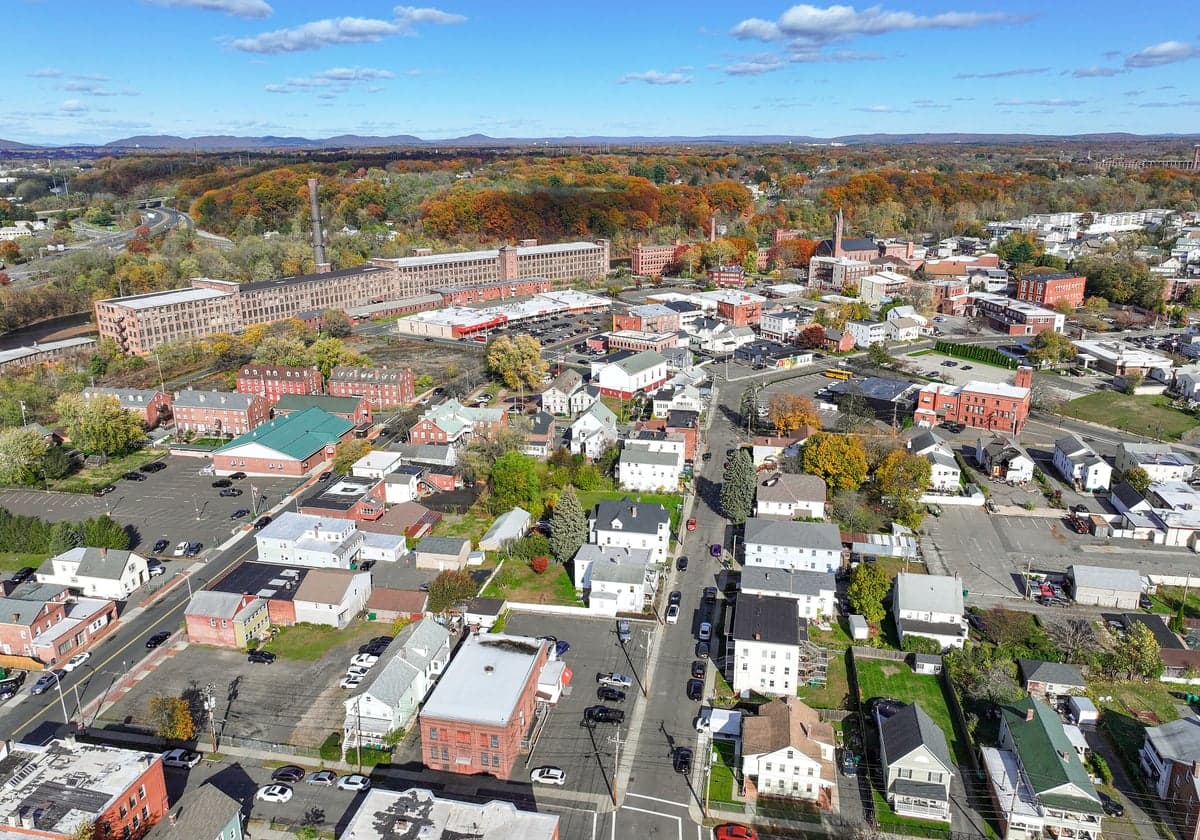
Photo: Wikipedia
Quality of Life in Chicopee, MA
Above-average quality of iife. The area offers a reasonable cost of living, decent mobility, and a mix of neighborhood amenities.
What does Quality of Life tell us?
Quality of Life blends cost of living, nearby amenities, socioeconomic signals, and neighborhood character. City-level scores represent the whole municipality; individual neighborhoods can differ.
What does this tell us?
Quality of Life blends cost of living, nearby amenities, socioeconomic signals, and neighborhood character. City-level scores represent the whole municipality; individual neighborhoods can differ.
Cost of Living
7% below national average
The Real Cost of Living in Chicopee, MA for 2026
| Tier | Individual | Family (4) |
|---|---|---|
| Survival | $18k | $33k |
| Comfortable | $49k | $72k |
| Luxury | $106k+ | $165k+ |
| Elite (Top 5%) | $125k+ | $194k+ |
93%
The Area Signal
A metric tracking the socioeconomic signals of the area.
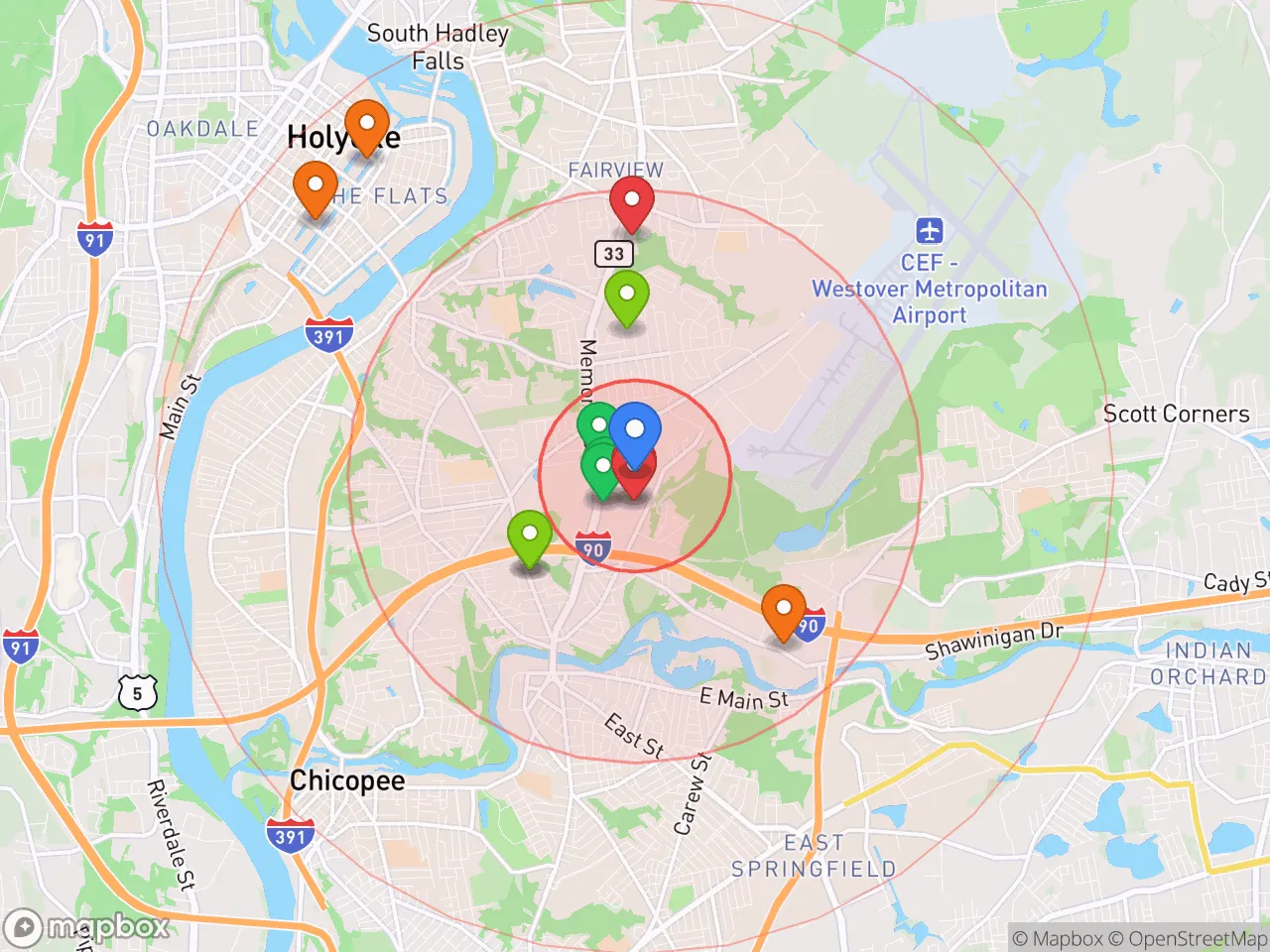
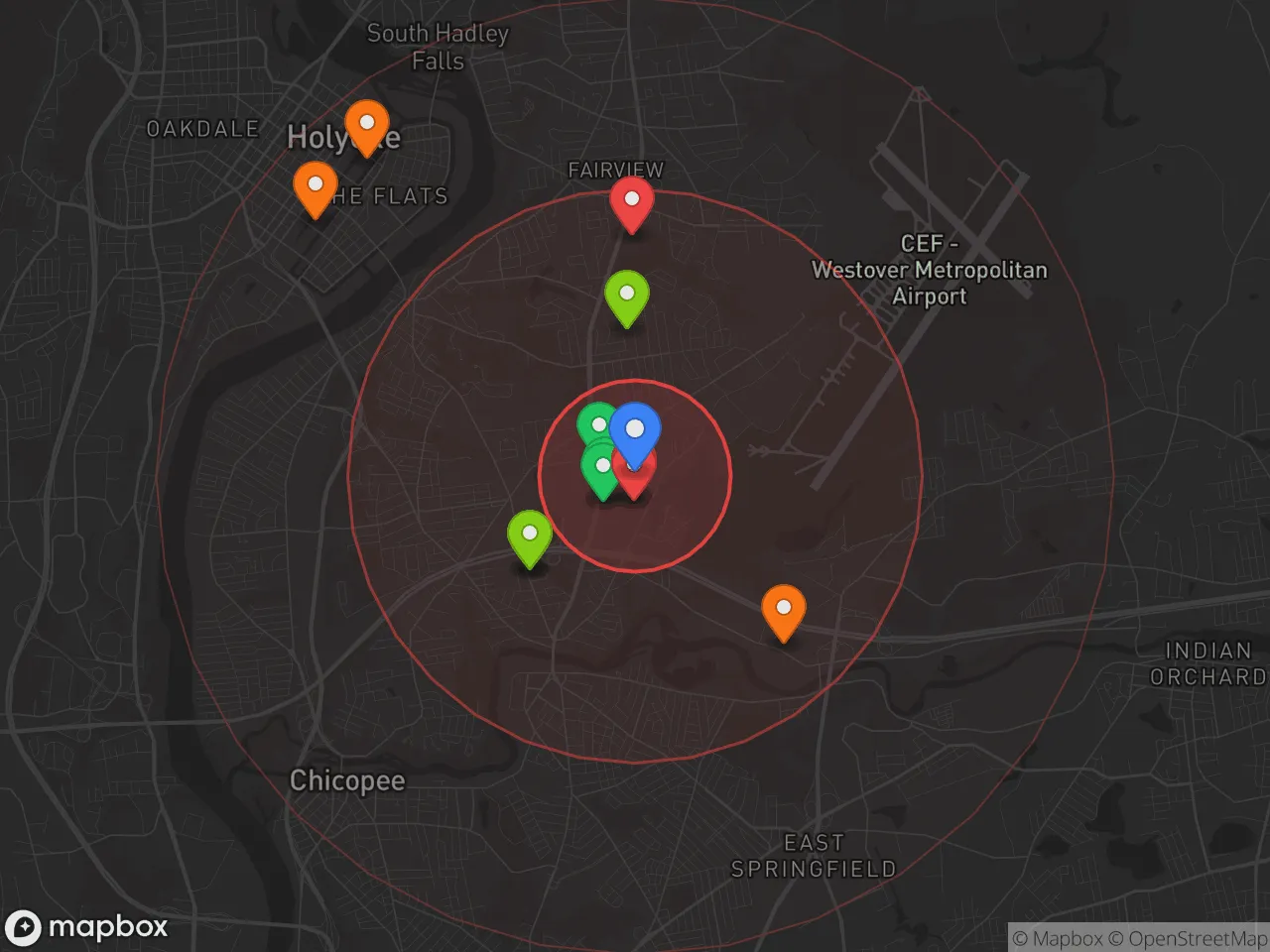
Hobbies
Explore the areaGroceries
8 within 10 miles
Gas
20 within 10 miles
Hospital
16 within 20 miles
Airport
JFK — John F. Kennedy International
Post Office
USPS — Chicopee, MA
Critical Amenities
Quality-of-Life Analysis
Chicopee, Massachusetts, offers a middle-income quality of life that stands apart from the more affluent and expensive communities of the Greater Springfield area. With a cost of living index of 93—7% below the national average—the city attracts a mix of working-class families, first-time homebuyers, and long-term residents who prioritize affordability over prestige. The population is predominantly white and Hispanic, with a median household income around $55,000, reflecting a blue-collar and service-oriented economic base rather than the professional-managerial class found in nearby Amherst or Longmeadow.
Cost of living, housing affordability, and how Chicopee compares to Springfield and Holyoke
Chicopee’s housing market is a standout value in western Massachusetts. The median home value is $251,800, roughly half the Massachusetts state median of $500,000+, and significantly lower than the $350,000+ median in neighboring East Longmeadow. Median rent sits at $1,108, well below the state average of $1,800 and comparable to Holyoke ($1,050) but cheaper than Springfield ($1,200). The average commute of 21 minutes is notably short—under the national average of 26 minutes—and reflects the city’s compact geography and easy access to I-90 (the Massachusetts Turnpike) and I-291. Property taxes in Chicopee are moderate at roughly $18 per $1,000 of assessed value, which keeps monthly carrying costs lower than in many Boston suburbs. However, the trade-off is a slower rate of home value appreciation; Chicopee’s values have risen only about 35% since 2019, compared to 50%+ in Hampden County’s pricier towns.
Schools, daily amenities, and what it’s like to live in Chicopee day-to-day
Chicopee Public Schools serve roughly 7,500 students across 12 elementary, two middle, and two high schools (Chicopee High and Comprehensive High). The district is rated below the state average on MCAS scores—about 35% of students meet or exceed expectations in math and English—but offers specialized programs like the Chicopee Academy for at-risk students and a robust vocational track at the Chicopee Comprehensive High School. For daily life, the city is well-served by the Chicopee Riverwalk and the 300-acre Szot Park, which hosts summer concerts and sports leagues. The downtown area along Memorial Drive has seen modest reinvestment, with new restaurants like The Munich Haus (German cuisine) and local breweries such as Abandoned Building Brewery. Groceries are affordable, with a Big Y and a Price Rite anchoring the retail corridors. Healthcare access is solid: the city is within 10 minutes of Baystate Medical Center in Springfield, the region’s Level 1 trauma center. The rhythm of life here is quieter than in Springfield—less nightlife, more strip-mall convenience—but the proximity to the Six Flags New England amusement park in Agawam and the Basketball Hall of Fame in Springfield adds recreational options within a 15-minute drive.
Chicopee is best suited for budget-conscious buyers, young families starting out, and retirees on fixed incomes who want a safe, low-stress environment without the premium prices of the Pioneer Valley’s college towns. It is less ideal for professionals seeking high-paying local jobs (the largest employers are Baystate Health, the city government, and retail chains like Walmart) or for those who value walkable urban density. For anyone willing to trade prestige for practicality, Chicopee delivers a stable, affordable base with a commute that leaves time for family and hobbies.

Crime in Chicopee, MA
Crime rates similar to the national median for U.S. locations.
Violent CrimeViolent Crime Analysis
Property CrimeProperty Crime Analysis
Crime Analysis
Chicopee, Massachusetts, presents a mixed safety profile that warrants careful consideration for potential residents. The city's violent crime rate of 472.6 incidents per 100,000 residents and property crime rate of 1,405.2 per 100,000 place it above both state and national averages, a reality shaped in part by the broader criminal justice environment in Western Massachusetts. As a mid-sized city within commuting distance of Springfield and Hartford, Chicopee experiences crime patterns influenced by its proximity to larger urban centers and the progressive judicial policies common across the region.
Crime in context
Chicopee's violent crime rate is roughly 30% higher than the national average of approximately 380 per 100,000, and significantly exceeds the Massachusetts state average of about 300 per 100,000. Property crime in Chicopee also runs above national norms, with the 1,405.2 rate surpassing the U.S. average of roughly 1,950 per 100,000 but still falling below the national figure. These numbers reflect a city where both violent offenses—including aggravated assault, robbery, and rape—and property crimes like burglary and larceny are more common than in safer suburban communities. The surrounding Hampden County area, including Springfield, has long struggled with elevated crime, and Chicopee's rates are consistent with a city that shares a regional justice system. Progressive district attorneys and judges in Massachusetts, who often prioritize diversion programs and reduced sentencing over incarceration, have been linked to higher recidivism and more offenders remaining on the street, a factor that directly impacts public safety in communities like Chicopee.
What residents experience
For those living in Chicopee, the elevated crime rates translate into tangible daily concerns. Residents report that property crimes—particularly vehicle break-ins, package thefts, and home burglaries—are the most frequent issues, especially in neighborhoods near major roads like Memorial Drive and the Chicopee River corridor. Violent crime, while less common than property crime, is concentrated in specific areas, including parts of the Willimansett neighborhood and near the city's commercial districts. The presence of progressive bail reform policies in Massachusetts means that individuals arrested for non-violent offenses are often released quickly, which can lead to repeat property crimes in the same areas. Families and retirees considering Chicopee should weigh these realities against the city's affordable housing and access to employment centers like Westover Air Reserve Base and local manufacturing.
Neighborhood-level variation is notable. The more suburban areas of Chicopee, such as the Fairview section near the Ludlow line, generally report lower crime rates than the densely populated downtown and Chicopee Falls districts. However, the city's overall safety profile is shaped by its position within a metro area where progressive criminal justice policies are the norm, meaning that even safer neighborhoods can be affected by crime spilling over from higher-crime zones. Prospective residents are advised to research specific blocks and consult local police reports, as the difference between a quiet street and a high-crime corridor can be stark.
* Values derived from national, state, county, city and local statistics and may differ in a specific area. Last updated: 2026-05-01T02:07:01.000Z
Narrative content on this page is AI-generated and may contain mistakes. Verify any details that matter before acting on them.
ReloMaps may earn a commission from affiliate links at no extra cost to you.

