Photo: Wikipedia
Political ClimatePolitical Climate in Chicopee, MA
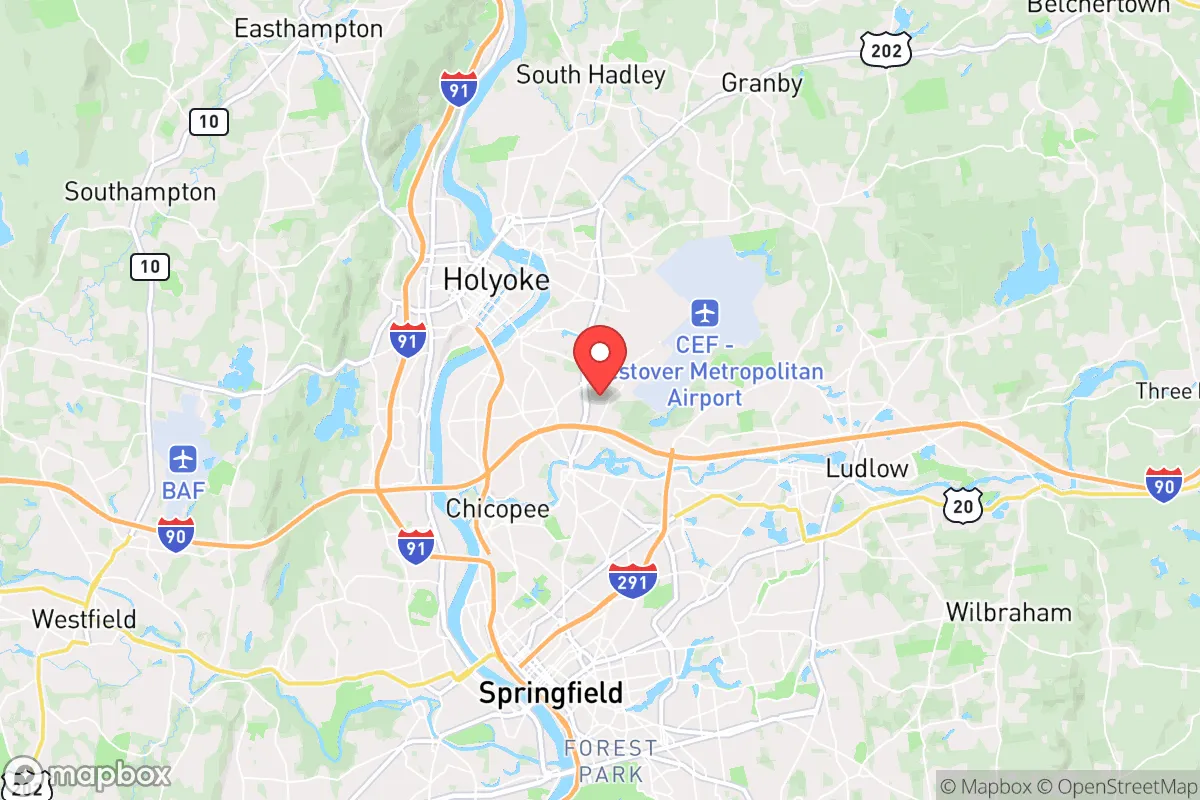
District shown is the primary district for this city’s centroid. Cities may span multiple districts.
Local Political AnalysisPolitical Analysis of Chicopee, MA
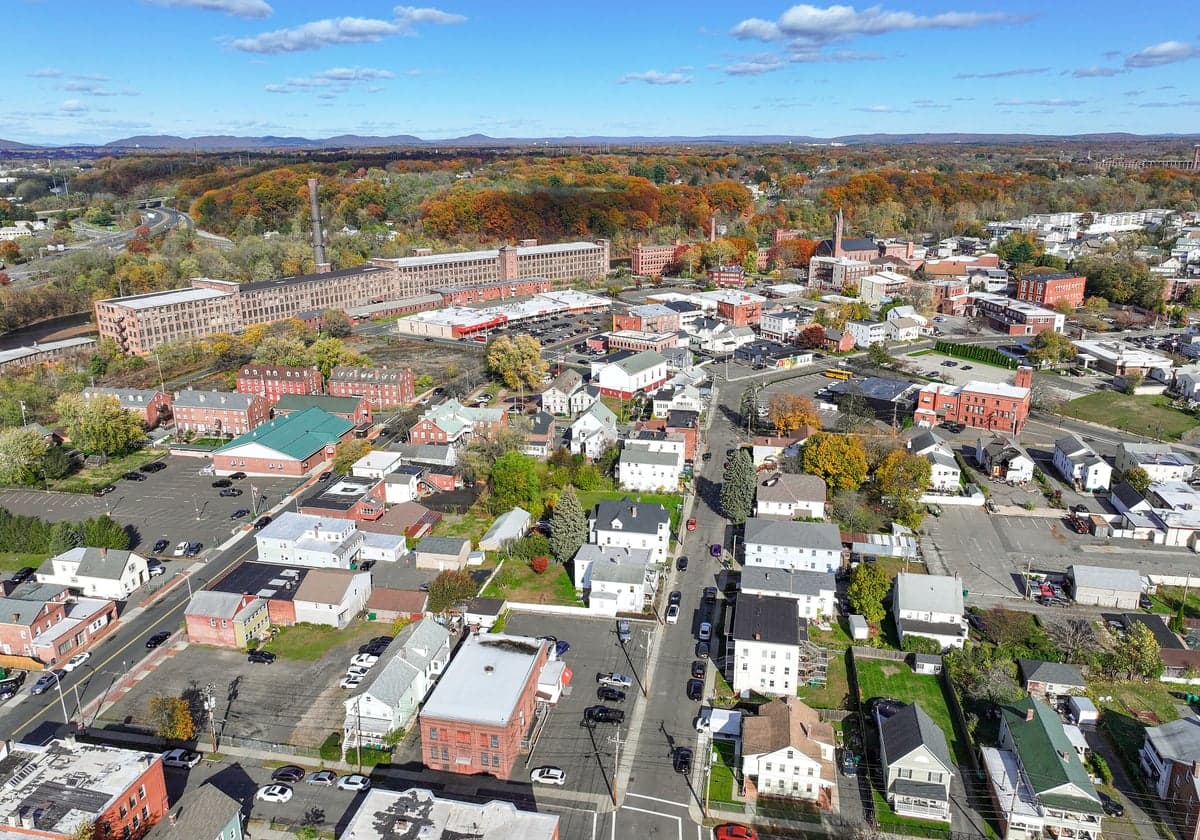
Chicopee, Massachusetts, has a Cook PVI of D+8, meaning it leans about eight points more Democratic than the national average, and that number tells you a lot about the political direction here. It wasn't always this way—this used to be a blue-collar, union-heavy town where folks voted for the person, not the party, and a lot of us had a healthy skepticism of government getting too big for its britches. Over the last decade or so, though, the shift has been real and steady, with progressive policies creeping in from the state level and local elections increasingly favoring candidates who push a more activist government agenda. If you're looking at moving here, you need to understand that the political climate is becoming less about common-sense local control and more about aligning with the broader Massachusetts Democratic machine.
How it compares
Chicopee sits in a kind of political middle ground compared to its neighbors, but that middle ground is shifting. To the north, Holyoke is even more liberal, with a strong progressive activist scene and city council that's pushed things like rent control and sanctuary city policies—stuff that raises eyebrows if you value property rights and local law enforcement cooperation. To the south, Springfield is a deep-blue urban core where machine politics and one-party rule have been the norm for decades. The real contrast is west of here, in towns like Westfield or Southwick, where you'll find more conservative-leaning voters and a general attitude of "leave us alone." Even closer, Ludlow and Wilbraham tend to be more moderate-to-conservative, especially on fiscal issues. So Chicopee is caught in the middle: it's not as far-left as Holyoke or Springfield, but it's definitely not the kind of place where you'll find a strong local pushback against state-level overreach on things like energy mandates, gun laws, or school curriculum changes.
What this means for residents
For someone who values personal freedoms and limited government, the biggest concern here is how much state policy drives local life. Massachusetts has some of the strictest gun laws in the country, and Chicopee's local government generally doesn't push back—you won't see the kind of Second Amendment sanctuary resolutions you might find in Western Mass towns like Palmer or Monson. The same goes for taxes: property taxes in Chicopee are moderate for the region, but the state income tax and the constant pressure for new fees and mandates (like the upcoming millionaire's tax and the push for electric vehicle mandates) hit everyone, regardless of local sentiment. The school system has also seen a shift toward more progressive curriculum frameworks, which is something to keep an eye on if you're a parent who wants a say in what your kids are taught. On the plus side, the city still has a strong sense of community and a lot of long-time residents who remember when things were different, so there's a quiet undercurrent of resistance to the most extreme policies.
Culturally, Chicopee still holds onto some of its old-school New England character—the Polish-American heritage, the church picnics, the sense that your neighbor will help you out without the government getting involved. But the policy direction is clear: more state control, more progressive social policies, and less room for local dissent. If you're looking for a place where your vote actually pushes back against the tide, you might feel like you're swimming upstream here. It's a decent town with good people, but the political winds are blowing in a direction that should give any freedom-minded person pause. Keep an eye on local elections and school board races—that's where the real battles are happening, and where you can still make a difference if you get involved.

State Political ClimatePolitical Climate in Massachusetts
State Political AnalysisPolitical Environment in the State
Massachusetts has long been one of the most reliably Democratic states in the nation, with a partisan lean that has only deepened over the past two decades. In the 2024 presidential election, Kamala Harris carried the state by roughly 25 points, a margin that has held steady since 2016. The dominant coalition is a mix of urban progressives in Boston and its inner suburbs, combined with well-educated, moderate-to-liberal voters in the western college towns and the Cape. However, this blue veneer masks a sharp and growing divide: the state’s rural and exurban areas—places like Worcester County’s small towns, the Berkshires, and the South Shore—have been trending red, even as the legislature and governor’s office remain firmly in progressive hands. For a conservative considering relocation, the key takeaway is that while the state’s political machinery is deeply left-leaning, there are pockets of resistance and a policy environment that is increasingly hostile to traditional freedoms.
Urban vs. rural divide
The political geography of Massachusetts is a tale of two worlds. The Boston metro area—including Cambridge, Somerville, and Brookline—is the engine of the state’s progressive dominance, routinely delivering 80-90% Democratic margins. These areas are dense, highly educated, and heavily influenced by the region’s academic and tech sectors. In contrast, the rural and exurban towns of central and western Massachusetts tell a different story. Places like Worcester, the state’s second-largest city, have become more competitive; Worcester County as a whole voted for Trump in 2020 and 2024, a flip from its Obama-era lean. Towns like Sturbridge, Oxford, and Charlton are now reliably Republican, driven by working-class voters and small business owners frustrated with high taxes and regulatory overreach. The Berkshires, while culturally liberal in places like Great Barrington and Williamstown, have rural precincts that vote red. The Cape and Islands—Barnstable, Falmouth—are swing areas, with older, wealthier retirees often splitting tickets. The divide is stark: the state’s 40 most Democratic towns are all within 30 miles of Boston, while the 40 most Republican towns are scattered across the central and western hills.
Policy environment
Massachusetts’ policy environment is a textbook case of progressive governance with a heavy hand. The state has a flat income tax rate of 5%, but a 2022 ballot question (Question 1) added a 4% surtax on income over $1 million, effectively creating a 9% top marginal rate—one of the highest in the nation. Property taxes are moderate by Northeast standards, but the state’s regulatory burden is immense. The Massachusetts Paid Family and Medical Leave (PFML) program, funded by payroll deductions, mandates up to 26 weeks of leave, a cost borne by employers and employees alike. Education policy is dominated by the state’s powerful teachers’ unions; the 2020 Student Opportunity Act funneled billions into K-12 funding, but school choice is virtually nonexistent—charter schools are capped, and inter-district choice is limited. Healthcare is heavily regulated, with the state’s 2006 health reform law serving as a model for the ACA; Massachusetts has near-universal coverage, but costs are high. Election laws are among the most liberal: no-excuse mail-in voting, same-day registration, and early voting are permanent fixtures. For conservatives, the policy environment feels like a one-party state where dissent is managed through high taxes and tight regulations on everything from firearms to home-based businesses.
Trajectory & freedom
The trajectory of freedom in Massachusetts is unmistakably downward. The state has become a national leader in restricting personal liberties, particularly on firearms. The 2024 Massachusetts Gun Safety Act (H.4885) banned the sale of many semi-automatic rifles, expanded the state’s “red flag” law, and required gun owners to lock up firearms even in their own homes—a law that critics argue violates the Second Amendment and has already drawn federal lawsuits. Parental rights have been eroded: the state’s 2022 Parental Rights in Education bill was defeated, and schools in places like Lexington and Newton have adopted policies that allow students to change their names and pronouns without notifying parents. Medical autonomy is constrained by the state’s strict vaccine mandates for schoolchildren and healthcare workers, which were among the most aggressive in the country during the COVID-19 pandemic. Property rights are under pressure from the state’s MBTA Communities Law, which forces towns near transit to rezone for high-density housing, overriding local zoning control. On the plus side, Massachusetts has no state-level “sanctuary” law for illegal immigration, though many cities like Boston and Cambridge operate as de facto sanctuaries. The overall trend is clear: the state is becoming less free, with the legislature actively expanding government control over daily life.
Civil unrest & political movements
Massachusetts has a long history of political activism, but recent years have seen a sharp uptick in visible flashpoints. The 2020 George Floyd protests in Boston were large and occasionally violent, with property damage in the Downtown Crossing area. The state’s sanctuary city policies have led to tensions: in Boston, the 2023 arrest of a Venezuelan gang member who had been released by local police sparked a political firestorm, with Republican Governor Charlie Baker (now a former governor) facing criticism from both sides. The right has organized around the Massachusetts Fiscal Alliance and local gun rights groups like the Gun Owners’ Action League, which have been active in challenging the 2024 gun law. The left is dominated by the Progressive Massachusetts network and the Massachusetts Teachers Association, which have successfully blocked school choice and parental notification bills. Election integrity has been a minor issue—the state’s mail-in voting system was expanded during COVID and made permanent, but there have been no major fraud scandals. The most visible flashpoint for a new resident would be the constant presence of political signage and activism in the suburbs, where lawn signs for local races and ballot questions are ubiquitous.
Projection
Over the next 5-10 years, Massachusetts is likely to become even more progressive, driven by demographic trends. The state’s population is aging and slowly declining, but in-migration from other states is heavily skewed toward young, college-educated professionals who are comfortable with high taxes and liberal social policies. The rural and exurban areas that have been trending red are losing population, while Boston and its inner suburbs are growing. This will likely deepen the urban-rural divide, but the state’s political power will remain concentrated in the blue areas. The legislature, which is already supermajority Democratic, will continue to pass laws that expand government control—expect more gun restrictions, higher taxes on the wealthy, and further erosion of local zoning control. The 2024 gun law is a harbinger; similar bills on rent control, universal healthcare, and climate mandates are in the pipeline. For a conservative moving in now, the realistic expectation is that the state will be a one-party progressive state for the foreseeable future, with the only real political fights happening in the margins—like local school board races or ballot questions on tax policy.
For a new resident, the bottom line is that Massachusetts offers world-class education, healthcare, and infrastructure, but at the cost of significant personal freedom and high taxes. If you value low taxes, gun rights, parental control over education, and limited government, this state will be a constant source of frustration. The best strategy is to target the red-leaning exurbs—places like Sturbridge, Oxford, or Charlton—where you can find like-minded neighbors and a lower cost of living, while still accessing Boston’s job market. But be prepared: the state’s political trajectory is not on your side, and every legislative session brings new restrictions on the freedoms that conservatives hold dear. If you’re considering a move, visit those rural towns, talk to local business owners, and understand that you’ll be swimming against a strong progressive current.
* Values derived from national, state, county, city and local statistics and may differ in a specific area. Last updated: 2026-05-01T02:07:01.000Z
Narrative content on this page is AI-generated and may contain mistakes. Verify any details that matter before acting on them.
ReloMaps may earn a commission from affiliate links at no extra cost to you.

