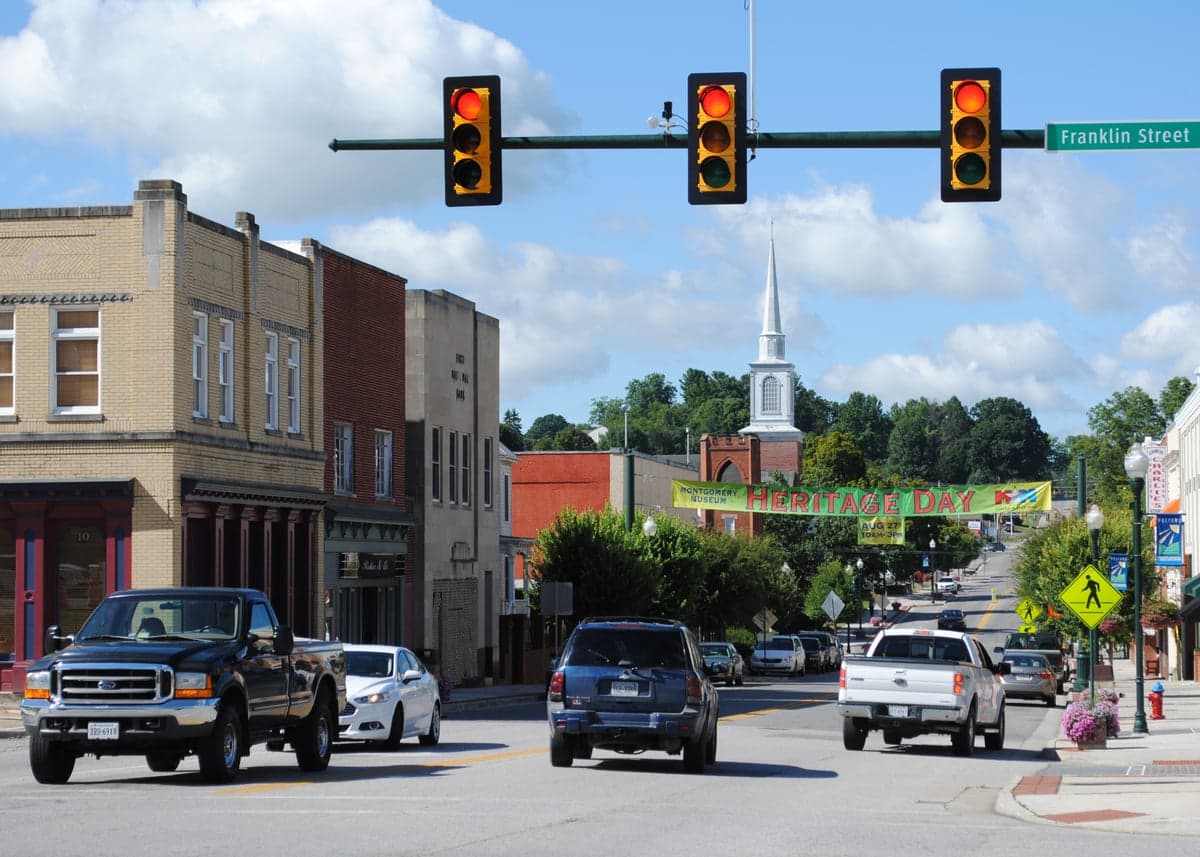
Photo: Wikipedia
Strategic Assessment of Christiansburg, VA
Meaningful friction. Expect exposure to either population pressure, blast zones, or natural disaster risk. Consider buying a retreat property.
What does the Strategic Assessment tell us?
Our Strategic Assessment grades tactical survivability of an area. Major population centers, military targets, fallout zones, natural disasters, and border exposure all drive risk — lower exposure means a more defensible position in a crisis.
This is heavily inspired by Joel Skousen's Strategic Relocation book. Highly recommended you checkout the book ($)What does this tell us?
Our Strategic Assessment grades tactical survivability of an area. Major population centers, military targets, fallout zones, natural disasters, and border exposure all drive risk — lower exposure means a more defensible position in a crisis.
This is heavily inspired by Joel Skousen's Strategic Relocation book. Highly recommended you checkout the book ($)Strategic Pillars

Key Distances
Regional Safe Places
Below is our recommended "safe zones" in Virginia and the surrounding area based on our strategic heuristics. For most people, it's unrealistic to live in a “safe zone” full-time due to work, family or other personal reasons. They tend to be more rural. However, many of these areas are perfect for second homes and retreat properties that double as a vacation home or even a short-term rental.
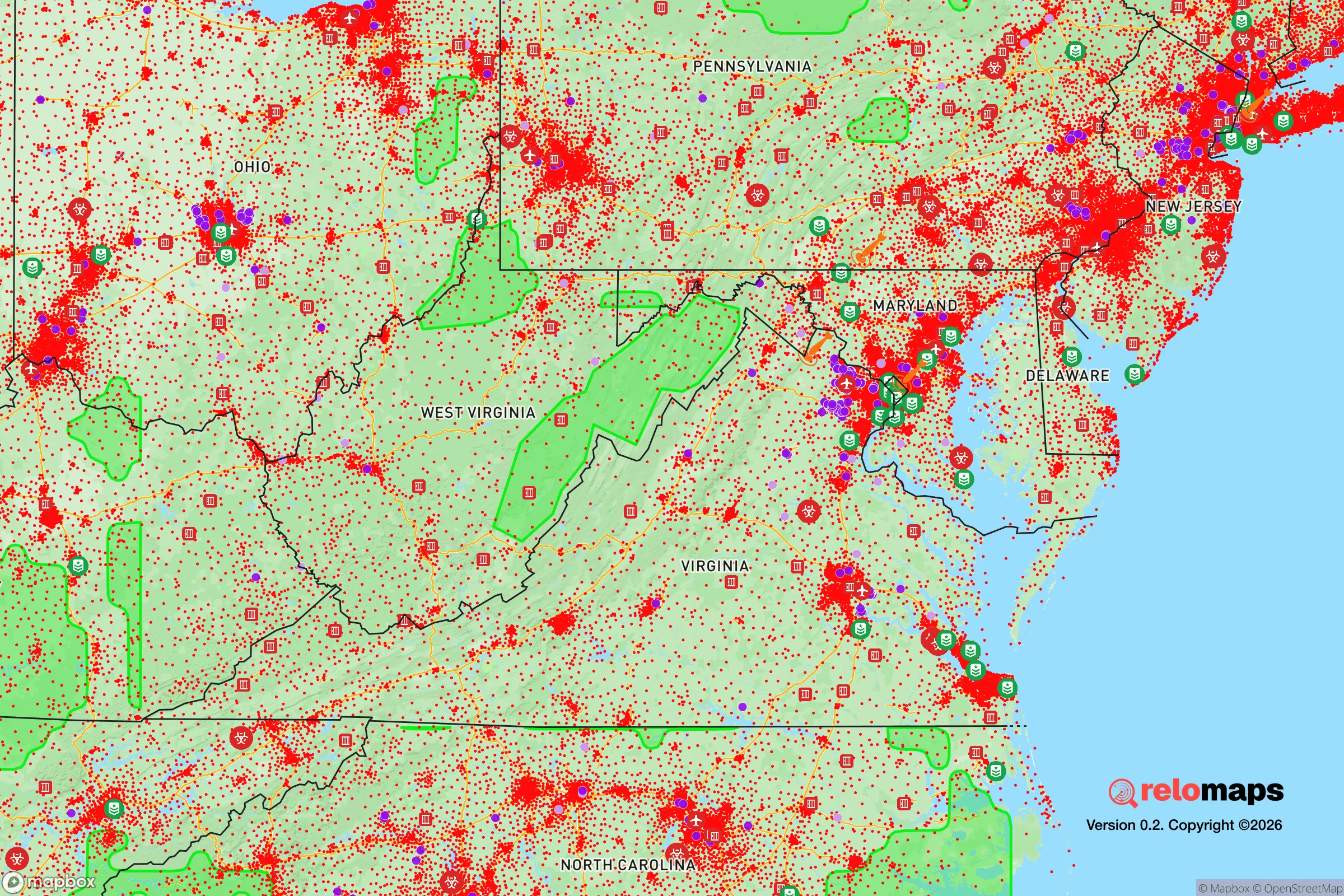
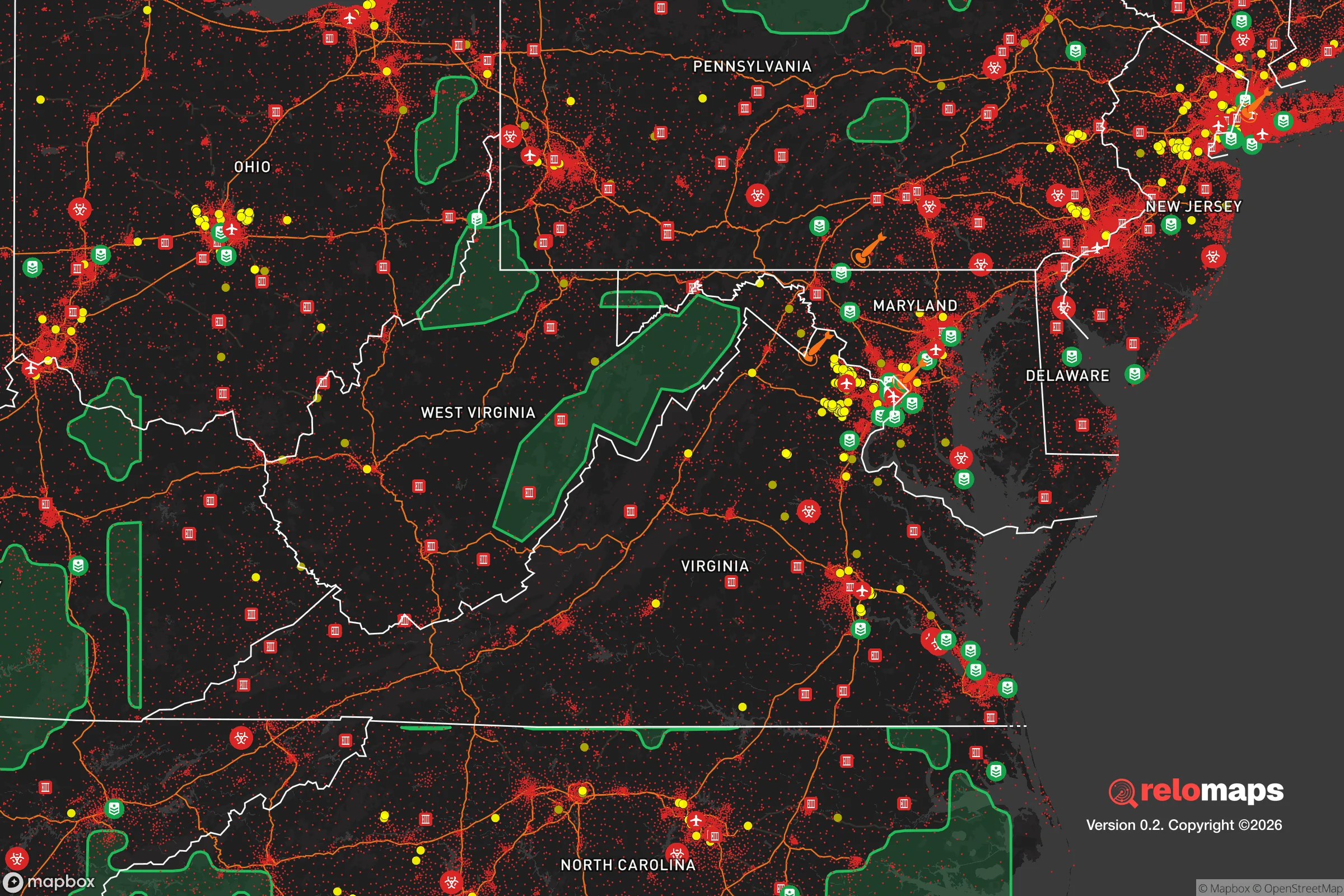


Important Note: For informational purposes only. This does not mean nothing bad ever happens in the green zones. Please use common sense. This is based on public data and modeled with AI. We tried to take a conservative approach but mistakes happen. We update this regularly as new information becomes available.
Solar Generator Recommendations
Backup power matters more here than in safer locations. We've picked three solar generators across budgets and capacity tiers — start with the budget unit if you only need a few essentials, or step up if you want to run a fridge and HVAC for days at a time.

Jackery Portable Power Station Explorer 300
Budget OptionPower on the Go: Weighing only 11 lbs, it's convenient to set up and store with book-sized foldable solar panels

BLUETTI Portable Power Station AC180
Designed for both indoor and outdoor scenarios, AC180 is highly capable as it has a robost capacity and continuous output power.

EF ECOFLOW DELTA Pro Ultra Power Station
Upgraded PickEcoFlow DELTA Pro Ultra is a whole-home energy system designed to grow with your family. Integrated with the Smart Home Panel 2, it scales to meet your evolving energy needs — keeping your home powered, intelligent, and secure through every stage of life.
We earn a commission, at no additional cost to you.
Strategic Assessment Analysis
Christiansburg, Virginia, offers a surprisingly resilient strategic position for those prioritizing long-term stability and preparedness, sitting at a critical junction between the Appalachian spine and the I-81 corridor. While no location is immune to the cascading risks of the modern era, this town’s blend of geographic insulation, access to natural resources, and distance from primary target zones makes it a viable base for a conservative-leaning relocator seeking to weather civic unrest, supply chain disruptions, or larger-scale disasters. The key is understanding both its natural advantages and its specific vulnerabilities, particularly its proximity to the New River Valley’s critical infrastructure.
Geographic position and natural advantages for long-term stability
Christiansburg’s primary strategic asset is its position within the Valley and Ridge province of the Appalachian Mountains, a region that has historically acted as a buffer against coastal and inland chaos. The town sits at roughly 2,200 feet elevation, which provides a natural cooling effect and reduces the risk of flooding compared to lower-lying areas along the New River. The surrounding topography—the Blue Ridge to the east and the Allegheny Mountains to the west—creates a natural funnel for travel and communication, but also limits the avenues of approach for any large-scale movement of people or resources during a crisis. This is not a flat, open plain where a mob or a military unit can advance unimpeded; the hills and hollows provide defensible terrain for those who know how to use it. The area’s water resources are robust, with the New River and its tributaries offering a reliable surface water source, and the underlying karst geology providing groundwater potential for wells, though careful testing is required due to limestone fissures. The growing season is moderate—roughly 150 days—which supports small-scale agriculture, but the clay-heavy soils require amendment for serious food production. For a relocator, the key takeaway is that Christiansburg offers a natural fortress-like setting with ample water and defensible terrain, but it is not a self-sufficient Eden; it requires active management and preparation.
Risks, exposures, and proximity to fallout-relevant landmarks
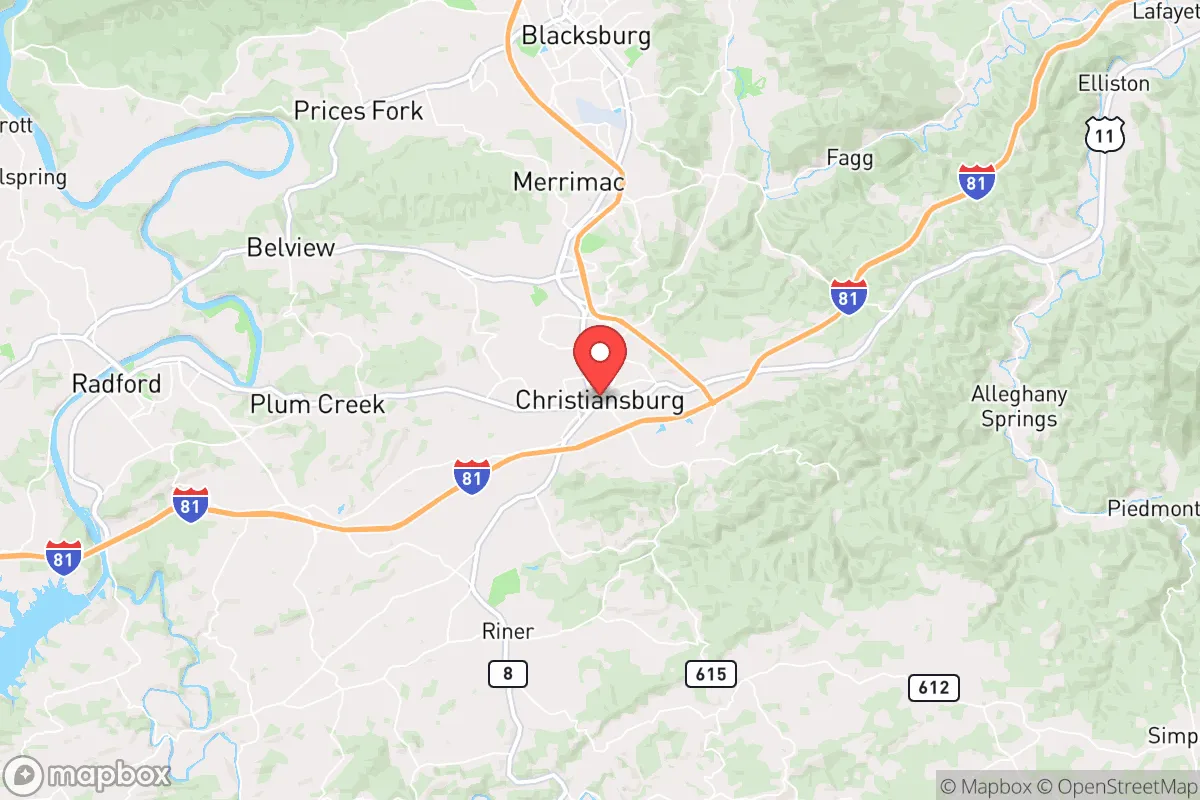
The most significant risk for Christiansburg is its location within the New River Valley, which hosts several high-value targets that could become focal points during a national emergency. The town is roughly 25 miles from the Radford Army Ammunition Plant, a massive facility that produces propellants and explosives for the U.S. military. In a conflict or major civil unrest scenario, this plant could be a primary target for sabotage, drone strikes, or even a conventional attack, and the fallout—both literal and figurative—could affect downwind areas, including Christiansburg. Additionally, the I-81 corridor is a critical logistics artery for the eastern United States, and any disruption to that highway—whether from a natural disaster, a terrorist attack, or a breakdown in civil order—would immediately impact the town’s supply chains and potentially bring a wave of refugees or looters from the larger cities to the north and south. The proximity to Virginia Tech in Blacksburg (just 10 miles away) is a double-edged sword: the university provides a pool of skilled professionals and medical resources, but it also represents a concentration of population and ideology that could become a flashpoint during unrest. Christiansburg itself is not a primary target, but its location near these critical nodes means that a relocator must plan for secondary effects—evacuees, supply shortages, and potential contamination from a strike on the ammunition plant. The good news is that the mountainous terrain provides some shielding from blast and fallout, but a prepper should have a detailed evacuation route to the west, toward the more remote areas of West Virginia, as a contingency.
Practical resilience for a relocator: food, water, energy, and defensibility
For a single individual or family looking to establish a resilient homestead, Christiansburg offers a mixed bag of practical advantages and challenges. Water is the strongest asset: the New River is a perennial, high-volume source, and many properties in the surrounding county have access to springs or shallow wells. However, the town’s municipal water system is dependent on the New River and the Christiansburg Water Treatment Plant, which could be compromised by a power outage or contamination event. A relocator should invest in a backup well with a hand pump or a rainwater catchment system to ensure independence. Food production is feasible but requires work: the growing season is short, and the soil is acidic and clay-heavy, so raised beds, greenhouses, and soil amendments are necessary for serious yields. The area has a strong hunting culture—deer, turkey, and small game are abundant in the national forests to the west—and fishing in the New River is reliable. Energy resilience is a bright spot: the region has good solar potential, especially on south-facing slopes, and the mountainous terrain allows for micro-hydro setups on smaller streams. Wood heating is a no-brainer here, with abundant hardwood forests providing fuel for the winter. Defensibility is where Christiansburg shines: the town itself is a typical suburban sprawl, but the surrounding rural areas offer properties with long driveways, natural chokepoints, and line-of-sight advantages. A relocator should target a property on a dead-end road or a ridge with a clear view of the approach. The local law enforcement presence is moderate, but in a prolonged crisis, you will be on your own. The community is generally self-reliant and conservative, with a strong gun culture and a network of like-minded individuals, but a newcomer should build relationships slowly and demonstrate competence before expecting help.
The overall strategic picture for Christiansburg is one of cautious optimism for the prepared relocator. It is not a remote survivalist bunker—it is a working-class town with real exposure to the vulnerabilities of the modern grid and the I-81 corridor. But for someone who understands that true resilience is built on community, terrain, and redundancy, Christiansburg offers a solid foundation. The key is to avoid the trap of complacency: the town’s relative safety compared to a major metro area can lull a relocator into thinking they are safe without active preparation. The ammunition plant, the interstate, and the university are real risks that require a plan. If you are willing to dig a well, plant a garden, stockpile supplies, and build relationships with your neighbors, Christiansburg can be a strategic base for weathering the storms ahead. If you are looking for a place where you can simply buy a house and hope for the best, this is not it. The mountains will not save you—only your own preparation will.

* Values derived from national, state, county, city and local statistics and may differ in a specific area. Last updated: 2026-04-19T15:39:03.000Z
Narrative content on this page is AI-generated and may contain mistakes. Verify any details that matter before acting on them.
ReloMaps may earn a commission from affiliate links at no extra cost to you.

