Photo: Wikipedia
Find The Best Places To Live
in Christiansburg
PRO TIP! You can paste a Zillow or Redfin link to get info on that property.
What It's Like Living in Christiansburg, VA
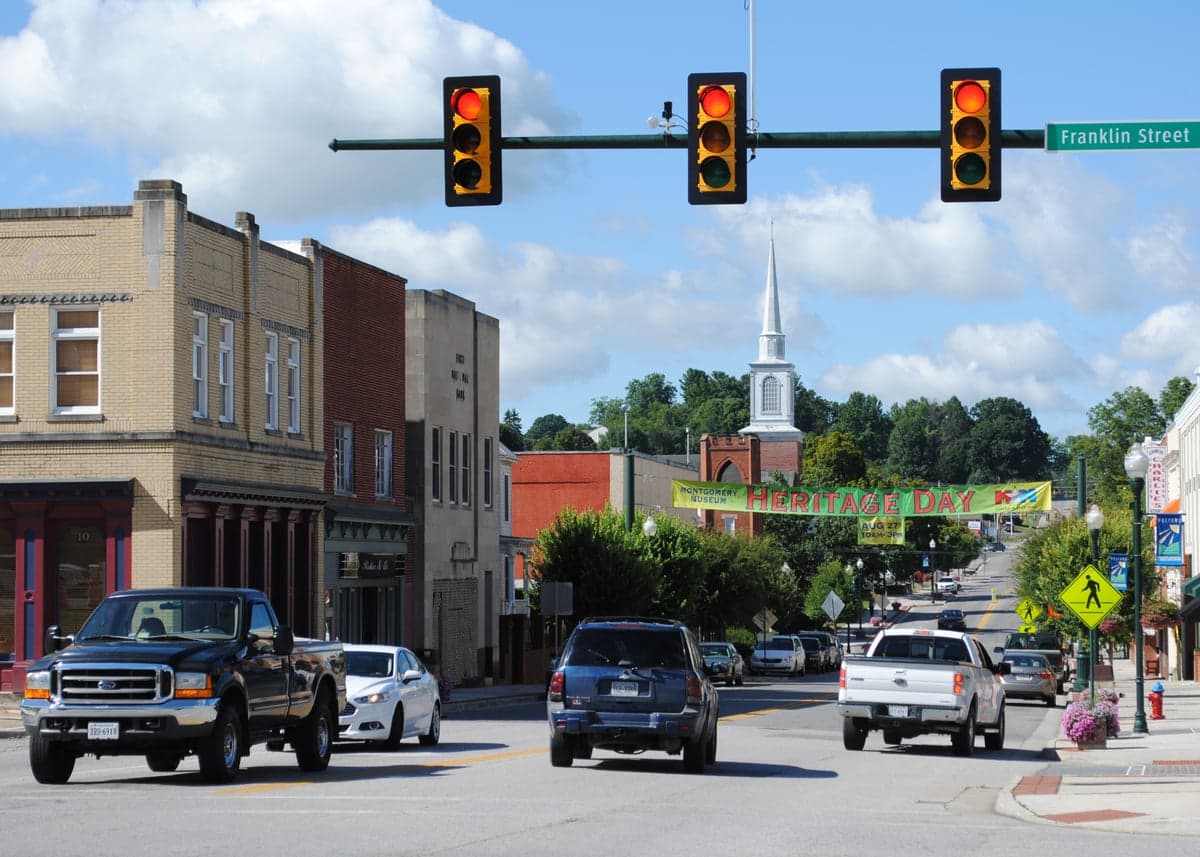
Christiansburg, Virginia, has a way of feeling like the town you already know before you’ve even unpacked. It’s not flashy, and it doesn’t try to be—it’s a place where the New River Valley’s blue-collar roots meet a steady influx of families and remote workers who want a slower pace without being totally cut off. With a population just shy of 23,000, it’s big enough to have a Walmart and a solid school system, but small enough that you’ll start recognizing faces at the Huckleberry Trail after a few months.
The Daily Rhythm: Work, Commute, and Weekend Habits
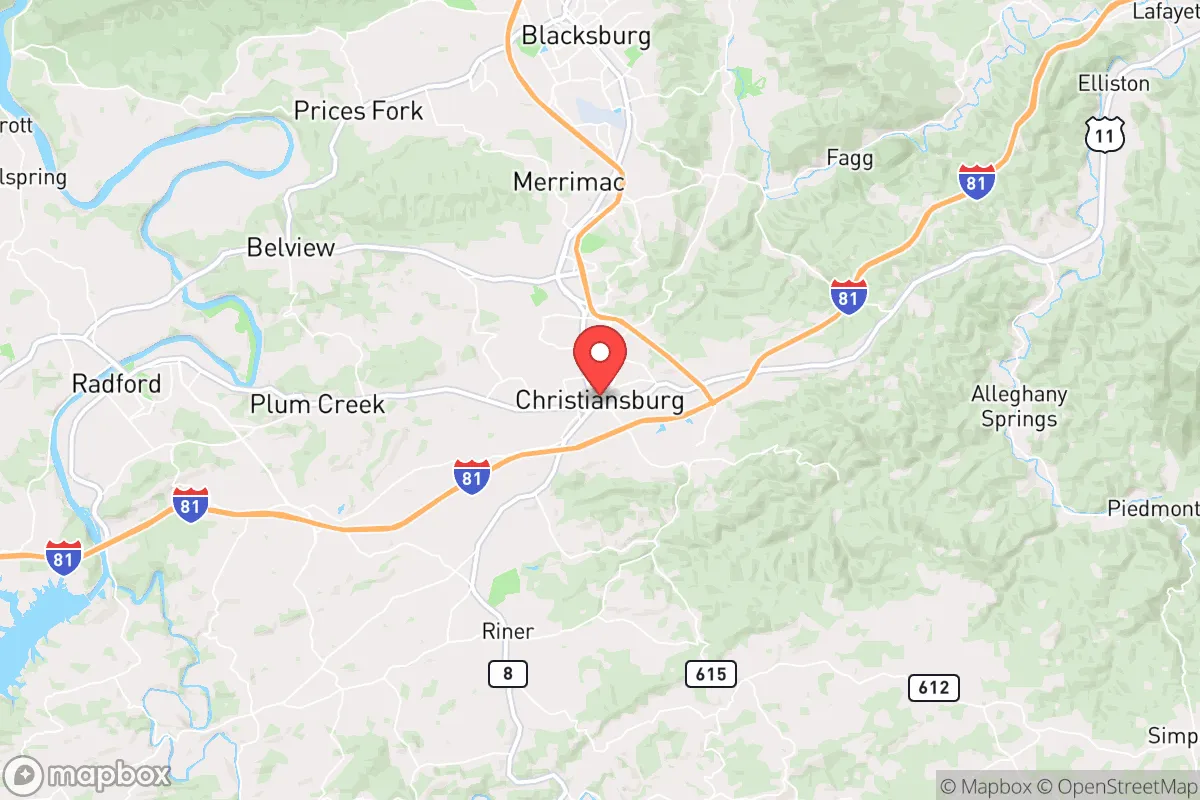
For most people living here, the day starts early. The average commute clocks in at a refreshingly short 18 minutes, which means you can actually have coffee at home instead of in the car. A lot of that traffic flows toward the Virginia Tech campus in Blacksburg (10 minutes west) or the Volvo Trucks plant in Dublin (about 20 minutes south). Christiansburg itself is a bedroom community for those jobs, but it also holds its own as a retail hub—the New River Valley Mall and the U.S. 11 corridor are where you’ll find the chain restaurants (Chipotle, Chick-fil-A, Texas Roadhouse) and big-box stores that make errands easy. Weekends often mean hitting the Huckleberry Trail, a paved path that snakes through town and connects to Blacksburg, or heading to Claytor Lake State Park for kayaking and camping. The median age here is 37.6, which tracks: you see a lot of young families pushing strollers on the trail, and a fair number of empty-nesters who downsized from bigger Virginia cities.
Sports, Community, and What Brings People Together
Sports are a big deal, but not in the way you’d expect in a town this size. There’s no pro team, of course, but Virginia Tech football is the de facto religion of the region. On fall Saturdays, Christiansburg’s restaurants and bars—like Bull & Bones Brewhaus or Sharkeys—fill up with maroon and orange for Hokies games. High school sports are genuinely well-attended, too; Christiansburg High School’s football and basketball games draw solid crowds, and the local youth leagues are a major social hub for parents. The town also hosts the Christiansburg Bluegrass Festival each summer, which brings in regional acts and a laid-back, family-friendly crowd. For music beyond bluegrass, you’ll drive to Blacksburg for the Lyric Theatre or to Floyd (about 30 minutes) for the Floyd Country Store’s Friday Night Jamboree—a true Appalachian experience.
What’s There to Do (and What’s Missing)
Outdoor life is the main draw. The Jefferson National Forest is 20 minutes away, offering hiking on the Appalachian Trail, fishing in the New River, and mountain biking at Pandapas Pond. In town, the Christiansburg Recreation Center has a gym, pool, and sports leagues that are affordable and well-run. But if you’re looking for a nightlife scene beyond a few breweries and sports bars, you’ll be disappointed. The town shuts down early—most restaurants close by 9 or 10 p.m.—and the cultural offerings are thin compared to Roanoke (40 minutes north). Locals joke that the biggest event of the year is the Montgomery County Fair, which is charming but not exactly a destination. For concerts, theater, or fine dining, you’re driving to Blacksburg or Roanoke. That’s the trade-off: peace and quiet come at the cost of convenience.
Pros and Cons of Living Here
The honest picture has clear upsides and real frustrations. Here’s what longtime residents tend to mention:
- Pro: Cost of living is genuinely low. The cost of living index sits at 95 (below the national average), and the median home value of $242,900 means a family can buy a three-bedroom house with a yard for what a studio apartment costs in Northern Virginia. The median household income of $75,451 goes a long way here.
- Pro: Safety is a real asset. The violent crime rate of 160.2 per 100,000 is well below the national average, and most people feel comfortable leaving doors unlocked during the day. Property crime is more of a concern (mostly car break-ins near the mall), but it’s not a daily worry.
- Con: The weather can wear you down. Winters are gray and damp—think 35°F and drizzly for weeks at a time—and summers are humid. You’ll learn to love layers and a good rain jacket.
- Con: It’s not diverse in lifestyle options. If you’re single and under 30, the dating pool is small, and the social scene revolves around church, sports, or the university. About 45.5% of adults hold a college degree, which is high for rural Virginia, but that education level often comes from Virginia Tech transplants who may leave after graduation.
The cultural quirks here are subtle but real. People wave at you on the Huckleberry Trail. The local high school’s marching band is a point of pride. And there’s an unspoken understanding that you don’t complain about the 18-minute commute—because everyone knows how good you’ve got it compared to the rest of the state. Christiansburg isn’t for everyone, but for someone who wants a safe, affordable place to raise kids or settle into a quieter chapter, it fits like an old pair of boots.

Similar towns to Christiansburg

* Values derived from national, state, county, city and local statistics and may differ in a specific area. Last updated: 2026-04-19T15:39:03.000Z
Narrative content on this page is AI-generated and may contain mistakes. Verify any details that matter before acting on them.
ReloMaps may earn a commission from affiliate links at no extra cost to you.

