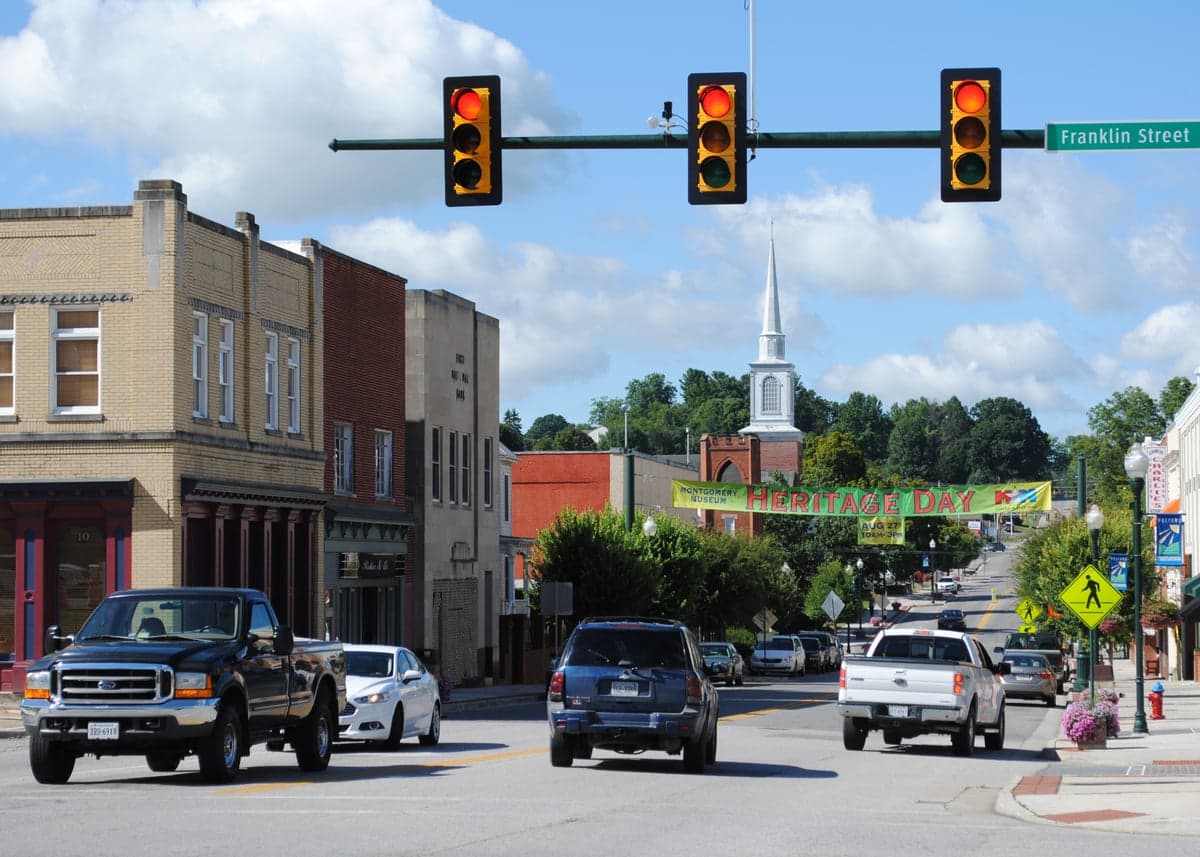
Photo: Wikipedia
Political ClimatePolitical Climate in Christiansburg, VA
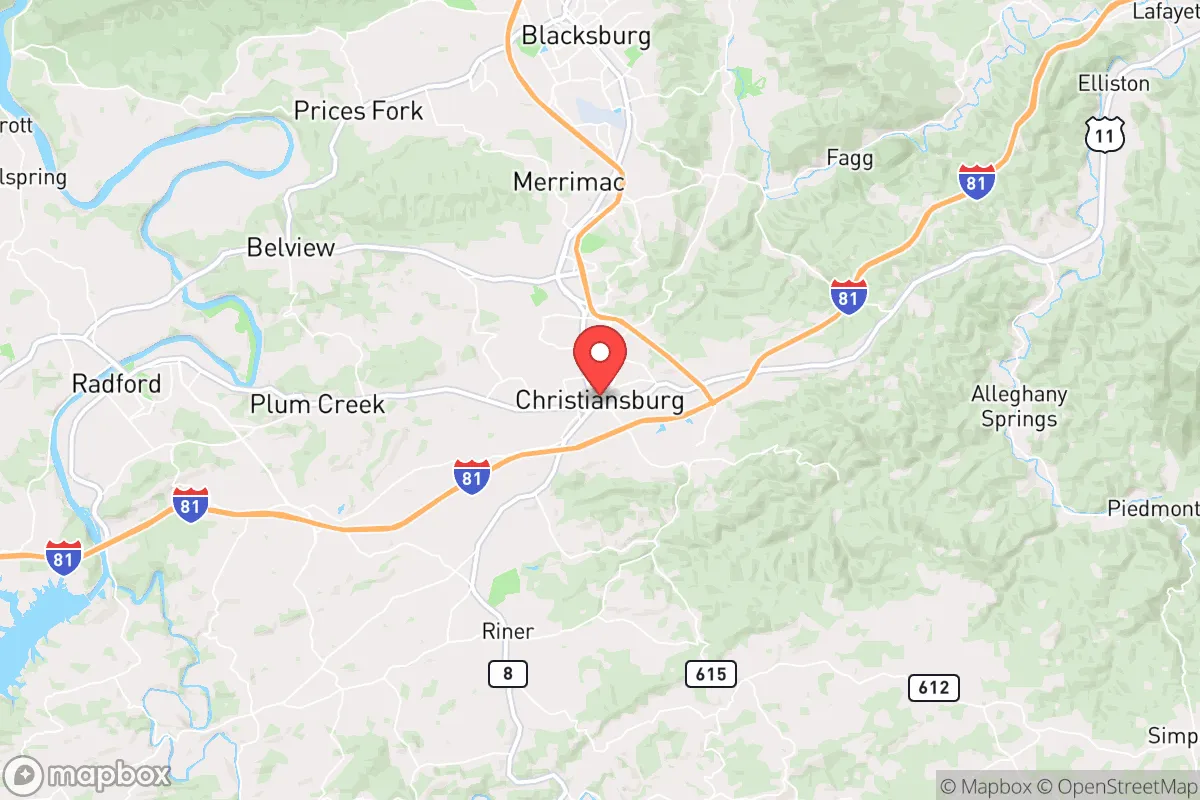
District shown is the primary district for this city’s centroid. Cities may span multiple districts.
Local Political AnalysisPolitical Analysis of Christiansburg, VA
Christiansburg is a solidly conservative town, and that’s not just talk—it’s baked into the numbers. The Cook PVI here is R+22, meaning the district votes about 22 points more Republican than the national average, and that’s held steady for years. You don’t see wild swings election to election; folks here tend to vote their values, and those values lean heavily toward limited government, personal responsibility, and keeping the federal government out of local decisions. The trajectory has been stable, but there’s a quiet concern among long-time residents that the progressive creep from places like Blacksburg—just a few miles up the road—could start spilling over if we’re not careful.
How it compares
If you want to see the contrast, just drive ten minutes east to Blacksburg, home of Virginia Tech. That town votes reliably blue, and the cultural divide is real. Christiansburg is more about family-owned businesses, churches, and a slower pace of life, while Blacksburg leans into university-driven activism and progressive policies. Further south, Roanoke is a mixed bag—more purple than red—but Christiansburg remains a conservative anchor in the New River Valley. The surrounding Montgomery County is split, but Christiansburg itself, along with nearby Radford, tends to hold the line. It’s not uncommon to hear folks say they moved here specifically to get away from the overreach they saw in Northern Virginia or Richmond.
What this means for residents
For the people living here, the conservative climate means fewer headaches with government overreach. You’re not dealing with heavy-handed zoning rules that tell you what you can do with your own property, and the local school board isn’t pushing radical curriculum changes without community input. Taxes stay reasonable, and there’s a general trust that local leaders won’t impose mandates that trample on personal freedoms. That said, there’s a growing wariness as national trends push progressive ideas into smaller towns—things like diversity equity and inclusion initiatives in local government or pressure to adopt “green” building codes that drive up costs. Most residents see these as solutions in search of a problem, and they’re keeping a close eye on any shifts. The near-term outlook is stable, but the long-term concern is that as the area grows—and it is growing—newcomers from more liberal areas might try to change the character of the place.
Culturally, Christiansburg still holds onto distinctions that matter. The annual Christiansburg Bluegrass Festival and the local 4-H fairgrounds are community staples, not political statements. There’s no push for sanctuary city status or defunding the police here—the sheriff’s office is well-supported, and Second Amendment rights are respected without much fuss. Policy-wise, the town has resisted things like plastic bag bans or mandatory paid leave ordinances that have popped up in other Virginia localities. It’s the kind of place where you can still have a conversation with a neighbor without worrying about being lectured, and that’s something worth protecting. If you’re looking for a town that values freedom over bureaucracy, Christiansburg is still that place—but you’ve got to stay engaged to keep it that way.

State Political ClimatePolitical Climate in Virginia
State Political AnalysisPolitical Environment in the State
Virginia is a classic swing state that has been drifting steadily blue over the past two decades, though it still holds significant red pockets that make it a fascinating case study for anyone considering relocation. The state voted for Democrats in every presidential election since 2008, with Joe Biden winning by 10 points in 2020, but the General Assembly remains narrowly divided, and the governorship has flipped between parties in recent cycles. The long-term trajectory, however, is concerning for conservatives: Northern Virginia’s explosive population growth, fueled by federal government expansion and tech migration, has turned the commonwealth from a reliably red state into a purple-to-blue one, with the 2023 legislative elections giving Democrats full control of both chambers and the governor’s mansion.
Urban vs. rural divide
The political map of Virginia is a tale of two worlds. The urban crescent stretching from Arlington and Alexandria through Richmond down to Norfolk and Virginia Beach is the engine of Democratic power. Northern Virginia alone accounts for over a third of the state’s population, and its voters are heavily influenced by federal employment, defense contracting, and a highly educated, diverse workforce that leans progressive. Fairfax County and Loudoun County are now reliably blue, with Loudoun flipping from red to blue in the 2010s as tech workers from D.C. moved in. In contrast, the rural western and southern regions—places like Roanoke, Lynchburg, and the Shenandoah Valley—remain deeply conservative, with counties like Augusta and Rockingham voting +30 to +40 points Republican. The divide is stark: you can drive 30 minutes from liberal Charlottesville to rural Albemarle County and feel like you’ve crossed into a different country. The 2021 governor’s race saw Republican Glenn Youngkin win by running up margins in these rural areas while holding the suburbs closer than expected, but the 2023 legislative elections showed that the urban growth is outpacing rural turnout.
Policy environment
Virginia’s policy environment is a mixed bag that has shifted leftward in recent years. The state income tax is a flat 5.75%, which is moderate compared to neighboring Maryland (up to 5.75% plus local taxes) but higher than Tennessee’s zero-rate. Property taxes are set locally and vary widely, with Loudoun County seeing some of the highest rates in the state due to school funding demands. The regulatory posture has become more aggressive: the 2020 Virginia Clean Economy Act mandates a 100% carbon-free electricity grid by 2050, which has driven up energy costs and forced coal plants to close early. Education policy has been a flashpoint—Youngkin’s 2022 executive orders on parental rights and critical race theory were popular with conservatives, but the 2023 Democratic legislature has pushed back, restoring some diversity, equity, and inclusion mandates in schools. Healthcare is dominated by the expansion of Medicaid under the 2018 bipartisan deal, which added 400,000 people to the rolls but also increased state spending. Election laws are relatively secure: Virginia requires photo ID to vote, has no-excuse absentee voting, and allows same-day registration, which conservatives see as a vulnerability. The state also has a Democratic trifecta as of 2024, meaning the governor’s veto can be overridden, and the legislature has passed bills on gun control (red flag laws, universal background checks) and abortion access (codifying Roe protections in 2020).
Trajectory & freedom
On personal freedom, Virginia is trending in a concerning direction for conservatives. The 2020 General Assembly passed a slew of gun control measures, including a red flag law, a one-handgun-per-month limit, and universal background checks, which were signed by Governor Ralph Northam. The 2023 legislative session saw further restrictions, including a ban on carrying firearms in certain public spaces. On parental rights, Youngkin’s 2022 executive orders on transparency in school curricula were a win, but the Democratic legislature has blocked efforts to expand school choice or voucher programs. Medical autonomy took a hit with the 2020 law requiring COVID-19 vaccines for state employees, though that has since been repealed. Property rights have been eroded by the Virginia Clean Economy Act, which gives the state authority to override local zoning for solar and wind projects. On the positive side, Virginia has no state-level rent control, and the right-to-work law remains intact, protecting workers from forced union membership. The 2023 passage of a constitutional amendment on hunting and fishing rights was a rare bright spot. Overall, the state is becoming less free by conservative metrics, with the Fraser Institute’s Economic Freedom ranking dropping Virginia from 12th to 20th nationally over the past decade.
Civil unrest & political movements
Virginia has been a battleground for political movements, with visible flashpoints that any new resident would notice. The 2017 Unite the Right rally in Charlottesville was a national shock, leading to the removal of Confederate statues and a wave of local activism that pushed the city further left. The 2020 Black Lives Matter protests in Richmond saw the Robert E. Lee statue become a focal point, and the city’s progressive mayor has since pushed for police reform and reparations studies. On the right, the 2021 “Parents Matter” movement in Loudoun County drew national attention after a sexual assault case in a school bathroom, leading to Youngkin’s victory and a wave of school board elections. Immigration politics are less heated than in border states, but Arlington and Fairfax have sanctuary policies limiting cooperation with ICE, which frustrates conservatives. Election integrity controversies flared in 2020, with some rural counties questioning mail-in ballot procedures, but no major fraud was proven. The 2023 legislative session saw a bill to create a nonpartisan redistricting commission, which passed, but the process remains contentious. A new resident would see these tensions in local news and community meetings, especially in the suburbs where school policies and zoning debates dominate.
Projection
Over the next 5-10 years, Virginia will likely continue its leftward drift, driven by demographic shifts that favor Democrats. Northern Virginia is projected to add another 500,000 residents by 2030, mostly from out-of-state migration of young professionals and federal employees. The Hampton Roads area, with its military and shipyard base, is more moderate but aging, while Richmond is gentrifying and becoming more progressive. Rural areas will continue to lose population, reducing their political clout. The 2025 gubernatorial election will be a key test—if a Republican can win again, it might slow the trend, but the structural advantage for Democrats in the state legislature is growing. Expect more gun control, higher taxes (a proposed 1% income tax surcharge for education is on the table), and continued expansion of renewable energy mandates. The parental rights movement may stall as the legislature solidifies Democratic control. For someone moving in now, the Virginia of 2035 will likely look more like Maryland or New Jersey—blue, high-cost, and heavily regulated—than the purple swing state it was in 2010.
For a conservative considering relocation, Virginia offers a mixed bag: low taxes relative to the Northeast, a strong economy, and beautiful rural areas, but a political climate that is increasingly hostile to traditional values. If you’re looking for a place where your vote will matter and your voice can be heard, the rural counties and smaller cities like Lynchburg or Roanoke offer a conservative haven within a blue state. But be prepared for state-level policies that will continue to push left, from gun restrictions to education mandates. The bottom line: Virginia is a beautiful state with great job opportunities, but it’s not the conservative stronghold it once was. If you’re willing to fight for your values at the local level, it can still work—but don’t expect the state government to have your back.
* Values derived from national, state, county, city and local statistics and may differ in a specific area. Last updated: 2026-04-19T15:39:03.000Z
Narrative content on this page is AI-generated and may contain mistakes. Verify any details that matter before acting on them.
ReloMaps may earn a commission from affiliate links at no extra cost to you.

