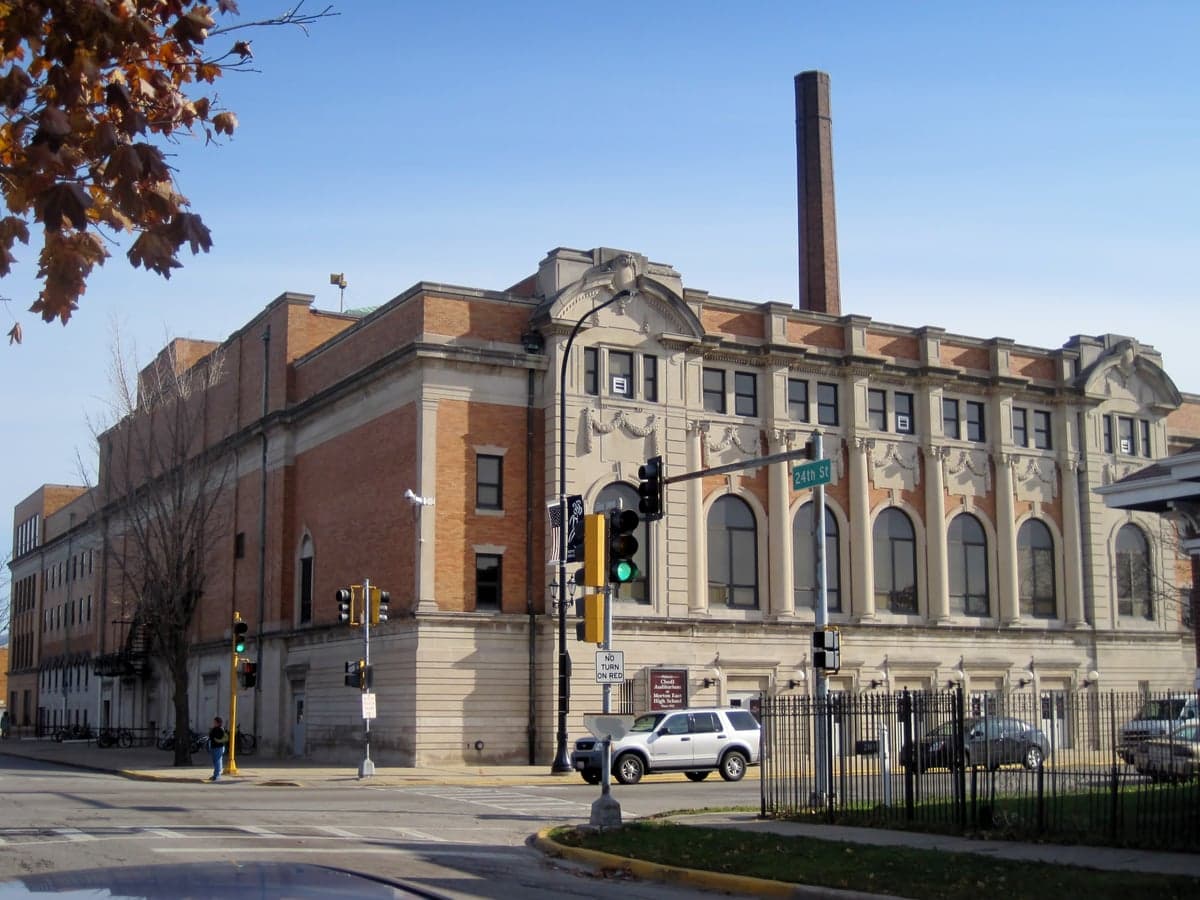
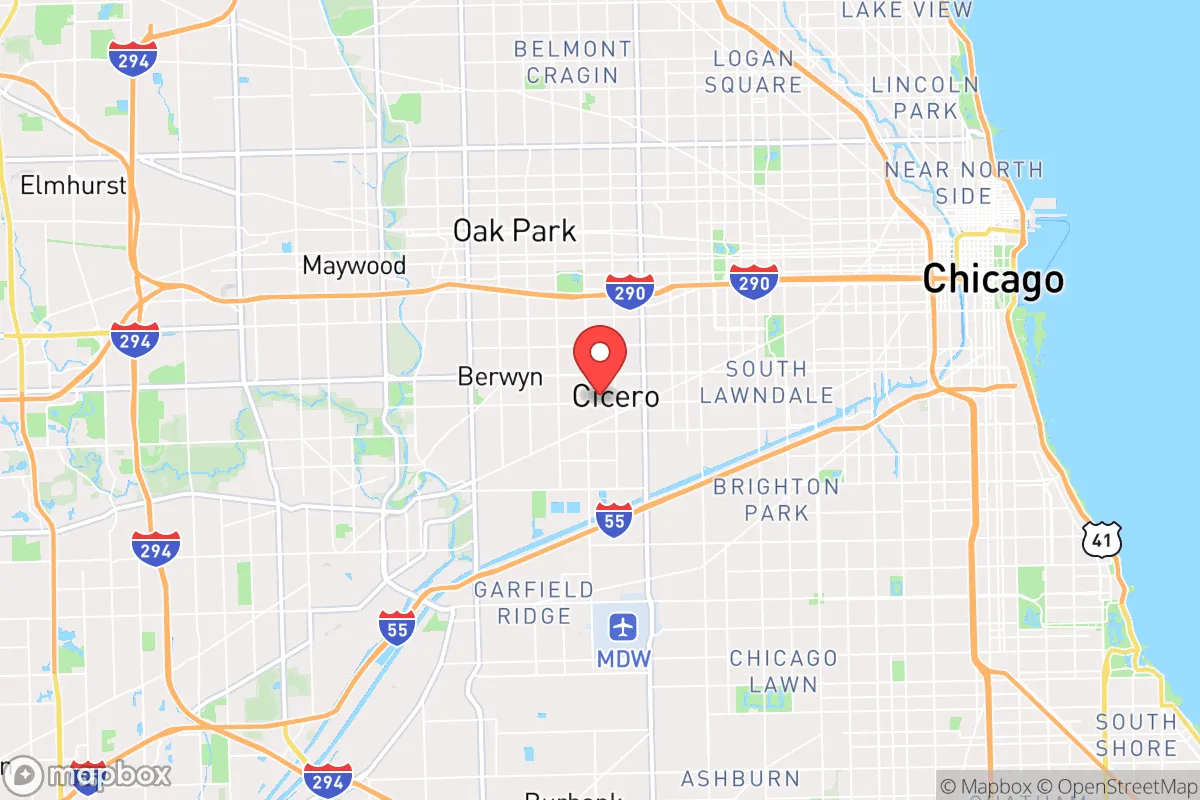
Photo: Wikipedia
Quality of Life in Cicero, IL
A high quality of life with strong walkability, manageable living costs, healthy neighborhood signals, and solid amenity access.
What does Quality of Life tell us?
Quality of Life blends cost of living, nearby amenities, socioeconomic signals, and neighborhood character. City-level scores represent the whole municipality; individual neighborhoods can differ.
What does this tell us?
Quality of Life blends cost of living, nearby amenities, socioeconomic signals, and neighborhood character. City-level scores represent the whole municipality; individual neighborhoods can differ.
Cost of Living
9% below national average
The Real Cost of Living in Cicero, IL for 2026
| Tier | Individual | Family (4) |
|---|---|---|
| Survival | $18k | $34k |
| Comfortable | $46k | $67k |
| Luxury | $103k+ | $160k+ |
| Elite (Top 5%) | $122k+ | $188k+ |
102%
The Area Signal
A metric tracking the socioeconomic signals of the area.
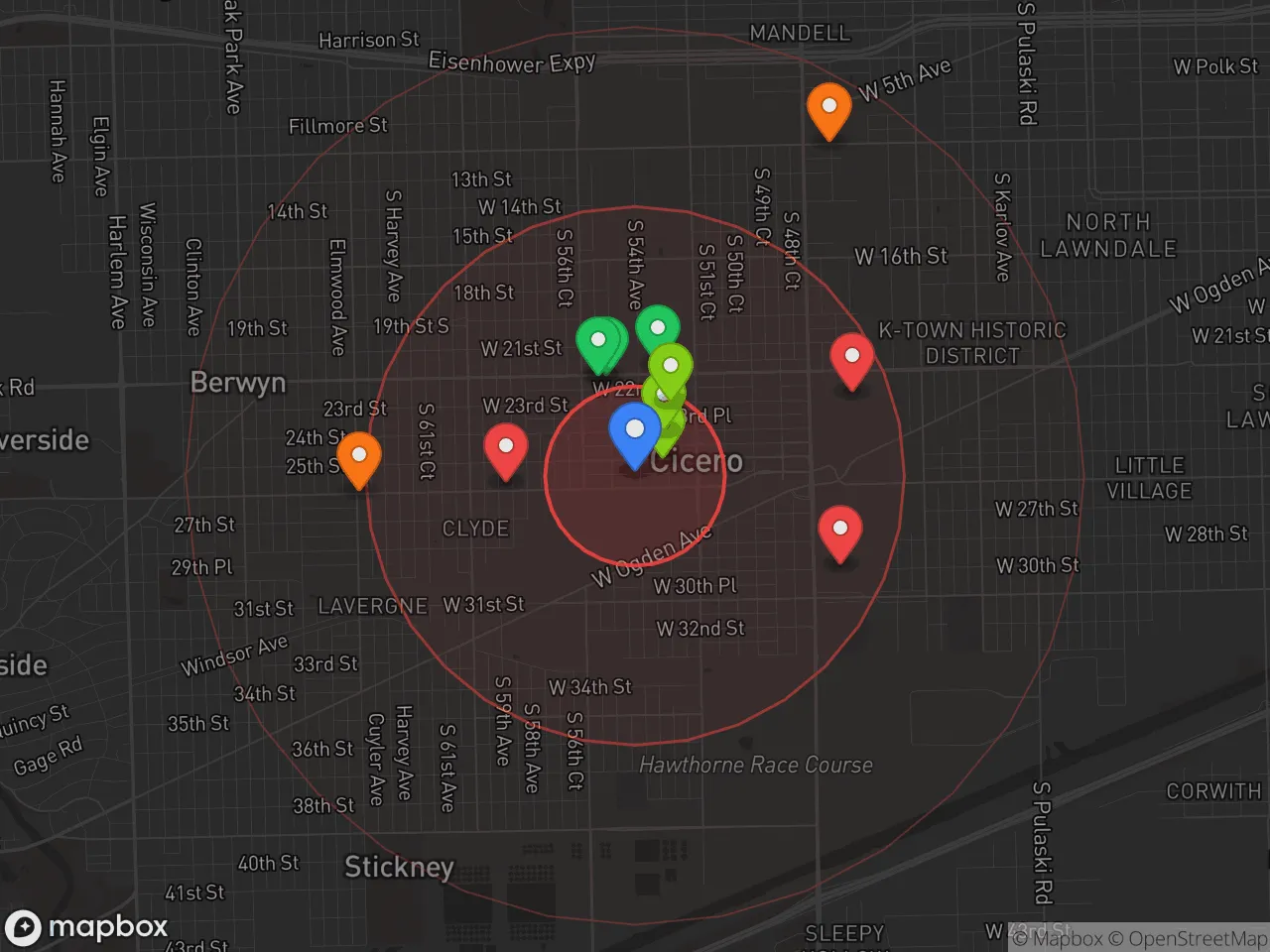
Hobbies
Explore the areaGroceries
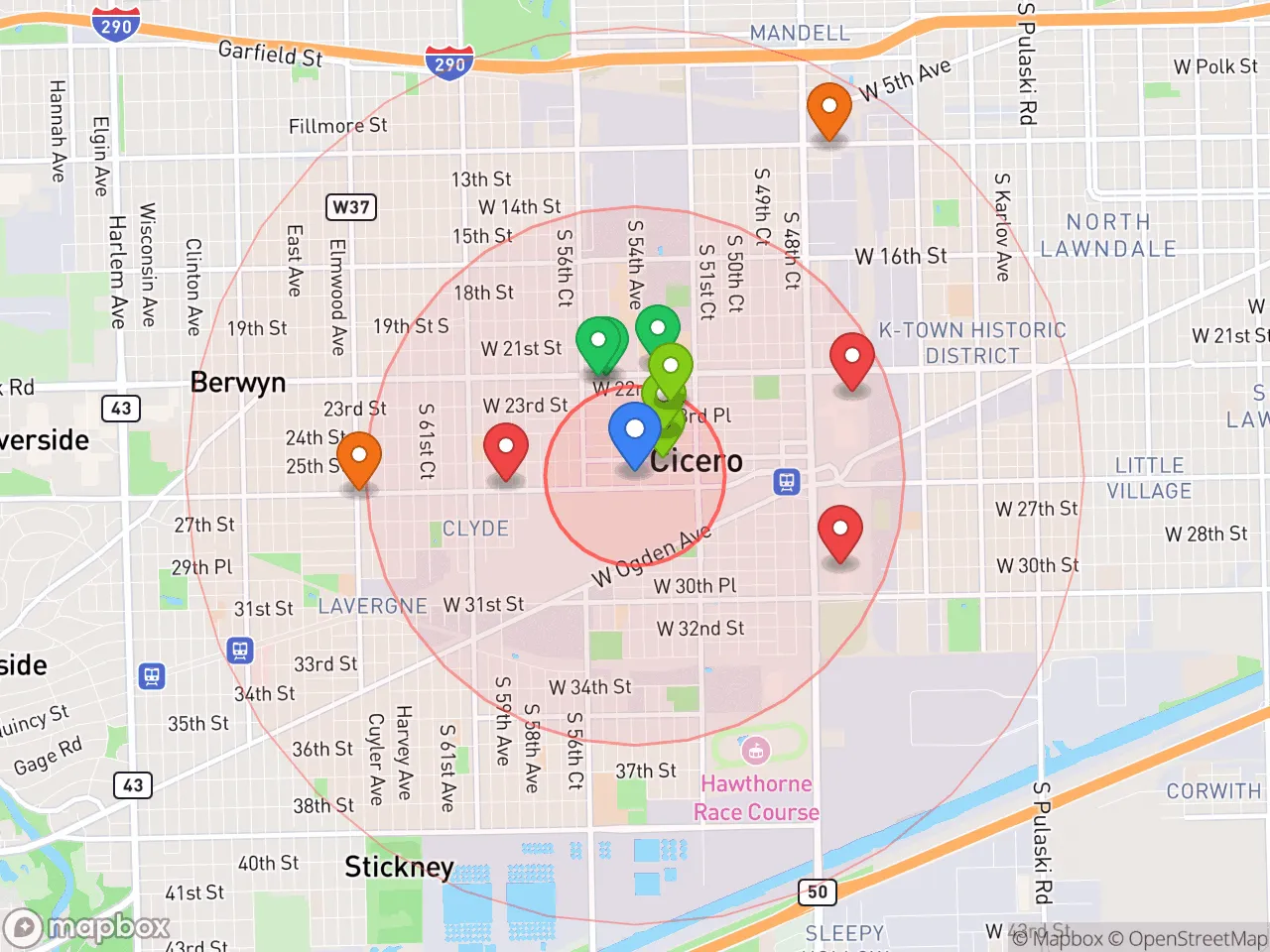
9 within 10 miles
Gas
20 within 10 miles
Hospital
20 within 20 miles
Airport
MDW — Midway International
Post Office
USPS — Cicero, IL
Critical Amenities
Quality-of-Life Analysis
Cicero, Illinois, presents a unique quality-of-life profile as a densely populated, predominantly working-class suburb immediately west of Chicago, where the cost of living is notably lower than the national average but where residents navigate the trade-offs of urban proximity and suburban infrastructure. With a cost of living index of 91 (100 being the U.S. average), Cicero is more affordable than the vast majority of Chicagoland suburbs, attracting a mix of long-term Latino families, first-time homebuyers, and commuters who work in Chicago but seek lower housing costs. The town’s character is shaped by its high population density, its status as the birthplace of Al Capone’s gangster era, and its modern identity as a hub for Mexican-American culture and small-scale manufacturing.
Cost of living and housing affordability compared to nearby suburbs
Cicero’s housing market is a primary draw for budget-conscious buyers and renters. The median home value of $236,000 is roughly half the Cook County median of about $290,000 and significantly below Chicago’s citywide median of $320,000. Median rent sits at $1,121, which is about $300 less than the Chicago metro average. These figures make Cicero one of the most affordable communities within a 20-minute drive of downtown Chicago. However, the trade-off is that housing stock is older—much of it built before 1950—and lot sizes are small. Property taxes in Cicero are high, typical of Cook County, often exceeding $4,000 annually on a median-priced home, which can offset some of the purchase-price savings. For renters, the market is tight, with vacancy rates below 4%, so finding a unit often requires quick action.
Daily life, schools, and local amenities for families
Daily life in Cicero is defined by its walkable commercial corridors, particularly along Cermak Road and 26th Street, which are lined with Mexican bakeries, taquerias, grocery stores, and small shops. The town’s school district, Cicero School District 99, serves roughly 14,000 students across 18 elementary and middle schools, with a student-teacher ratio of about 17:1. High school students attend J. Sterling Morton East High School, which has a graduation rate near 80% but struggles with below-average state test scores. For recreation, residents use Cicero Community Park, Hawthorne Park, and the nearby Brookfield Zoo (a 10-minute drive). The average commute time of 29.7 minutes is slightly above the national average of 26 minutes, reflecting the heavy reliance on the Stevenson Expressway (I-55) and CTA’s Pink Line train, which connects Cicero to downtown Chicago in about 30 minutes. Traffic congestion on Ogden Avenue and Cicero Avenue is a daily frustration, especially during rush hours.
Who thrives in Cicero and who should look elsewhere
Cicero is best suited for working-class families and individuals who prioritize affordability and urban proximity over suburban sprawl and top-tier schools. First-generation immigrants, particularly from Mexico and Central America, find a strong cultural community, Spanish-language services, and a network of family-owned businesses. Commuters who work in Chicago’s industrial corridors or downtown offices will appreciate the short, direct transit options. However, families seeking high-performing public schools, large yards, or low crime rates may be better served by suburbs like Berwyn or Brookfield, which offer similar commute times but higher home prices. Empty nesters and retirees on fixed incomes may find Cicero’s property taxes and older housing stock burdensome. Ultimately, Cicero delivers a lower-cost, culturally rich, and transit-connected lifestyle for those who can tolerate its density and infrastructure limitations.

Crime in Cicero, IL
Generally safer than 71% of comparable U.S. locations.
Violent CrimeViolent Crime Analysis
Property CrimeProperty Crime Analysis
Crime Analysis
Cicero, Illinois, presents a mixed safety profile for prospective residents. While the town’s violent crime rate of 212.5 per 100,000 residents is notably lower than the national average, its property crime rate of 964.4 per 100,000 is significantly elevated, creating a situation where residents face a higher risk of theft and burglary. The overall safety picture is further complicated by the legal and political environment in Cook County, where progressive prosecutorial policies have raised concerns about recidivism and public safety.
Crime in context
Cicero’s violent crime rate of 212.5 per 100,000 is roughly 40% below the national average of approximately 380 per 100,000, and well under the Illinois state average. This is a meaningful positive, particularly for a dense inner-ring suburb. However, the property crime rate of 964.4 per 100,000 is about 30% higher than the national average. This disparity means that while serious violent incidents are less common, residents are more likely to experience car break-ins, package theft, and home burglaries than in a typical American suburb. The town’s proximity to Chicago and its status as a transportation hub contribute to transient crime patterns.
What residents experience
Daily life in Cicero involves a heightened awareness of property security. Many residents use steering wheel locks, install security cameras, and avoid leaving valuables in parked cars. The local Cicero Police Department maintains a visible presence, but the broader Cook County justice system introduces a significant variable. Cook County State’s Attorney Kim Foxx has implemented policies that deprioritize prosecution for many non-violent property crimes and low-level drug offenses, and the county’s judges are among the most progressive in the nation regarding bail reform and sentencing. This means that even when suspects are arrested, they are often released quickly without cash bail, a dynamic that directly contributes to repeat offenses. For victims of property crime, the likelihood of seeing a case result in meaningful consequences is low, which can be deeply frustrating and erode trust in the system. Residents should be aware that the progressive legal environment in Cook County effectively prioritizes offender rehabilitation over punitive measures, leading to more criminals on the street and a higher risk of victimization for law-abiding citizens.
Neighborhood-level variation is notable. Areas closer to the Eisenhower Expressway (I-290) and the Chicago border, particularly around Cermak Road and 26th Street, experience higher rates of both property and street-level crime. In contrast, the residential blocks south of 31st Street and near Hawthorne Park tend to be quieter, with stronger neighborhood watch participation and lower incident reports. Prospective renters should specifically ask landlords about recent burglary trends on their block, as crime patterns can shift dramatically within just a few streets. Overall, Cicero offers a lower violent crime baseline than many nearby communities, but the combination of high property crime and a permissive prosecutorial environment demands that newcomers take proactive safety measures.
* Values derived from national, state, county, city and local statistics and may differ in a specific area. Last updated: 2026-04-29T19:08:57.000Z
Narrative content on this page is AI-generated and may contain mistakes. Verify any details that matter before acting on them.
ReloMaps may earn a commission from affiliate links at no extra cost to you.

