 Popular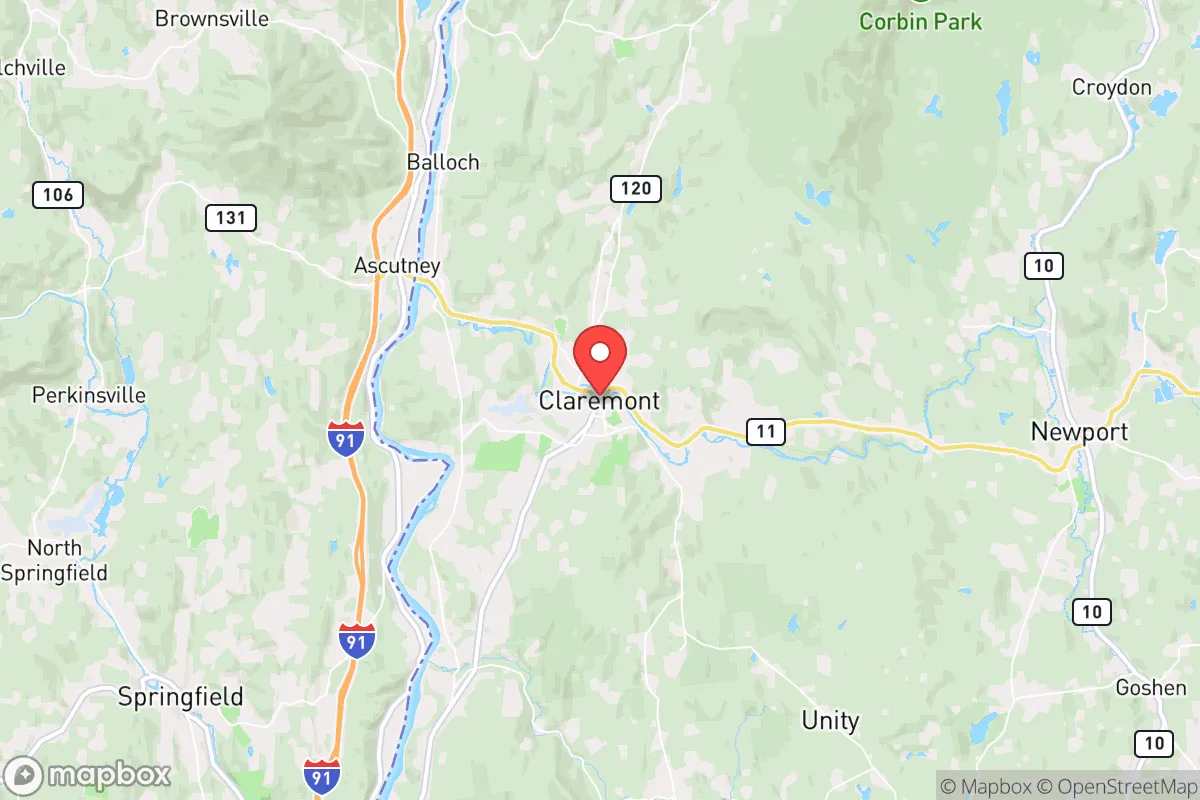
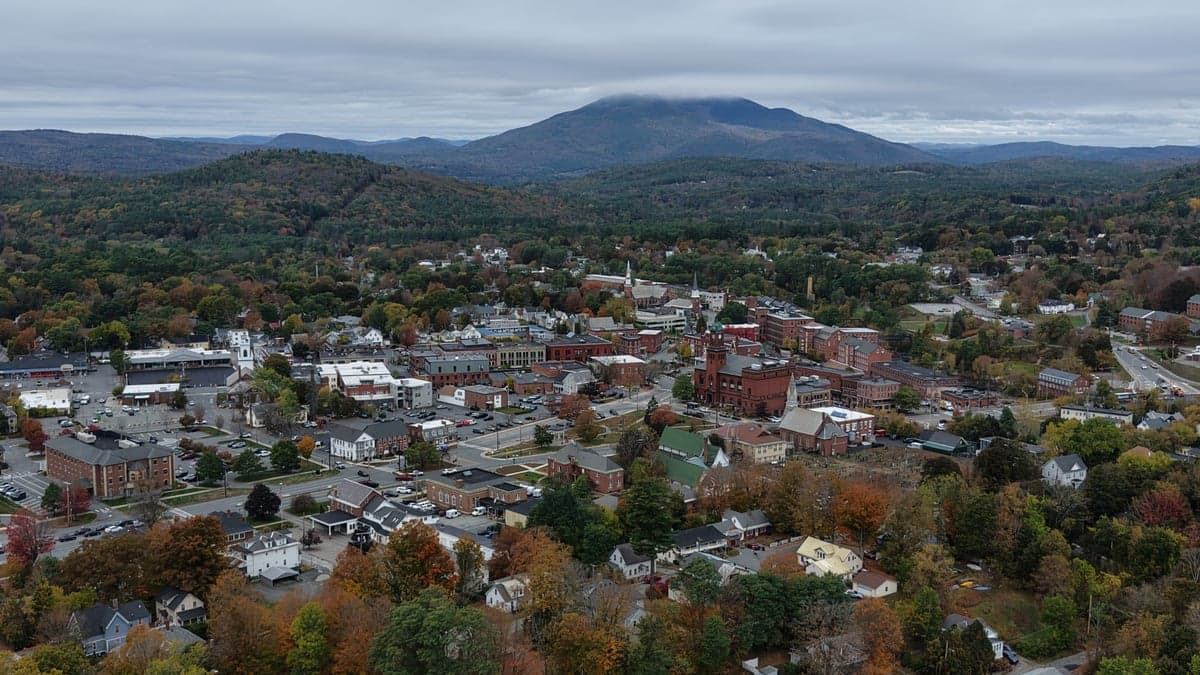
Photo: Wikipedia
Political ClimatePolitical Climate in Claremont, NH
District shown is the primary district for this city’s centroid. Cities may span multiple districts.
Local Political AnalysisPolitical Analysis of Claremont, NH
Claremont, New Hampshire, sits in a political gray zone that’s been shifting leftward over the past decade, with a Cook PVI of D+2 that masks a deeper story. For a long time, this was a reliably blue-collar, independent-minded town where folks voted for the person, not the party, but the last few election cycles have seen a noticeable tilt toward progressive candidates and policies. The surrounding towns—like Newport, Unity, and Acworth—lean more conservative, and you can feel the difference driving just 10 minutes out of Claremont’s downtown, where “Live Free or Die” still means something real.
How it compares
Compared to nearby cities like Lebanon and Hanover, which are solidly blue thanks to Dartmouth College and a booming healthcare sector, Claremont is more of a battleground. Lebanon’s Cook PVI is D+8, and Hanover is D+12, so Claremont’s D+2 actually makes it one of the more moderate spots in the Upper Valley. But that’s the thing—it used to be a place where you could have a reasonable conversation about taxes or property rights without being called a bigot. Now, you’ve got city council meetings where folks are pushing for things like sanctuary city status and zoning changes that favor dense, government-subsidized housing over single-family homes. The contrast with towns like Sunapee or New London, which are more fiscally conservative and libertarian-leaning, is stark. Those places still push back hard on state mandates and federal overreach, while Claremont seems to be rolling over for every new regulation that comes down from Concord.
What this means for residents
For residents, the shift means you’re paying more attention to local elections than ever before. School board races, city council seats, and planning board appointments have become battlegrounds for bigger ideological fights. If you value personal freedom—like the right to keep and bear arms without a bunch of red tape, or the ability to run a small business without drowning in licensing fees—you’re going to feel the squeeze. Property taxes in Claremont are already high relative to the region, and with progressive policies pushing for more social programs and “equity” initiatives, you can bet those taxes are only going up. The long-term concern is that Claremont could become a satellite of the Burlington, Vermont, model—where government tries to solve every problem with a new program or a new tax, and individual liberty takes a back seat to collective goals. That’s a scary thought for anyone who remembers when this town was more about self-reliance than state reliance.
What makes Claremont different
Culturally, Claremont still has some of that old New Hampshire grit—there are plenty of folks who hunt, fish, and work with their hands. But the policy direction is drifting away from that. You see it in things like the push for more bike lanes and “complete streets” projects that prioritize pedestrians over cars, or the local food co-op that’s become a hub for activist types. It’s not that those things are bad on their own, but they signal a broader shift toward a more urban, progressive mindset that doesn’t always respect the rural, independent traditions that made this area great. If you’re thinking about moving here, keep an eye on the school board and the city council elections—those are the real indicators of where Claremont is headed. Right now, it’s a toss-up, but the trend line is concerning for anyone who values limited government and personal responsibility.

State Political ClimatePolitical Climate in New Hampshire
State Political AnalysisPolitical Environment in the State
New Hampshire has long been the most conservative state in New England, but that reputation is under serious strain. The state leans Republican at the presidential level in a close race — it voted for Trump in 2016 and 2024, but went for Biden by a razor-thin 7,000 votes in 2020 — and the state legislature has flipped between GOP and Democratic control every two years for the past decade. The real story is a slow, grinding shift: the once-reliable "Live Free or Die" ethos is being challenged by an influx of out-of-state transplants, particularly from Massachusetts, who are dragging the state’s politics leftward, especially in the southeastern corner.
Urban vs. rural divide
The political map of New Hampshire is a tale of two states. The southeastern quadrant — Manchester, Nashua, Portsmouth, and the Seacoast region — is increasingly Democratic, driven by high-income professionals, tech workers, and former Bay Staters who commute to Boston or work remotely. Hillsborough County (Manchester) and Rockingham County (the Seacoast) together hold nearly half the state’s population, and they’ve been trending blue. In 2020, Biden won Manchester by 12 points and Portsmouth by 30. Meanwhile, the rest of the state — the North Country (Coos County), the Lakes Region (Belknap County), and the western border along the Connecticut River (Grafton and Sullivan counties) — remains deeply red. Coos County voted for Trump by 25 points in 2024, and towns like Berlin, Lancaster, and Littleton are solidly conservative. The divide isn’t just urban vs. rural; it’s also about transplants vs. natives. Towns like Derry, Londonderry, and Windham are still reliably red, but they’re being squeezed by the blue wave from the south. The key battleground is the "Golden Triangle" of Manchester-Nashua-Salem, where a few thousand swing voters decide the state every cycle.
Policy environment
New Hampshire’s policy environment is a mixed bag for conservatives. The good news: no state income tax, no sales tax, and no capital gains tax — a trifecta that makes it a low-tax haven compared to neighboring Massachusetts, Vermont, and Maine. Property taxes are high (the 4th highest in the nation as a percentage of home value), but that’s the price of no income tax. The state has a right-to-work law, and the legislature is generally pro-business. On education, New Hampshire has a robust school choice program — the Education Freedom Account (EFA) program, launched in 2021, allows parents to use state per-pupil funding for private school, homeschooling, or tutoring. Over 5,000 students are enrolled as of 2025. The bad news: the state has a Democratic governor (Kelly Ayotte, elected in 2024, but she’s a moderate Republican who signed a 24-week abortion ban in 2025), and the legislature is split. Healthcare is a flashpoint: the state expanded Medicaid under the Affordable Care Act in 2014, and efforts to repeal it have failed. Election laws are relatively loose — same-day voter registration is allowed, and there’s no voter ID requirement for absentee ballots, which has drawn criticism from election integrity advocates. The state also has a "sanctuary" policy for transgender minors: in 2023, the legislature overrode the governor’s veto to ban conversion therapy, but a 2024 bill to restrict transgender athletes in girls’ sports failed. So the policy environment is a tug-of-war: low taxes and school choice are wins, but the cultural and healthcare battles are trending left.
Trajectory & freedom
New Hampshire is becoming less free in the areas that matter most to conservatives, despite its libertarian branding. The biggest blow came in 2024, when the state legislature passed a law requiring background checks on all private firearm sales (HB 1178), ending the state’s long-standing no-permit, no-registration gun culture. The law was signed by Governor Ayotte, a Republican, which shocked many Second Amendment advocates. On parental rights, a 2023 law (HB 143) requires schools to notify parents if a student requests a name or pronoun change, but it’s been challenged in court and enforcement is spotty. On medical autonomy, the state legalized recreational marijuana in 2023, but local towns can opt out — and many have, including Bedford and Merrimack. The "Live Free or Die" motto is still on license plates, but the reality is that the state has added more regulations in the last five years than in the previous twenty. Property rights are under pressure from a housing crisis: zoning reforms in 2024 (SB 243) allow accessory dwelling units by right, which is a win for property owners, but it also means more density in suburban towns. The trajectory is clear: the state is slowly adopting Massachusetts-style policies, especially on guns and social issues, driven by the influx of new residents who want the low taxes but not the libertarian culture.
Civil unrest & political movements
New Hampshire has a long history of civil disobedience and grassroots activism, but the tone has shifted. The "Free State Project" — a movement that aimed to move 20,000 libertarians to the state — peaked around 2020 and has since fizzled, with many participants leaving due to the rising cost of living and the leftward drift. However, its legacy remains in towns like Keene and Portsmouth, where libertarian-leaning activists still hold regular meetings. On the left, the "Granite State Progress" group has been active in pushing for gun control and abortion rights, and they’ve been successful. In 2020, the state saw large Black Lives Matter protests in Manchester and Portsmouth, but they were smaller than in other states. Immigration politics are relatively quiet — New Hampshire has a small foreign-born population (about 6%), and there are no sanctuary city policies, though Manchester has a "welcoming city" resolution that’s mostly symbolic. Election integrity has been a hot topic: in 2020, the state’s same-day voter registration and mail-in voting expansion (due to COVID) led to lawsuits and a 2022 law (HB 1564) that tightened absentee ballot rules, but it was vetoed by the governor. The most visible flashpoint is the annual "First in the Nation" presidential primary, which brings national attention and protests from both sides. For a new resident, the political climate is less about street protests and more about the quiet, grinding battle in the state house and town halls.
Projection
Over the next 5-10 years, New Hampshire will continue to drift left, but not as fast as its neighbors. The key demographic driver is in-migration: the state is growing by about 1% per year, and most newcomers are from Massachusetts, New York, and California. These transplants tend to be younger, more educated, and more liberal — they bring their politics with them. The southeastern counties (Hillsborough, Rockingham, Strafford) will become solidly blue, while the rural north and west will remain red. The state legislature will flip between GOP and Democratic control, but the GOP will need to win the suburbs, which is getting harder. The wildcard is the housing crisis: if the state can’t build enough housing, the cost of living will push out young families and working-class conservatives, accelerating the leftward shift. By 2030, expect a Democratic governor and a split legislature, with the state adopting more progressive policies on healthcare (a public option is likely), education (more funding for public schools at the expense of EFAs), and gun control (a red flag law is probable). The "Live Free or Die" ethos will survive in the rural towns, but it will be a minority position in the state as a whole.
For a conservative moving to New Hampshire today, the bottom line is this: you’re getting low taxes and school choice, but you’re also getting a state that is slowly adopting the policies you left behind. The best places to land are the rural towns in the North Country (like Berlin or Colebrook) or the western border (like Hanover or Lebanon, though those are college towns). Avoid the southeastern suburbs unless you’re ready for a political fight. The state is still freer than Massachusetts, but the gap is closing faster than most people realize. If you value liberty, buy your land and your guns now — because the window is closing.
* Values derived from national, state, county, city and local statistics and may differ in a specific area. Last updated: 2026-04-19T05:08:20.000Z
Narrative content on this page is AI-generated and may contain mistakes. Verify any details that matter before acting on them.
ReloMaps may earn a commission from affiliate links at no extra cost to you.

