 Popular
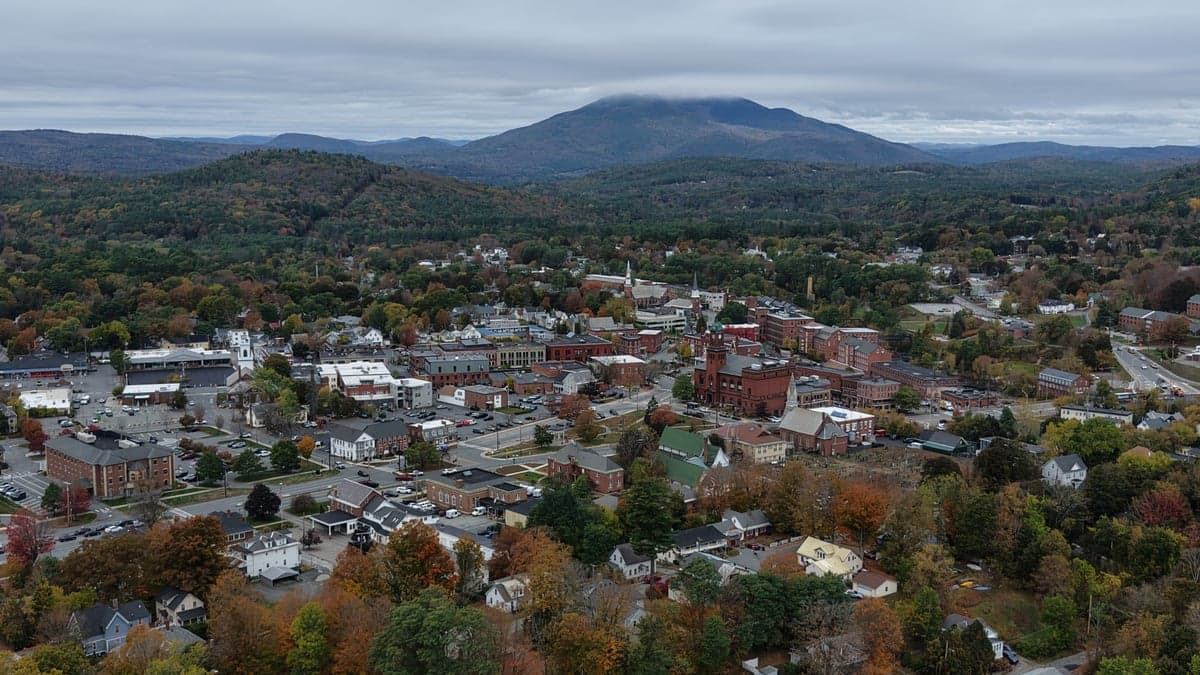
Photo: Wikipedia
Personal Sovereignty in Claremont, NH
Viable for self-reliance. Generally workable, though some barriers may limit total independence.
What does Personal Sovereignty tell us?
Personal Sovereignty measures your capacity for self-reliance and independence with minimal government friction. Higher scores mean fewer barriers between you and the way you want to live... but it assumes you have the space you need and good neighbors.
What does this tell us?
Personal Sovereignty measures your capacity for self-reliance and independence with minimal government friction. Higher scores mean fewer barriers between you and the way you want to live... but it assumes you have the space you need and good neighbors.
State Policy
Energy independence: Importer (10% of energy produced in-state)
Personal Liberty
Homesteading

Personal Liberty Analysis
For the individual or family prioritizing personal sovereignty above all else, Claremont, New Hampshire, offers a legal and cultural environment that is markedly more protective of autonomy than most of the United States. While no location is a fortress against federal overreach, New Hampshire’s state-level framework—rooted in its "Live Free or Die" ethos—provides a significant buffer against the erosion of personal rights seen in neighboring states. Claremont, as a smaller industrial city in the Connecticut River Valley, presents a specific blend of low regulatory pressure, strong self-defense laws, and a practical landscape for self-reliance, though it is not without its local challenges, including a higher property tax rate that demands careful financial planning.
Tax burden and regulatory posture: how New Hampshire’s structure protects your income and property
New Hampshire’s tax structure is a primary draw for those seeking to minimize government extraction from their earnings. The state has no state income tax on wages or salaries and no state sales tax, meaning every dollar you earn stays in your pocket or your business. This is a deliberate policy choice that reduces the state government’s ability to fund expansive programs that often come with strings attached. For a prepper or survivalist, this translates directly into more capital for land, supplies, and training. However, the trade-off is a heavier reliance on local property taxes. In Claremont, the 2024 property tax rate is approximately $30.50 per $1,000 of assessed value, which is above the state average. This means a home valued at $200,000 carries an annual tax bill of roughly $6,100. While this is a significant cost, it is a fixed, predictable expense that does not scale with your income or consumption, unlike income or sales taxes. The regulatory posture in Claremont is generally business-friendly, with no state-level zoning mandates that would prevent you from running a small home-based operation or keeping livestock, though you must check local ordinances. The city’s planning board is known for being pragmatic rather than ideological, a stark contrast to the bureaucratic hurdles found in Vermont or Massachusetts just across the river.
Self-defense and gun law specifics: what you can legally own and carry in Claremont
New Hampshire is one of the most firearm-friendly states in the nation, and Claremont residents benefit directly from this. The state operates under a constitutional carry framework, meaning no permit is required to carry a concealed or open firearm for anyone legally allowed to possess one. There is no state-level background check system beyond the federal NICS check, no waiting periods, and no registration of firearms or magazines. This is a critical consideration for those who view firearms as a non-negotiable component of personal and family defense. Furthermore, New Hampshire has a stand-your-ground law with no duty to retreat in any place you are lawfully present, and the state’s castle doctrine is robust. Magazine capacity is unrestricted, and there are no bans on common rifle platforms like AR-15s. For the survivalist, this means you can legally stockpile the tools of self-defense without fear of state-level confiscation or registration schemes. The only notable restriction is that you cannot carry in federal buildings, courthouses, or secure areas of airports—standard limitations. The local culture in Claremont is supportive of these rights; the Sullivan County Sheriff’s Office is known for being pro-Second Amendment, and there are multiple gun shops and ranges within a 20-minute drive.
Self-reliance and homesteading viability: lot sizes, zoning, and off-grid feasibility in Claremont
Claremont’s geography and zoning code make it a viable location for a self-reliant lifestyle, though the degree of autonomy you can achieve depends on whether you are inside the city limits or in the surrounding rural areas. Within the city, standard residential lots are typically 0.25 to 0.5 acres, which is enough for a substantial vegetable garden, a few fruit trees, and small livestock like chickens or rabbits, provided you follow the city’s animal ordinance (which allows up to six hens without a permit, but no roosters). For larger ambitions—such as keeping goats, pigs, or a horse—you will need to look at the unincorporated areas of Claremont or the neighboring towns of Unity, Cornish, or Newport, where minimum lot sizes of 2 to 5 acres are common. Off-grid living is legally feasible in New Hampshire. The state does not require a grid connection for electricity, and you can use solar panels, wind turbines, or a generator as your primary power source. However, you must comply with the state’s building code for any permanent structure, which includes septic system approval from the New Hampshire Department of Environmental Services. Water rights are generally favorable: you can drill a well on your property without a permit, though you must register it. The climate is a challenge—winters are long and cold, with average snowfall around 60 inches—so a serious prepper will need a robust heating plan, typically wood or pellet stoves, which are common and culturally accepted here.
Personal liberties: parental rights, medical autonomy, speech, and property protections
New Hampshire has codified several protections that directly appeal to those wary of government overreach. In terms of parental rights, the state passed HB 1431 in 2022, which explicitly affirms that parents have the fundamental right to direct the upbringing, education, and care of their children, including medical decisions. This means you can opt your child out of any school curriculum or activity you find objectionable without facing legal retaliation. The state also has a robust medical freedom law that prohibits mandatory vaccination as a condition of employment or public service, and it bars discrimination based on vaccination status. For the survivalist, this is crucial: you are not forced to accept medical interventions you distrust. On speech, New Hampshire has no hate speech laws that would criminalize political or religious expression, and the state’s constitution provides stronger free speech protections than the First Amendment in some contexts. Property rights are also well-guarded; the state has a strong eminent domain law that requires a public necessity and just compensation, and there is no state-level property tax on business equipment or inventory, which benefits anyone running a home-based operation. The only area where Claremont falls short is in its local noise and nuisance ordinances, which can be used against someone running a generator or shooting range on a small lot—so choose your acreage wisely.
Overall, Claremont offers a sovereignty profile that is among the strongest in the Northeast, but it is not a libertarian utopia. The high property tax is a real burden that funds local schools and services you may not fully use, and the city’s older infrastructure means you will likely need to invest in your own water filtration or backup power. Compared to Vermont, where gun laws are restrictive and vaccine mandates were enforced, or Massachusetts, where nearly every aspect of personal autonomy is regulated, Claremont is a clear winner for the conservative-leaning survivalist. The state’s constitutional carry, low income tax burden, and strong parental rights create a legal foundation that allows you to live as you see fit, provided you are willing to pay the property tax bill and endure the winters. For the single individual or family looking to build a resilient, independent life, Claremont is a solid base of operations—just be prepared to defend it, both legally and literally.

* Values derived from national, state, county, city and local statistics and may differ in a specific area. Last updated: 2026-04-19T05:08:20.000Z
Narrative content on this page is AI-generated and may contain mistakes. Verify any details that matter before acting on them.
ReloMaps may earn a commission from affiliate links at no extra cost to you.

