Photo: Wikipedia
Political ClimatePolitical Climate in Claremore, OK
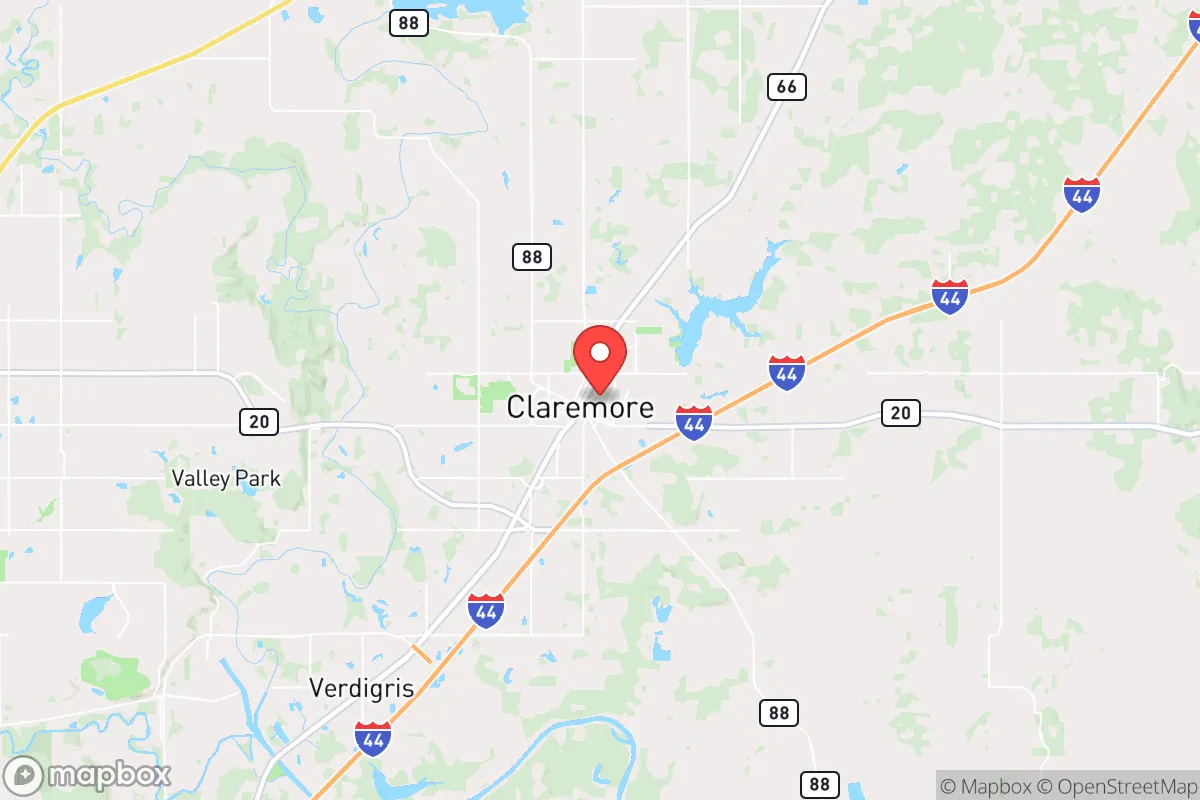
District shown is the primary district for this city’s centroid. Cities may span multiple districts.
Local Political AnalysisPolitical Analysis of Claremore, OK
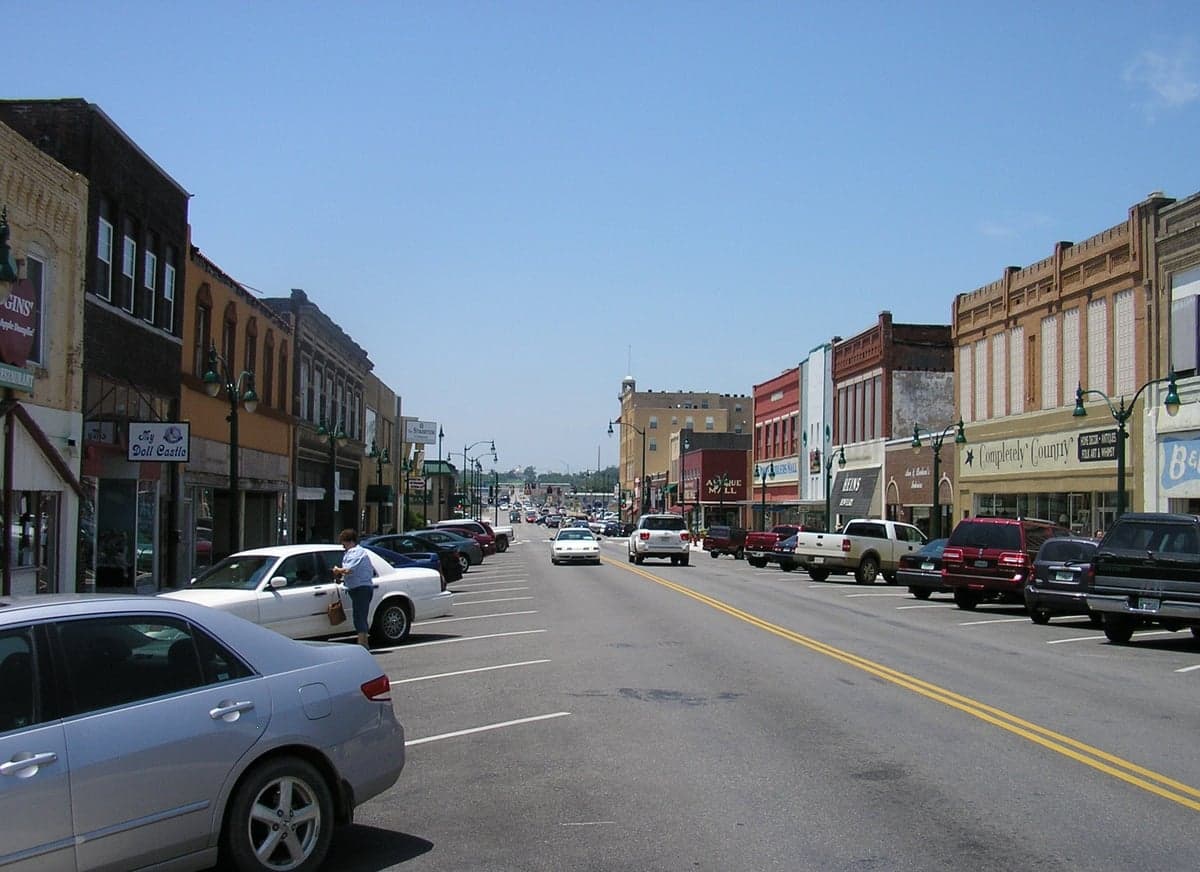
Claremore is about as solidly conservative as it gets in Oklahoma, and that’s not changing anytime soon. The Cook PVI clocks it at R+28, which means Republicans have a nearly 30-point built-in advantage over the national average. If you’ve lived here a while, you’ve seen that lean hold steady through wave elections and local shakeups alike. The real story isn’t whether Claremore is red—it’s how that red is holding against the creeping progressive pressure you see in places like Tulsa, just 25 miles south, or even in the state capital. Folks here still believe in limited government, personal responsibility, and keeping the feds out of your business, and that’s not just talk—it’s how the county votes, year after year.
How it compares
Drive 20 minutes south to Tulsa, and you’ll hit a different political world. Tulsa County as a whole is still red-leaning, but the city itself has shifted noticeably left in the last decade, with younger transplants and out-of-state money pushing for more progressive policies on zoning, policing, and taxes. Claremore, by contrast, feels like a time capsule of older-school Oklahoma values. Compared to nearby Owasso or Broken Arrow—both reliably conservative—Claremore is actually a bit more rural and a bit more skeptical of government overreach. You won’t see the same push for “equity” initiatives or bike-lane mandates here. The surrounding Rogers County is deep red, and that creates a buffer against the kind of ideological drift you see in more urbanized suburbs. If you’re looking for a place where the local school board isn’t suddenly debating critical race theory or gender ideology, Claremore is still that place—for now.
What this means for residents
For the people who live here, the political climate translates into a pretty straightforward daily life. Property taxes stay low because the county commission isn’t chasing new spending programs. Second Amendment rights are respected without a lot of hoops—you can carry without a permit in Oklahoma, and Claremore’s local government hasn’t tried to add extra restrictions. The school system, Claremore Public Schools, still focuses on core academics and hasn’t gone down the road of DEI offices or gender-neutral bathrooms. That said, there’s a quiet concern among longtime residents that the growth from Tulsa’s sprawl is bringing in folks who don’t share those values. If you see new housing developments going up, you wonder whether the next city council election might bring a candidate who thinks “diversity, equity, and inclusion” is a priority. So far, that hasn’t happened, but it’s something to keep an eye on.
Culturally, Claremore still has its feet planted in the old Oklahoma—rodeos, church potlucks, and a general distrust of anyone who wants to “fix” things that aren’t broken. The Rogers County GOP is active, and local elections tend to turn on who’s more committed to cutting taxes and protecting property rights. There’s no city income tax, no plastic bag ban, no noise ordinances that get enforced on your backyard bonfire. If you value being left alone to live your life without a bureaucrat telling you how to mow your lawn or what kind of lightbulb to buy, Claremore delivers. The long-term trajectory depends on how many people move in from blue states and whether they decide to bring their politics with them. For now, it’s still a place where conservative common sense runs the show, and that’s exactly how most folks here want it to stay.

State Political ClimatePolitical Climate in Oklahoma
State Political AnalysisPolitical Environment in the State
Oklahoma has been a reliably red state for decades, with Republicans holding every statewide office and supermajorities in both legislative chambers. The state voted for Donald Trump by 33 points in 2024, a margin that has widened from 20 points in 2008, reflecting a steady rightward shift driven by rural consolidation and suburban realignment. While Democrats once dominated state politics through the 1990s, the last 15 years have seen a complete inversion: the party now holds zero statewide elected positions and controls less than 30% of legislative seats.
Urban vs. rural divide
The political map of Oklahoma is starkly divided between its two major metros and the vast rural expanse. Oklahoma City and Tulsa are the only areas where Democrats remain competitive, though both have shifted right in recent cycles. Oklahoma County, which includes Oklahoma City, voted for Trump by 8 points in 2024 after backing Biden by 1 point in 2020 — a dramatic 9-point swing driven by suburban growth in Edmond, Yukon, and Mustang. Tulsa County, home to Tulsa, went for Trump by 15 points in 2024, up from 12 points in 2020, as suburbs like Broken Arrow and Bixby continue to trend red. The rural counties tell the real story: Cimarron County in the Panhandle voted 87% for Trump, while Latimer County in the southeast gave him 82%. The only blue holdouts are a handful of small, historically Democratic counties in the southeast — like Pushmataha and McCurtain — where conservative Democrats still hold sway, but these are fading fast as older voters retire. The state’s political gravity center has moved decisively to the suburbs and exurbs, where growth is fastest and voting patterns are most conservative.
Policy environment
Oklahoma’s policy environment is among the most conservative in the nation, with a low-tax, low-regulation posture that has attracted businesses and residents from high-cost states. The state has a flat income tax of 4.75%, which the legislature is actively working to phase out entirely — a bill to reduce it to 3.99% by 2027 passed in 2025. Property taxes are among the lowest in the country, averaging 0.87% of home value, with no state-level property tax. Sales taxes are high, however, with combined state and local rates often exceeding 10% in cities like Oklahoma City and Tulsa. Education policy has been a flashpoint: the state passed universal school choice in 2023, allowing any family to use public funds for private or homeschool expenses, a move that has drawn families from neighboring states. Healthcare is limited — Oklahoma has not expanded Medicaid under the Affordable Care Act, and rural hospital closures have accelerated. Election laws are strict: voter ID is required, early voting is limited to three days, and absentee ballots require notarization or a witness. The state also passed a near-total abortion ban in 2022, with no exceptions for rape or incest, which has reshaped the political landscape and drawn national attention.
Trajectory & freedom
Oklahoma has moved decisively toward greater personal liberty in several key areas, particularly gun rights, parental rights, and tax freedom. In 2019, the state passed constitutional carry, allowing anyone over 21 to carry a firearm without a permit. In 2023, the legislature passed the Parents’ Bill of Rights, which requires schools to notify parents of any medical or mental health services provided to students and prohibits instruction on sexual orientation in grades K-5. The state also passed a law in 2024 banning gender-affirming care for minors, with penalties for providers. On the economic freedom front, Oklahoma has become a right-to-work state, and occupational licensing reforms have reduced barriers for trades like barbering and cosmetology. However, there are concerning trends: the state’s medical marijuana program, which was one of the most permissive in the country when voters approved it in 2018, has been steadily tightened by the legislature, with new restrictions on potency and advertising. Additionally, the state’s heavy reliance on oil and gas revenue means that personal freedom is somewhat constrained by the boom-and-bust cycle — when prices drop, the state cuts services, but taxes rarely rise. Overall, Oklahoma is becoming more free for those who align with its conservative values, but less so for those who don’t.
Civil unrest & political movements
Oklahoma has seen relatively little civil unrest compared to coastal states, but there have been notable flashpoints. The 2020 Black Lives Matter protests in Oklahoma City and Tulsa were large but largely peaceful, though the Tulsa protests drew national attention given the city’s history with the 1921 race massacre. In response, the legislature passed a law in 2021 increasing penalties for rioting and blocking highways during protests. Immigration politics have been heated: the state passed a law in 2024 requiring local law enforcement to cooperate with federal immigration authorities, and Governor Kevin Stitt has deployed National Guard troops to the Texas border. There is no sanctuary city movement in Oklahoma — in fact, Oklahoma City and Tulsa have both passed resolutions affirming cooperation with ICE. Election integrity has been a major issue since 2020, with the legislature passing a law in 2021 that banned ballot drop boxes and tightened absentee ballot rules. The state also created a Election Integrity Unit within the Attorney General’s office in 2023. On the left, activist groups like the Oklahoma Policy Institute and the ACLU of Oklahoma have been active in challenging the abortion ban and school choice laws, but they have little political power. On the right, groups like Oklahomans for Health and Parental Rights have been influential in pushing the Parents’ Bill of Rights and anti-trans legislation. The most visible political movement in the state is the growing push for school choice, which has turned into a grassroots campaign with rallies at the state capitol.
Projection
Over the next 5-10 years, Oklahoma is likely to become even more conservative, driven by two demographic trends: in-migration from blue states and the continued exodus of younger, more liberal residents to Texas and Colorado. The state’s population grew by 5.5% between 2020 and 2024, with the fastest growth in the Oklahoma City suburbs of Edmond, Mustang, and Yukon, as well as the Tulsa exurbs of Bixby and Jenks. These new residents are overwhelmingly conservative, drawn by low taxes and school choice. The rural counties will continue to shrink and age, but their voting power will remain high due to the state’s gerrymandered legislative districts. The biggest wildcard is the state’s budget: if oil prices stay high, the state will continue to cut taxes and expand school choice; if they crash, the state may face a fiscal crisis that could force tax increases or service cuts. The abortion ban will remain a defining issue, but it’s unlikely to be repealed — instead, expect more litigation over exceptions and enforcement. The state’s political leadership is likely to remain in the hands of the far-right Freedom Caucus, which has grown in influence since 2022. For a conservative moving in, Oklahoma will feel like a safe bet for the foreseeable future, but the state’s heavy reliance on oil and its aging infrastructure are long-term risks that could test the limits of its low-tax model.
For a new resident, the bottom line is this: Oklahoma offers a political environment that is deeply aligned with conservative values — low taxes, strong gun rights, school choice, and limited government. You’ll find a state where your vote actually counts in Republican primaries, where your kids can attend school without woke curriculum, and where your property rights are respected. The trade-offs are real: limited healthcare access, a boom-and-bust economy, and a political culture that can feel insular. But if you’re looking for a place where the government stays out of your life and your wallet, Oklahoma is one of the best bets in the country. Just be prepared for the summers and the politics — both are hot and show no signs of cooling down.
* Values derived from national, state, county, city and local statistics and may differ in a specific area. Last updated: 2026-04-21T09:09:34.000Z
Narrative content on this page is AI-generated and may contain mistakes. Verify any details that matter before acting on them.
ReloMaps may earn a commission from affiliate links at no extra cost to you.

