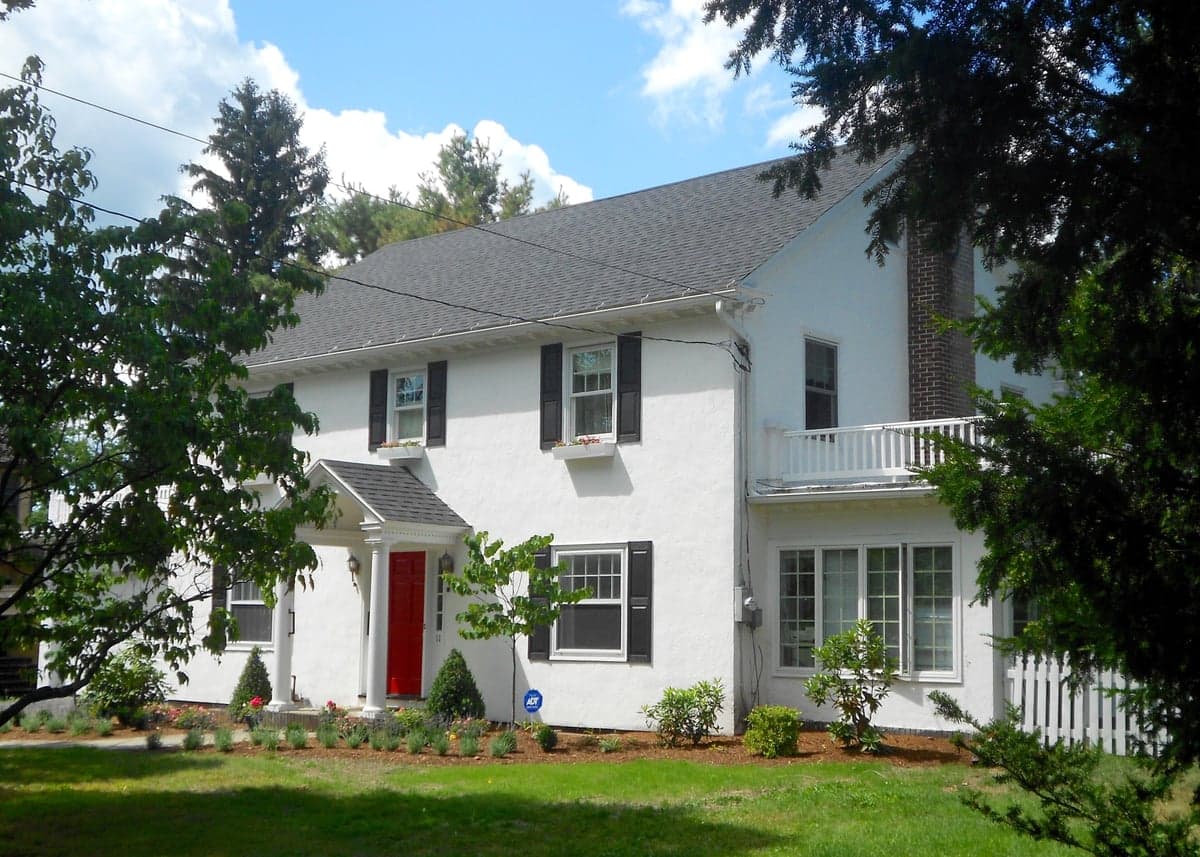
Photo: Wikipedia
Political ClimatePolitical Climate in Clarks Green, PA
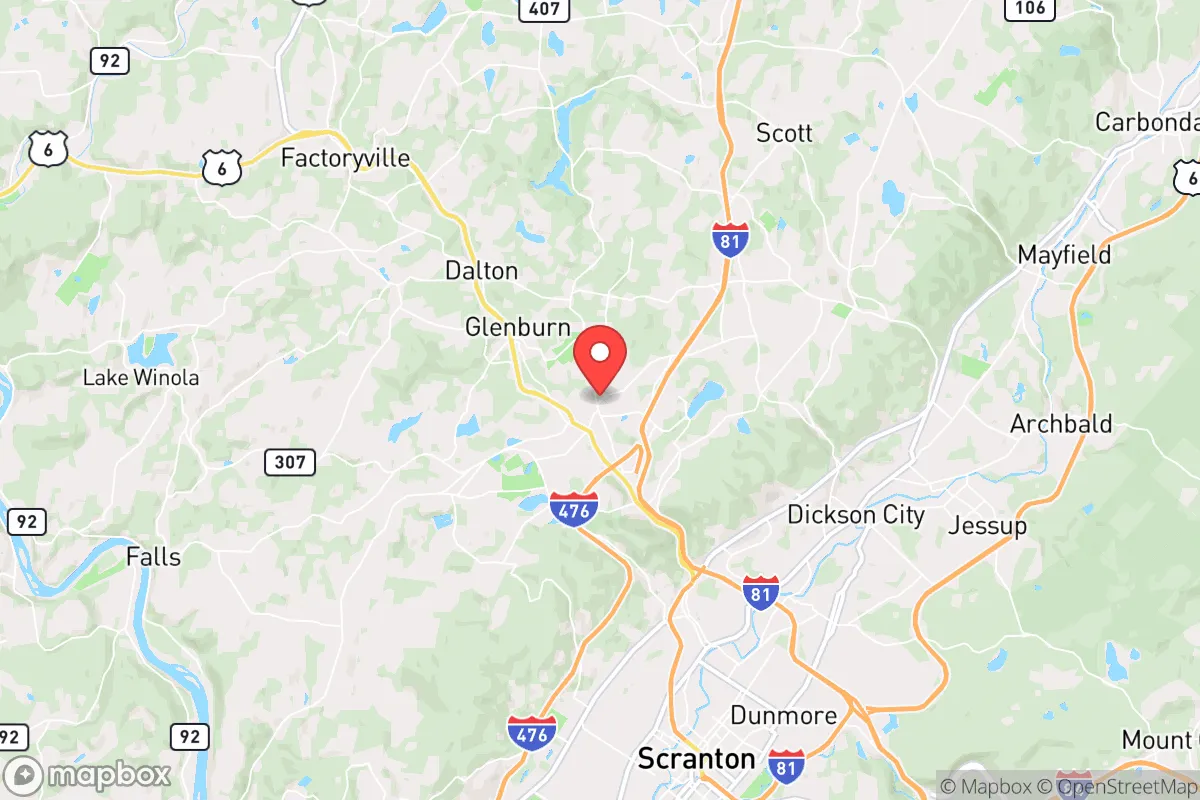
District shown is the primary district for this city’s centroid. Cities may span multiple districts.
Local Political AnalysisPolitical Analysis of Clarks Green, PA
Clarks Green, Pennsylvania, leans reliably Republican, with a Cook Partisan Voting Index (PVI) of R+4, meaning the borough votes about four points more Republican than the national average. This isn't a deep-red stronghold, but it's a solidly conservative-leaning community in a state that, as a whole, is a pure toss-up—Pennsylvania's statewide PVI is EVEN. Over the last decade, the area has held steady, not swinging as hard toward the GOP as some rural parts of the state, but also not drifting blue like the nearby city of Scranton, which is about 10 miles south and has trended Democratic in recent cycles. If you're moving here, you're stepping into a place where Republican candidates typically win by comfortable margins, but it's not unusual to see a mix of yard signs during election season.
How it compares
Clarks Green's R+4 lean puts it in a different political lane than much of Lackawanna County, which as a whole is more competitive—the county voted for Joe Biden in 2020 by about 11 points, driven by Scranton and the more urbanized areas. In contrast, Clarks Green and its neighbor Clarks Summit (which shares similar demographics) are noticeably more conservative. Drive 20 minutes west to Dalton or Factoryville, and you'll find even redder territory, with PVIs closer to R+12 or R+15. Compared to Pennsylvania at large, Clarks Green is a bit more Republican than the state's average, but it's not an outlier—think of it as a slightly more conservative version of the suburbs around Harrisburg or Allentown. The real contrast is with Philadelphia or Pittsburgh, which are deep blue, or with the rural northern tier, which is deep red. Clarks Green sits in a middle ground: reliably Republican but not overwhelmingly so.
What this means for residents
For conservative residents, the political climate feels comfortable. Local elections tend to favor Republicans, and the borough council and school board are generally center-right. You'll find that community events, like the annual Clarks Green Day, don't get bogged down in partisan tension—most folks just want to keep the streets safe and the taxes reasonable. For liberal residents, it's a different story. You won't be isolated—there are plenty of like-minded people, especially among younger families and professionals commuting to Scranton or Wilkes-Barre—but you'll be in the minority. That said, the area is not hostile. People are generally polite, and political disagreements rarely get heated in public. The biggest practical difference is in policy: the borough keeps property taxes low (around 2.5 mills), and there's little appetite for new spending initiatives, which aligns with the conservative majority. If you're used to a more progressive local government—say, from a place like State College or Philadelphia—you might find the pace of change slow.
Culturally, Clarks Green is a bit of a bubble. It's a small, walkable borough with a strong sense of community, and that tends to reinforce the status quo. You won't see the same kind of activism or protest culture you'd find in a college town or big city. The biggest local political flashpoints in recent years have been about development—whether to allow more housing or commercial space—and those debates often split along traditional lines, with conservatives favoring limited growth and liberals pushing for more density. For newcomers, the key takeaway is this: if you're conservative, you'll feel at home; if you're liberal, you'll find your people but you'll need to adjust to being the underdog. Either way, the politics here are more about quiet consistency than loud confrontation.

State Political ClimatePolitical Climate in Pennsylvania
State Political AnalysisPolitical Environment in the State
Pennsylvania is the ultimate swing state, with a Cook PVI of EVEN that perfectly captures its knife-edge balance. Over the past 20 years, it has shifted from a reliably blue-leaning state in presidential races (voting Democratic from 1992 through 2012) to a true battleground where margins are measured in tens of thousands of votes. The 2016 and 2020 elections saw razor-thin results—Trump won by 44,000 votes in 2016, Biden by 80,000 in 2020—and the 2024 race is expected to be just as tight. This volatility is driven by a slow realignment: working-class white voters in the west and northeast have moved right, while suburban Philadelphia has moved left, creating a state that is neither red nor blue but a patchwork of competing coalitions.
Urban vs. rural divide
The political map of Pennsylvania is a tale of two states. The southeastern corner—Philadelphia and its collar counties (Montgomery, Delaware, Chester, Bucks)—is the Democratic engine, delivering margins of 400,000+ votes that offset GOP gains everywhere else. Pittsburgh and its immediate suburbs (Allegheny County) are also reliably blue, though less overwhelmingly so. In contrast, the vast rural and exurban areas—the northern tier (Tioga, Bradford, Potter counties), the central spine (Centre, Clinton, Lycoming), and the southwestern coal country (Washington, Greene, Fayette)—vote Republican by 60-70% margins. The key battlegrounds are the "collar counties" around Philadelphia (Bucks and Chester, which flipped from red to purple to blue over the past decade) and the old industrial towns of the Lehigh Valley (Allentown, Bethlehem, Easton) and the Scranton/Wilkes-Barre area (Lackawanna and Luzerne counties). These regions are where elections are decided: they contain enough moderate and working-class voters who swing between parties based on economic messaging and cultural issues.
Policy environment
Pennsylvania's policy landscape reflects its divided government. The state has a flat income tax of 3.07% and a sales tax of 6% (with no tax on clothing or groceries), making it relatively tax-friendly compared to neighboring New York and New Jersey. Property taxes are high, however, averaging 1.5-2% of home value, which is a major issue for homeowners. The state has no right-to-work law, and union density remains above the national average, particularly in the public sector and construction. Education policy is decentralized: school funding is heavily reliant on local property taxes, leading to wide disparities between wealthy suburbs and poor rural districts. In 2023, the state Supreme Court ruled the current funding system unconstitutional, setting up a long-term reform process. Healthcare is a mixed bag: Pennsylvania expanded Medicaid under the ACA, but the state also has a robust private insurance market. Election laws are moderately restrictive: no-excuse mail-in voting was enacted in 2019 (Act 77) but remains politically contentious, with Republicans pushing for voter ID requirements and Democrats defending mail-in access. The state has no permit-to-purchase law for handguns, but it does require background checks for all gun sales (including private sales) and has a "stand your ground" law that was strengthened in 2011.
Recent policy direction
Over the past five years, Pennsylvania has moved in a moderately liberal direction on several fronts, but with significant conservative holdouts. In 2022, Governor Josh Shapiro signed an executive order banning discrimination based on sexual orientation and gender identity in state employment and contracting, and the state Supreme Court ruled that the state's ban on same-sex marriage was unconstitutional (though it remains on the books). On gun policy, the state passed a "red flag" law in 2023 (Act 18) allowing courts to temporarily seize firearms from individuals deemed a threat, but it was paired with a preemption law that blocks local municipalities from enacting their own gun ordinances—a win for gun rights advocates. On abortion, Pennsylvania remains a relative island of access in the Midwest: abortion is legal up to 24 weeks, and the state has no waiting period or mandatory counseling laws. However, the 2022 Dobbs decision triggered a political firestorm, and the state's Republican-controlled legislature has repeatedly tried to pass a 20-week ban, which Governor Shapiro has vetoed. On election integrity, the 2020 election saw intense controversy, with Trump allies challenging mail-in ballot procedures. The state has since implemented stricter signature verification and ballot tracking, but no major voter ID law has passed. On property rights, the state has a strong tradition of local zoning control, which has slowed renewable energy projects and housing development. On privacy, Pennsylvania has no comprehensive data privacy law, though a 2023 bill (HB 1201) to create a consumer data protection framework is pending.
Civil unrest & political movements
Pennsylvania has seen its share of political flashpoints. The 2020 election aftermath was particularly intense in Philadelphia, where Trump supporters and election deniers held protests outside the convention center during the vote count. The January 6th investigation had deep roots here: several Pennsylvania Republicans, including state Senator Doug Mastriano, were subpoenaed for their role in the "alternate elector" scheme. On the left, the Black Lives Matter protests in Philadelphia in 2020 were large and occasionally violent, leading to property damage and a lasting debate over policing. Immigration politics are less visible than in border states, but sanctuary city policies in Philadelphia (which limits cooperation with ICE) have been a recurring flashpoint, with the state legislature passing bills to withhold state funding from sanctuary cities (vetoed by the governor). The "Stop the Steal" movement remains active in rural counties, with grassroots groups pushing for election audits and hand-counting of ballots. In 2023, a proposal to secede from the state and join West Virginia was floated by a few rural commissioners in Fulton County, but it gained no traction. Overall, the political temperature is high but not boiling over—most residents go about their daily lives without encountering overt political conflict, though the intensity of campaign ads and door-knocking in swing counties is relentless.
Projection
Over the next 5-10 years, Pennsylvania is likely to remain a battleground, but with a slow demographic drift toward the Democrats. The Philadelphia suburbs are growing and diversifying, while rural counties are aging and shrinking. In-migration from New York and New Jersey—often younger, more educated, and more liberal—is accelerating in the Lehigh Valley and the Poconos. However, the working-class white voters who flipped to Trump in 2016 and 2020 are not returning to the Democratic fold; they are becoming a reliable GOP base. The wild card is the state's growing Latino population, concentrated in Allentown, Reading, and Lancaster, which is politically diverse and could swing either way. If the GOP can make inroads with Latino voters (as they did in Florida and Texas), Pennsylvania could become more competitive for Republicans. If Democrats consolidate the suburbs and the growing minority vote, the state could lean blue by 2032. For a new resident, the practical implication is that Pennsylvania will remain a high-attention swing state, meaning constant political advertising, intense local activism, and a polarized but functional government. The state's divided government (Democratic governor, Republican legislature) is likely to persist, producing incremental policy changes rather than dramatic shifts.
For a conservative relocator, Pennsylvania offers a mixed bag: low income taxes, strong gun rights (with some recent restrictions), and a robust school choice movement (the state has a tax-credit scholarship program and is expanding charter schools). However, you'll be living in a state where the governor and major cities are liberal, and where cultural battles over abortion, transgender rights, and election integrity are fought every election cycle. For a liberal relocator, the state provides abortion access, a strong union tradition, and a vibrant urban culture, but you'll have to contend with a Republican legislature that blocks many progressive priorities. The bottom line: Pennsylvania is a place where your vote genuinely matters, and where your daily life will be shaped by the constant tug-of-war between two roughly equal coalitions. If you enjoy being in the center of the action and can tolerate the noise, it's a great place to live. If you want a state where your political views are the clear majority, look elsewhere.
* Values derived from national, state, county, city and local statistics and may differ in a specific area. Last updated: 2026-10-10T16:27:11.000Z
Narrative content on this page is AI-generated and may contain mistakes. Verify any details that matter before acting on them.
ReloMaps may earn a commission from affiliate links at no extra cost to you.

