 Popular
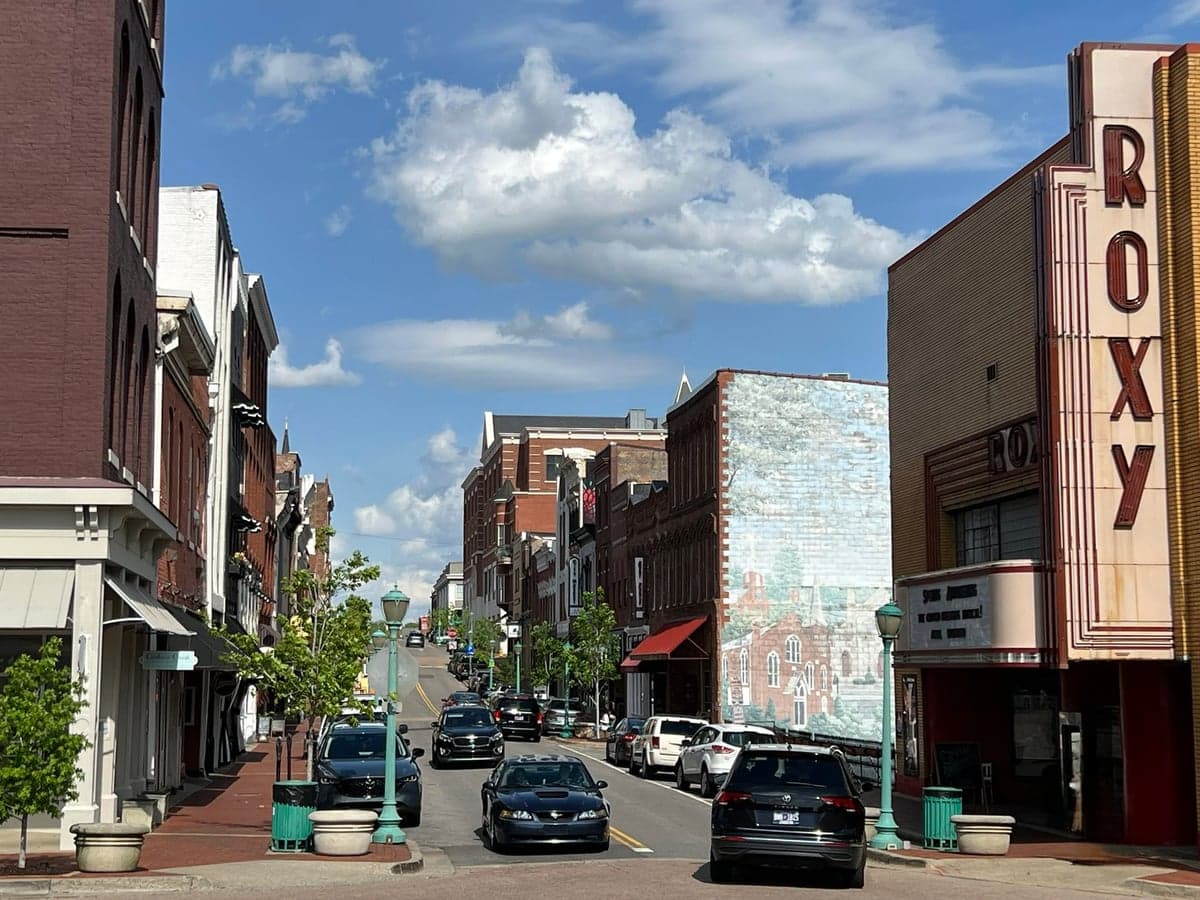
Photo: Wikipedia
Demographics of Clarksville, TN
Affluence Level in Clarksville, TN
A middle-class area roughly in line with national averages across income, home values, education, and employment.
People of Clarksville, TN
Clarksville, Tennessee is a city of 171,897 residents shaped by its role as a military hub and a growing regional center. Its population is notably diverse for a mid-sized Southern city, with a white majority of 55.0%, a significant Black population at 22.4%, a Hispanic community of 12.5%, and smaller East/Southeast Asian (2.0%) and Indian (0.4%) groups. The city’s identity is heavily influenced by Fort Campbell, creating a transient yet deeply rooted community with a young median age and a strong sense of civic pride.
How the city was settled and grew
Clarksville’s original population was drawn by the promise of fertile land along the Cumberland River, with European-American settlers arriving in the late 18th century after the Cherokee cession of 1779. The city was formally founded in 1785 and grew slowly as a tobacco and river-trade center. The arrival of the railroad in the 1850s spurred modest growth, but the real population boom came with the establishment of Camp Campbell (later Fort Campbell) in 1941. This military installation drew thousands of soldiers and their families, many of whom stayed after service. The historic Downtown district and New Providence neighborhood were the original landing points for these early waves, with New Providence becoming a working-class area for railroad and river workers. The post-World War II era saw the first significant Black migration into the city, settling primarily in the St. Bethlehem area and the Greenwood neighborhood, which became the heart of Clarksville’s African American community.
Modern era (post-1965)
The 1965 Hart-Cellar Act had a limited immediate effect on Clarksville, as the city’s foreign-born population remains low at 3.5%. However, the post-1965 era saw a major domestic shift: the expansion of Fort Campbell during the Vietnam War and the subsequent decades brought a steady influx of military families from across the country, diversifying the city’s racial and ethnic makeup. The Hispanic population began growing noticeably in the 1990s, driven by construction and service jobs, with many settling in the Oakland area and the Rossview corridor. The Black population, which had been concentrated in Greenwood and St. Bethlehem, began dispersing into newer subdivisions like Sango and Woodlawn as housing options expanded. The East/Southeast Asian community, primarily Vietnamese and Filipino, grew alongside the military presence, with many families living near Fort Campbell in the Gate 5 area. The Indian subcontinent population remains small (0.4%), largely composed of professionals in healthcare and engineering, and is not concentrated in any single neighborhood.
The future
Clarksville’s population is heading toward greater diversity, but not at a rapid pace. The white share has declined from roughly 65% in 2000 to 55% today, while the Hispanic and Black shares have grown steadily. The foreign-born population is likely to remain below 5% for the foreseeable future, as the city lacks the large-scale refugee resettlement or tech-driven immigration seen in Nashville. The city is not tribalizing into distinct enclaves; rather, newer subdivisions like Havenwood and Mallory Ridge are drawing a mix of white, Black, and Hispanic families. The military presence ensures a constant churn of residents, which prevents deep ethnic segregation but also limits the formation of long-standing ethnic neighborhoods. The next 10-20 years will likely see the Hispanic population approach 15-18%, the Black population stabilize around 22-24%, and the white share continue a slow decline. The East/Southeast Asian and Indian populations will grow modestly, driven by healthcare and education jobs at Austin Peay State University and Tennova Healthcare.
For someone moving to Clarksville now, the city offers a stable, family-oriented environment with a growing diversity that is more organic than engineered. It is not a melting pot in the traditional sense, but a place where military service, affordable housing, and regional job growth create a pragmatic, community-focused population. The key takeaway: Clarksville is becoming more diverse, but slowly, and the military remains the dominant cultural and demographic force. New arrivals will find a city that is welcoming but not dramatically changing, with neighborhoods that are more mixed than segregated and a future that looks much like its present—steady, growing, and grounded in its Fort Campbell roots.

* Values derived from national, state, county, city and local statistics and may differ in a specific area. Last updated: 2026-04-15T23:55:18.000Z
Narrative content on this page is AI-generated and may contain mistakes. Verify any details that matter before acting on them.
ReloMaps may earn a commission from affiliate links at no extra cost to you.

