 Popular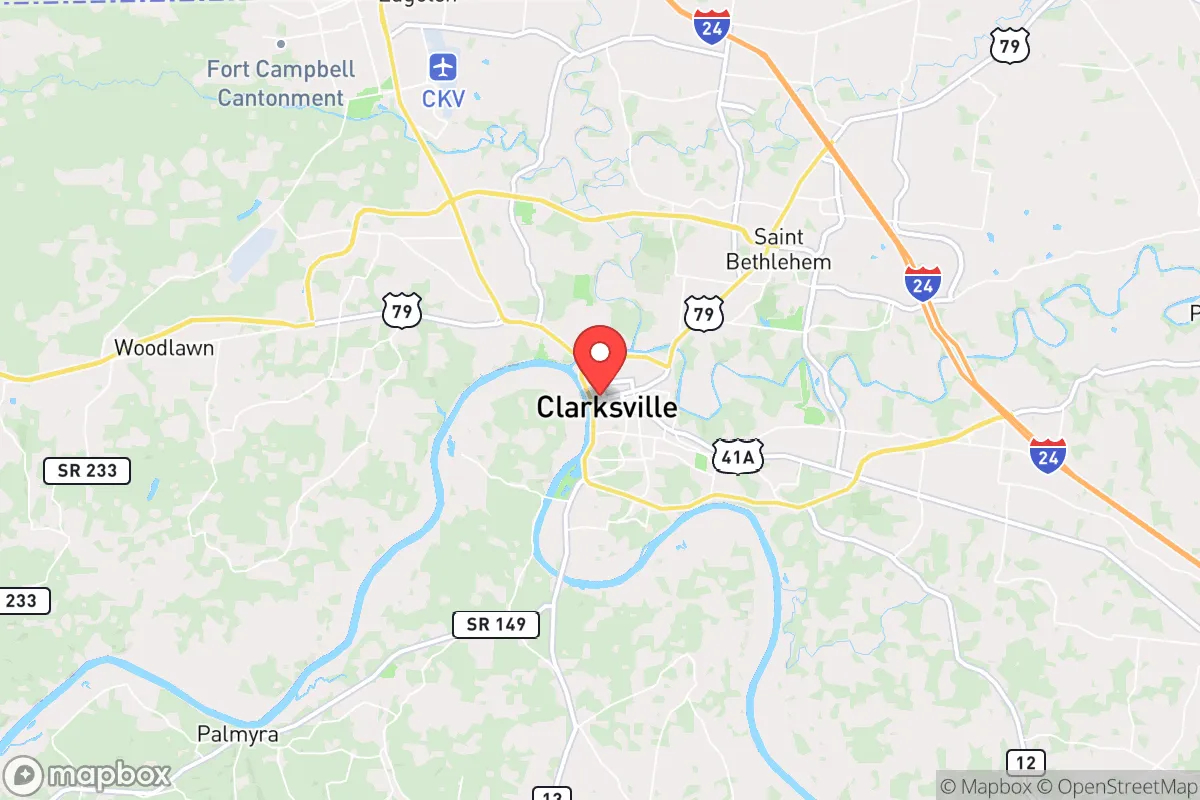
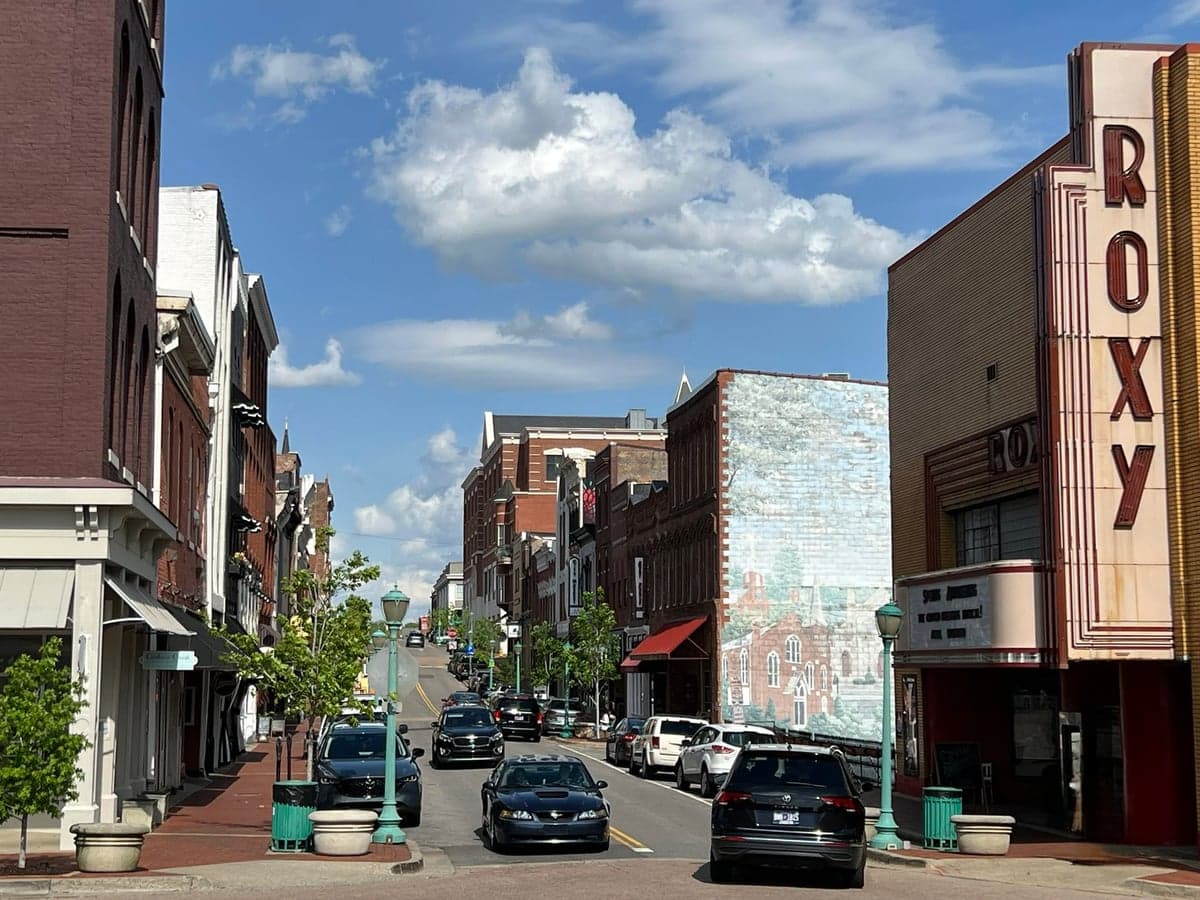
Photo: Wikipedia
Political ClimatePolitical Climate in Clarksville, TN
District shown is the primary district for this city’s centroid. Cities may span multiple districts.
Local Political AnalysisPolitical Analysis of Clarksville, TN
Clarksville has long been a solidly conservative community, and the numbers back that up with a Cook PVI of R+10, meaning the area votes about ten points more Republican than the national average. That’s not just a statistic—it reflects a deep-rooted culture of self-reliance and limited government that’s been here for generations. But like a lot of places in Tennessee, you can feel the ground shifting under your feet as more folks move in from blue states, bringing big-government ideas with them. The political lean is still red, no doubt, but the trajectory is something to keep an eye on if you value personal freedoms and local control.
How it compares
When you look at the surrounding area, Clarksville is actually a bit of a moderate island compared to the deep-red counties that ring it. Head south to Dickson County or west to Stewart County, and you’ll find communities that vote even more reliably conservative—places where the idea of government meddling in your daily life is met with a hard no. On the flip side, Nashville is just 45 minutes east, and that city’s progressive policies on taxes, zoning, and public spending are a cautionary tale for what happens when a place loses its conservative backbone. Clarksville still holds the line, but the influx of folks from California and New York—many drawn by Fort Campbell or the lower cost of living—has started to nudge local elections toward more moderate candidates. It’s not a flip, but it’s a slow drift that’s worth watching.
What this means for residents
For those of us who’ve been here a while, the biggest concern is how this shift could affect our way of life. Right now, Clarksville still respects the Second Amendment, keeps property taxes relatively low, and doesn’t have the kind of overreaching regulations you see in bigger cities. But as the population grows, there’s pressure to adopt more progressive policies—like higher impact fees on new homes or stricter environmental rules that can choke small businesses. The school board and county commission races are where you really see the battle lines drawn; a few years back, we had a push for more centralized curriculum control that felt like a step toward government overreach. So far, common sense has won out, but it takes showing up to local meetings and voting in every primary to keep it that way. If you’re moving here, understand that your voice matters more in local politics than national ones—that’s where the real fights over your rights happen.
Culturally, Clarksville still feels like a place where neighbors help neighbors and the government stays out of the way. You won’t find mask mandates or vaccine passports being pushed here, and the city council has been pretty good about pushing back on state-level overreach when it comes to property rights. That said, the long-term outlook depends on who moves in and whether they respect the local values that made this area a good place to raise a family. The military presence at Fort Campbell brings a lot of folks from all over, and while most adapt to the conservative vibe, a few try to change it. Keep an eye on the next few election cycles—if the school board or county commission starts leaning left, that’s your cue that the old Clarksville is fading. For now, it’s still a place where you can live free, but you’ve got to stay engaged to keep it that way.

State Political ClimatePolitical Climate in Tennessee
State Political AnalysisPolitical Environment in the State
Tennessee has been a reliably red state for decades, but the political climate here is more complex than a simple partisan label suggests. The state leans solidly Republican at the presidential level — Donald Trump won it by 30 points in 2020 and by a similar margin in 2024 — and the GOP holds supermajorities in both chambers of the state legislature. Over the last 10-20 years, the state has shifted from a purple-ish battleground (Al Gore carried it in 2000) to a deep-red stronghold, driven largely by suburban and exurban growth in the Nashville and Knoxville corridors, alongside a steady exodus of conservative-leaning families from blue states. But that in-migration is also bringing new tensions, especially in the fast-growing middle Tennessee region.
Urban vs. rural divide
The political map of Tennessee is a textbook study in the urban-rural split. Nashville (Davidson County) is the state's deep-blue anchor, consistently voting 65-70% Democratic in presidential races. Memphis (Shelby County) is similarly blue, driven by a large African American population and union-heavy industrial history. Knoxville (Knox County) and Chattanooga (Hamilton County) are more purple — Knox County went for Trump by about 15 points in 2024, while Hamilton County was closer to a 10-point Republican margin. The real red engine is everywhere else: the sprawling rural counties of West Tennessee (like Gibson County and Weakley County), the Cumberland Plateau, and the northeastern mountain counties routinely vote 75-80% Republican. The fastest-growing suburban counties — Williamson County (south of Nashville) and Rutherford County (southeast of Nashville) — are now reliably red, with Williamson voting +25 R in 2024. But there's a quiet shift: Wilson County (east of Nashville) and Sumner County (north) are seeing an influx of moderate-to-liberal transplants from California and Illinois, which is slowly nudging those suburban margins tighter.
Policy environment
Tennessee's policy environment is aggressively conservative on most fronts. The state has no personal income tax — a major draw for relocators — and the sales tax is high (around 9.55% average combined rate) to compensate. The regulatory posture is light: no state-level minimum wage above the federal $7.25, no rent control, and a right-to-work law that keeps unions weak. On education, the state has a robust school choice program — the Education Savings Account (ESA) pilot, expanded in 2023, allows families in certain counties to use public funds for private school tuition. The state also passed a Parental Bill of Rights (SB 1225) in 2022, requiring schools to notify parents of any changes to a child's health or well-being. On healthcare, Tennessee did not expand Medicaid under the Affordable Care Act, leaving roughly 300,000 low-income adults in a coverage gap. Election laws are strict: voter ID is required, early voting is limited to 14 days, and the state purged over 100,000 voters from rolls in 2023 under a new "cleanup" law. The legislature also passed a law in 2024 banning ranked-choice voting statewide, a preemptive move against any local experimentation.
Trajectory & freedom
On balance, Tennessee is becoming more free in several key areas, though not uniformly. The state expanded gun rights significantly in 2021 with permitless carry (SB 765), allowing any law-abiding adult to carry a handgun without a permit. In 2023, the legislature passed a law (SB 1440) prohibiting local governments from enforcing any new federal gun restrictions — a direct nullification-style move. On parental rights, the 2022 law mentioned above was followed by a 2023 law (HB 1233) requiring school libraries to remove any material deemed "harmful to minors," which has led to book challenges in Rutherford County and Knox County. On medical autonomy, the state passed a near-total abortion ban in 2022 (HB 2416) with no exceptions for rape or incest, only to save the mother's life. That's a clear expansion of government power over personal medical decisions, which some conservatives support and others see as overreach. On property rights, the state has no statewide rent control ban, but local governments in Nashville and Memphis have tried to impose tenant protections, only to be preempted by the legislature in 2023 (SB 100). The overall trajectory is toward more state-level control over local and individual decisions, which cuts both ways depending on your view of liberty.
Civil unrest & political movements
Tennessee has seen its share of political flashpoints. The most visible was the 2023 Nashville Covenant School shooting, which sparked massive protests at the state capitol demanding gun control — including a high-profile expulsion of two Democratic lawmakers (Justin Jones and Justin Pearson) for leading a protest on the House floor. They were later reinstated, but the episode highlighted a deep cultural divide. On the right, the Tennessee Freedom Coalition and local Moms for Liberty chapters are active in school board races, particularly in Williamson County and Rutherford County. Immigration politics are relatively quiet compared to border states, but there was a 2024 law (HB 2120) requiring local law enforcement to cooperate with ICE detainers. There's no serious secessionist movement, but nullification rhetoric around federal gun laws is common in rural counties. Election integrity remains a hot topic: the 2023 voter purge was challenged in court, and the state's new "election integrity unit" has investigated dozens of cases, though most have been minor. A new resident in Nashville will see occasional protests on the capitol steps, while in Jackson or Johnson City, politics is quieter but just as intense in local churches and civic clubs.
Projection
Over the next 5-10 years, Tennessee will likely stay red but become more internally contested. The in-migration from California, Illinois, and New York is concentrated in the Nashville metro and the I-24 corridor, and those newcomers tend to be moderate-to-liberal on social issues while appreciating the low taxes. That could flip Wilson County and Sumner County from red to purple within a decade. Meanwhile, the rural counties are aging and shrinking, which will slowly erode the GOP's raw vote advantage. The state legislature will likely remain Republican-controlled due to gerrymandering, but the margin could tighten. Expect more fights over school choice expansion, property tax caps, and preemption of local ordinances. The biggest wild card is whether the state's abortion ban will be moderated — polls show a majority of Tennesseans support exceptions for rape and incest, but the legislature has shown no appetite for changes. A new resident moving in now should expect a state that is broadly conservative but with growing pockets of liberal influence, especially around Nashville and Memphis.
Bottom line for a new resident: If you're moving to Tennessee for the low taxes, gun-friendly laws, and school choice, you'll find a state that largely delivers on those promises — but don't expect a uniform experience. The political climate varies dramatically from Nashville to Cookeville. Pay attention to local school board races and county commission elections, because that's where the real cultural battles are being fought. And if you're in the Nashville suburbs, be prepared for your neighbors to have very different views on what "freedom" means.
* Values derived from national, state, county, city and local statistics and may differ in a specific area. Last updated: 2026-04-15T23:55:18.000Z
Narrative content on this page is AI-generated and may contain mistakes. Verify any details that matter before acting on them.
ReloMaps may earn a commission from affiliate links at no extra cost to you.

