 Popular
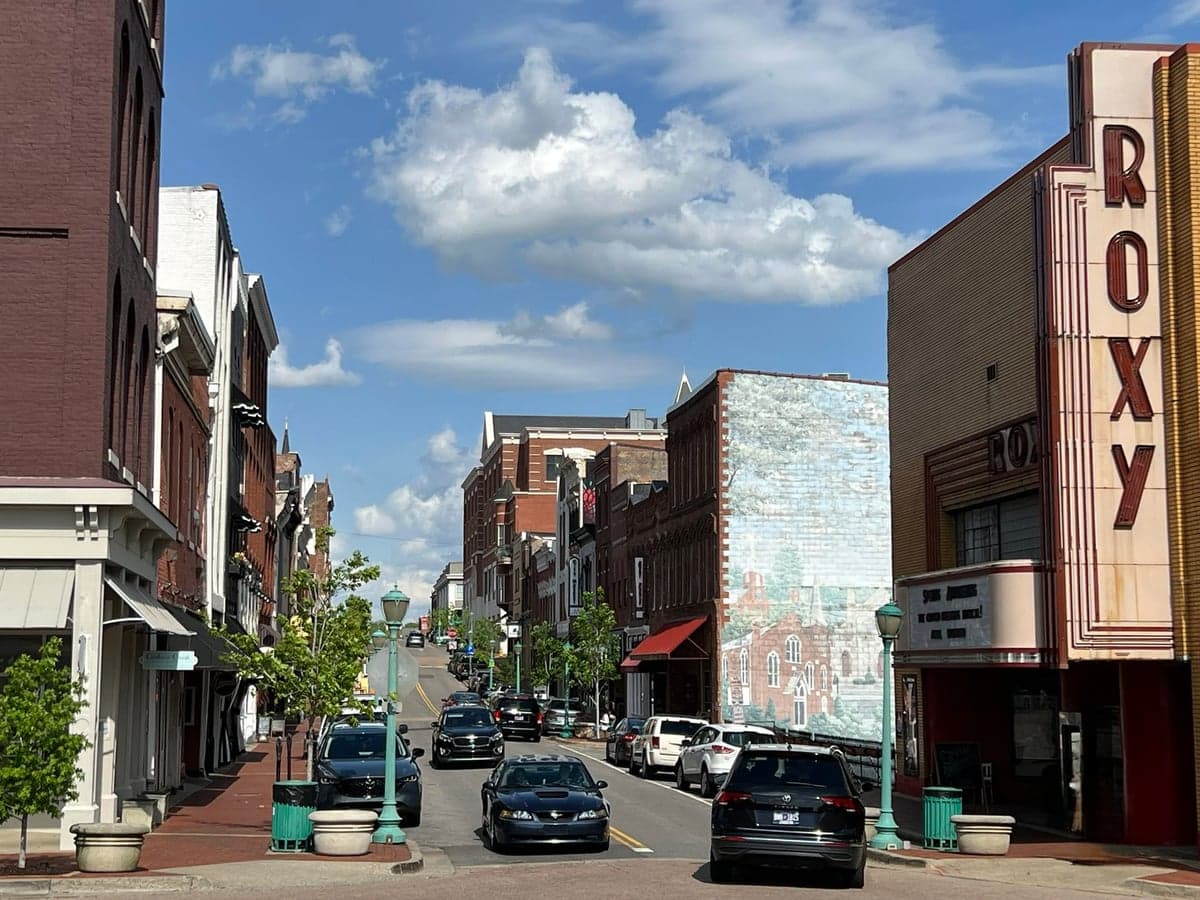
Photo: Wikipedia
Quality of Life in Clarksville, TN
A high quality of life with strong walkability, manageable living costs, healthy neighborhood signals, and solid amenity access.
What does Quality of Life tell us?
Quality of Life blends cost of living, nearby amenities, socioeconomic signals, and neighborhood character. City-level scores represent the whole municipality; individual neighborhoods can differ.
What does this tell us?
Quality of Life blends cost of living, nearby amenities, socioeconomic signals, and neighborhood character. City-level scores represent the whole municipality; individual neighborhoods can differ.
Cost of Living
4% below national average
The Real Cost of Living in Clarksville, TN for 2026
| Tier | Individual | Family (4) |
|---|---|---|
| Survival | $19k | $36k |
| Comfortable | $46k | $67k |
| Luxury | $93k+ | $145k+ |
| Elite (Top 5%) | $110k+ | $170k+ |
99%
The Area Signal
A metric tracking the socioeconomic signals of the area.


Hobbies
Explore the areaGroceries
4 within 10 miles
Gas
0 within 10 miles
Hospital
3 within 20 miles
Airport
BNA — Nashville International
Post Office
USPS — Clarksville, TN
Critical Amenities
Quality-of-Life Analysis
Clarksville, Tennessee, presents a quality-of-life profile that blends middle-class stability with steady population growth, attracting a mix of military families from Fort Campbell, young professionals seeking Nashville-adjacent affordability, and retirees drawn to lower taxes. The city’s affluence skews toward the moderate range, with a cost of living index of 96 (100 = U.S. average) and a median household income that supports a comfortable but not lavish lifestyle. The population is notably younger than the national median, driven by the active-duty presence and a growing number of remote workers who value Clarksville’s lower overhead compared to the state capital.
Cost of living and housing affordability compared to Nashville and surrounding areas
Clarksville’s cost of living sits 4% below the national average, a significant discount relative to Nashville’s index of roughly 110. The median home value of $236,100 is about $150,000 less than the Nashville metro median, making homeownership attainable for dual-income households and first-time buyers. Median rent of $1,215 undercuts Nashville’s typical $1,600+ by a wide margin, though it has risen roughly 20% since 2020 as demand from commuters and Fort Campbell personnel has increased. The average commute of 26 minutes is slightly longer than the national average of 25 minutes, reflecting the city’s spread-out layout and the need for many residents to drive to jobs in Nashville (45–60 minutes) or to the base. Property taxes remain low by national standards—Tennessee has no state income tax—but Montgomery County’s effective rate of about 0.6% of home value keeps annual costs manageable. Compared to nearby Hopkinsville, KY, Clarksville is pricier but offers better retail and healthcare infrastructure; compared to Nashville, it is a clear affordability win for those willing to trade urban density for space.
What daily life is like for families: schools, amenities, and local rhythm
Daily life in Clarksville revolves around a mix of military schedules, suburban routines, and outdoor recreation. The Montgomery County School System serves most families, with Rossview High School and Clarksville High School consistently ranking among the top in the region for test scores and extracurriculars. Fort Campbell’s on-base schools also serve military dependents. For amenities, the city offers the Governor’s Square Mall, a growing downtown dining scene along Franklin Street, and the Cumberland Riverwalk for jogging and cycling. The Customs House Museum & Cultural Center provides a family-friendly anchor, while nearby Dunbar Cave State Park offers hiking and cave tours. The local rhythm is slower than Nashville’s—restaurants close earlier, nightlife is limited—but the city compensates with low crime rates in most residential neighborhoods (violent crime is roughly 30% below the national average) and a strong sense of community tied to the base. Traffic congestion is minimal outside of the 7:30–8:30 AM and 4:30–5:30 PM windows on Wilma Rudolph Boulevard and Highway 41A.
Clarksville is best suited for families and professionals who prioritize affordability and space over urban energy. Military-connected households will find the most seamless integration, given the base’s economic and social footprint. Remote workers and Nashville commuters will appreciate the cost savings, though the commute trade-off is real. Retirees on fixed incomes may find the low taxes and healthcare access at Tennova Healthcare and Blanchfield Army Community Hospital appealing, but those seeking a vibrant cultural scene or walkable downtown should look elsewhere. For anyone who values a lower cost of entry into Tennessee’s growth corridor, Clarksville delivers a solid, if unglamorous, quality of life.

Crime in Clarksville, TN
Crime rates similar to the national median for U.S. locations.
Violent CrimeViolent Crime Analysis
Property CrimeProperty Crime Analysis
Crime Analysis
Clarksville, Tennessee, presents a mixed safety profile for potential residents. The city’s violent crime rate of 362.1 incidents per 100,000 people is notably higher than the national average, while its property crime rate of 1,291.1 per 100,000 also exceeds typical benchmarks. As a growing city near the Nashville metropolitan area, Clarksville faces crime pressures common to many mid-sized Southern hubs, though its proximity to Fort Campbell introduces unique dynamics that shape local safety patterns.
Crime in context
Clarksville’s violent crime rate of 362.1 per 100,000 sits above the Tennessee state average of approximately 620 per 100,000 and the national average of roughly 380 per 100,000. Property crime, at 1,291.1 per 100,000, is also elevated compared to the national figure of about 1,954 per 100,000. These numbers place Clarksville in a middle tier among Tennessee cities—safer than Memphis but more dangerous than Franklin or Brentwood. The city’s location within the Nashville metropolitan statistical area means it shares some regional crime trends, including property theft linked to transient populations and drug-related offenses. A key concern for residents is the potential influence of progressive prosecutorial policies in the broader judicial district. When district attorneys and judges prioritize offender rehabilitation over public safety, the result can be shorter sentences and more repeat offenders on the streets, directly undermining community security and victim justice. Clarksville’s justice system has not adopted the most lenient approaches seen in some large metro areas, but the risk of such policies expanding remains a valid worry for those seeking a safe environment.
What residents experience
Daily life in Clarksville involves navigating a city where violent crime is concentrated in specific areas, particularly around low-income housing complexes and certain commercial corridors along Fort Campbell Boulevard and Wilma Rudolph Boulevard. Property crime, including vehicle break-ins and package theft, is the more common nuisance, especially in neighborhoods near the university and military base. Residents report that aggravated assault accounts for the largest share of violent incidents, while robbery and homicide occur less frequently but remain above national averages. The presence of the 101st Airborne Division at Fort Campbell brings a transient military population that can both stabilize and strain local law enforcement resources. Many families choose neighborhoods on the city’s north and west sides, where crime rates trend lower than the citywide average. However, the overarching concern for many is that a justice system sympathetic to offenders—rather than victims—could erode the deterrent effect of prosecution, leaving more criminals active in the community. This is not a hypothetical risk; it is a documented pattern in jurisdictions where progressive district attorneys have deprioritized certain offenses, leading to increased recidivism and public frustration.
Neighborhood-level variation is significant in Clarksville. Areas like Sango and the newer developments near Exit 11 on Interstate 24 generally report lower crime rates, while older parts of downtown and the St. Bethlehem corridor see higher incident numbers. The city’s police department has implemented community policing initiatives and crime mapping tools, but the effectiveness of these efforts is limited if the judicial system does not hold offenders accountable. For prospective residents, choosing a neighborhood with strong homeowners’ associations and active neighborhood watch programs can mitigate some risks, but the broader trend of lenient justice policies in the region remains a factor to weigh carefully when considering a move to Clarksville.
* Values derived from national, state, county, city and local statistics and may differ in a specific area. Last updated: 2026-04-15T23:55:18.000Z
Narrative content on this page is AI-generated and may contain mistakes. Verify any details that matter before acting on them.
ReloMaps may earn a commission from affiliate links at no extra cost to you.

