 Popular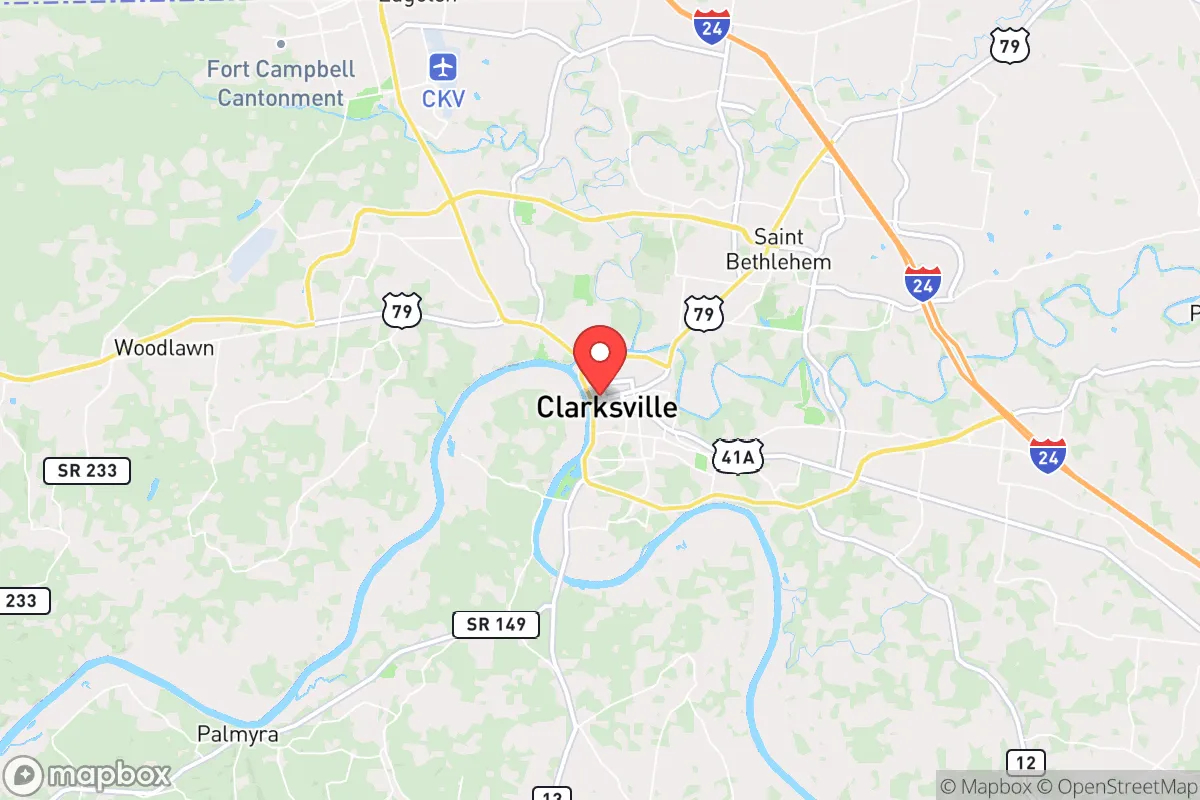
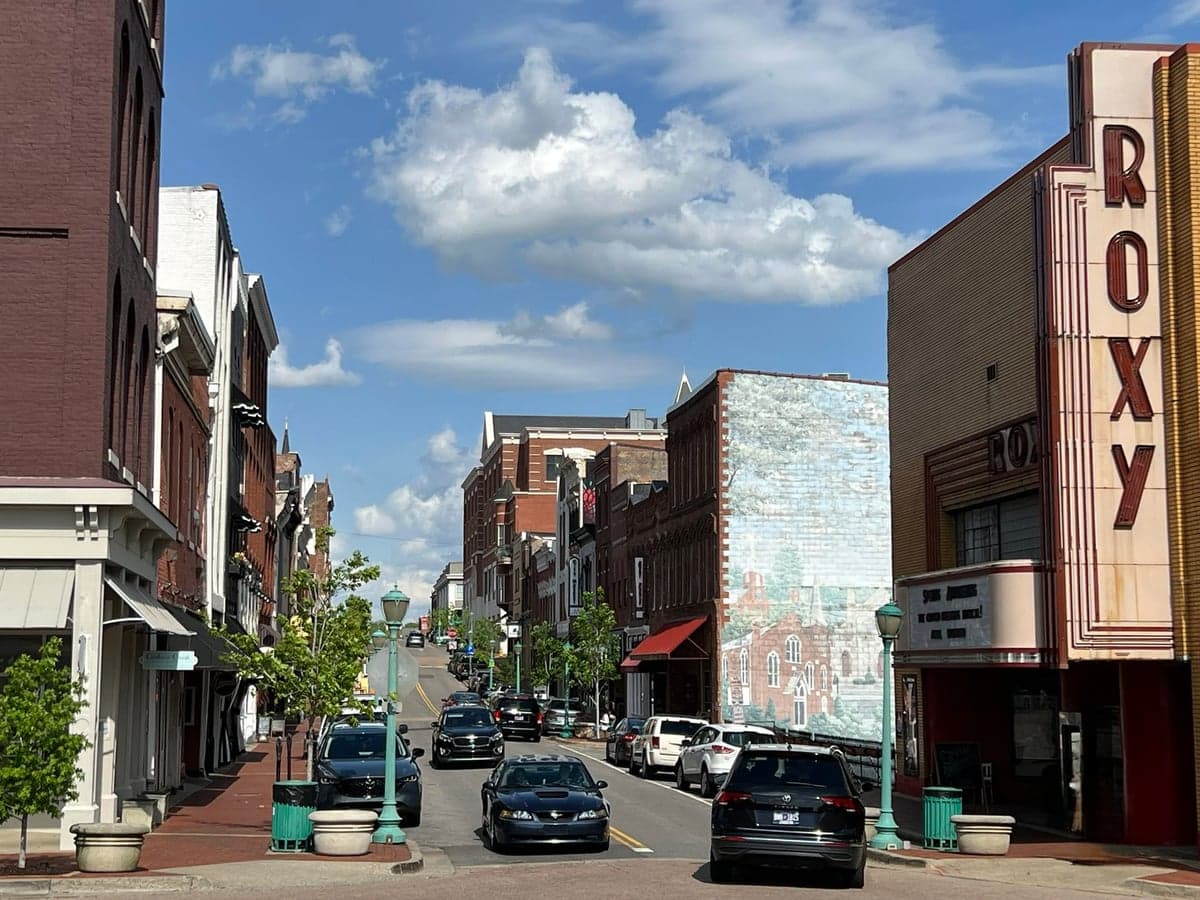
Photo: Wikipedia
Strategic Assessment of Clarksville, TN
Meaningful friction. Expect exposure to either population pressure, blast zones, or natural disaster risk. Consider buying a retreat property.
What does the Strategic Assessment tell us?
Our Strategic Assessment grades tactical survivability of an area. Major population centers, military targets, fallout zones, natural disasters, and border exposure all drive risk — lower exposure means a more defensible position in a crisis.
This is heavily inspired by Joel Skousen's Strategic Relocation book. Highly recommended you checkout the book ($)What does this tell us?
Our Strategic Assessment grades tactical survivability of an area. Major population centers, military targets, fallout zones, natural disasters, and border exposure all drive risk — lower exposure means a more defensible position in a crisis.
This is heavily inspired by Joel Skousen's Strategic Relocation book. Highly recommended you checkout the book ($)Strategic Pillars

Key Distances
Regional Safe Places
Below is our recommended "safe zones" in Tennessee and the surrounding area based on our strategic heuristics. For most people, it's unrealistic to live in a “safe zone” full-time due to work, family or other personal reasons. They tend to be more rural. However, many of these areas are perfect for second homes and retreat properties that double as a vacation home or even a short-term rental.
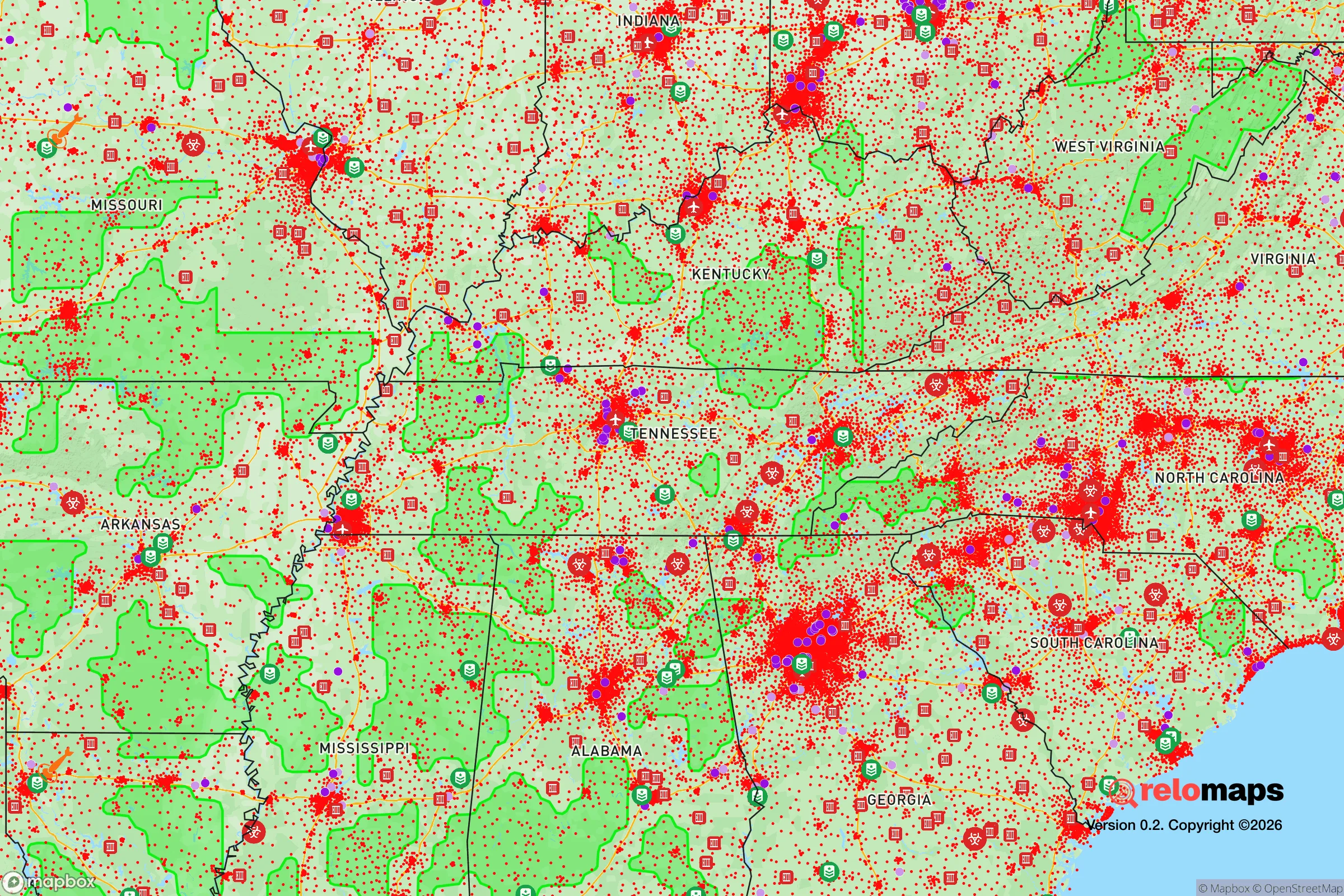
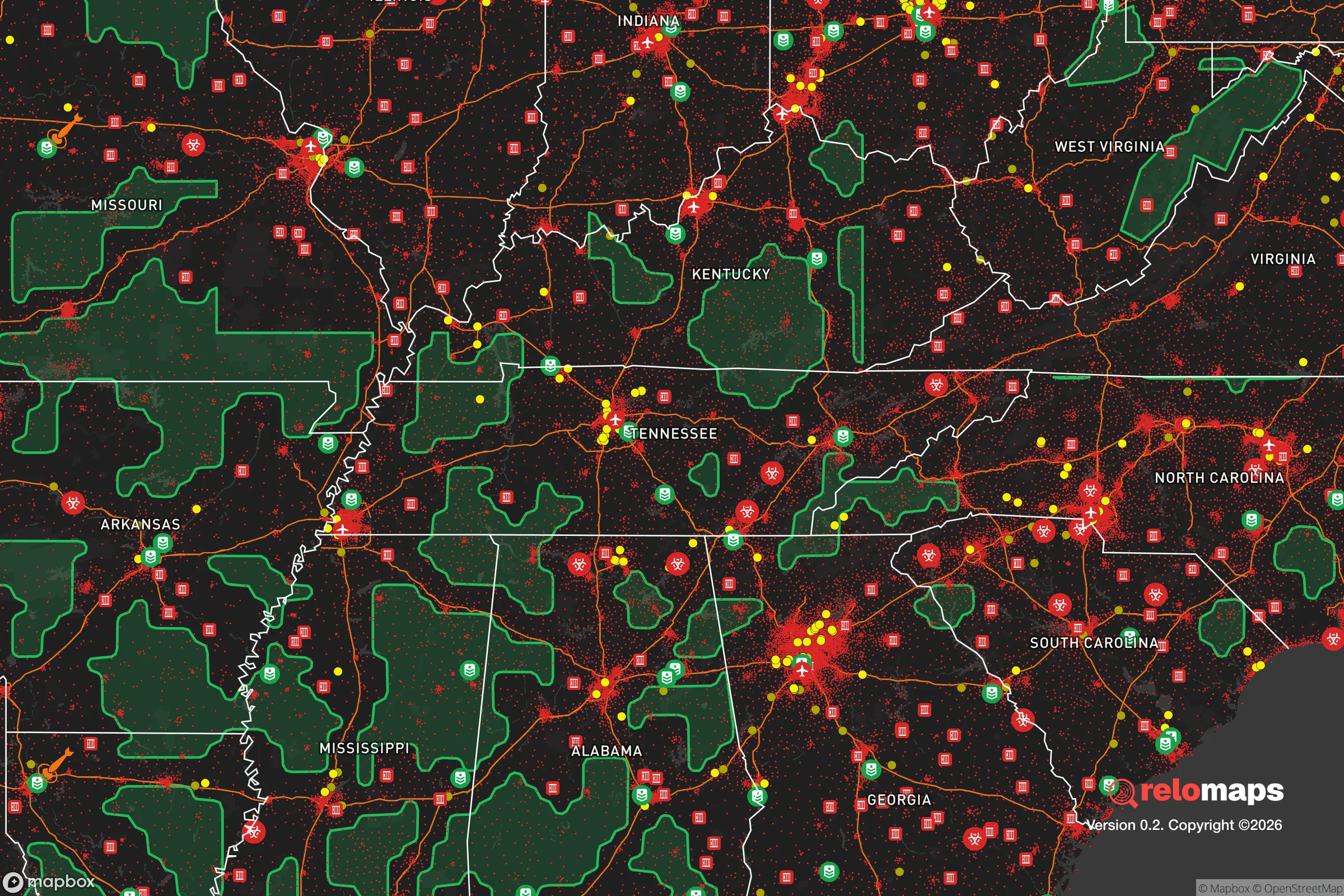


Important Note: For informational purposes only. This does not mean nothing bad ever happens in the green zones. Please use common sense. This is based on public data and modeled with AI. We tried to take a conservative approach but mistakes happen. We update this regularly as new information becomes available.
Solar Generator Recommendations
Backup power matters more here than in safer locations. We've picked three solar generators across budgets and capacity tiers — start with the budget unit if you only need a few essentials, or step up if you want to run a fridge and HVAC for days at a time.

Jackery Portable Power Station Explorer 300
Budget OptionPower on the Go: Weighing only 11 lbs, it's convenient to set up and store with book-sized foldable solar panels

BLUETTI Portable Power Station AC180
Designed for both indoor and outdoor scenarios, AC180 is highly capable as it has a robost capacity and continuous output power.

EF ECOFLOW DELTA Pro Ultra Power Station
Upgraded PickEcoFlow DELTA Pro Ultra is a whole-home energy system designed to grow with your family. Integrated with the Smart Home Panel 2, it scales to meet your evolving energy needs — keeping your home powered, intelligent, and secure through every stage of life.
We earn a commission, at no additional cost to you.
Strategic Assessment Analysis
Clarksville, Tennessee, sits in a strategic sweet spot that resilience-minded relocators should take seriously. It offers a rare combination: proximity to the economic and logistical muscle of the Nashville metro, yet enough distance to avoid the worst of a major urban collapse or fallout scenario. The city’s position along the Cumberland River, its military-industrial anchor at Fort Campbell, and its location in a state with low regulation and strong Second Amendment protections make it a defensible, self-reliant base for those planning for civic unrest, supply chain disruptions, or mass casualty events. But no location is perfect, and Clarksville’s advantages come with real exposure risks that demand honest assessment.
Geographic position and natural buffers: why Clarksville works as a fallback zone
Clarksville’s geography gives it a layered defense against the chaos that could engulf larger cities. It sits roughly 45 miles northwest of Nashville—close enough to tap into that region’s resources, medical infrastructure, and transportation hubs, but far enough that a Nashville-centric disaster (civil unrest, a dirty bomb, a pandemic surge) won’t automatically overrun Clarksville. The Cumberland River provides a natural water source and a potential transportation corridor if roads become compromised. The surrounding terrain is rolling hills and farmland, not dense forest or mountains, which means decent line-of-sight for security and manageable travel routes. The area is also outside the immediate blast or fallout zones of any major military or nuclear target—no major strategic weapons facilities or nuclear power plants within a 50-mile radius. That’s a meaningful buffer when you’re thinking about EMPs, radiation clouds, or targeted strikes. The climate is temperate, with four distinct seasons, which supports year-round gardening and livestock operations—critical for long-term food security. The region’s water table is generally reliable, with many rural properties having access to well water, and the Tennessee Valley Authority grid provides relatively stable power, though it’s not immune to grid-down scenarios.
Risks, exposures, and proximity to fallout-relevant landmarks
No strategic assessment is honest without naming the liabilities. Clarksville’s biggest risk is its proximity to Fort Campbell, a major Army installation home to the 101st Airborne Division and a massive logistics hub. In a national emergency—whether a foreign invasion, a domestic insurrection, or a cascading grid failure—Fort Campbell becomes a high-value target. That means Clarksville could see military traffic, checkpoints, or even direct engagement if the base is attacked or if the federal government declares martial law. The base also stores munitions and fuel, which could become secondary hazards. Additionally, Clarksville sits within 100 miles of the Tennessee Valley Authority’s Sequoyah Nuclear Plant (near Chattanooga) and the Browns Ferry Nuclear Plant (Alabama), though prevailing winds generally push fallout away from the city. Still, a worst-case release could affect the region. The city itself is not a major population center—around 170,000 people—but it’s growing fast, which means suburban sprawl is eating up farmland and increasing dependency on centralized infrastructure. Flooding is a real concern along the Cumberland River and Red River, especially in low-lying neighborhoods near downtown. Tornadoes are a seasonal threat, as with most of the mid-South, and the area’s aging housing stock in some parts of town may not hold up well in a direct hit. Finally, Clarksville’s location on Interstate 24 means it’s a natural chokepoint for evacuees fleeing Nashville in a crisis—that could bring thousands of unprepared people through town, straining resources and security.
Practical resilience for a relocator: food, water, energy, and defensibility
For someone serious about self-reliance, Clarksville offers a workable foundation. The surrounding agricultural land is fertile and affordable—you can still buy a few acres with a house for under $300,000, well within reach for a prepper family. The growing season runs from April to October, long enough for two crop cycles of staples like corn, beans, squash, and potatoes. Local farmers’ markets and co-ops are active, and there’s a strong hunting culture (deer, turkey, small game) in the nearby national forests and wildlife management areas. Water is accessible via wells on most rural properties, and the Cumberland River is a reliable backup source if you have filtration and storage. Energy-wise, the grid is reasonably stable, but solar is a smart investment here—the region gets about 200 sunny days per year, enough for a modest off-grid setup. Natural gas is available in many subdivisions, but rural properties often rely on propane, which requires storage and resupply. Defensibility is mixed: Clarksville’s layout is mostly flat and open, which makes it harder to secure a perimeter than a mountainous property. But the city’s strong law enforcement presence (thanks to the military influence) and a generally conservative, armed population mean that crime rates are lower than the national average, and community watch is taken seriously. The local gun culture is robust—there are multiple ranges, gun shops, and training facilities within a 30-minute drive. For medical resilience, Blanchfield Army Community Hospital on Fort Campbell is a major trauma center, but it’s on a military base, so access could be restricted in a crisis. Vanderbilt University Medical Center in Nashville is world-class but 45 minutes away—fine for routine care, but a liability if roads are blocked. Stockpiling antibiotics, trauma kits, and basic surgical supplies is wise.
The overall strategic picture for Clarksville is cautiously optimistic for the prepared relocator. It’s not a remote bunker—it’s a working-class city with real exposure to military targets and flood risks. But its combination of affordable land, strong Second Amendment culture, low state taxes, and proximity to Nashville’s resources without being swallowed by them makes it a viable base for a resilience-minded household. The key is to buy outside the floodplain, invest in well water and solar, and build relationships with the local farming and veteran communities. If you’re looking for a place that balances access to modern infrastructure with the ability to hunker down and ride out a crisis, Clarksville deserves a serious look. Just don’t expect it to stay quiet if the balloon goes up—Fort Campbell will draw attention, and you’ll need to have your plan locked in before the sirens sound.

* Values derived from national, state, county, city and local statistics and may differ in a specific area. Last updated: 2026-04-15T23:55:18.000Z
Narrative content on this page is AI-generated and may contain mistakes. Verify any details that matter before acting on them.
ReloMaps may earn a commission from affiliate links at no extra cost to you.

