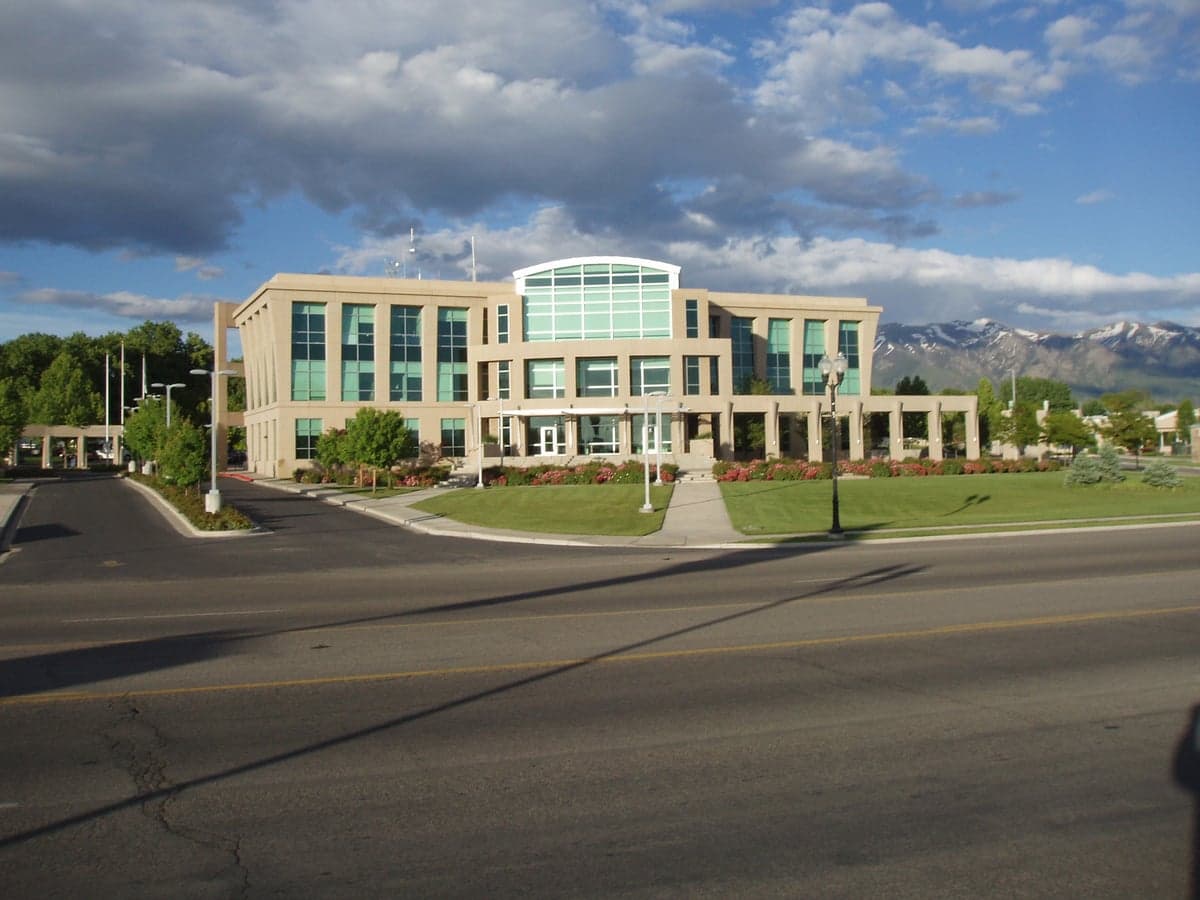
Photo: Wikipedia
Personal Sovereignty in Clearfield, UT
Viable for self-reliance. Generally workable, though some barriers may limit total independence.
What does Personal Sovereignty tell us?
Personal Sovereignty measures your capacity for self-reliance and independence with minimal government friction. Higher scores mean fewer barriers between you and the way you want to live... but it assumes you have the space you need and good neighbors.
What does this tell us?
Personal Sovereignty measures your capacity for self-reliance and independence with minimal government friction. Higher scores mean fewer barriers between you and the way you want to live... but it assumes you have the space you need and good neighbors.
State Policy
Energy independence: Self-sufficient (80% of energy produced in-state)
Personal Liberty
Homesteading

Personal Liberty Analysis
Clearfield, Utah, offers a notably high degree of personal sovereignty compared to many other regions in the United States, largely due to the state’s deeply embedded culture of self-reliance and a legal framework that actively resists federal overreach. For the individual or family operating from a survivalist or prepper mindset, this translates into a tangible environment where local governance is generally hands-off, and state-level protections for gun rights, property use, and parental authority are robust. While no location is a perfect libertarian enclave, Clearfield sits within a state that consistently ranks among the top in the nation for economic freedom and individual liberties, making it a serious consideration for those prioritizing autonomy over convenience.
Tax burden and regulatory posture: how Utah’s fiscal policies protect your resources
Utah’s tax structure is designed to leave more money in your pocket, which is a core component of personal sovereignty. The state levies a flat income tax rate of 4.65%, a figure that has been trending downward and is constitutionally capped to prevent future hikes. Property taxes are also relatively low, with effective rates averaging around 0.57% of assessed home value, well below the national average. For a prepper, this means less of your hard-earned capital is siphoned off to fund programs you may not support. On the regulatory side, Utah is a “right-to-work” state with minimal business licensing hurdles, and Clearfield itself operates under a general plan that favors development and property rights over restrictive zoning. The state’s regulatory environment is consistently ranked among the top five least burdensome in the country, meaning fewer bureaucratic obstacles to building a workshop, storing supplies, or running a home-based business. This fiscal and regulatory posture directly supports the goal of financial independence and resource accumulation.
Self-defense and gun law specifics: what you can legally own and carry in Clearfield
For those concerned with personal and family security, Clearfield’s legal landscape is exceptionally favorable. Utah is a constitutional carry state, meaning any law-abiding adult 21 or older can carry a concealed firearm without a permit. There is no state-level requirement for registration, and the state preempts local governments from enacting their own gun control ordinances, so Clearfield city council cannot ban magazines or specific firearm types. The state also recognizes the “stand your ground” doctrine, with no duty to retreat in any place where you have a legal right to be. For preppers, this extends to long guns and suppressors: Utah law explicitly protects the right to own NFA items like silencers and short-barreled rifles, and state law prohibits local law enforcement from assisting federal agents in enforcing any future federal gun bans. The legal climate here is designed to maximize individual capacity for self-defense, with minimal government interference in what you can own or how you carry it.
Self-reliance and homesteading viability: lot sizes, zoning, and off-grid feasibility
Clearfield’s suburban character does impose some limits on full-scale homesteading, but the surrounding area offers significant opportunities for self-reliance. Within city limits, standard residential lots range from 0.15 to 0.25 acres, which is sufficient for a substantial vegetable garden, a small chicken coop, and rainwater collection systems. The city’s zoning code does not prohibit backyard food production, and many residents keep laying hens without issue. For those seeking more land, unincorporated Davis County and neighboring Weber County offer parcels of 1 to 5 acres within a 15-minute drive, where livestock like goats and sheep are permitted. Off-grid feasibility is moderate: while Utah law does not require connection to the municipal grid, Clearfield’s building codes mandate connection to city water and sewer for new construction within city limits. However, on larger rural lots outside city jurisdiction, you can drill a well, install septic, and go fully solar. The state’s net metering policy is favorable for solar, and there are no state-level restrictions on rainwater harvesting. For the serious prepper, the strategy is to buy a home in Clearfield for daily convenience and a small rural parcel nearby for true self-sufficiency.
Personal liberties: parental rights, medical autonomy, speech, and property protections
Utah has become a national leader in protecting parental rights and medical freedom, which directly impacts sovereignty in Clearfield. The state’s Parental Rights in Education laws ensure that parents have the final say in their children’s medical care, education, and upbringing, with explicit protections against school-based medical interventions without parental consent. On medical autonomy, Utah was one of the first states to pass a law prohibiting COVID-19 vaccine mandates by private employers and has maintained a strong stance against federal health mandates. The state also has a Right to Try law for experimental treatments and a robust medical conscience clause allowing healthcare providers to refuse participation in procedures they object to. Free speech is protected by state law that explicitly prohibits “viewpoint discrimination” on public property, including college campuses. Property rights are reinforced by Utah’s private property protection act, which requires the government to compensate landowners for any regulatory taking that reduces property value by more than 20%. These legal frameworks create a buffer against federal overreach and give residents a strong legal basis to resist government intrusion into family and medical decisions.
When compared to other regions in the Mountain West, Clearfield offers a balanced sovereignty profile that is stronger than most coastal or Midwestern suburbs but slightly less libertarian than rural Idaho or Montana. The trade-off is proximity to Hill Air Force Base and the Wasatch Front’s economic engine, which provides job security and infrastructure resilience—key considerations for any long-term survival strategy. For the individual or family who values low taxes, strong gun rights, parental control, and the ability to live with minimal government interference, Clearfield represents a solid, practical choice. It is not a remote homestead, but it is a place where the legal and cultural environment actively supports the prepper mindset, allowing you to build your own resilience within a community that largely shares your values.

* Values derived from national, state, county, city and local statistics and may differ in a specific area. Last updated: 2026-05-03T20:34:19.000Z
Narrative content on this page is AI-generated and may contain mistakes. Verify any details that matter before acting on them.
ReloMaps may earn a commission from affiliate links at no extra cost to you.

