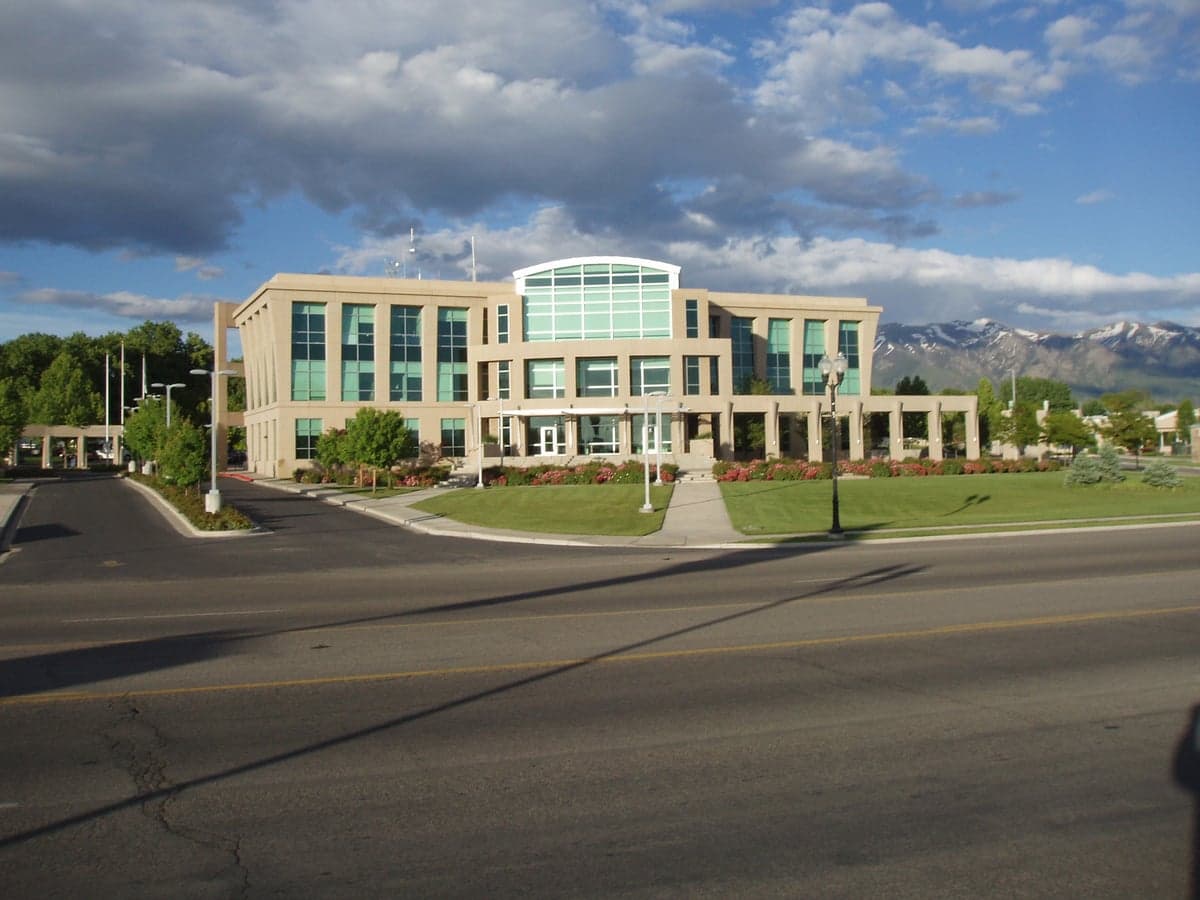
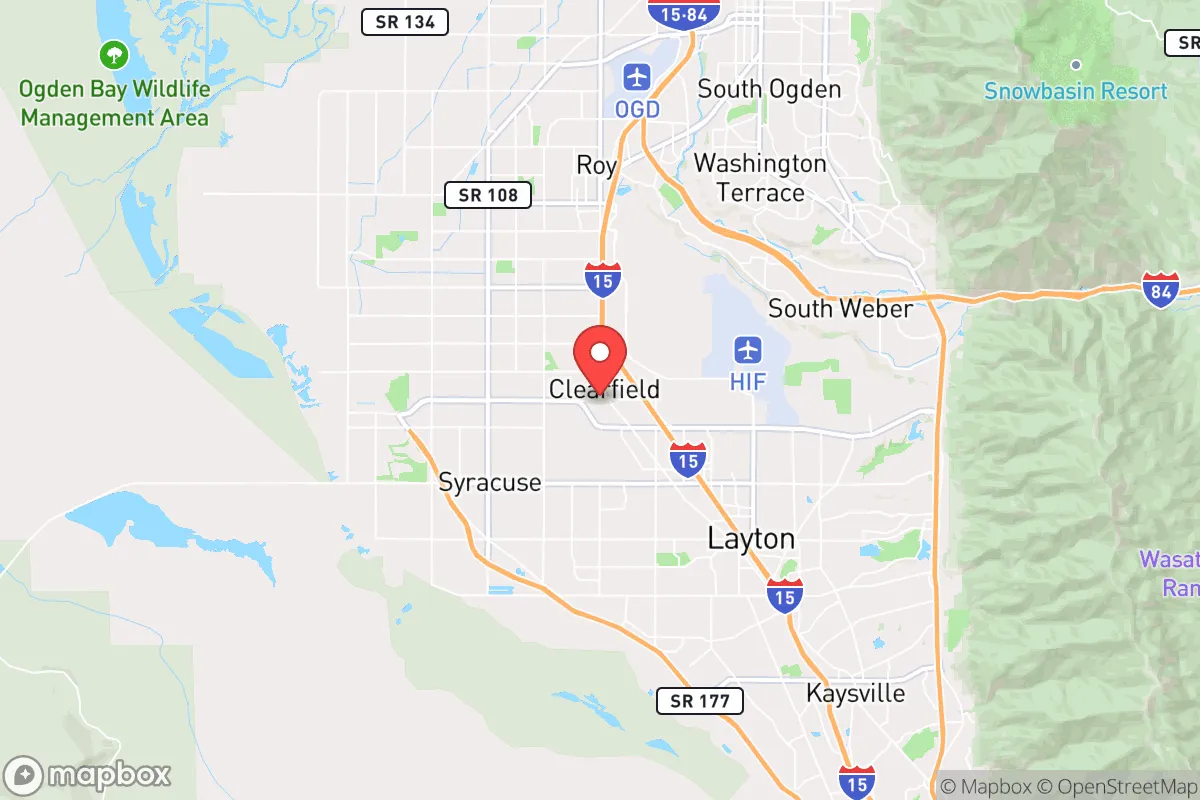
Photo: Wikipedia
Demographics of Clearfield, UT
Affluence Level in Clearfield, UT
A middle-class area roughly in line with national averages across income, home values, education, and employment.
People of Clearfield, UT
Clearfield, Utah, is a mid-sized city of 32,895 residents that blends a historic working-class identity with growing suburban diversity. Its population is predominantly white (68.2%) but has a significant and growing Hispanic community (20.3%), alongside small Black (3.1%) and East/Southeast Asian (2.5%) populations. The city is less college-educated than the national average (23.5%) and has a low foreign-born share (4.6%), reflecting its roots as a blue-collar, family-oriented community anchored by Hill Air Force Base and local manufacturing. Today, Clearfield feels like a quieter, more affordable alternative to Ogden and Salt Lake City, with a strong sense of local pride and a population that is slowly becoming more ethnically varied.
How the city was settled and grew
Clearfield was originally settled in the 1850s by Mormon pioneers dispatched by Brigham Young to farm the fertile Weber River delta. The land was divided into small family plots, and the first residents were predominantly of English and Scandinavian descent, drawn by religious community and the promise of irrigated agriculture. The city remained a sleepy farming hamlet until the early 1940s, when the U.S. Army established the Ogden Arsenal (now Hill Air Force Base) just south of town. This single event transformed Clearfield: thousands of workers—many from rural Utah and the Intermountain West—flooded in to build and staff the base. The Hillcrest neighborhood, located near the base's northern gate, was built rapidly in the 1940s and 1950s to house these defense workers and their families. A second wave of settlement came in the 1950s and 1960s as the base expanded and defense contractors like Thiokol (now Northrop Grumman) opened facilities. The South Clearfield area, south of State Street, filled with modest ranch-style homes built for a new generation of engineers, mechanics, and administrative staff. By 1970, Clearfield had grown from a village of 1,200 to a city of over 12,000, with a population that was overwhelmingly white, LDS, and employed in defense or related industries.
Modern era (post-1965)
After the 1965 Immigration and Nationality Act, Clearfield did not experience the rapid ethnic diversification seen in larger Utah cities like Salt Lake City or Ogden. The foreign-born share remained below 5% through the 1990s, and the city's growth came primarily from domestic in-migration—Utahns moving from rural areas and from other Western states for jobs at Hill Air Force Base and the expanding logistics sector. The most significant demographic shift began in the 1990s and accelerated after 2000: a steady influx of Hispanic families, many from Mexico and Central America, drawn by construction, service, and warehouse jobs in Davis County's booming economy. These families concentrated in the East Clearfield neighborhood, east of Main Street and near the I-15 corridor, where older, more affordable housing stock and proximity to bus lines made settlement practical. The Hispanic share rose from roughly 8% in 2000 to 20.3% by 2024, making Clearfield one of the most Hispanic cities in Davis County. The Black population (3.1%) and East/Southeast Asian population (2.5%) are smaller and more dispersed, with no single ethnic enclave. The West Clearfield area, west of the railroad tracks and closer to the Great Salt Lake wetlands, remains predominantly white and older, with many long-term residents who have lived there since the 1960s. The Clearfield City Center district, around the historic downtown, has seen some reinvestment but remains a mix of older white residents and newer Hispanic families, with a growing number of young professionals priced out of Ogden.
The future
Clearfield's population is likely to continue its slow diversification, driven by Hispanic growth and the ongoing affordability of its housing stock relative to Salt Lake County. The white share is declining gradually (from 75% in 2010 to 68.2% in 2024), and the Hispanic share is expected to reach 25-28% by 2040, assuming current migration and birth rates hold. The East/Southeast Asian and Black populations are likely to remain small but stable, as Clearfield lacks the ethnic infrastructure (specialty grocery stores, religious institutions, community organizations) that attracts larger immigrant communities to cities like Salt Lake City or West Valley City. The city is not tribalizing into distinct ethnic enclaves; rather, Hispanic families are integrating into existing neighborhoods, particularly in East Clearfield and the City Center, while white families continue to dominate West Clearfield and Hillcrest. The biggest wildcard is housing: if Clearfield builds new multifamily units near the FrontRunner station, it could attract younger, more diverse residents; if it remains a single-family-home suburb, it will likely age in place. The foreign-born share (4.6%) is low and unlikely to spike, as Clearfield does not have a large refugee resettlement program or a major immigrant-employing industry.
For someone moving to Clearfield now, the city offers a stable, family-oriented environment with a growing Hispanic presence that is adding cultural texture but not fundamentally altering the city's character. It is becoming a more diverse version of its former self—still working-class, still defense-anchored, but with a younger, more Latino population in its eastern neighborhoods. The city is not homogenizing into a bland suburb, nor is it fragmenting into isolated enclaves; it is slowly absorbing new groups into its existing fabric. For conservative-leaning families, Clearfield remains a safe, affordable, and community-driven choice, with the caveat that its schools and services are increasingly serving a bilingual population.

* Values derived from national, state, county, city and local statistics and may differ in a specific area. Last updated: 2026-05-03T20:34:19.000Z
Narrative content on this page is AI-generated and may contain mistakes. Verify any details that matter before acting on them.
ReloMaps may earn a commission from affiliate links at no extra cost to you.

