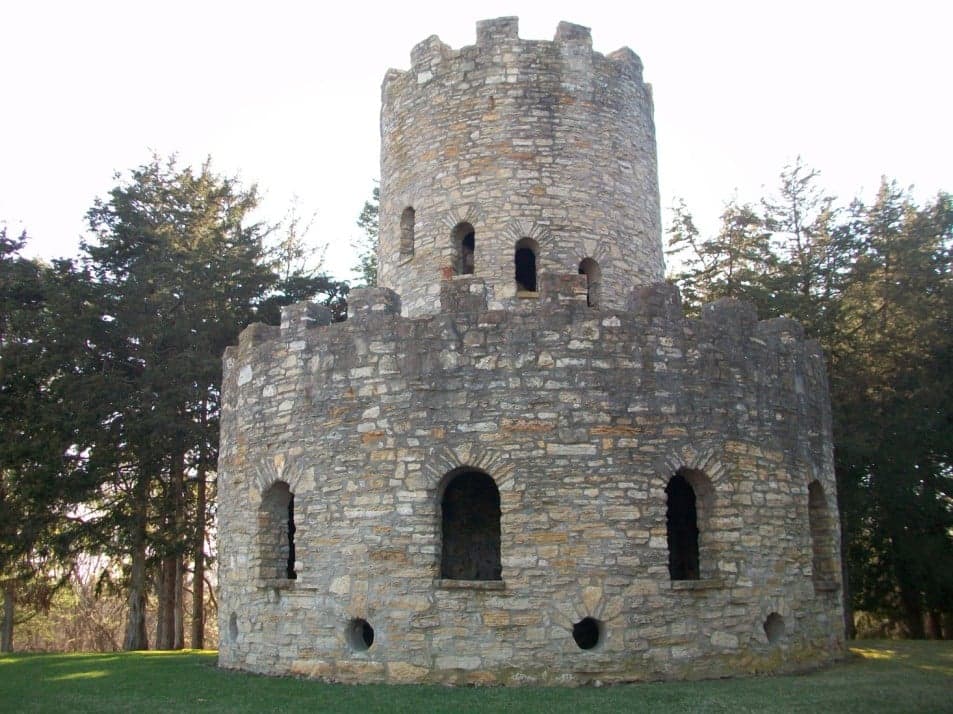


Photo: Wikipedia
Demographics of Clinton, IA
Affluence Level in Clinton, IA
A below-average socioeconomic profile. Incomes, home values, and educational attainment trail the U.S., with higher poverty and unemployment.
People of Clinton, IA
The people of Clinton, Iowa, today number 24,425 and form a predominantly white (86.8%) community with a small but notable Hispanic (5.0%) and Black (4.6%) presence. The city is characterized by a low foreign-born rate of just 0.4% and a college attainment rate of 21.6%, reflecting a historically industrial, working-class identity. Distinctive markers include a strong sense of local heritage tied to the Mississippi River and manufacturing, with a population that has been slowly declining since its mid-20th-century peak.
How the city was settled and grew
Clinton’s human history began with its founding in 1836 as a river town, originally named after New York governor DeWitt Clinton. The city’s growth was driven by the lumber industry and the arrival of the Chicago and North Western Railway in the 1850s, which turned Clinton into a major milling and transportation hub. The first major wave of settlers were Yankees from New England and upstate New York, who established the Lyon’s Addition neighborhood near the riverfront, building the early commercial and civic structures. A second wave of German and Irish immigrants arrived in the 1860s-1880s to work in the sawmills and railroad yards, settling in the South Clinton district, where many of their descendants still live in the older frame houses. By 1900, the city had grown to over 13,000, with the North Clinton neighborhood developing as a middle-class area for foremen and small business owners. The population peaked at roughly 34,000 in the 1960s, supported by the manufacturing boom at companies like Clinton Corn Processing Company (now Archer Daniels Midland) and DuPont, which drew additional workers from the rural Midwest.
Modern era (post-1965)
After the 1965 Hart-Cellar Act, Clinton saw minimal international immigration compared to larger Midwestern cities. The foreign-born population remains negligible at 0.4%, with no significant influx from East/Southeast Asia (0.3%) or the Indian subcontinent (0.0%). Instead, the modern era has been defined by domestic shifts. The Hispanic population grew from near zero in 1990 to 5.0% today, largely through Mexican-American families moving from agricultural regions in Texas and California for work in Clinton’s food processing plants. These families have concentrated in the East Clinton neighborhood, near the ADM plant, where a small cluster of Hispanic-owned businesses has emerged. The Black population (4.6%) is primarily composed of families who moved from Chicago and the Quad Cities during the 1970s-1990s for manufacturing jobs, settling in the West Clinton area around the former Clinton Regional Airport. Suburbanization has been limited, with most growth occurring in the Eagle Point district, a newer development of single-family homes built in the 2000s that has attracted younger white families seeking affordable housing. Overall, the city has lost about 28% of its population since 1960, as manufacturing downsizing and a lack of new industries have driven out-migration, particularly among younger adults.
The future
Clinton’s population is projected to continue a slow decline over the next 10-20 years, likely falling below 22,000 by 2040, as the aging white cohort (median age ~42) shrinks and out-migration of young adults persists. The Hispanic population is the only segment showing growth, but at 5.0% it remains too small to offset overall losses; it is expected to plateau around 6-7% as second-generation families assimilate into the broader community. The Black population is stable but not growing, as manufacturing jobs have not returned. The city is not tribalizing into distinct enclaves—neighborhoods like South Clinton and Lyon’s Addition are becoming more mixed as older white residents move out and Hispanic and Black families move in. The North Clinton area, once solidly middle-class white, is seeing an influx of lower-income renters, while Eagle Point remains predominantly white and family-oriented. For someone moving in now, Clinton is becoming a more diverse but still overwhelmingly white, aging, and shrinking community, where affordable housing and a quiet river-town lifestyle are the main draws, but economic opportunity remains limited.
In summary, Clinton is a historically industrial, white-majority city that is slowly diversifying through Hispanic growth while losing population overall. Its neighborhoods reflect a layered history of Yankee, German, Irish, and later Mexican and Black settlement, but the future points toward a smaller, more homogenized community with a modestly higher Hispanic share. For a conservative-leaning individual or family, Clinton offers low cost of living and a traditional small-town atmosphere, but with a shrinking tax base and limited job growth to consider.

* Values derived from national, state, county, city and local statistics and may differ in a specific area. Last updated: 2026-04-30T00:18:06.000Z
Narrative content on this page is AI-generated and may contain mistakes. Verify any details that matter before acting on them.
ReloMaps may earn a commission from affiliate links at no extra cost to you.

