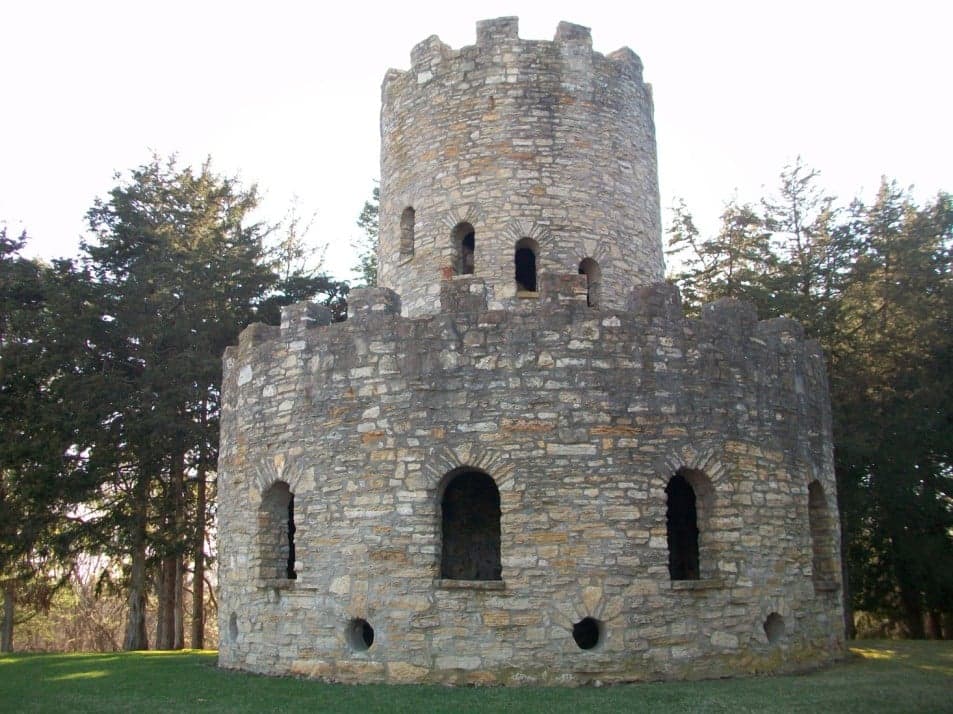
Photo: Wikipedia
Political ClimatePolitical Climate in Clinton, IA
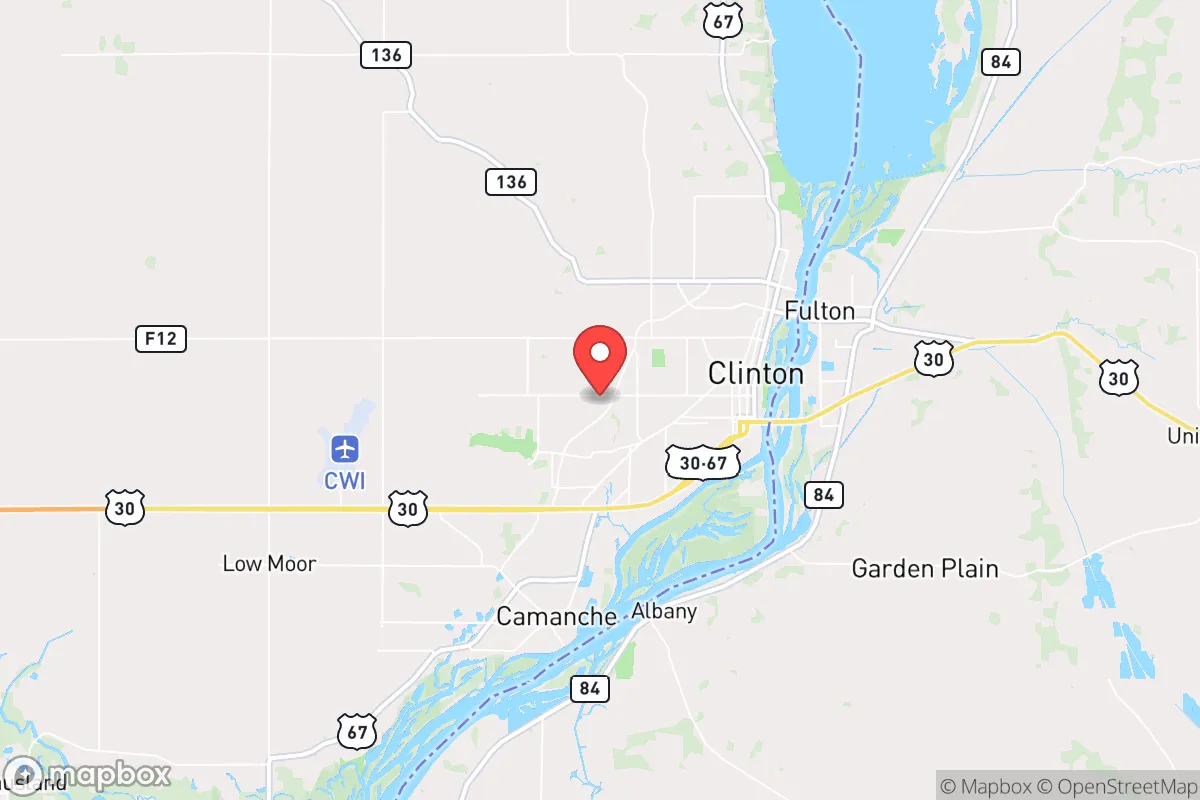
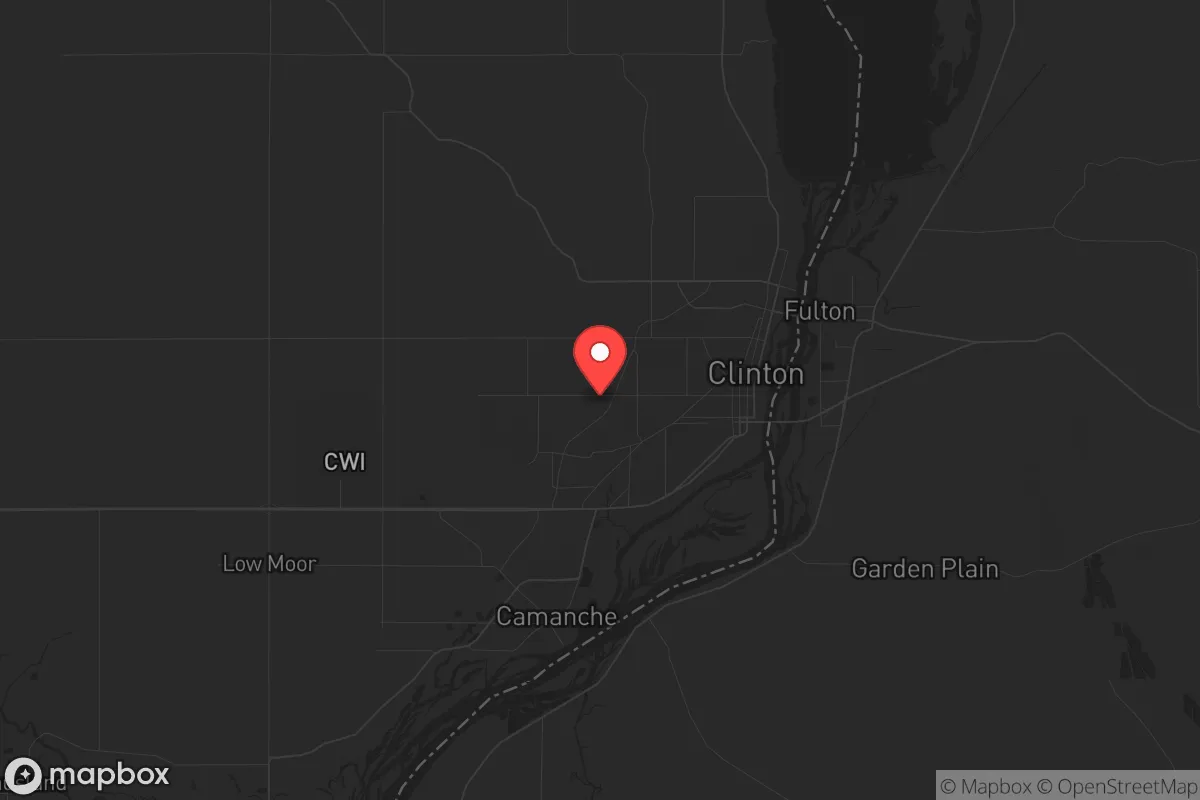
District shown is the primary district for this city’s centroid. Cities may span multiple districts.
Local Political AnalysisPolitical Analysis of Clinton, IA
Clinton, Iowa, sits in a county that has been a reliable bellwether for the state’s broader political shifts, but the current climate leans solidly conservative. The area carries a Cook PVI of R+4, meaning it votes about four points more Republican than the national average. That’s a noticeable shift from even a decade ago, when the county was more of a toss-up. You can feel it in local conversations—folks here are increasingly wary of government overreach, especially when it comes to mandates and regulations that feel like they’re coming from Des Moines or Washington, not from Main Street.
How it compares
Drive twenty miles east to the Quad Cities—Davenport and Bettendorf—and you’ll hit a more mixed political scene, with Scott County trending closer to even or slightly blue. Head west to Cedar Rapids, and you’re in a more progressive pocket. Clinton, by contrast, has held its ground. The rural areas surrounding the city, like the towns of Camanche and DeWitt, are even more conservative, often voting +10 to +15 points redder than Clinton itself. That contrast is important: it means the city council and county board have to balance a rural base that’s skeptical of new taxes and regulations against a smaller, more moderate urban core. Lately, the rural voice has been winning out, which is a good sign for anyone who values local control over personal freedoms.
What this means for residents
For someone living here, the political climate translates into a few concrete realities. First, property taxes have stayed relatively low compared to neighboring counties, and there’s been strong resistance to new bond measures for things like light rail or bike lanes that don’t serve the working-class majority. Second, the school board has held the line on curriculum changes that push progressive ideology—parents here still have a real say in what their kids are taught. Third, and maybe most importantly, the local sheriff’s office has a reputation for not enforcing state-level mandates that feel like overreach, whether that’s COVID-era restrictions or new gun storage laws. That kind of local discretion is rare and valuable. It’s not perfect—there’s always pressure from the state capitol—but for now, Clinton remains a place where a person’s right to live their own life is still respected.
One cultural distinction worth noting: Clinton has a strong blue-collar identity, rooted in its history as a river town and manufacturing hub. That identity makes it naturally skeptical of coastal, elite-driven policies. You won’t see many “defund the police” signs here, and the local paper’s letters to the editor are full of folks pushing back on mask mandates and vaccine passports. The trajectory, if current trends hold, is toward an even more conservative lean in the next few cycles. Younger families moving in from Chicago or the Quad Cities sometimes bring more progressive views, but they tend to moderate once they see how the community operates. The long-term outlook is stable—Clinton is likely to stay R+4 or drift a point or two redder, as long as the state legislature doesn’t preempt local control on issues like zoning or gun rights. For now, it’s a solid place for anyone who values personal freedom and a government that stays out of the way.

State Political ClimatePolitical Climate in Iowa
State Political AnalysisPolitical Environment in the State
Iowa has been a reliably Republican state in presidential elections since 2016, but it wasn’t always that way. For decades, Iowa was a classic swing state, voting for Barack Obama twice before flipping hard to Donald Trump by nearly 10 points in 2020 and again in 2024. The shift is driven by a coalition of rural conservatives, evangelical Christians, and working-class voters who have abandoned the Democratic Party over cultural and economic issues. However, the state’s two largest metros — Des Moines and Iowa City — remain Democratic strongholds, creating a sharp urban-rural divide that defines Iowa’s political landscape today.
Urban vs. rural divide
The political map of Iowa is a study in contrasts. The Des Moines metro (Polk, Dallas, and Warren counties) is the state’s economic engine and a Democratic-leaning area, with Polk County going for Biden in 2020 by about 12 points. But even within that metro, you see splits: suburban Dallas County, home to fast-growing towns like Waukee and West Des Moines, has trended right in recent cycles, flipping to Trump in 2020 after voting for Romney in 2012. Iowa City (Johnson County) is the state’s liberal anchor, driven by the University of Iowa, and consistently votes 2-to-1 Democratic. Meanwhile, rural counties like Sioux, Lyon, and Plymouth in northwest Iowa are among the most Republican in the nation, often delivering 80%+ margins for GOP candidates. The Mississippi River counties — Dubuque, Clinton, Scott — were once blue-collar Democratic bastions but have shifted hard right, with Scott County (Quad Cities) flipping to Trump in 2016 and staying there. The takeaway: if you’re moving to Iowa, your political experience will depend heavily on whether you land in a metro hub or a small town.
Policy environment
Iowa’s policy environment has moved decisively rightward over the past decade. The state has a flat income tax rate of 3.8% as of 2026, down from a progressive top rate of 8.98% in 2021, thanks to a series of tax cuts signed by Governor Kim Reynolds. There is no inheritance tax, and property taxes are relatively low, though they vary by county. On education, Iowa passed a universal school choice program in 2023, allowing any family to use state funds for private or homeschool expenses — a major win for parental rights. The state also enacted a six-week abortion ban in 2023 (the “fetal heartbeat” law), which was upheld by the Iowa Supreme Court in 2024. Election integrity measures include strict voter ID requirements, a ban on ballot drop boxes, and shortened early voting windows. On healthcare, Iowa did not expand Medicaid under the Affordable Care Act, and the state has a robust private insurance market. For a conservative family, the policy environment is among the most favorable in the Midwest.
Trajectory & freedom
Iowa is becoming more free in many respects, particularly on fiscal and educational freedom. The 2023 school choice law (HF 68) is a landmark — it lets parents direct state funding to the school of their choice, including religious and homeschool options. On gun rights, Iowa became a permitless carry state in 2021 (SF 509), meaning no license is needed to carry a concealed firearm. The state also passed a “Stand Your Ground” law in 2017. On medical freedom, Iowa banned COVID-19 vaccine mandates for state employees and contractors in 2023 (HF 889), and the state has no mask or vaccine mandates in schools. However, there are concerns: the state’s medical cannabis program remains highly restrictive, with low THC caps and few qualifying conditions. Property rights are strong, with no statewide rent control and limited zoning restrictions outside major cities. The trajectory is clearly toward more personal liberty, especially for families and gun owners.
Civil unrest & political movements
Iowa has seen relatively little civil unrest compared to coastal states, but there have been flashpoints. In 2020, Black Lives Matter protests in Des Moines and Iowa City turned violent on a few occasions, with property damage and clashes with police. The state’s response was swift: Governor Reynolds deployed the Iowa National Guard and signed a law in 2021 increasing penalties for rioting and blocking highways. On the right, the “Parents’ Rights” movement is strong, particularly in suburban districts like Ankeny and Johnston, where school board meetings became battlegrounds over critical race theory and LGBTQ curriculum. Immigration politics are less heated than in border states, but Iowa has seen a surge in migrant labor in meatpacking towns like Storm Lake and Postville, leading to local tensions. There is no sanctuary city policy anywhere in Iowa — in fact, a 2024 law (HF 648) requires local law enforcement to cooperate with federal immigration authorities. Election integrity remains a hot topic: the 2020 audit in Iowa found no widespread fraud, but the state has tightened rules anyway. A new resident would notice a generally calm political climate, but with active grassroots movements on both sides.
Projection
Over the next 5-10 years, Iowa will likely become more Republican and more culturally conservative. The key demographic driver is out-migration from rural areas and in-migration to the Des Moines metro, which is growing but still moderate. The state’s population is aging and increasingly white, with limited Hispanic growth outside a few towns. The Democratic Party’s base is shrinking as union membership declines and rural voters continue to realign. The 2024 election saw Trump win Iowa by 12 points, and the GOP now holds all four congressional seats and supermajorities in the state legislature. Expect further tax cuts, expanded school choice, and continued restrictions on abortion. The wild card is the Iowa caucuses — if the national GOP shifts left on any issue, Iowa’s conservative base will push back hard. For a new resident, the state will feel like a stable, low-regulation environment where conservative values are the norm, especially outside of Iowa City and Des Moines.
For a conservative individual or family considering a move, Iowa offers a policy environment that aligns closely with limited government, parental rights, and personal freedom. The tax burden is low and falling, schools are choice-friendly, and gun rights are robust. The main trade-off is that you’ll need to pick your location carefully — the urban centers lean left, but the suburbs and rural areas are deeply conservative. If you value a state where your vote counts and your values are reflected in law, Iowa is a solid bet for the next decade.
* Values derived from national, state, county, city and local statistics and may differ in a specific area. Last updated: 2026-04-30T00:18:06.000Z
Narrative content on this page is AI-generated and may contain mistakes. Verify any details that matter before acting on them.
ReloMaps may earn a commission from affiliate links at no extra cost to you.

