Photo: Wikipedia
Demographics of Cocoa Beach, FL
Affluence Level in Cocoa Beach, FL
A middle-class area roughly in line with national averages across income, home values, education, and employment.
People of Cocoa Beach, FL
The people of Cocoa Beach, Florida, today form a predominantly white, highly educated, and politically conservative community of 11,341 residents, with a distinctive identity shaped by the space industry and coastal living. The city’s population is 88.6% white, 6.5% Hispanic, 1.1% East/Southeast Asian, 0.8% Black, and 0.2% Indian (subcontinent), while only 2.2% are foreign-born. Half of all adults hold a college degree, reflecting a professional-class character tied to nearby Kennedy Space Center and Patrick Space Force Base. This is a place where aerospace engineers, military retirees, and tourism workers coexist in a low-density beach town that prizes its small-town feel and conservative values.
How the city was settled and grew
Cocoa Beach was not a colonial settlement or agricultural hub; its history as a populated place begins in the early 20th century. The area was largely uninhabited scrubland until the 1920s, when the first permanent residents arrived as part of Florida’s land boom. The City of Cocoa Beach was officially incorporated in 1925, with a handful of families building seasonal cottages and fishing camps along the barrier island. The original population was almost entirely white and native-born, drawn by the promise of oceanfront property and a quiet life. The historic Riverfront neighborhood, along the Banana River side of the island, became the early residential core, where the first general store and post office served the scattered homesteads. Through the 1930s and 1940s, the population remained tiny—fewer than 500 people—and the community was essentially a fishing village with no major industry.
The first transformative wave came in the 1950s with the establishment of the Cape Canaveral Air Force Station and later the Kennedy Space Center. The federal government’s space program brought an influx of engineers, technicians, and military personnel, most of them white and from other parts of the United States. These newcomers settled in newly built subdivisions such as South Cocoa Beach, where ranch-style homes and mid-century modern houses were constructed to accommodate the growing workforce. The Minutemen Causeway area also saw rapid development, with apartment complexes and single-family homes filling in the island’s central corridor. By 1960, the population had surged past 3,000, and the city’s identity as a space-age bedroom community was firmly established.
Modern era (post-1965)
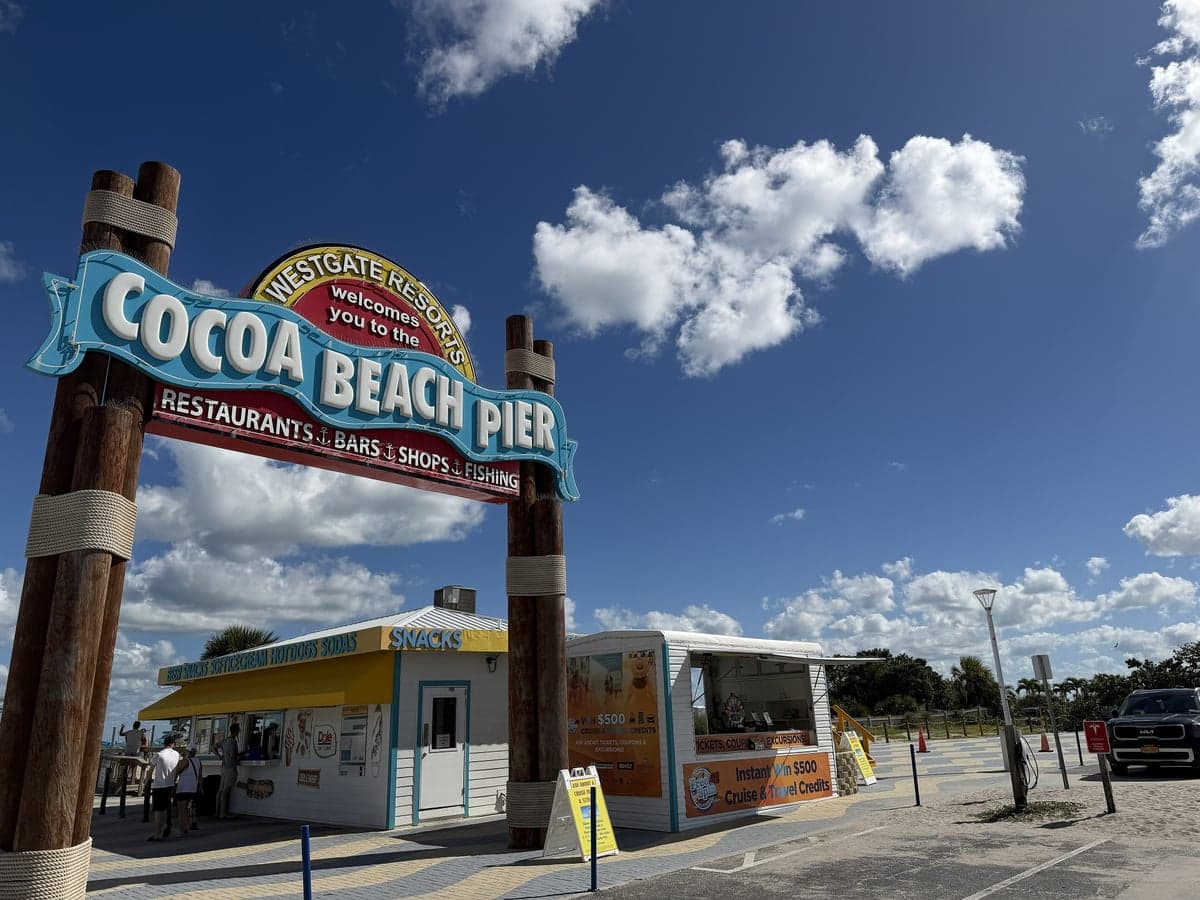
After the 1965 Hart-Cellar Act, Cocoa Beach saw little change in its racial or ethnic composition, as the city’s economy and geography did not attract large-scale immigration. The foreign-born share remains low at 2.2%, and the population has stayed overwhelmingly white. The 1970s and 1980s brought a second domestic wave: retirees and second-home buyers from the Northeast and Midwest, drawn by the warm climate and the cachet of living near the space program. These newcomers concentrated in the northern end of the island, near the Cocoa Beach Pier, where condominium towers and gated communities replaced older motels. The South Patrick Shores area, technically unincorporated but functionally part of Cocoa Beach’s orbit, absorbed many military families stationed at Patrick Space Force Base.
The Hispanic population, now 6.5%, grew modestly from the 1990s onward, largely through domestic migration from other Florida cities rather than direct immigration. East/Southeast Asian residents (1.1%) are primarily professionals in aerospace and engineering fields, with no distinct ethnic enclave. The Black population remains very small at 0.8%, reflecting the city’s historical lack of industrial or agricultural jobs that might have drawn a more diverse workforce. The Indian-subcontinent population (0.2%) is negligible. In short, Cocoa Beach has not experienced the ethnic diversification seen in many other Florida cities; it remains a predominantly white, native-born community where the major demographic shifts have been age-related rather than race-related.
The future
The population of Cocoa Beach is projected to remain stable or grow slowly, with the city’s build-out limits on a narrow barrier island constraining new development. The community is homogenizing in terms of race and ethnicity, with no signs of rapid diversification. The Hispanic share may rise gradually as second-generation families from nearby Orlando and Melbourne move in, but the foreign-born rate is unlikely to climb above 5% given the high cost of housing and the lack of immigrant-service infrastructure. The most notable trend is aging: the median age is around 50, and the city is becoming a retirement destination for space-industry alumni and military veterans. Younger families are increasingly priced out, as the median home value exceeds $600,000.
Over the next 10–20 years, Cocoa Beach will likely become even more of an enclave for affluent, older, white professionals and retirees. The downtown commercial district along Orlando Avenue is being redeveloped with upscale condos and boutique retail, catering to this demographic. The city’s political character—consistently Republican in presidential elections—will probably hold, as the population base remains homogenous and property-tax-conscious. For a conservative-leaning mover, this means joining a community where the social fabric is stable, the schools are strong, and the neighbors are likely to share similar backgrounds and values.
Bottom line: Cocoa Beach is becoming a more exclusive, older, and whiter community, shaped by the space industry’s legacy and coastal real estate pressures. For someone moving in now, it offers a predictable, low-crime environment with a like-minded population, but little ethnic or economic diversity. The city’s future is one of slow, controlled change, not rapid transformation.

* Values derived from national, state, county, city and local statistics and may differ in a specific area. Last updated: 2026-05-14T01:51:09.000Z
Narrative content on this page is AI-generated and may contain mistakes. Verify any details that matter before acting on them.
ReloMaps may earn a commission from affiliate links at no extra cost to you.

