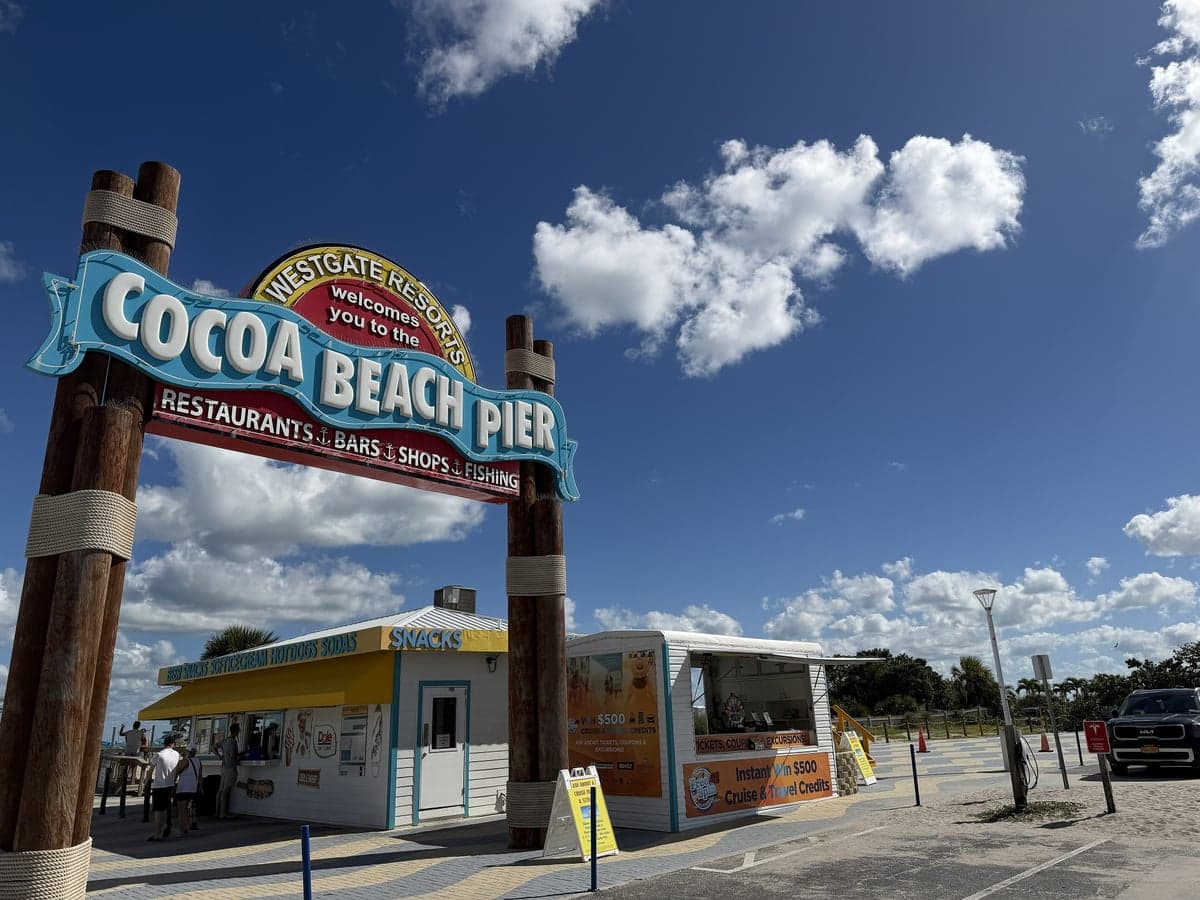
Photo: Wikipedia
Strategic Assessment of Cocoa Beach, FL
Meaningful friction. Expect exposure to either population pressure, blast zones, or natural disaster risk. Consider buying a retreat property.
What does the Strategic Assessment tell us?
Our Strategic Assessment grades tactical survivability of an area. Major population centers, military targets, fallout zones, natural disasters, and border exposure all drive risk — lower exposure means a more defensible position in a crisis.
This is heavily inspired by Joel Skousen's Strategic Relocation book. Highly recommended you checkout the book ($)What does this tell us?
Our Strategic Assessment grades tactical survivability of an area. Major population centers, military targets, fallout zones, natural disasters, and border exposure all drive risk — lower exposure means a more defensible position in a crisis.
This is heavily inspired by Joel Skousen's Strategic Relocation book. Highly recommended you checkout the book ($)Strategic Pillars

Key Distances
Regional Safe Places
Below is our recommended "safe zones" in Florida and the surrounding area based on our strategic heuristics. For most people, it's unrealistic to live in a “safe zone” full-time due to work, family or other personal reasons. They tend to be more rural. However, many of these areas are perfect for second homes and retreat properties that double as a vacation home or even a short-term rental.

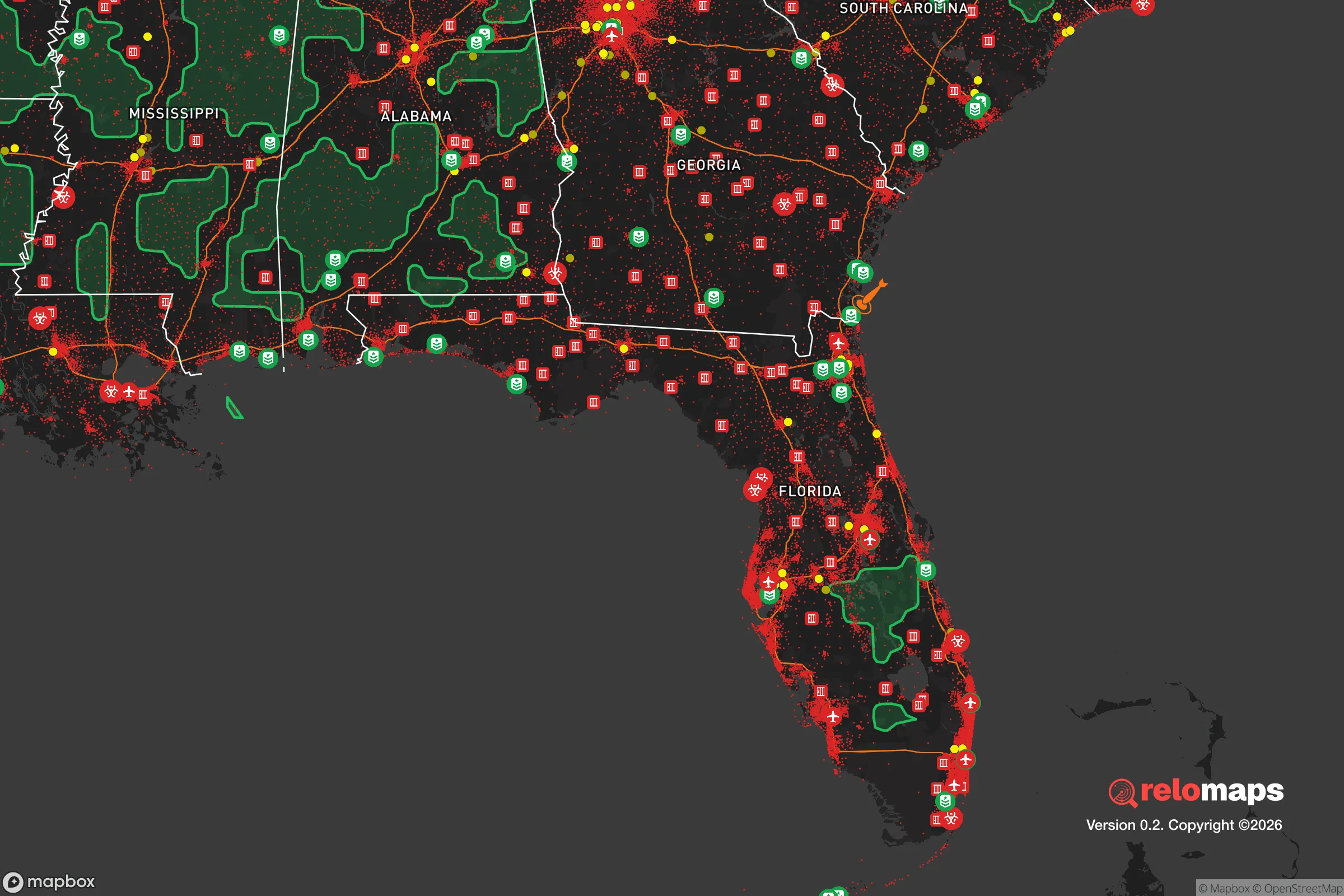


Important Note: For informational purposes only. This does not mean nothing bad ever happens in the green zones. Please use common sense. This is based on public data and modeled with AI. We tried to take a conservative approach but mistakes happen. We update this regularly as new information becomes available.
Solar Generator Recommendations
Backup power matters more here than in safer locations. We've picked three solar generators across budgets and capacity tiers — start with the budget unit if you only need a few essentials, or step up if you want to run a fridge and HVAC for days at a time.

Jackery Portable Power Station Explorer 300
Budget OptionPower on the Go: Weighing only 11 lbs, it's convenient to set up and store with book-sized foldable solar panels

BLUETTI Portable Power Station AC180
Designed for both indoor and outdoor scenarios, AC180 is highly capable as it has a robost capacity and continuous output power.

EF ECOFLOW DELTA Pro Ultra Power Station
Upgraded PickEcoFlow DELTA Pro Ultra is a whole-home energy system designed to grow with your family. Integrated with the Smart Home Panel 2, it scales to meet your evolving energy needs — keeping your home powered, intelligent, and secure through every stage of life.
We earn a commission, at no additional cost to you.
Strategic Assessment Analysis
Cocoa Beach, Florida, presents a complex strategic picture for the conservative prepper or survivalist. Its primary value lies in its geographic position on a barrier island, offering a natural buffer from mainland unrest, and its proximity to the Cape Canaveral Space Force Station, which brings a unique mix of high-tech infrastructure and potential security. However, this same location creates severe vulnerabilities: it is a narrow, evacuation-dependent spit of land with a single major road in and out, sitting directly in the path of the Atlantic hurricane corridor and within easy striking distance of a high-value national security target. For a relocator weighing resilience against risk, Cocoa Beach is a high-stakes gamble—offering genuine defensive advantages but demanding an exceptionally disciplined, self-sufficient setup to survive the inevitable disruptions.
Geographic position and natural defensive advantages
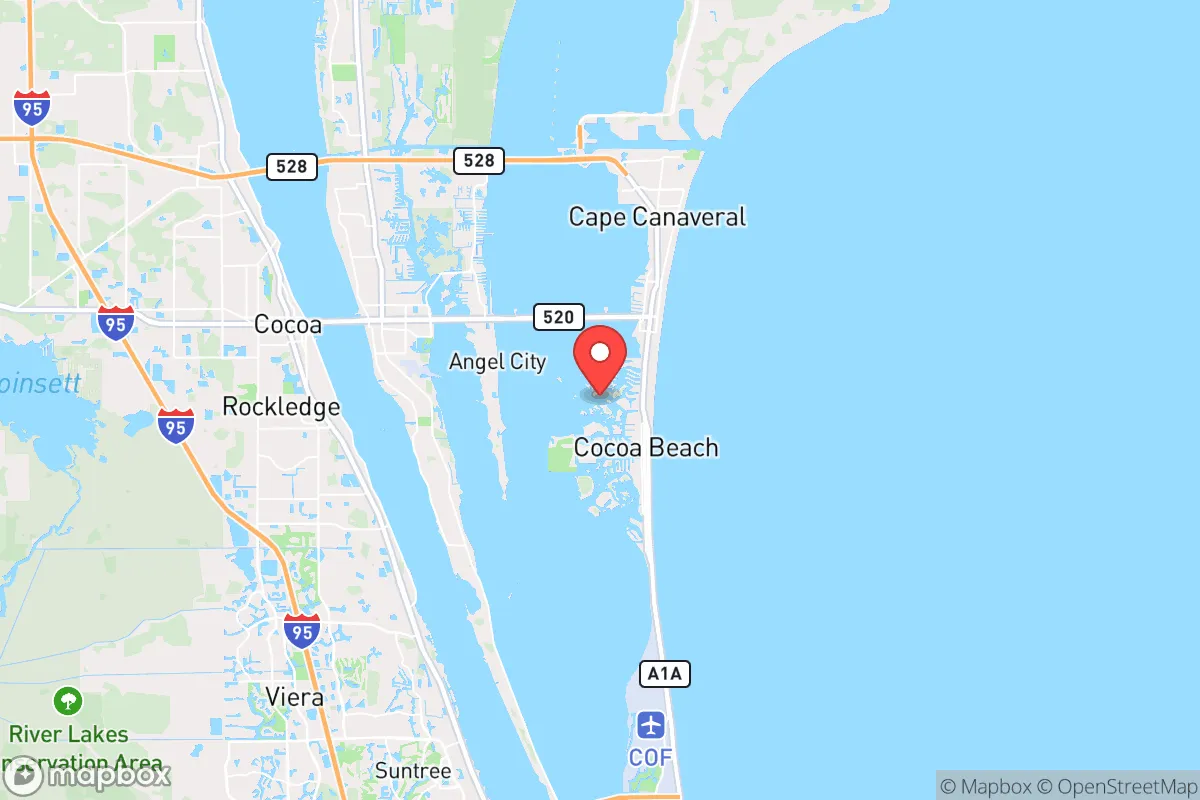
Cocoa Beach sits on a barrier island roughly 15 miles long and rarely more than a mile wide, separated from the mainland by the Indian River Lagoon and the Banana River. This insular geography provides a natural moat: access is limited to a handful of bridges and causeways, primarily State Road 520 and the Pineda Causeway, which can be monitored and controlled with relative ease during civil unrest. The surrounding waters—the Atlantic Ocean to the east and the lagoons to the west—create a defensible perimeter that discourages casual foot traffic and vehicle-borne threats. The area’s flat, open terrain also offers long sightlines, reducing ambush points compared to wooded or mountainous regions. For a prepper, this means a small, organized group could effectively secure the island’s chokepoints, provided they have the means to do so before a crisis escalates. The presence of the Cape Canaveral Space Force Station immediately to the north adds a layer of federal security presence, including patrols and restricted airspace, which could deter large-scale criminal activity in the immediate vicinity—though it also makes the area a potential target, as discussed below.
Risks, exposures, and proximity to fallout-relevant landmarks
The most glaring vulnerability is Cocoa Beach’s dependence on a single evacuation route: State Road A1A, which runs the length of the island and connects to the mainland via just two major bridges. In any scenario—hurricane evacuation, mass casualty event, or civil unrest—these bridges become instant bottlenecks. A single accident or deliberate blockage could trap thousands of residents on the island with no secondary egress. The area sits in the heart of Florida’s hurricane alley; the 2022 Hurricane Ian and 2024 Hurricane Milton both caused widespread flooding and power outages in Brevard County, and Cocoa Beach’s low elevation (averaging 10 feet above sea level) makes it highly susceptible to storm surge. A Category 3 or higher storm could inundate the entire island, forcing a chaotic, last-minute evacuation that would overwhelm the road network. Beyond weather, the proximity to Cape Canaveral is a double-edged sword. While the Space Force base provides some security, it is also a high-value target for any adversary—state or non-state—seeking to disrupt U.S. space operations. A kinetic attack, cyber attack, or even a large-scale industrial accident at the launch facilities could produce fallout zones, chemical releases, or electromagnetic pulse (EMP) effects that would render Cocoa Beach uninhabitable for days or weeks. Additionally, the island is less than 50 miles from Orlando, a major population center with over 2.5 million people. In a societal collapse scenario, that population would likely flow toward the coast, overwhelming the limited resources and creating a security nightmare for anyone trying to hold the island.
Practical resilience for a relocator: food, water, energy, and defensibility
For a relocator committed to staying, self-sufficiency is non-negotiable. Cocoa Beach has no significant freshwater sources on the island; the municipal water supply comes from the mainland via the Cocoa Water and Sewer Authority, meaning a disruption to the causeway infrastructure would cut water access immediately. A prepper must have a minimum of two weeks of stored water per person, plus a means of purification (e.g., Berkey filters or UV systems) for brackish lagoon water in an emergency. Food storage is equally critical: the island has few grocery stores (the main Publix on A1A and a smaller Winn-Dixie), and these would be stripped within hours of a crisis. A deep pantry of shelf-stable goods, plus the ability to fish the Atlantic and lagoons (with a saltwater fishing license and gear), is essential. Energy resilience is a bright spot: Florida’s abundant sunshine makes solar panels a viable primary power source, but battery storage (e.g., Tesla Powerwall or DIY lithium banks) is mandatory, as grid outages are frequent during storms. A backup generator running on propane or diesel is also wise, but fuel supplies on the island are limited to a few gas stations that would run dry quickly. Defensibility is the island’s strongest card: the narrow geography means a small perimeter can be secured, and the ocean provides a natural escape route by boat. A prepper with a seaworthy vessel (e.g., a 20-foot center console with a reliable outboard) could evacuate to the mainland or offshore if the bridges are compromised. However, the lack of cover and the high density of vacation rentals and condos mean that noise and light discipline are difficult to maintain; any sustained defense would require cooperation with neighbors, which is a risk in itself if those neighbors are unprepared or hostile.
Overall, Cocoa Beach is a niche option for the strategic relocator who values natural barriers and a federal security presence but is willing to accept extreme weather risk and a single-point-of-failure evacuation route. It is not a bug-out location for the average prepper; it is a high-maintenance, high-risk outpost that demands significant investment in water storage, power backup, and maritime capability. For a single individual or small family with the resources to harden a home, stockpile supplies, and maintain a boat, it could serve as a defensible redoubt during short-term crises. But for anyone seeking long-term resilience against societal collapse, the mainland—with its access to freshwater, farmland, and multiple egress routes—is a far more sustainable bet. Cocoa Beach is a beachfront gamble: beautiful when the weather holds, but a trap when the tide turns.

* Values derived from national, state, county, city and local statistics and may differ in a specific area. Last updated: 2026-05-14T01:51:09.000Z
Narrative content on this page is AI-generated and may contain mistakes. Verify any details that matter before acting on them.
ReloMaps may earn a commission from affiliate links at no extra cost to you.

