
Photo by Backroad Packers on Unsplash
Political ClimatePolitical Climate in Coeur Dalene, ID
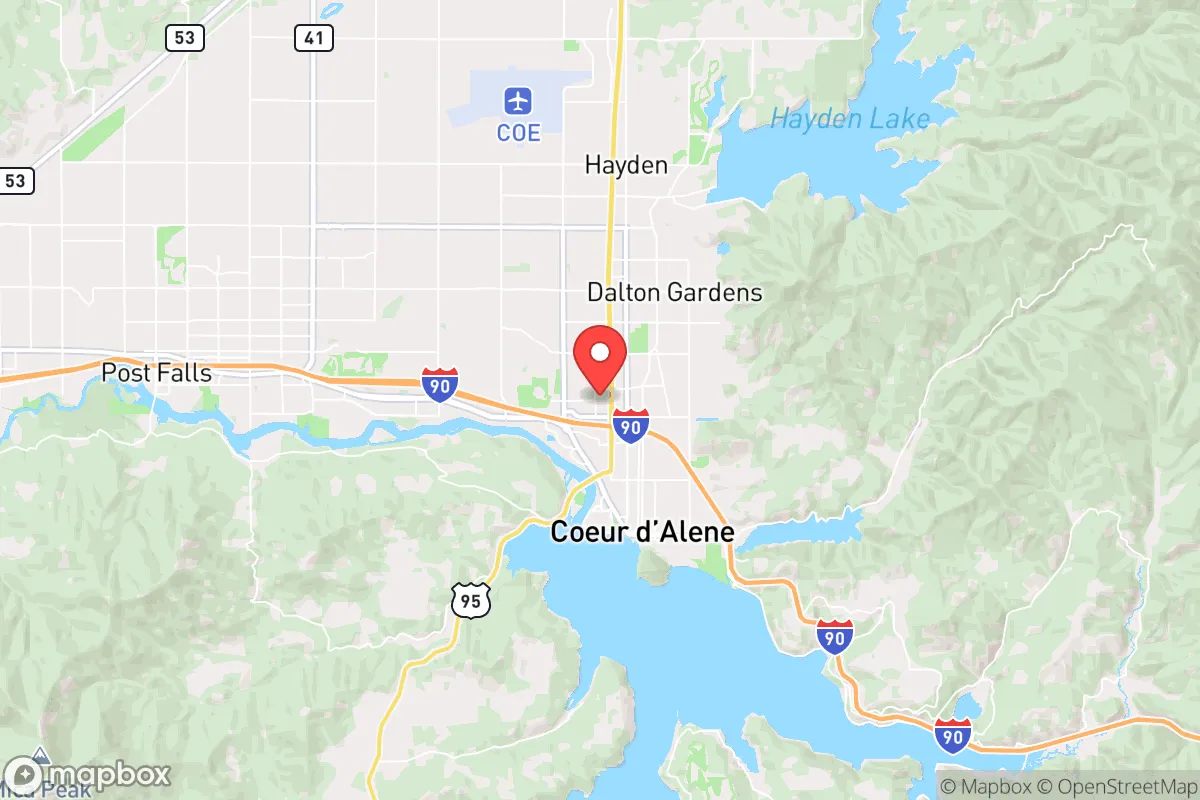
District shown is the primary district for this city’s centroid. Cities may span multiple districts.
Local Political AnalysisPolitical Analysis of Coeur Dalene, ID
Coeur d'Alene sits in the heart of a deeply conservative region, with a Cook PVI of R+22 that puts it among the most reliably Republican areas in the Pacific Northwest. That number isn't just a statistic—it reflects a community where traditional values, personal responsibility, and limited government have been the bedrock for generations. But if you've lived here as long as I have, you've seen the winds start to shift, especially in the last five to ten years. The core of Kootenai County still votes solidly red, but the city itself has seen an influx of folks from places like California, Washington, and Oregon, bringing with them a different set of priorities. The trajectory isn't a sudden flip—it's more like a slow erosion, and that's what has a lot of us watching closely.
How it compares
Drive twenty minutes south to Post Falls or east to Hayden, and you'll find a political landscape that's even more staunchly conservative than Coeur d'Alene proper. Those communities have held the line harder against the progressive creep that's started to show up in the city limits. Meanwhile, head west across the state line into Spokane, Washington, and you're in a completely different world—a deep blue city where taxes are higher, regulations are tighter, and the local government has a much heavier hand in daily life. That contrast is exactly what many of us moved here to escape. The difference isn't just academic; it shows up in things like property rights, school board decisions, and how quickly the local sheriff responds to overreach from state or federal agencies. Coeur d'Alene still has a strong conservative majority, but it's not as monolithic as it was twenty years ago, and that's a real concern for those of us who value keeping government out of our personal lives.
What this means for residents
For the average person living here, the political climate translates directly into how much freedom you feel day-to-day. During the pandemic, for example, Kootenai County was one of the few places in the region where local officials pushed back hard against state mandates, refusing to enforce mask orders or business closures. That wasn't just politics—it meant people could make their own choices about their health, their kids' schooling, and their livelihoods without a bureaucrat in Boise telling them what to do. Property taxes here are still relatively low compared to the West Coast, and zoning laws are generally friendly to homeowners who want to build a shop, keep livestock, or run a small business from their property. But there's a growing tension as new residents push for more urban-style regulations—things like stricter noise ordinances, higher impact fees, and limits on short-term rentals. If that trend continues, the very character that makes Coeur d'Alene attractive could start to fade.
Culturally, Coeur d'Alene has always prided itself on being a place where people mind their own business and take care of their neighbors without needing a government program to do it. That's still true in the outlying areas, but the city itself has seen a noticeable uptick in progressive activism—things like climate action plans, diversity initiatives in the school district, and calls for more public transit funded by tax increases. None of that sits well with the old guard, who see it as the same kind of government overreach that drove people out of places like Portland and Seattle in the first place. The long-term outlook depends on whether the newcomers adapt to the local culture or try to remake it in the image of the places they left. For now, the balance still tips heavily toward freedom and local control, but it's something worth keeping an eye on if you're thinking about putting down roots here.

State Political ClimatePolitical Climate in Idaho
State Political AnalysisPolitical Environment in the State
Idaho has long been one of the most reliably conservative states in the nation, with a Republican trifecta in state government that has only deepened over the past two decades. The state’s political DNA is rooted in a libertarian-leaning, Western independence streak, but the last 10-15 years have seen a sharp shift toward hardline conservative governance, driven by explosive population growth and an influx of like-minded transplants from California, Washington, and Oregon. Today, Idaho is a solidly red state where the GOP holds supermajorities in both legislative chambers, and the governor’s mansion has been in Republican hands since 1995. The 2024 presidential election saw Donald Trump carry the state by roughly 30 points, a margin that has held steady or grown in recent cycles, though the real action is now in the primary battles between establishment and more populist, liberty-oriented factions within the party.
Urban vs. rural divide
The political map of Idaho is a textbook study in the urban-rural split, but with a twist: even the state’s largest city, Boise, is not a deep-blue stronghold. Ada County (Boise) has trended purple over the last decade, voting for Joe Biden in 2020 by a slim 1.5-point margin, but it swung back toward Trump in 2024 by about 4 points, reflecting a broader suburban realignment. Meanwhile, the smaller cities tell a more conservative story. Meridian, a fast-growing Boise suburb, is reliably red, with Trump winning by 18 points in 2024. Nampa and Caldwell in Canyon County are even more conservative, with Canyon County voting +34 for Trump. The rural counties are where the GOP’s base is deepest: Lemhi County (Salmon) voted +76 for Trump, and Madison County (Rexburg), home to Brigham Young University-Idaho, hit +80. The only reliably blue pockets are the college towns: Moscow (University of Idaho) and Boise State University’s immediate campus area, but these are small islands in a sea of red. The real divide is not Boise vs. the rest, but the fast-growing, suburbanizing Treasure Valley (Boise-Meridian-Nampa) versus the deeply rural, resource-dependent north and east.
Policy environment
Idaho’s policy environment is aggressively pro-business and anti-tax, with a flat income tax rate of 5.8% (down from 6.5% in 2023) and a corporate rate of 5.8%. There is no state-level property tax, though local levies vary. The state legislature has passed multiple rounds of income tax cuts since 2020, and the goal is to eventually eliminate the income tax entirely. Education policy is a flashpoint: the state has a robust school choice movement, with a new Education Savings Account (ESA) program passed in 2024 that allows parents to use public funds for private school tuition, homeschooling materials, or tutoring. This was a major win for parental rights advocates. On healthcare, Idaho has not expanded Medicaid under the Affordable Care Act (though voters passed a ballot initiative in 2018 that forced expansion), and the legislature has repeatedly tried to impose work requirements on the program. Election laws are among the strictest in the West: voter ID is required, same-day registration is not allowed, and the state has a closed primary system. In 2024, the legislature passed a law banning ranked-choice voting, a preemptive strike against a reform that had gained traction in other Western states. The regulatory environment is light-touch, with no state-level occupational licensing for many trades and a strong right-to-work law.
Trajectory & freedom
Idaho is arguably becoming more free in several key areas, but the trajectory is not uniform. On gun rights, the state is a national leader: permitless carry (constitutional carry) has been law since 2016, and in 2024 the legislature passed a “Second Amendment Preservation Act” that prohibits state and local law enforcement from enforcing any future federal gun bans or confiscation orders. This is a direct challenge to federal overreach. On parental rights, the 2024 ESA program and a 2023 law banning transgender procedures for minors (the “Vulnerable Child Protection Act”) represent a clear expansion of what many conservatives see as family freedom. However, there are concerning trends. The state’s Medical Freedom Act (2021) prohibits vaccine passports and employer vaccine mandates, but in 2023, the legislature weakened some of its provisions under pressure from hospital lobbyists. Property rights are a mixed bag: while there is no state income tax on capital gains, the rapid influx of out-of-state buyers has driven up home prices, and local zoning laws in places like Ketchum and Sun Valley have become more restrictive, limiting new construction. The biggest threat to freedom, in my view, is the creeping influence of federal land management—the federal government owns 62% of Idaho’s land—which creates constant friction over logging, mining, and grazing rights. The state has sued the Biden administration multiple times over public lands access, and the “Transfer of Public Lands” movement remains a live political issue.
Civil unrest & political movements
Idaho has seen its share of political flashpoints, but they are more about organized activism than street-level unrest. The most visible movement is the Idaho Freedom Foundation, a conservative think tank that has pushed for tax cuts, school choice, and anti-federal land policies. On the left, the Idaho Democratic Party is weak, but activist groups like Reclaim Idaho (which led the Medicaid expansion ballot initiative) and Idaho Women’s March have organized protests at the state capitol, particularly after the 2022 Dobbs decision. Immigration politics are a hot-button issue: the state has a law (SB 1309) that prohibits “sanctuary cities,” and in 2024, the legislature passed a bill allowing local police to enforce federal immigration law, a move that drew protests from immigrant advocacy groups in Canyon County, where the Latino population is growing. Election integrity controversies have been minimal compared to other states, but in 2022, the far-right Idaho Republican Party censured several moderate GOP legislators for not supporting a full audit of the 2020 election. There have been no major instances of political violence, but the North Idaho region, particularly around Sandpoint and Bonners Ferry, has seen a rise in white nationalist activity, which the state government has largely condemned but not aggressively prosecuted. A new resident would notice the strong presence of “Don’t Tread on Me” flags and pro-Second Amendment signage, especially outside the Treasure Valley.
Projection
Over the next 5-10 years, Idaho will likely become more conservative in policy but more contested in its internal politics. The in-migration wave—Idaho grew by 18% between 2010 and 2020, and the pace has accelerated since—is bringing in a mix of people: many are conservative refugees from blue states, but a significant minority are remote workers and retirees who lean moderate or even left on social issues. The Treasure Valley will continue to purple, with Boise possibly becoming a swing city by 2030, but the rural counties will remain deeply red. The real fight will be within the GOP: the populist, anti-establishment wing (backed by the Idaho Freedom Foundation) is gaining power, and they are pushing for a state constitutional convention to rewrite the state’s tax and spending limits. I expect to see a push for a state-level gold or silver standard, or at least a study of it, as a hedge against federal monetary policy. The biggest wildcard is federal land policy: if a future Democratic administration tightens restrictions on logging and mining, expect a full-blown “sagebrush rebellion” 2.0, with Idaho leading a multi-state legal challenge. For a new resident, the bottom line is that Idaho will remain a safe haven for conservative values, but the political landscape will become more dynamic and factionalized as the population grows.
For someone moving to Idaho, the practical takeaway is this: you are coming to a state that values personal liberty, low taxes, and limited government, but you need to be aware that the rapid growth is straining infrastructure and creating new political fault lines. If you are a conservative looking for a place where your values are the norm, Idaho is still one of the best bets in the country. But don’t expect a static, unchanging environment—the state is in the middle of a transformation, and the next decade will determine whether it remains a bastion of Western freedom or becomes a more conventional, suburbanized version of itself. Choose your county carefully: Kootenai County (Coeur d’Alene) is booming and becoming more moderate, while Bonneville County (Idaho Falls) remains rock-ribbed conservative. The key is to get involved early—join a local Republican precinct committee, attend a school board meeting, and make your voice heard. That’s how you keep Idaho Idaho.
* Values derived from national, state, county, city and local statistics and may differ in a specific area. Last updated: 2026-05-01T21:55:58.000Z
Narrative content on this page is AI-generated and may contain mistakes. Verify any details that matter before acting on them.
ReloMaps may earn a commission from affiliate links at no extra cost to you.

