 Popular
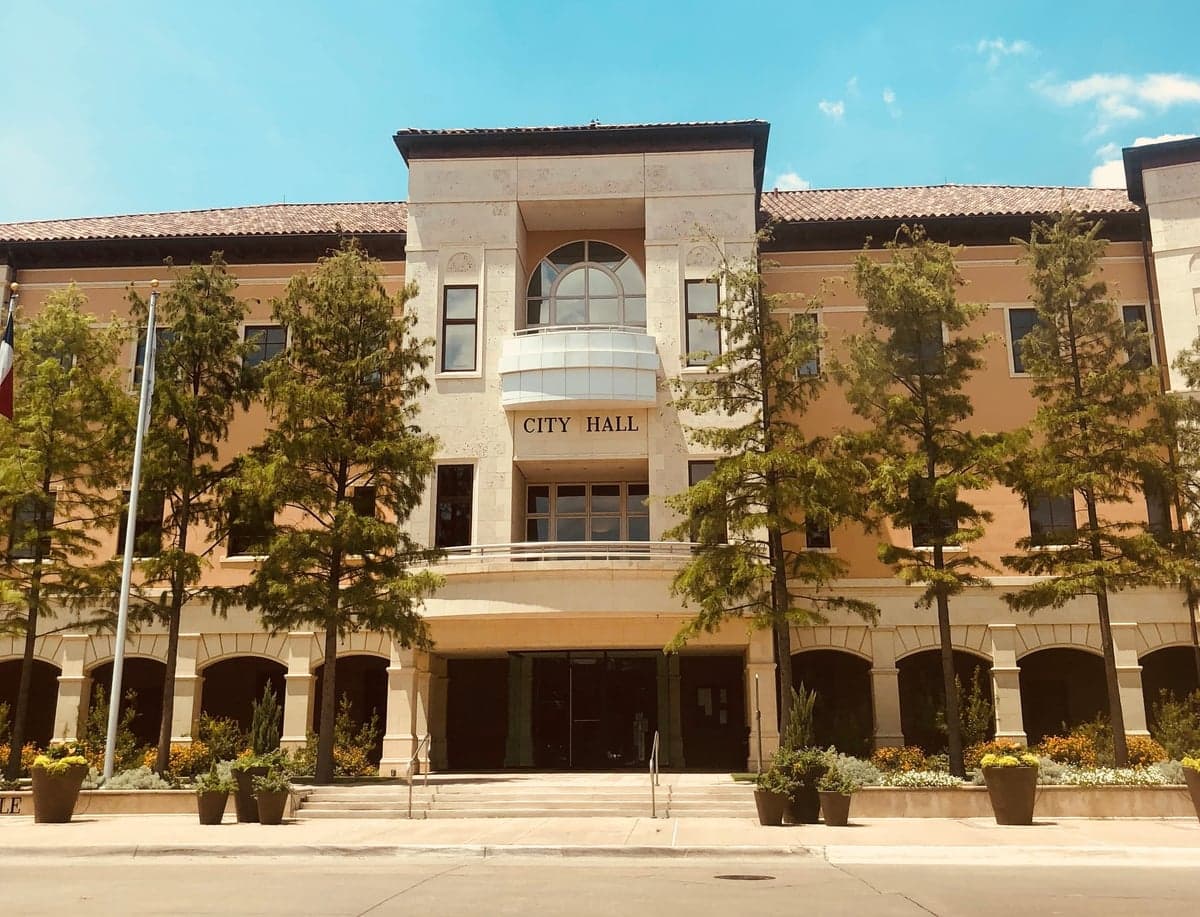
Photo: Wikipedia
Demographics of Colleyville, TX
Affluence Level in Colleyville, TX
A wealthy area with high-earning, well-educated households. Incomes, home values, and educational attainment meaningfully outpace national averages.
People of Colleyville, TX
The people of Colleyville, Texas today form an affluent, highly educated community of 25,906 residents characterized by its predominantly White population (72.0%), a significant Indian-subcontinent minority (5.9%), and a growing Hispanic presence (11.3%). With 70.3% of adults holding a college degree and a foreign-born rate of just 1.4%, the city stands as one of the most educated and least immigrant-dependent suburbs in the Dallas-Fort Worth metroplex. Its identity is shaped by large-lot estates, top-rated Grapevine-Colleyville ISD schools, and a culture of civic engagement that leans conservative, attracting families and professionals seeking space, safety, and strong property values.
How the city was settled and grew
Colleyville was not a pioneer-era settlement but a late-19th-century farming hamlet that remained tiny for decades. The area was originally part of Peters Colony land grants in the 1840s, but actual permanent settlement did not accelerate until the railroad arrived in the 1880s. The community was named after Dr. Lilburn Colley, a physician who moved his family there in the 1880s and became the first postmaster. Early residents were predominantly Anglo-American farmers and ranchers of German and Scots-Irish descent, drawn by cheap blackland prairie soil for cotton and grain. The historic Old Town Colleyville district, centered around the intersection of Colleyville Boulevard and Glade Road, contains the original homes and commercial buildings from this era, including the 1910 Colleyville Methodist Church. The population remained below 500 until after World War II, when the first suburban wave began. The Bransford Estates neighborhood, developed in the 1950s on former ranchland, became the first planned subdivision, attracting middle-class White families from Fort Worth and Dallas seeking larger lots and newer schools.
Modern era (post-1965)
The post-1965 transformation of Colleyville was driven almost entirely by domestic migration, not international immigration. The 1965 Hart-Cellar Act had minimal direct effect here; the city’s foreign-born rate of 1.4% is among the lowest in Tarrant County. Instead, the population boomed from the 1970s through the 1990s as White professionals and executives from DFW’s expanding corporate sector—especially from American Airlines, Lockheed Martin, and the energy industry—sought estate-sized lots and top-rated schools. The Woodland Hills neighborhood, developed in the 1980s and 1990s, became the epicenter of this wave, with homes on one- to three-acre lots attracting corporate transferees and local executives. The Estates of Shady Brook, built in the 1990s and early 2000s, drew a similar demographic but with larger custom homes. The Indian-subcontinent community (5.9%) began arriving in the 1990s and 2000s, primarily as highly educated professionals in technology and medicine, settling in newer subdivisions like Chatham Oaks and Preston Oaks. This group is distinct from the East/Southeast Asian population (2.7%), which is smaller and more dispersed. The Hispanic population (11.3%) grew steadily from the 2000s onward, largely through domestic migration from other Texas cities and second-generation families moving from Dallas and Fort Worth, with concentrations in the Glade Crossing area and along the city’s southern edge near Highway 26.
The future
Colleyville’s population is likely to continue homogenizing in terms of income and education while slowly diversifying ethnically. The city is nearly built out—available land for new subdivisions is scarce—so future growth will come from infill development and teardown-rebuilds on existing lots. The White share (72.0%) is expected to decline gradually as the Indian-subcontinent and Hispanic populations grow, but the pace will be slow due to high housing costs (median home price above $800,000) that filter for high-income buyers. The Indian community is likely to grow faster than the East/Southeast Asian group, given the concentration of tech and medical professionals in the region. The Hispanic population will likely plateau or grow modestly, as most new Hispanic residents are middle-class families moving from other DFW suburbs rather than immigrants. The city shows no signs of tribalizing into ethnic enclaves; instead, neighborhoods like Woodland Hills and Chatham Oaks are becoming more integrated across groups. The next 10-20 years will see Colleyville remain a wealthy, highly educated, politically conservative suburb with a slowly diversifying but still majority-White population.
For someone moving in now, Colleyville offers a stable, low-turnover community where property values are supported by school quality and limited supply. The population is becoming slightly more diverse but remains overwhelmingly native-born and English-speaking, with a culture that prizes privacy, large lots, and local civic involvement. It is not a place of rapid demographic change or ethnic tension, but rather a slow-evolution suburb where the biggest shifts are generational—aging empty-nesters selling to younger families—rather than ethnic or cultural.

* Values derived from national, state, county, city and local statistics and may differ in a specific area. Last updated: 2026-04-19T07:19:22.000Z
Narrative content on this page is AI-generated and may contain mistakes. Verify any details that matter before acting on them.
ReloMaps may earn a commission from affiliate links at no extra cost to you.

