 Popular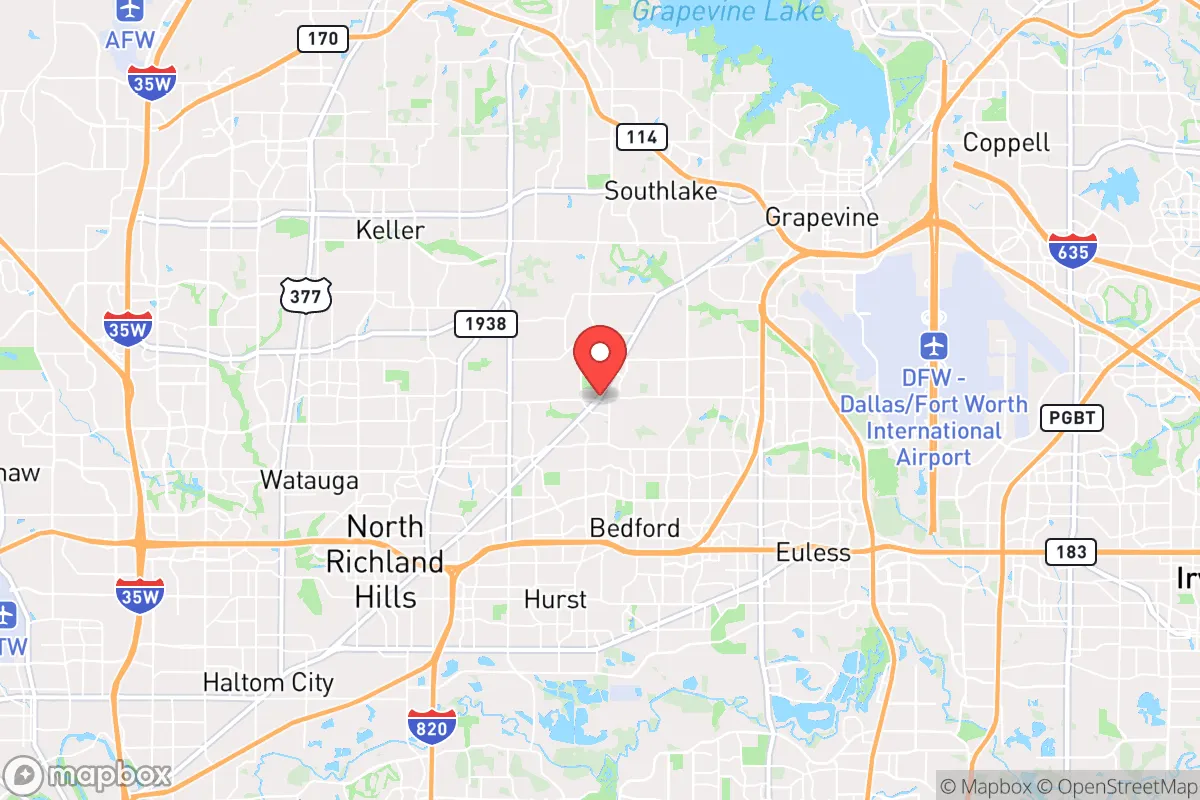
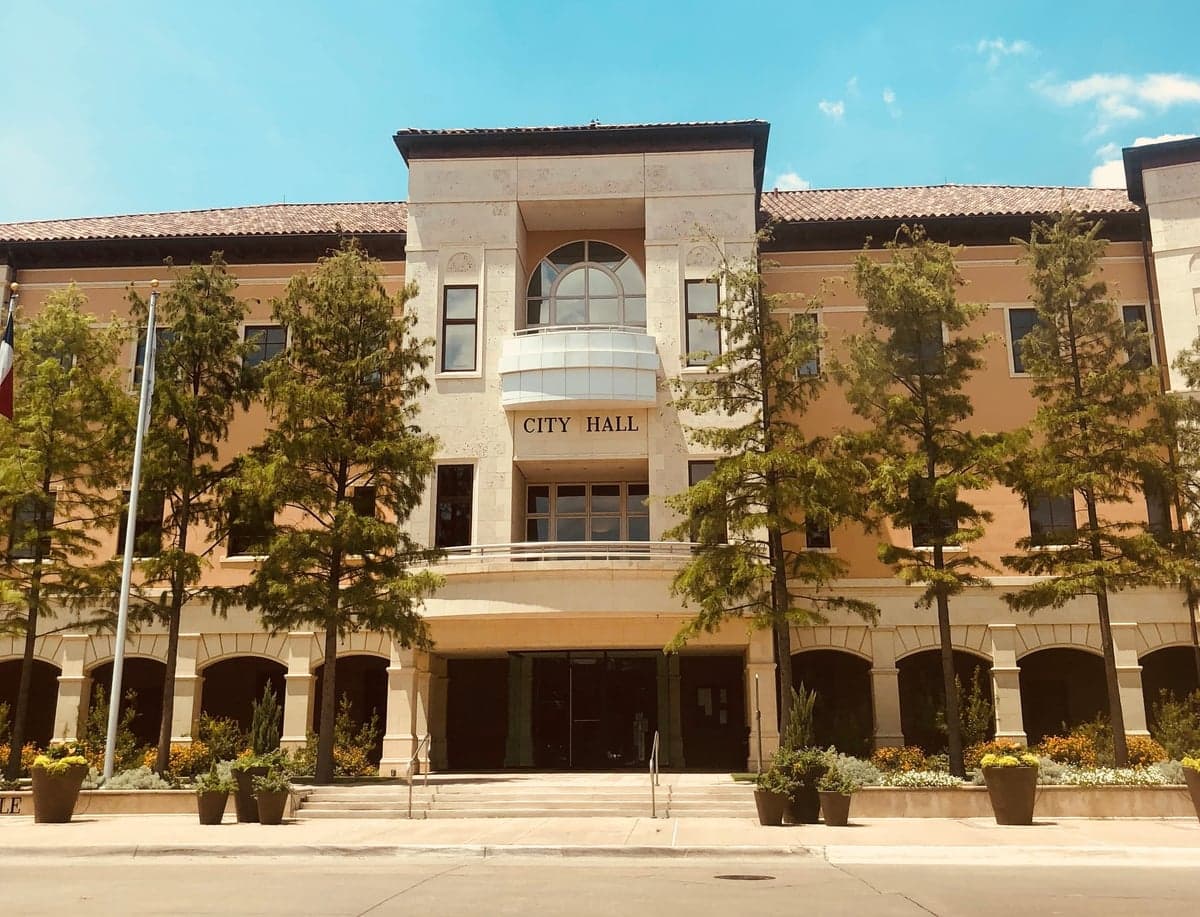
Photo: Wikipedia
Political ClimatePolitical Climate in Colleyville, TX
District shown is the primary district for this city’s centroid. Cities may span multiple districts.
Local Political AnalysisPolitical Analysis of Colleyville, TX
Colleyville has long been a rock-solid conservative stronghold, and that hasn't changed much even as the Dallas-Fort Worth metroplex has grown around it. With a Cook Partisan Voting Index of R+7, this Tarrant County suburb leans reliably Republican in both local and national elections, and most folks here like it that way. You don't see the kind of political whiplash you get in some of the neighboring towns—places like Grapevine or Southlake have seen more of a tug-of-war as new folks move in, but Colleyville has stayed pretty steady. The trajectory here is still firmly right-of-center, though there's always a quiet worry about whether the progressive creep from Dallas or Fort Worth might start seeping in.
How it compares
Compared to its neighbors, Colleyville is noticeably more conservative than, say, Bedford or Euless, which have shifted a bit more purple in recent years as younger families and transplants arrive. Over in Southlake, you've got a similar R+7 vibe, but the school board battles there have been louder and more divisive—Colleyville's politics are lower-key, more about keeping things running smoothly than making headlines. Flower Mound, just to the north, is also red but with a slightly more moderate streak, especially on environmental issues. Colleyville, by contrast, tends to vote straight-ticket Republican without much drama. The real contrast is with Dallas proper, where progressive policies on taxes, policing, and zoning are the norm—something that makes Colleyville feel like a refuge for folks who want less government meddling in their daily lives.
What this means for residents
For the people who live here, the political climate means lower taxes, fewer regulations, and a general hands-off approach from local government. You don't get the kind of overreach you see in blue cities—no heavy-handed zoning rules that tell you what you can do with your own property, no aggressive tax hikes to fund pet projects. The city council and school board tend to focus on core services: roads, public safety, and schools, without diving into social engineering. That said, there's a growing unease among longtime residents about the direction of the state as a whole. As more people move in from California and other blue states, there's a fear that the cultural and political fabric could fray. The concern isn't about losing elections—it's about losing the freedom to live without government telling you how to raise your kids, run your business, or speak your mind.
One thing that sets Colleyville apart is its strong sense of local control. The city has resisted some of the more progressive trends you see in nearby areas, like sanctuary city policies or defunding the police. The police department here is well-funded and respected, and there's no appetite for the kind of soft-on-crime experiments that have hurt other cities. Culturally, Colleyville is still very much a place where church attendance is high, family values are front and center, and the Fourth of July parade is a bigger deal than any political rally. The biggest policy distinction is probably the lack of heavy-handed HOA-style regulations—while some neighborhoods have them, the city itself doesn't micromanage property aesthetics or business operations the way some suburbs do. For now, Colleyville remains a place where you can pretty much live your life the way you want, as long as you're not looking to turn it into a progressive experiment. The long-term worry is whether that will hold as the region grows, but for the moment, it's still a solid bet for anyone who values personal freedom and limited government.

State Political ClimatePolitical Climate in Texas
State Political AnalysisPolitical Environment in the State
Texas has been a reliably Republican state for decades, with the GOP holding every statewide office and both chambers of the legislature since the mid-1990s. The dominant coalition is a mix of rural conservatives, suburban moderates, and a growing number of Hispanic voters who lean right on economic and social issues. However, the 10-20 year arc shows a slow but steady shift: in 2020, Donald Trump won Texas by just 5.6 points, down from 9 points in 2016 and 16 points in 2012. The state is still solidly red, but the margins are tightening as urban centers like Austin, Dallas, and Houston swell with new arrivals from blue states.
Urban vs. rural divide
The political map of Texas is a tale of two worlds. The vast rural expanse—places like Lubbock, Midland, and the Panhandle—votes overwhelmingly Republican, often by 70-80% margins. These areas are the backbone of the GOP’s dominance. Meanwhile, the major metros are the battlegrounds. Dallas and Tarrant counties (Fort Worth) have been trending blue, with Tarrant flipping to Biden in 2020 after decades of red. Houston’s Harris County is now reliably Democratic, and Austin’s Travis County is a deep blue stronghold. The suburbs in between—like Collin County (north of Dallas) and Williamson County (north of Austin)—are the real story. These once-solid red suburbs are shifting purple, driven by transplants from California and New York who bring progressive voting habits. El Paso, far west, is a Democratic island, while San Antonio remains a swingy area with a strong military and Hispanic influence that keeps it competitive.
Policy environment
Texas’s policy environment is a dream for conservatives who value limited government. There is no state income tax, which is a huge draw for families and businesses. Property taxes are high (around 1.6-2.5% of assessed value), but the state offers a homestead exemption and a 10% cap on annual appraisal increases for homeowners. The regulatory posture is famously business-friendly, with no state-level minimum wage above the federal $7.25 and right-to-work laws that weaken union power. On education, Texas has school choice via charter schools and a robust homeschooling community, though a full voucher program has stalled in the legislature. Healthcare is a mixed bag: Texas refused Medicaid expansion under Obamacare, leaving many low-income adults uninsured, but the state has strong protections for religious freedom and parental consent for minors’ medical decisions. Election laws were tightened in 2021 with SB 1, which banned drive-through voting, added ID requirements for mail ballots, and restricted early voting hours—a move that critics call voter suppression but supporters say ensures integrity.
Trajectory & freedom
On balance, Texas is becoming more free in several key areas, but there are warning signs. The 2021 permitless carry law (HB 1927) allows most adults to carry a handgun without a license, a major expansion of Second Amendment rights. Parental rights were strengthened with the 2023 ban on gender transition procedures for minors (SB 14) and a law requiring schools to get parental consent for any medical or counseling services (HB 567). On speech, the state passed a law in 2021 (HB 20) that bars social media platforms from censoring users based on political viewpoints, though it’s tied up in court. Medical autonomy took a hit with the near-total abortion ban (trigger law after Dobbs), which has no exceptions for rape or incest—a stance that pleases social conservatives but worries libertarians. Property rights are strong, with no statewide zoning and a robust eminent domain compensation process. The biggest threat to freedom is the property tax burden, which has risen faster than inflation, and the creeping influence of local government overreach in blue cities like Austin, which has tried to impose homeless camping bans and short-term rental restrictions.
Civil unrest & political movements
Texas has seen its share of political flashpoints. The 2020 Black Lives Matter protests in Austin, Dallas, and Houston were large and occasionally violent, leading to property damage and a lasting distrust of police in some circles. On the right, the “Texas Nationalist Movement” (Texit) has gained some traction, with a 2022 poll showing 18% support for secession, though it remains fringe. Immigration politics are a constant: Governor Greg Abbott’s Operation Lone Star has deployed state troopers and National Guard to the border, bused migrants to blue cities, and installed razor wire along the Rio Grande—a direct challenge to federal authority that has sparked lawsuits. Sanctuary city bans (SB 4) remain law, requiring local police to cooperate with ICE. Election integrity is a hot-button issue: the 2020 election saw a few localized irregularities (like a Harris County drive-through voting snafu), but no widespread fraud was proven. Still, the 2021 voting law has been a rallying cry for both sides. New residents will notice the political polarization in everyday life—yard signs, bumper stickers, and even church affiliations can signal your lean.
Projection
Over the next 5-10 years, Texas will likely remain Republican at the state level, but the margins will continue to shrink. The in-migration from blue states—about 1,000 people move to Texas per day—is slowly shifting the suburbs. Places like Fort Bend County (southwest of Houston) and Hays County (south of Austin) are flipping blue, while rural areas are losing population. The GOP will need to hold onto Hispanic voters, who are trending right on cultural issues but still lean Democratic on economic ones. If the party can keep the suburbs from fully flipping, Texas stays red. If not, it becomes a swing state by 2032. For a new resident, expect more competitive elections, more ballot initiatives (if the legislature allows them), and a continued culture war over education, guns, and immigration. The freedom trajectory is positive on guns and parental rights, but property taxes and local government overreach in blue cities are the real threats.
For someone moving to Texas now, the bottom line is this: you get low taxes, strong gun rights, and a business-friendly climate, but you also get high property taxes, a polarized political environment, and a state that is slowly becoming more competitive. If you’re a conservative, you’ll feel at home in the suburbs and rural areas, but you’ll need to keep an eye on the urban drift. If you’re a libertarian, the lack of income tax and the permitless carry law are wins, but the property tax burden and the abortion ban might chafe. Either way, Texas is still a place where your vote matters more than in a deep blue state—and where the political future is very much up for grabs.
* Values derived from national, state, county, city and local statistics and may differ in a specific area. Last updated: 2026-04-19T07:19:22.000Z
Narrative content on this page is AI-generated and may contain mistakes. Verify any details that matter before acting on them.
ReloMaps may earn a commission from affiliate links at no extra cost to you.

