 Popular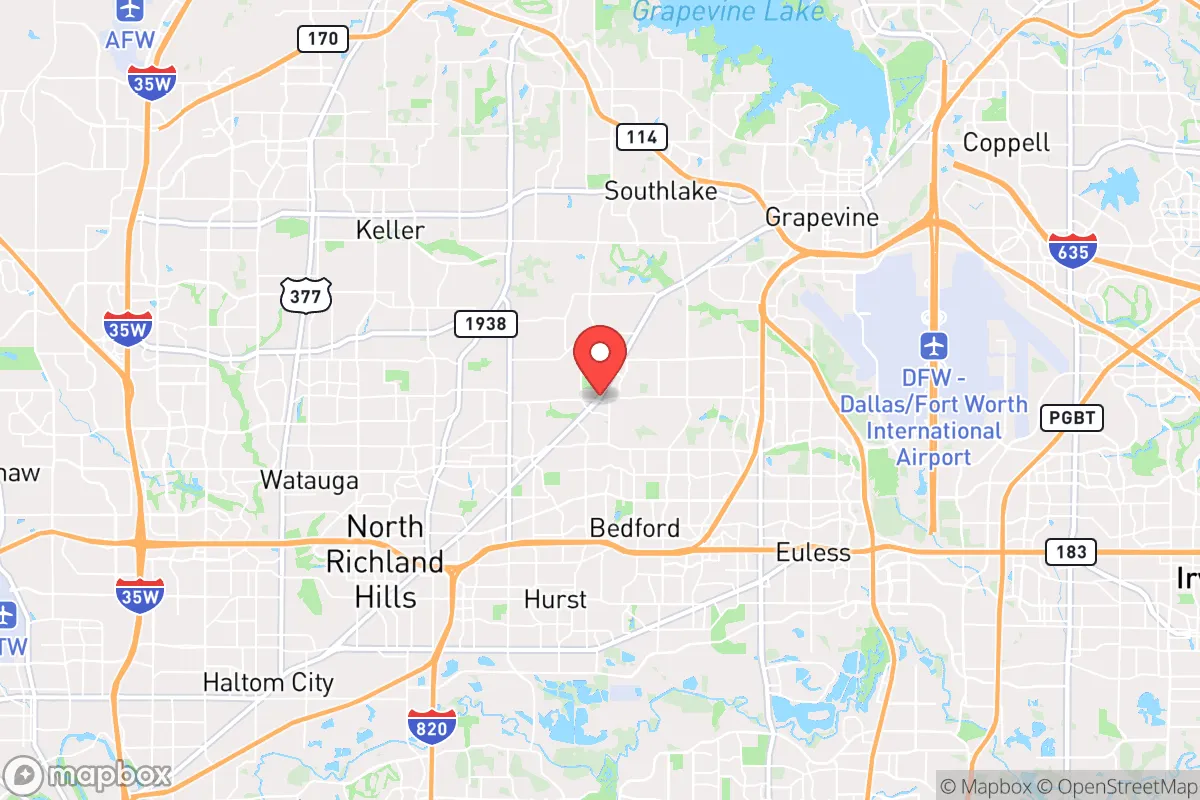
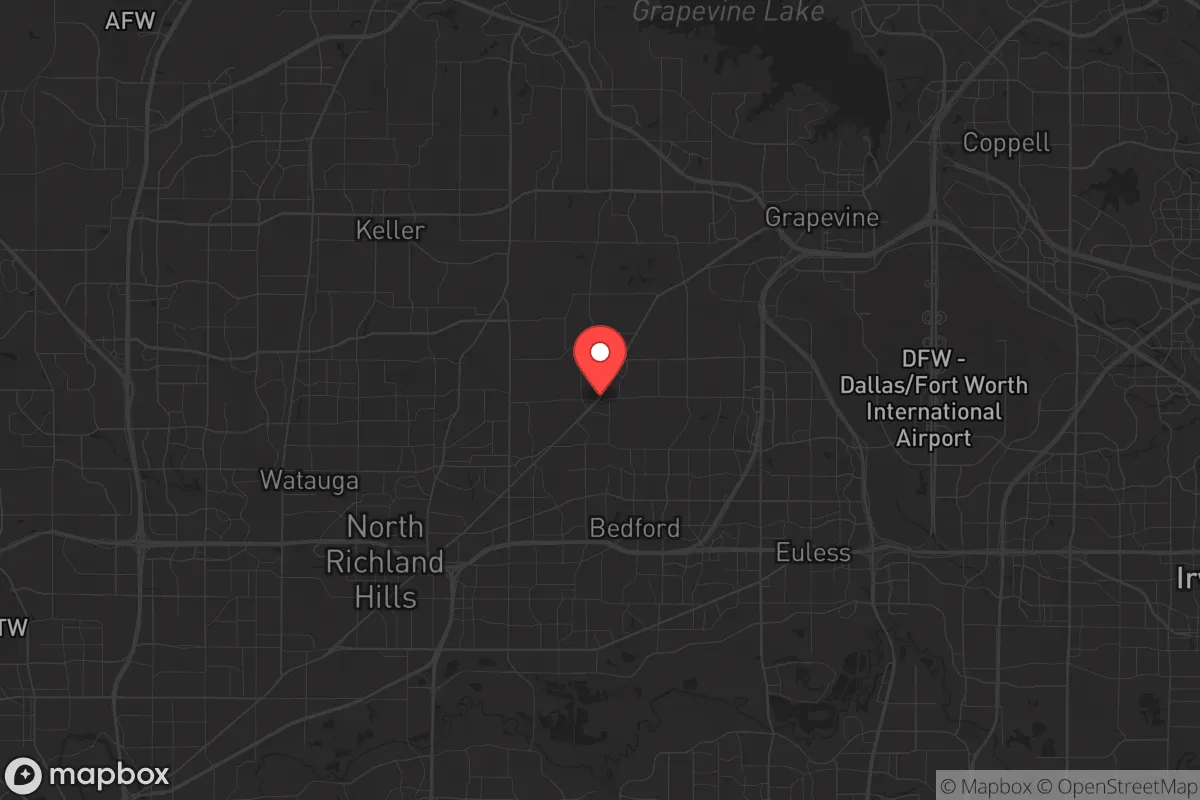
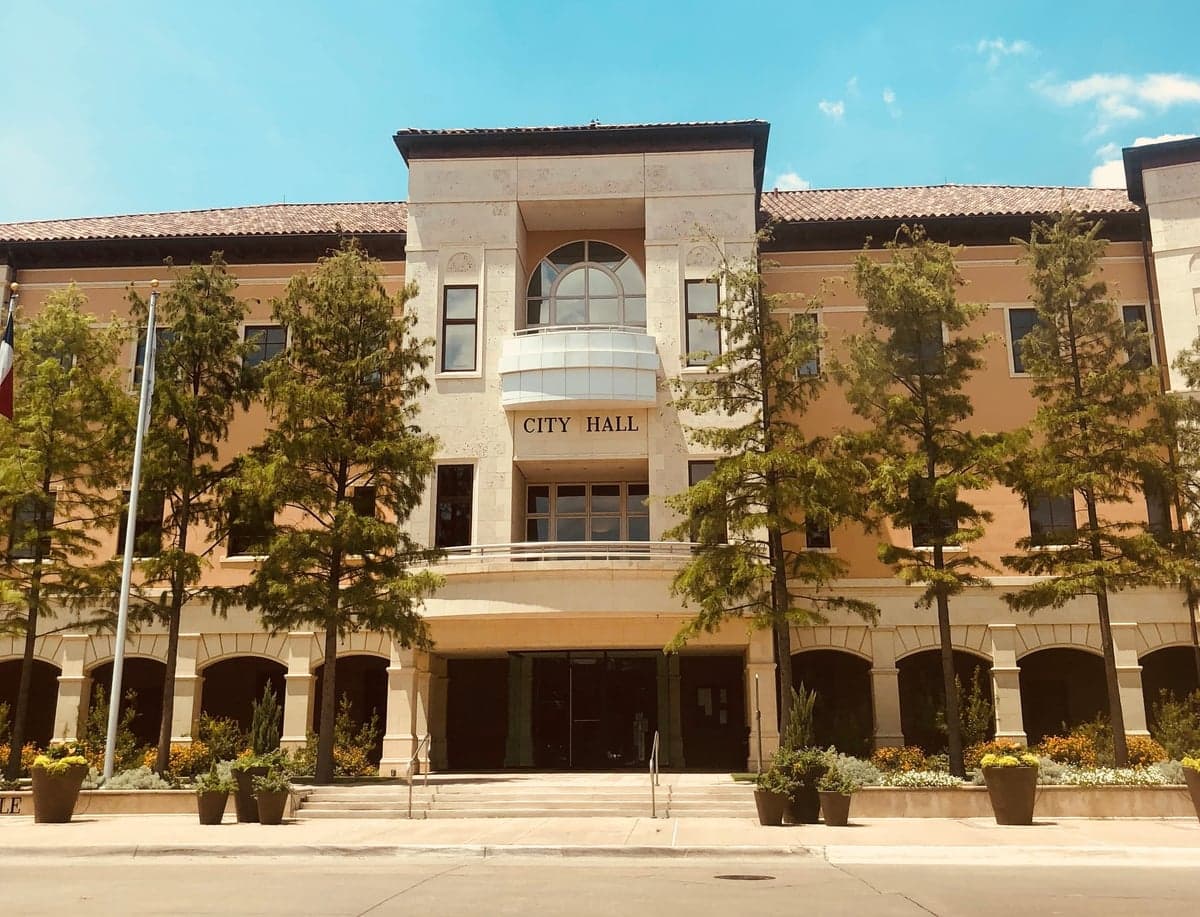
Photo: Wikipedia
Strategic Assessment of Colleyville, TX
Multiple tactical vulnerabilities. Population density, target proximity, or disaster risk are likely compounding. A retreat property and exit planning is required.
What does the Strategic Assessment tell us?
Our Strategic Assessment grades tactical survivability of an area. Major population centers, military targets, fallout zones, natural disasters, and border exposure all drive risk — lower exposure means a more defensible position in a crisis.
This is heavily inspired by Joel Skousen's Strategic Relocation book. Highly recommended you checkout the book ($)What does this tell us?
Our Strategic Assessment grades tactical survivability of an area. Major population centers, military targets, fallout zones, natural disasters, and border exposure all drive risk — lower exposure means a more defensible position in a crisis.
This is heavily inspired by Joel Skousen's Strategic Relocation book. Highly recommended you checkout the book ($)Strategic Pillars

Key Distances
Regional Safe Places
Below is our recommended "safe zones" in Texas and the surrounding area based on our strategic heuristics. For most people, it's unrealistic to live in a “safe zone” full-time due to work, family or other personal reasons. They tend to be more rural. However, many of these areas are perfect for second homes and retreat properties that double as a vacation home or even a short-term rental.

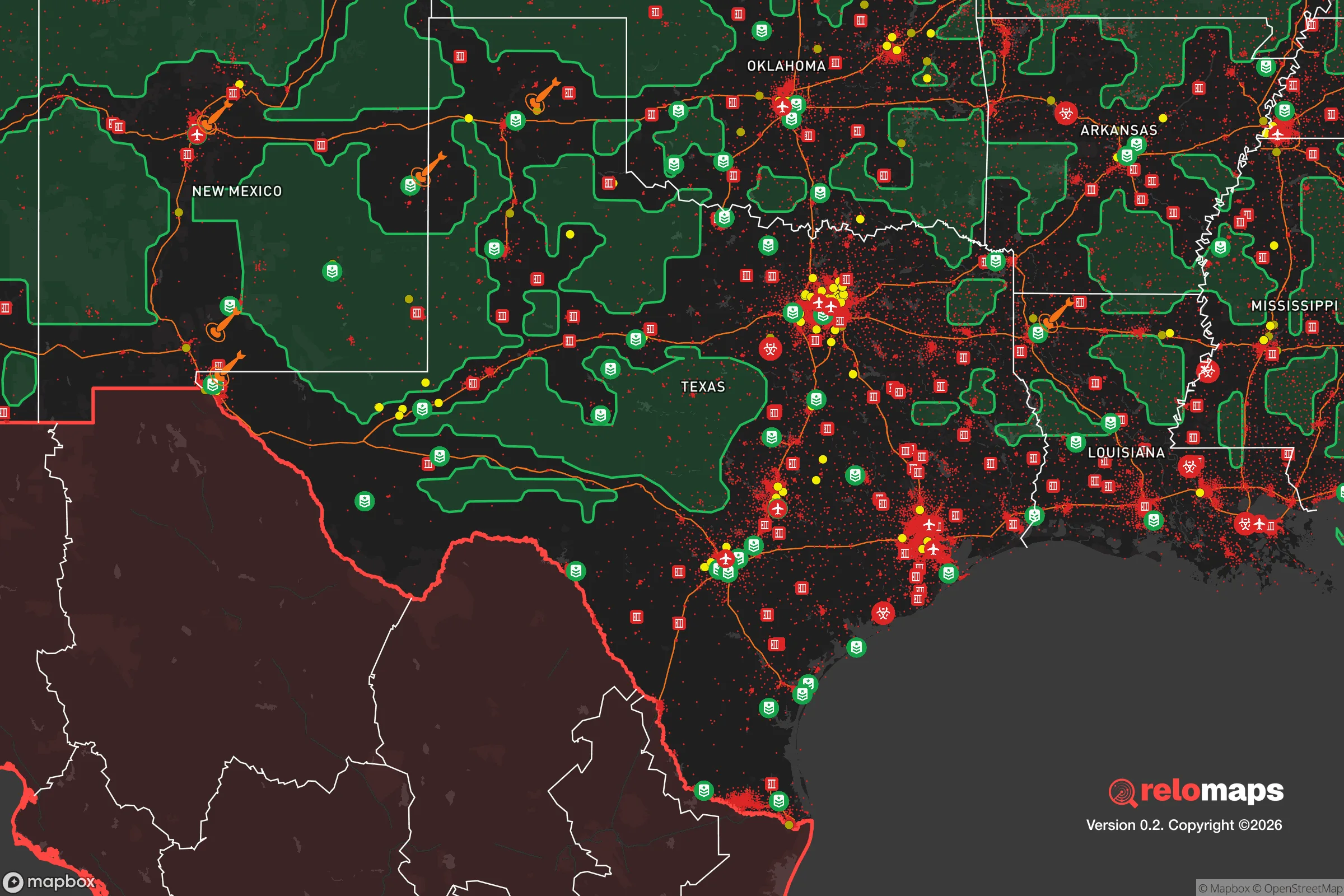


Important Note: For informational purposes only. This does not mean nothing bad ever happens in the green zones. Please use common sense. This is based on public data and modeled with AI. We tried to take a conservative approach but mistakes happen. We update this regularly as new information becomes available.
Solar Generator Recommendations
Backup power matters more here than in safer locations. We've picked three solar generators across budgets and capacity tiers — start with the budget unit if you only need a few essentials, or step up if you want to run a fridge and HVAC for days at a time.

Jackery Portable Power Station Explorer 300
Budget OptionPower on the Go: Weighing only 11 lbs, it's convenient to set up and store with book-sized foldable solar panels

BLUETTI Portable Power Station AC180
Designed for both indoor and outdoor scenarios, AC180 is highly capable as it has a robost capacity and continuous output power.

EF ECOFLOW DELTA Pro Ultra Power Station
Upgraded PickEcoFlow DELTA Pro Ultra is a whole-home energy system designed to grow with your family. Integrated with the Smart Home Panel 2, it scales to meet your evolving energy needs — keeping your home powered, intelligent, and secure through every stage of life.
We earn a commission, at no additional cost to you.
Strategic Assessment Analysis
Colleyville, Texas, sits in a strategic sweet spot that resilience-minded relocators should take seriously: close enough to the economic engine of the Dallas-Fort Worth metroplex to access jobs and supply chains, but far enough from the urban core to avoid the worst of civil unrest, mass casualty events, and fallout from a major disaster. This Tarrant County city of roughly 26,000 residents offers a low-density, high-property-value environment that naturally filters for stability, with a median household income pushing $200,000 and a violent crime rate that consistently runs 80% below the national average. For a conservative-leaning individual or family looking to hedge against societal breakdown, Colleyville provides a defensible base with real advantages—but it’s not without exposure risks that demand honest assessment.
Geographic position and natural advantages for long-term stability
Colleyville’s location at the intersection of State Highway 26 and State Highway 121 places it roughly 20 miles northeast of downtown Fort Worth and 25 miles northwest of downtown Dallas. That distance matters: in a scenario involving mass casualty events, civil unrest, or a major infrastructure failure, the urban core’s chaos tends to radiate outward, and Colleyville sits far enough outside the blast radius—literal or figurative—to buy critical reaction time. The city is part of the Mid-Cities region, a corridor of affluent suburbs that includes Southlake, Grapevine, and Keller, creating a contiguous zone of high-value, low-crime properties that function as a natural buffer. The area’s topography is gently rolling, with limestone bedrock and clay soils that support well-drained building sites and reduce flood risk compared to areas closer to the Trinity River. The Brazos River watershed lies about 15 miles west, offering a secondary water source if municipal supplies are compromised, though direct access is limited without private land holdings. The climate is classic North Texas—hot summers, mild winters, and an average of 234 sunny days per year—which supports solar energy generation and extended growing seasons for food production. The Edwards Aquifer feeds the region’s groundwater, and while Colleyville relies on surface water from the Tarrant Regional Water District, the city’s elevation (roughly 750 feet above sea level) provides natural drainage advantages over flood-prone areas like those near the Trinity.
Risks, exposures, and proximity to fallout-relevant landmarks
No strategic assessment is honest without naming the threats. Colleyville’s biggest exposure is its proximity to DFW International Airport, located just 8 miles east. In a mass casualty event—whether a coordinated attack, a nuclear incident, or a pandemic-related breakdown of air travel—that airport becomes a primary target or a vector for contagion. The city also sits within 15 miles of Fort Worth’s Alliance Airport, a major cargo hub, and within 20 miles of Naval Air Station Joint Reserve Base Fort Worth, a military installation that could become a focal point during civil unrest or foreign conflict. The Barnett Shale natural gas fields underlie the region, with numerous drilling sites and compressor stations within a 10-mile radius; a major gas leak or explosion at one of these facilities could disrupt local energy supplies or cause localized fallout. On the infrastructure side, Colleyville is served by Oncor Electric Delivery, and the grid is part of the Electric Reliability Council of Texas (ERCOT), which has demonstrated vulnerability during extreme weather events—most notably the 2021 winter storm that left millions without power for days. The city’s water supply comes from the Tarrant Regional Water District, which draws from Cedar Creek Reservoir and Richland-Chambers Reservoir, both located over 60 miles southeast; a major drought or contamination event could strain that pipeline. For a prepper, these risks mean that self-sufficiency in energy and water storage is non-negotiable, not optional. The city’s affluent profile also makes it a potential target for looting during widespread civil unrest, though the low crime rate and strong police presence (Colleyville PD maintains a response time under 5 minutes) mitigate that somewhat.
Practical resilience for a relocator: food, water, energy, and defensibility
For someone serious about preparedness, Colleyville offers a mixed bag. On the positive side, the city’s zoning is heavily residential with large lots—many homes sit on half-acre to one-acre parcels—which allows for private gardens, rainwater catchment, and solar panel installation without HOA pushback in many neighborhoods. The city’s building codes are up to date, and newer homes (post-2000) typically include natural gas backup generators as standard or easily added features. The local soil is clay-heavy but workable for raised-bed vegetable gardens, and the growing season runs from March to November, supporting staples like tomatoes, peppers, squash, and beans. For water, the average annual rainfall is 36 inches, and a 1,000-square-foot roof can capture roughly 22,000 gallons per year with a proper cistern system—enough to supplement household use for a family of four. The Colleyville Public Library and Colleyville Community Center could serve as neighborhood coordination points during a crisis, though they’re not hardened facilities. On the energy front, the city’s grid is above-average for Texas, with underground power lines in many newer subdivisions reducing outage risk from wind and ice. However, the ERCOT grid’s fragility means that a multi-day blackout during a winter storm or summer heatwave is a realistic scenario; a whole-home generator with a 500-gallon propane tank is a wise investment. For defensibility, Colleyville’s layout is a plus: the city is bisected by State Highway 26, but most residential areas are accessed via a network of cul-de-sacs and limited-entry subdivisions, creating natural chokepoints that slow unauthorized movement. The Colleyville Police Department has 40 sworn officers and a strong community policing model, but in a widespread civil unrest event, they’d be stretched thin—meaning neighborhood watch and mutual-aid networks are essential. The nearest major medical facility is Texas Health Harris Methodist Hospital Southlake, 6 miles west, with a Level III trauma center; for serious injuries, John Peter Smith Hospital in Fort Worth (Level I) is 20 miles away, a drive that could be compromised during a mass casualty event.
The overall strategic picture for Colleyville is cautiously optimistic for a relocator with a prepper mindset. It’s not a remote bunker—it’s a well-heeled suburb with real exposure to urban risks—but its low crime, high property values, and natural defensibility make it one of the better options in the Dallas-Fort Worth area for those who want to stay connected to the economy while maintaining a credible fallback position. The key is to treat Colleyville as a base camp, not a fortress: invest in on-site water storage, solar with battery backup, and a reliable generator; build relationships with like-minded neighbors; and have a secondary bug-out location within 100 miles (the Hill Country or East Texas piney woods) for worst-case scenarios. For a conservative-leaning individual or family who values community stability, economic opportunity, and the ability to ride out a crisis without fleeing to the wilderness, Colleyville deserves a serious look—just don’t mistake its manicured lawns for invulnerability.

* Values derived from national, state, county, city and local statistics and may differ in a specific area. Last updated: 2026-04-19T07:19:22.000Z
Narrative content on this page is AI-generated and may contain mistakes. Verify any details that matter before acting on them.
ReloMaps may earn a commission from affiliate links at no extra cost to you.

