Photo: Wikipedia
Demographics of Archuleta County
Affluence Level in Archuleta County
An upper-middle-class area. Household wealth, education levels, and homeownership run ahead of national benchmarks.
People of Archuleta County
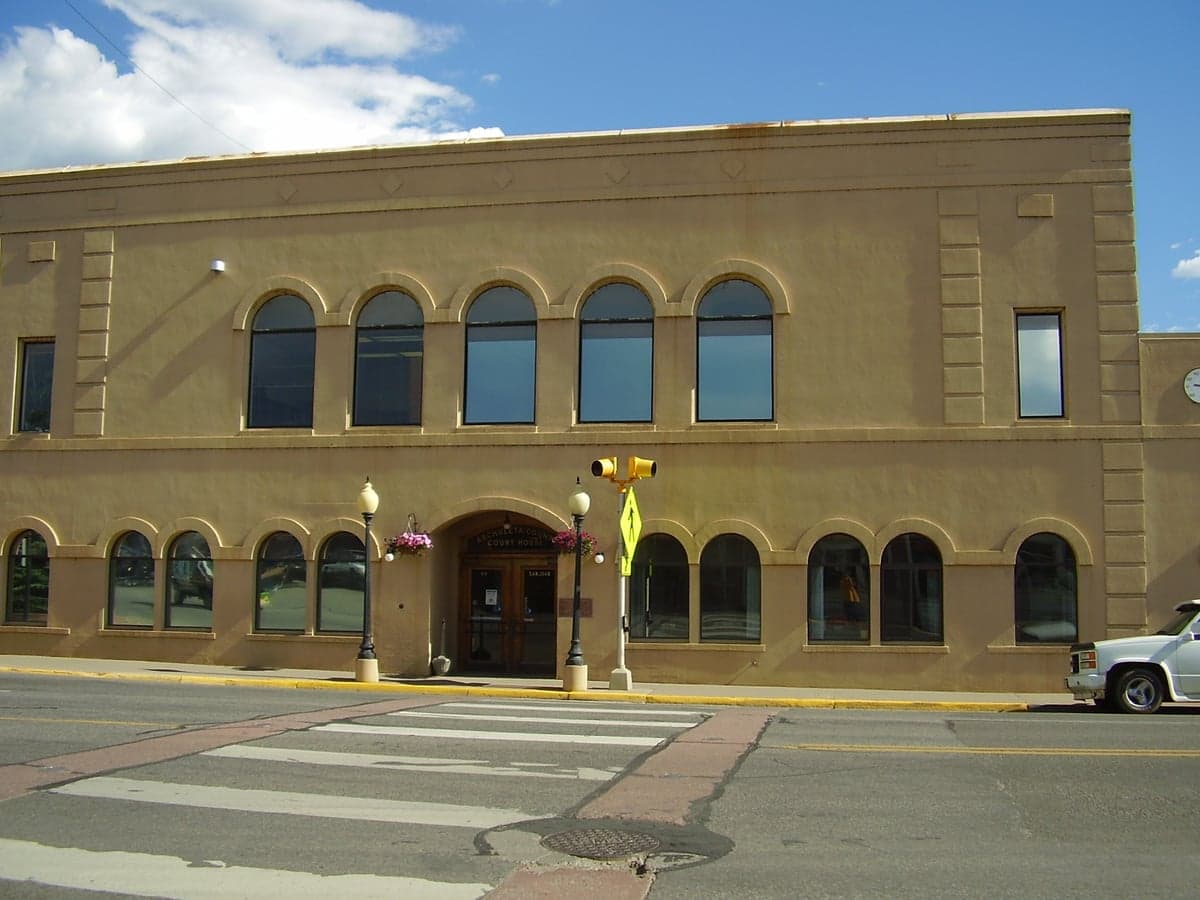
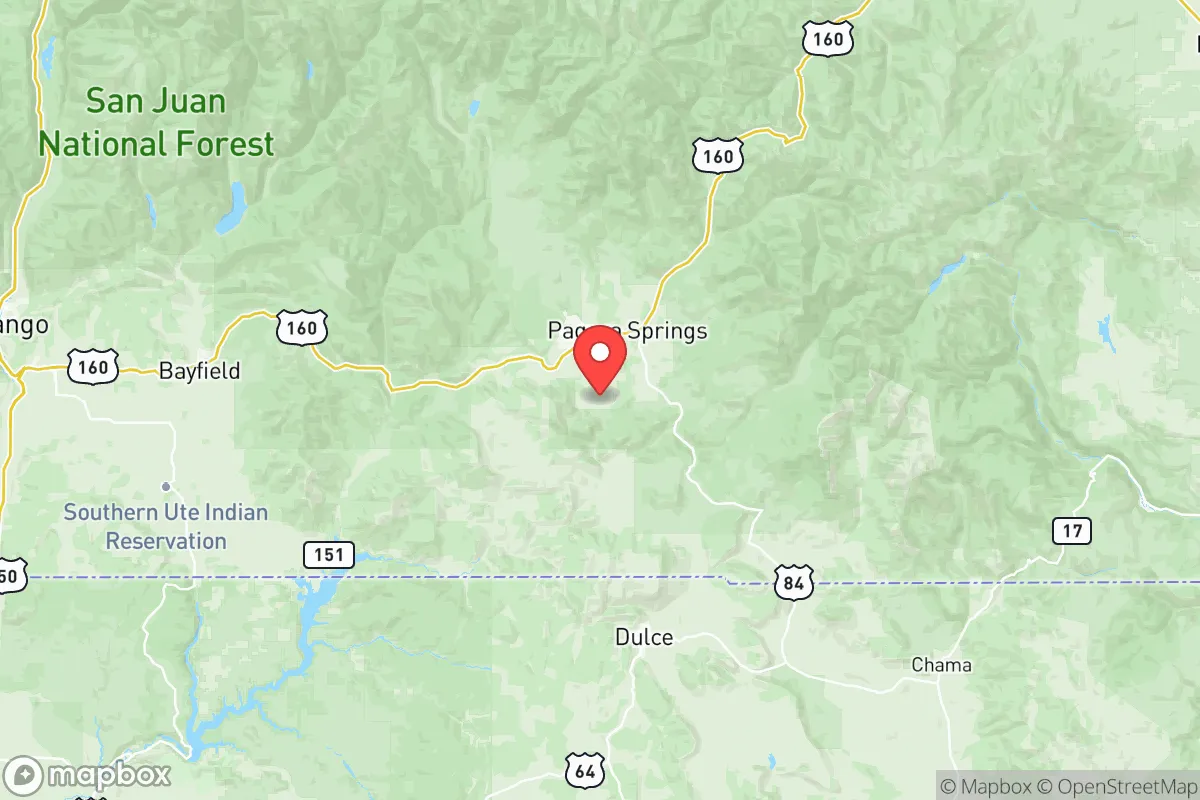
Today, the people of Archuleta County, Colorado, are a predominantly white, politically conservative population of roughly 13,730 residents, concentrated in the county seat of Pagosa Springs and the smaller unincorporated communities of Arboles, Chromo, and Chimney Rock. The county is notably homogeneous—77.3% white, 16.4% Hispanic, and with negligible Black (0.0%), East/Southeast Asian (0.3%), and Indian subcontinent (0.1%) populations—and its foreign-born share of just 2.1% is far below the national average. The area’s identity is rooted in a blend of Ute and Jicarilla Apache heritage, Spanish colonial settlement, and Anglo-American ranching and timber economies, producing a culture that prizes self-reliance, outdoor recreation, and limited government. For a conservative-leaning individual or family considering relocation, Archuleta County offers a low-density, high-autonomy lifestyle where the population is stable, aging, and slowly diversifying through Hispanic growth and domestic in-migration.
Settlement & growth (pre-1960)
The human history of Archuleta County begins with the Ute people, who occupied the San Juan Mountains and the Piedra River valley for centuries before European contact. The Jicarilla Apache also used the area seasonally, particularly around the present-day community of Chromo, where the landscape offered hunting and gathering grounds. Spanish explorers and missionaries passed through as early as the 1700s, but permanent European settlement did not begin until after the Mexican-American War (1846–1848) and the subsequent U.S. acquisition of the region via the Treaty of Guadalupe Hidalgo. The first Hispanic settlers—primarily Spanish-Mexican families from New Mexico—established small farming and ranching communities along the San Juan River and its tributaries, including the area that would become Arboles, founded in the 1870s as a supply point for Fort Lewis. These early settlers brought a Catholic, Spanish-speaking culture that still echoes in the county’s Hispanic surnames and place names.
The Anglo-American wave arrived in earnest after the 1880s, driven by the Denver and Rio Grande Western Railroad, which reached Pagosa Springs in 1881. The railroad opened the county to timber extraction, cattle ranching, and tourism centered on the geothermal hot springs that gave Pagosa Springs its name. Homesteaders—many of them of Scots-Irish and German descent—took up land grants in the valleys around Pagosa Springs and the remote settlement of Chimney Rock, named for the iconic twin spires that were a landmark for Ute and Navajo travelers. By 1900, the county’s population had grown to roughly 3,000, with Pagosa Springs serving as the commercial and governmental hub. The Ute were forcibly removed to reservations in Utah and southwestern Colorado by the 1880s, and the Jicarilla Apache were confined to the Jicarilla Apache Reservation in New Mexico, just south of the county line. The early 20th century saw slow growth, with the economy shifting from subsistence farming to a mix of ranching, logging, and early tourism. The Great Depression hit the county hard, but World War II brought a modest influx of veterans and their families who appreciated the area’s isolation and low cost of land. By 1960, the population had reached about 5,000, still overwhelmingly white and native-born, with a small Hispanic minority concentrated in Arboles and the southern part of the county.
Modern era (post-1965)
The 1965 Hart-Cellar Act had minimal direct impact on Archuleta County, as the area’s remote location and limited job base did not attract the large-scale immigration seen in urban Colorado. The foreign-born population remains tiny at 2.1%, and the county’s racial composition has shifted only modestly since 1965. The most significant demographic change has been the growth of the Hispanic population, which rose from roughly 8% in 1980 to 16.4% today. This growth is driven primarily by domestic migration from New Mexico and Texas—families of Spanish-Mexican heritage seeking lower housing costs and a slower pace of life—rather than by international immigration. These Hispanic residents have concentrated in Pagosa Springs and the southern communities of Arboles and Chromo, where they often work in construction, hospitality, and agriculture. The white population, while still the majority, has seen a slight relative decline as the county’s overall population has grown through domestic in-migration from other parts of Colorado and the Mountain West.
The post-1965 era also brought a wave of amenity migrants—retirees, second-home buyers, and remote workers—drawn by the county’s natural beauty, hot springs, and outdoor recreation. This group, overwhelmingly white and often college-educated (40.7% of adults hold a bachelor’s degree or higher), has settled primarily in Pagosa Springs and the gated communities around the Pagosa Springs Golf Club and the San Juan River. They have injected new wealth and political influence, but the county remains culturally conservative, with a strong libertarian streak. The Black population has never established a significant presence (0.0% today), and East/Southeast Asian and Indian subcontinent communities are negligible (0.3% and 0.1%, respectively). The county’s population density remains among the lowest in Colorado, at roughly 6 people per square mile, reinforcing a sense of isolation and self-sufficiency that appeals to conservative-leaning newcomers.
The future
Archuleta County’s population is projected to grow slowly, reaching perhaps 15,000–16,000 by 2040, driven primarily by domestic in-migration of retirees and remote workers from more expensive parts of Colorado and the West Coast. The Hispanic share is likely to continue rising gradually, possibly to 20–22% by 2040, as families from New Mexico and Texas continue to move in for affordable housing and family connections. However, the county is not expected to see significant growth in other minority groups; the foreign-born share will likely remain below 5%, and the Black, East/Southeast Asian, and Indian subcontinent populations will stay negligible. The cultural identity of the county is likely to remain predominantly white and conservative, but with a growing Hispanic influence that is being absorbed into the existing ranching and outdoor-recreation culture rather than creating distinct enclaves. The amenity-migrant influx may introduce more politically moderate or liberal voices, but the county’s voting patterns—consistently Republican in presidential elections by margins of 30–40 points—suggest that the conservative character will persist.
For someone moving in now, Archuleta County is becoming a place where the population is slowly diversifying along Hispanic lines while remaining overwhelmingly white and native-born. The county is not homogenizing into a generic suburban monoculture; rather, it is tribalizing into distinct groups: long-time Anglo ranchers and timber families, Hispanic families rooted in the area for generations, and newer amenity migrants. These groups coexist with minimal friction, united by a shared appreciation for the outdoors and a distrust of centralized authority. The future points toward a stable, low-growth community where the cultural identity is resilient but not static—a place where a conservative-leaning individual or family can find like-minded neighbors, affordable land, and a pace of life that values independence over convenience.

* Values derived from national, state, county, city and local statistics and may differ in a specific area. Last updated: 2026-06-01T14:46:28.000Z
Narrative content on this page is AI-generated and may contain mistakes. Verify any details that matter before acting on them.
ReloMaps may earn a commission from affiliate links at no extra cost to you.

