Photo: Wikipedia
Political ClimatePolitical Climate in Archuleta County
Showing district-level results — no local-only data available.
Local Political AnalysisPolitical Analysis of Archuleta County
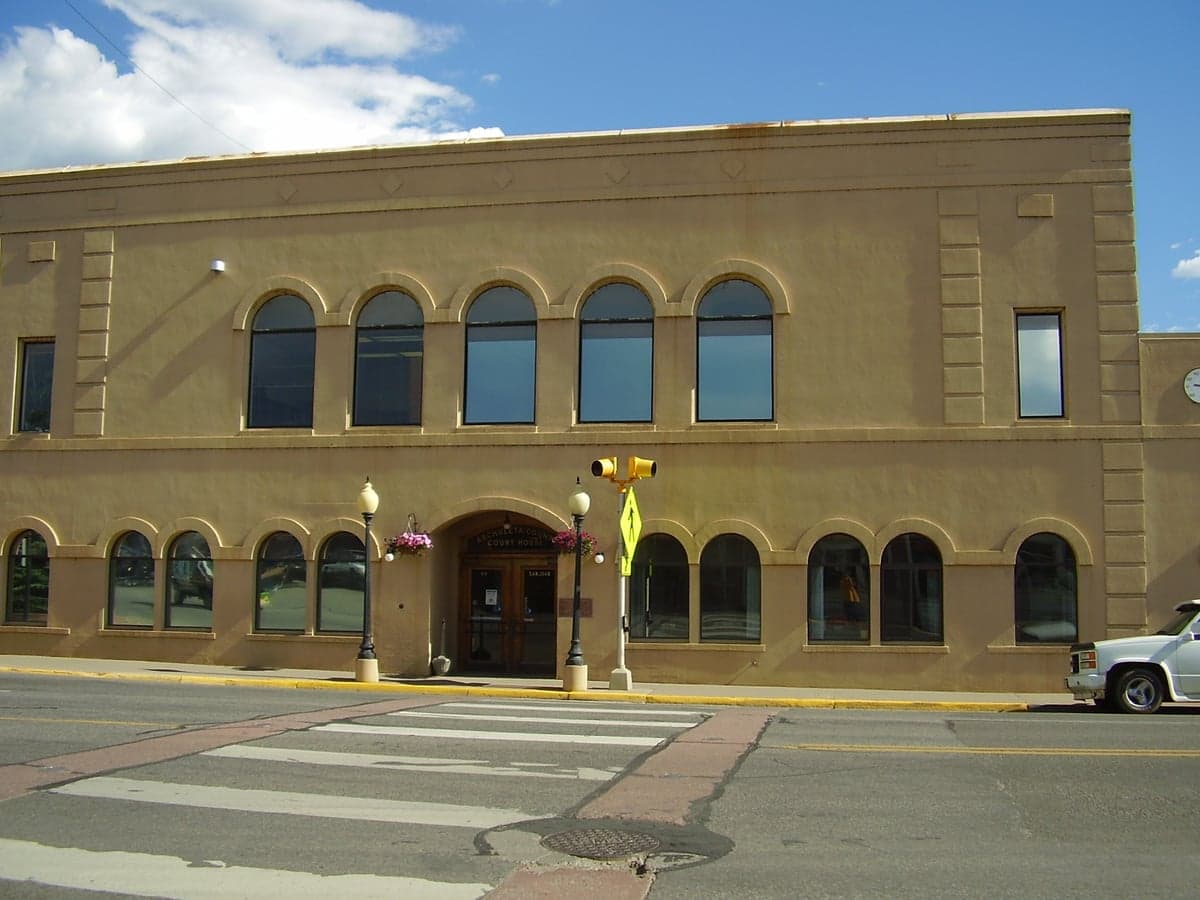
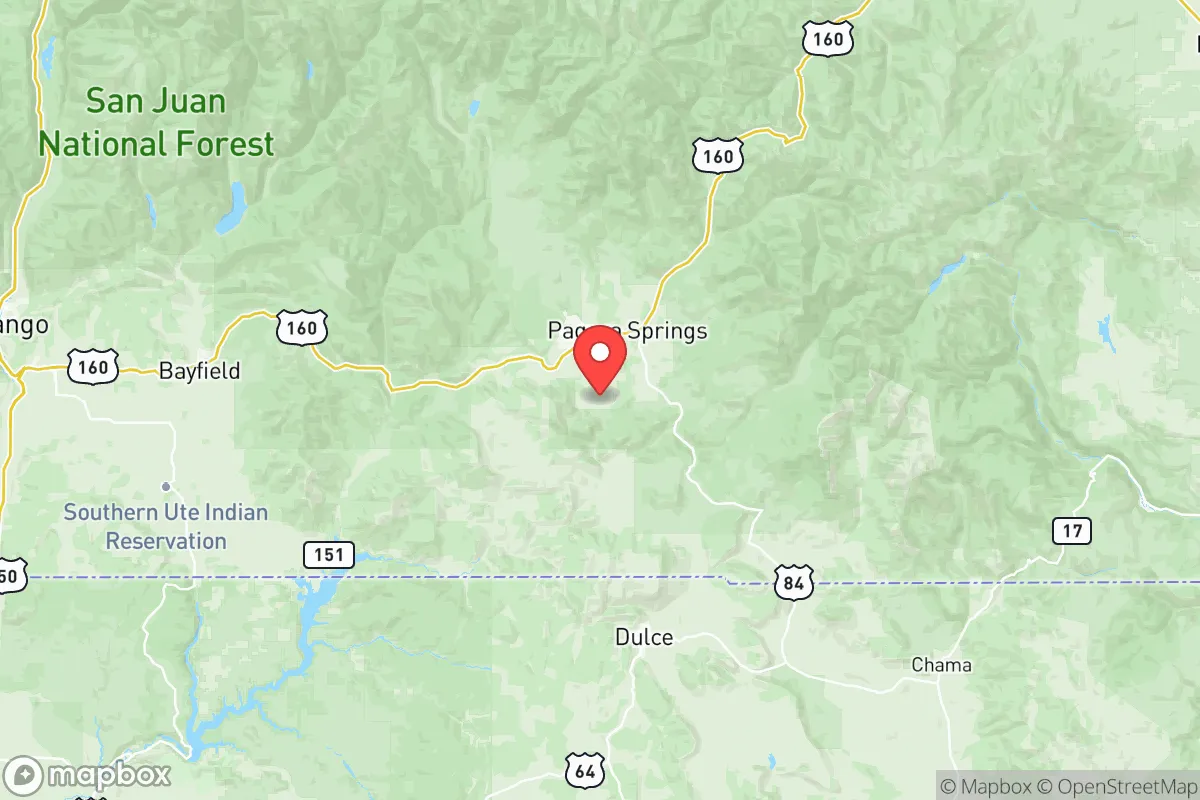
Archuleta County leans reliably conservative with a Cook PVI of R+5, but don't let that single number fool you — there's a real tug-of-war happening between the longtime rural families and the newer arrivals in Pagosa Springs. I've lived here going on three decades, and I can tell you the county used to be a solid lock for red candidates from the school board to the county commission. Over the last few election cycles though, you're seeing Pagosa Springs proper — especially the newer subdivisions and the downtown core — start to flirt with blue-leaning candidates, while the outlying areas like Arboles, Chromo, and the Piedra River valley still vote like it's 1985. The trajectory is concerning if you value limited government and local control, because the same progressive playbook that turned Boulder and now Durango is slowly seeping in through the tourist and second-home crowd.
How it compares
Here's the kicker: the whole state of Colorado leans D+6, meaning Archuleta County is a full eleven points more conservative than the state average. That gap is actually widening. While Denver, the Front Range, and ski towns like Aspen and Telluride have swung hard left — embracing heavy-handed zoning, vaccine mandates, and what I'd call overreach on energy policy — Archuleta County has held the line. We vote against state-level tax increases, we pushed back on the plastic bag bans, and we're skeptical of any "green energy" mandates that try to tell ranchers what they can do with their own land. Even nearby Durango, just an hour west, votes D+10, so when you come to Pagosa Springs you're walking into a different political reality.
What this means for residents
For folks who live here full-time, especially in the rural pockets, it means your rights are still mostly intact — no one's coming for your gas stove or your side-by-side ATV. But you have to stay vigilant. The county commission has stayed conservative so far, but the school board flipped a seat to a progressive candidate a couple years back, and suddenly there was talk of "equity training" and curriculum changes that parents weren't consulted on. That's the kind of creeping big-government mindset that makes you keep one eye on the ballot every November. Property taxes are relatively low because local leaders fight to keep spending in check, but you'll pay the price if state-level initiatives pass.
On the flip side, the cultural divide here is real. You've got the year-round locals who hunt, fish, and want to be left alone, and then the seasonal transplants who moved here for the hot springs and the mountain views and then try to change the place into another Telluride. The most telling battleground is land use — the push for more federal-style regulations on private property, stricter building codes, and "climate action plans" that sound nice in a city council meeting but raise your cost of living and restrict what you can do with your own acreage. If you value personal freedom and a government that stays out of your way, Archuleta County still delivers — but you have to work to keep it that way. Keep your ear to the ground, vote in every primary, and don't assume just because this county is R+5 that it'll stay that way forever.

State Political ClimatePolitical Climate in Colorado
State Political AnalysisPolitical Environment in the State
Colorado’s political landscape has shifted noticeably over the past two decades. Once considered a classic swing state, it now carries a Cook Partisan Voting Index of D+6, meaning Democrats hold a solid six-point advantage in presidential contests. The Denver–Boulder corridor drives this blue lean, while vast swaths of the rest of the state remain deeply conservative. The trajectory over the last 10–20 years has been unmistakably leftward—fueled by massive in-migration from California and the Northeast—and that direction shows no signs of reversing soon.
Urban vs. rural divide
The map breaks down into three distinct zones. Denver, Boulder, and their inner-ring suburbs are reliably Democratic, with Boulder County routinely delivering 75%+ of the vote to Democratic presidential candidates. Denver itself is similarly blue, with strong progressive organizing on housing, climate, and policing. Colorado Springs, home to the Air Force Academy and Focus on the Family, is the state’s conservative anchor—but even there, younger transplants are nudging the city purple. Fort Collins and Loveland (Larimer County) have trended purple-to-blue, while Pueblo and Durango remain working-class Democratic-leaning but with conservative streaks. The Western Slope (Grand Junction, Montrose) and the eastern plains (Greeley, Sterling) are solid red, with many counties voting +30 to +40 points Republican. The rural–urban split is so sharp that Weld County (Greeley) and Douglas County (Castle Rock) are the only large suburban/exurban areas still firmly in the GOP column, though Douglas has shifted from deep red to competitive.
Policy environment
Colorado’s tax structure is relatively light compared to coastal blue states, but it’s under pressure. Income tax is a flat 4.4% (down from 4.63% after Proposition 116 in 2020), and sales tax varies widely by locality. TABOR (Taxpayer’s Bill of Rights) still caps revenue growth and requires voter approval for tax hikes, though lawmakers have found workarounds such as fee increases and “retain and spend” measures. Property taxes are moderate but rising after the 2020 repeal of the Gallagher Amendment. On regulation, the state has aggressively pursued a green energy agenda—mandating 100% renewable electricity by 2040—which has squeezed traditional energy jobs on the Western Slope. Education policy is mixed: school choice is strong, with many charter options, but Denver Public Schools has leaned into progressive curriculum mandates. Healthcare is heavily regulated; the state runs its own insurance exchange and has expanded Medicaid, driving up costs for private plans. Election laws are among the most liberal: universal mail-in ballots, same-day registration, automatic voter registration, and no voter ID requirement at the polls—a setup that concerns many conservatives about integrity.
Trajectory & freedom
From a personal-liberty standpoint, Colorado is clearly becoming less free by conservative metrics. The legislature has passed a red-flag law (HB19-1177) allowing gun confiscation without due process, a permit-to-purchase requirement (HB21-1106), and a high-capacity magazine ban that effectively criminalizes common ownership. Parental rights have eroded: in 2024, the state banned for-profit conversion therapy for minors and removed religious exemption requirements for vaccine mandates in schools. Medical freedom took a hit with strict COVID-era mandates that lingered longer than in neighboring states. Property rights are increasingly constrained by local zoning and state land-use bills that override local control for densification. On the plus side for conservatives, TABOR remains intact—though lawmakers chip away at it—and 2024 saw a ballot measure (Proposition KK) to tax firearms sales to fund victims’ services, which barely passed. The overall trend is unmistakably toward more state-level control, higher regulation, and less individual autonomy, especially on the Second Amendment.
Civil unrest & political movements
Denver experienced significant civil unrest during the 2020 George Floyd protests, including property damage, fires, and the closure of a police precinct for months. Antifa-aligned groups remain active in Denver and Boulder, with occasional street confrontations. The state adopted a “sanctuary” stance on abortion (via the Reproductive Health Equity Act in 2022) but has resisted becoming a full sanctuary for illegal immigration—though Denver’s city government has housing and ID programs for undocumented residents. Election-integrity concerns peaked in 2020, when a lawsuit over ballot drop-box monitoring led to a court-ordered halt to partisan observation. Weld County has floated secession rhetoric multiple times. Organized conservative movements include the Colorado Republican Party’s grassroots push for election reform, and Western Slope groups advocating for local resource control against Denver’s green mandates. Recent flashpoint: the busing of migrants from Texas has overwhelmed Denver’s social services and ignited tensions over sanctuary policies.
Projection
In-migration patterns make a rightward shift unlikely. The state added roughly 750,000 people between 2010 and 2020, with the largest share coming from California, Illinois, and New York—most of whom lean left. The Denver metro will continue to absorb these newcomers, while rural counties depopulate or stagnate. Expect more stringent gun control, statewide rent control, and a progressive tax restructuring that could increase the burden on high earners. Colorado is also likely to adopt ranked-choice voting statewide, further entrenching left-leaning coalition politics. For conservatives, the best-case scenario is maintaining Douglas County and the Western Slope as red islands, while losing the rest of the Front Range. In a decade, Colorado will look much like Oregon or Washington—a blue urban core dominating a resistant but shrinking rural hinterland.
Bottom line for a conservative mover: If you value low taxes, gun rights, parental choice, and local control, you can find enclaves—Colorado Springs, Douglas County, Grand Junction, Greeley—where those values still dominate locally. But the state government will increasingly work against you. Expect a decade of fighting defensive battles in the legislature while watching the Denver cartel tighten its grip. If you’re looking for a state that’s trending more free, Colorado isn’t it; you’d be better served by Idaho, Texas, or Florida.
* Values derived from national, state, county, city and local statistics and may differ in a specific area. Last updated: 2026-06-01T14:46:28.000Z
Narrative content on this page is AI-generated and may contain mistakes. Verify any details that matter before acting on them.
ReloMaps may earn a commission from affiliate links at no extra cost to you.

